Artwork
Christ on the Cross
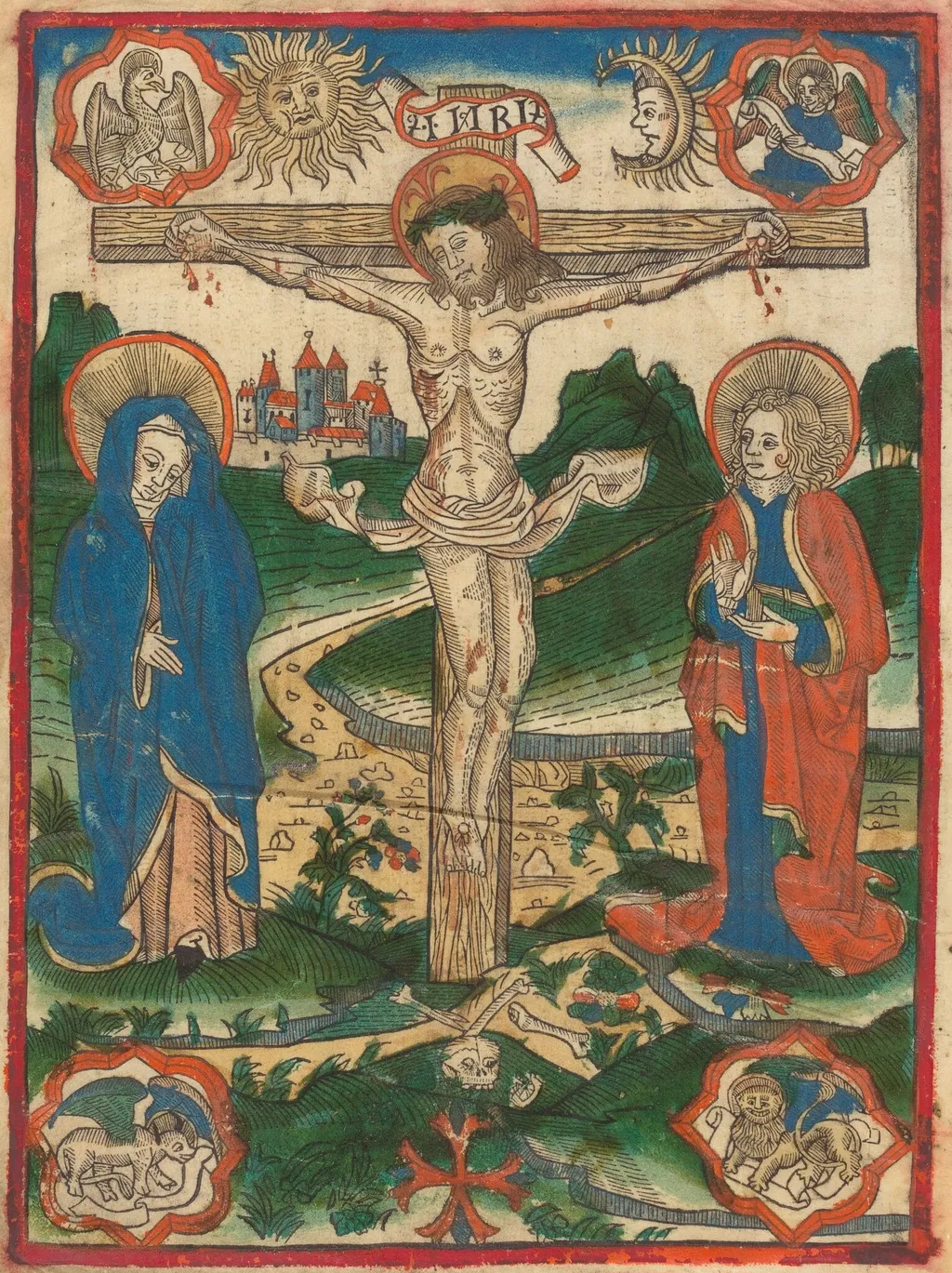
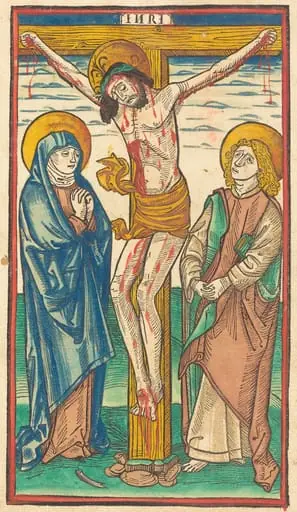
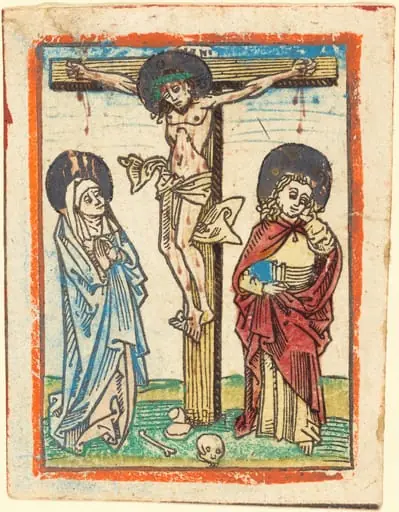
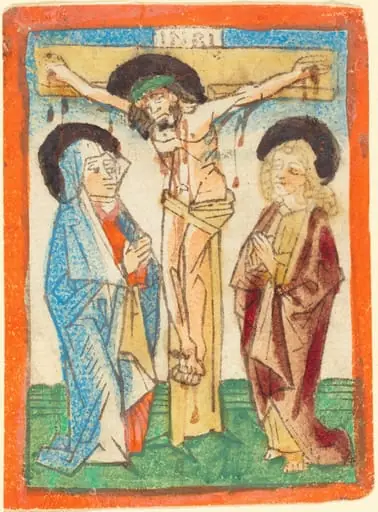
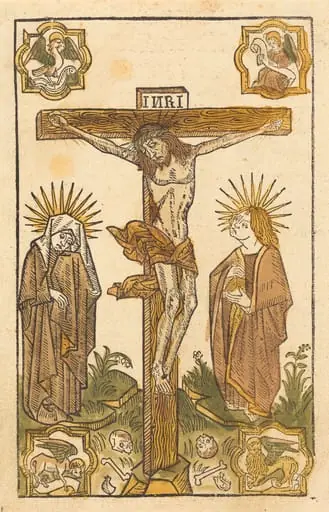
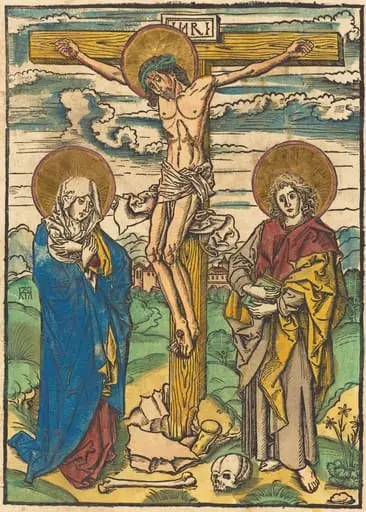
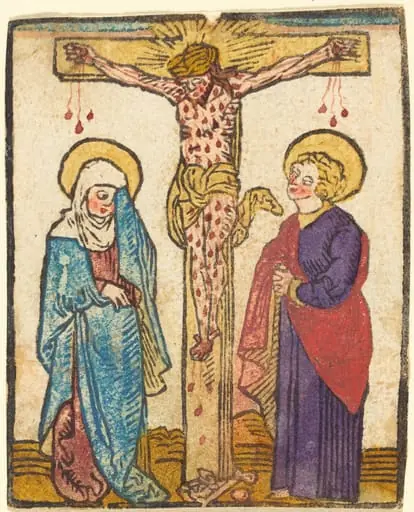
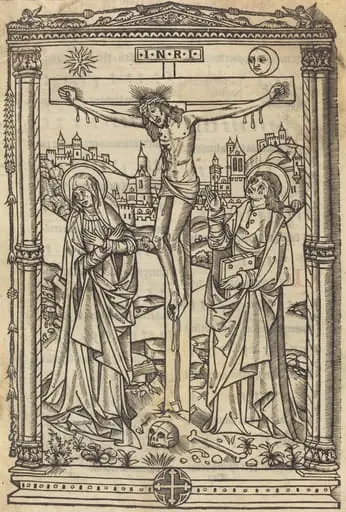
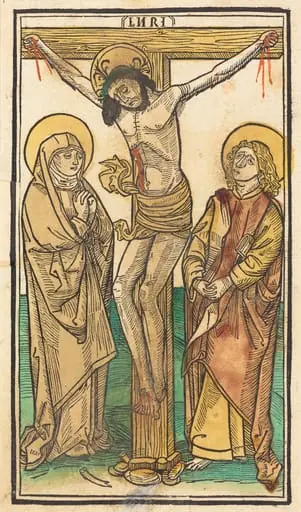
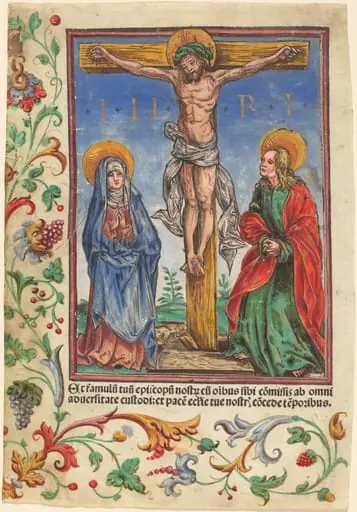
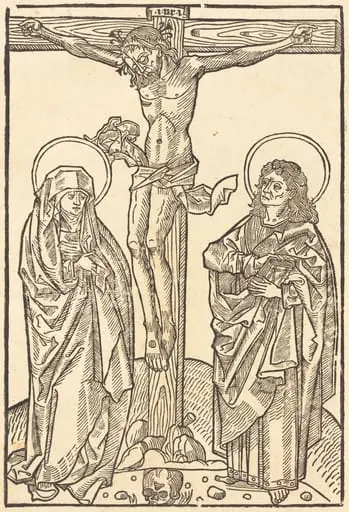
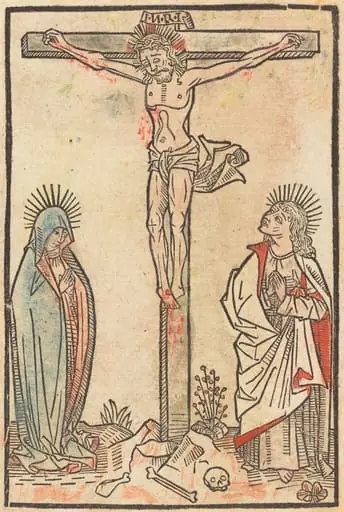
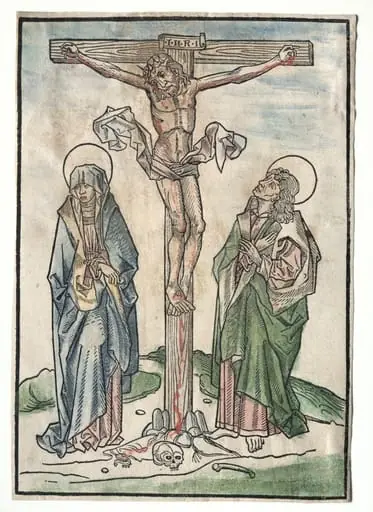
Christ on the Cross is an ink print by the Renaissance artist German 15th Century. It dates from 1490 and is held in the collection of the National Gallery of Art. This hand‑colored woodcut presents the crucifixion of Christ set against a landscape of undulating hills and a distant castle.
About this work
Overview
The composition is framed by a sun and moon sharing the sky, while two robed figures stand on either side of the cross, their postures suggesting contemplation.
This hand‑colored woodcut presents the crucifixion of Christ set against a landscape of undulating hills and a distant castle. The composition is framed by a sun and moon sharing the sky, while two robed figures stand on either side of the cross, their postures suggesting contemplation. Vivid pigments in green, blue, vermilion, rose, pale orange and red enliven the scene, directing attention to the central, contorted figure of the crucified Christ.
Subject & Meaning
The central figure is the suffering Christ, whose twisted pose emphasizes the physical and spiritual anguish of the crucifixion. Flanking him are two individuals in long garments, likely representing mourners or witnesses, whose solemn gestures convey prayerful reflection. The juxtaposition of celestial bodies and the distant fortress adds a symbolic backdrop, hinting at the cosmic significance of the event and the earthly realm’s response.
Technique & Style
Executed as a woodcut, the image was printed on vellum and subsequently hand‑colored with a palette that includes green, blue, vermilion, rose, pale orange and red. The carving yields bold outlines and stark contrasts, while the applied pigments introduce a lively chromatic range uncommon in monochrome prints of the period. The dynamic arrangement of figures and landscape demonstrates a compositional vigor that heightens emotional impact.
Context
The work belongs to the tradition of early modern religious prints, where woodcut technology enabled wider distribution of devotional images. Hand‑coloring on vellum suggests a later, possibly collector‑driven enhancement, indicating the piece was valued beyond its initial print run. While specific details of its creation and ownership remain undocumented, its stylistic traits align with European printmaking practices of the late 15th to early 16th centuries.
Artist & collection

Artist
This 15th-century German artist carved vivid religious scenes into metal and wood, then hand-painted them in bright, symbolic colors.

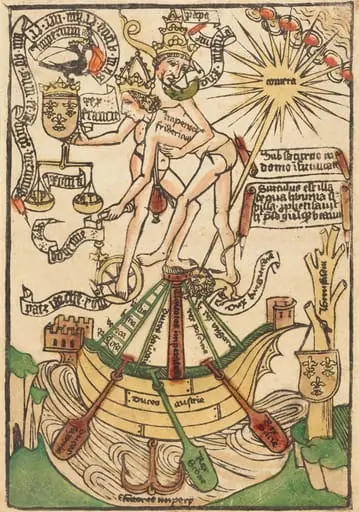 Allegory of the Meeting of Pope Paul II and Emperor Frederick III
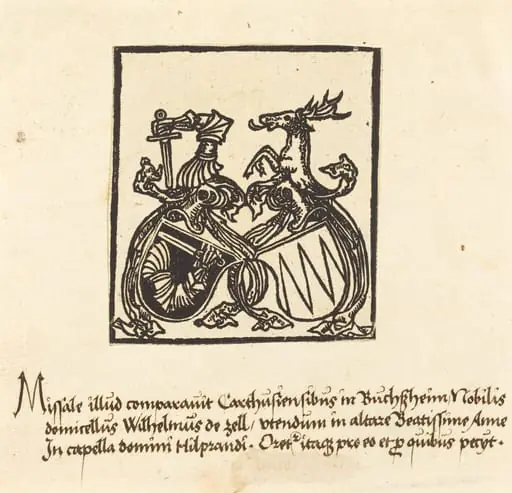 Bookplate of Wilhelm von Zell
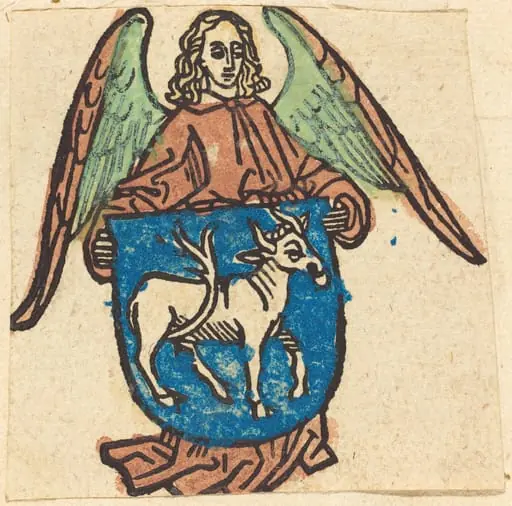 Bookplate of Hilprand Brandenburg of Bibrach
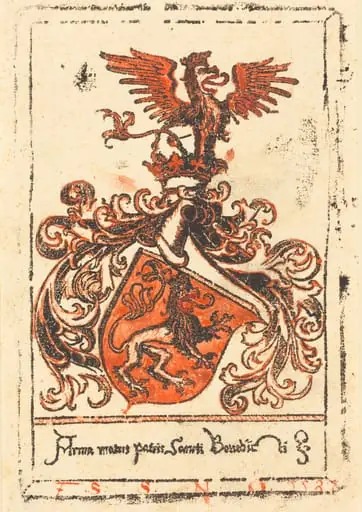 Bookplate of the Abbey of Ottobeuren
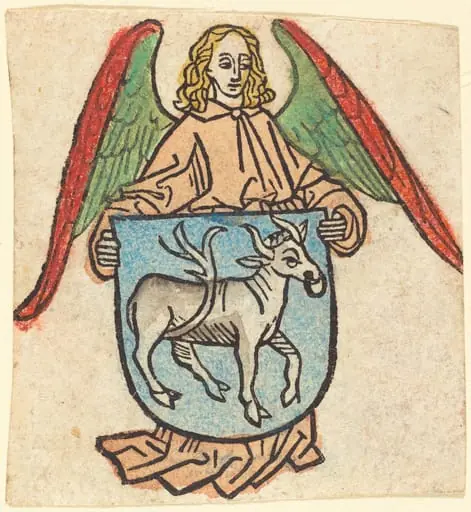 Bookplate of Hilprand Brandenburg of Bibrach
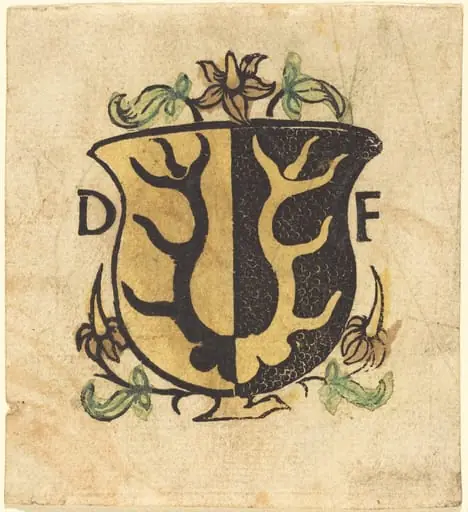 Bookplate of Dominicus Frauenfelder
![Studies for Six Figures (sheet from a model book) [recto], by German 15th Century](https://artifactworldgallery.com/img/german-15th-century--studies-for-six-figures-sheet-from-a-model-book-recto--4837429e0755bc3f-w320.webp) Studies for Six Figures (sheet from a model book) [recto]
Studies for Six Figures (sheet from a model book) [recto]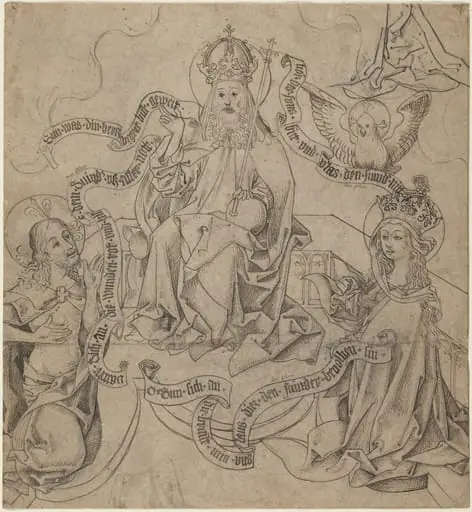 Christ and Mary Interceding with God the Father