Artwork
Christ on the Cross
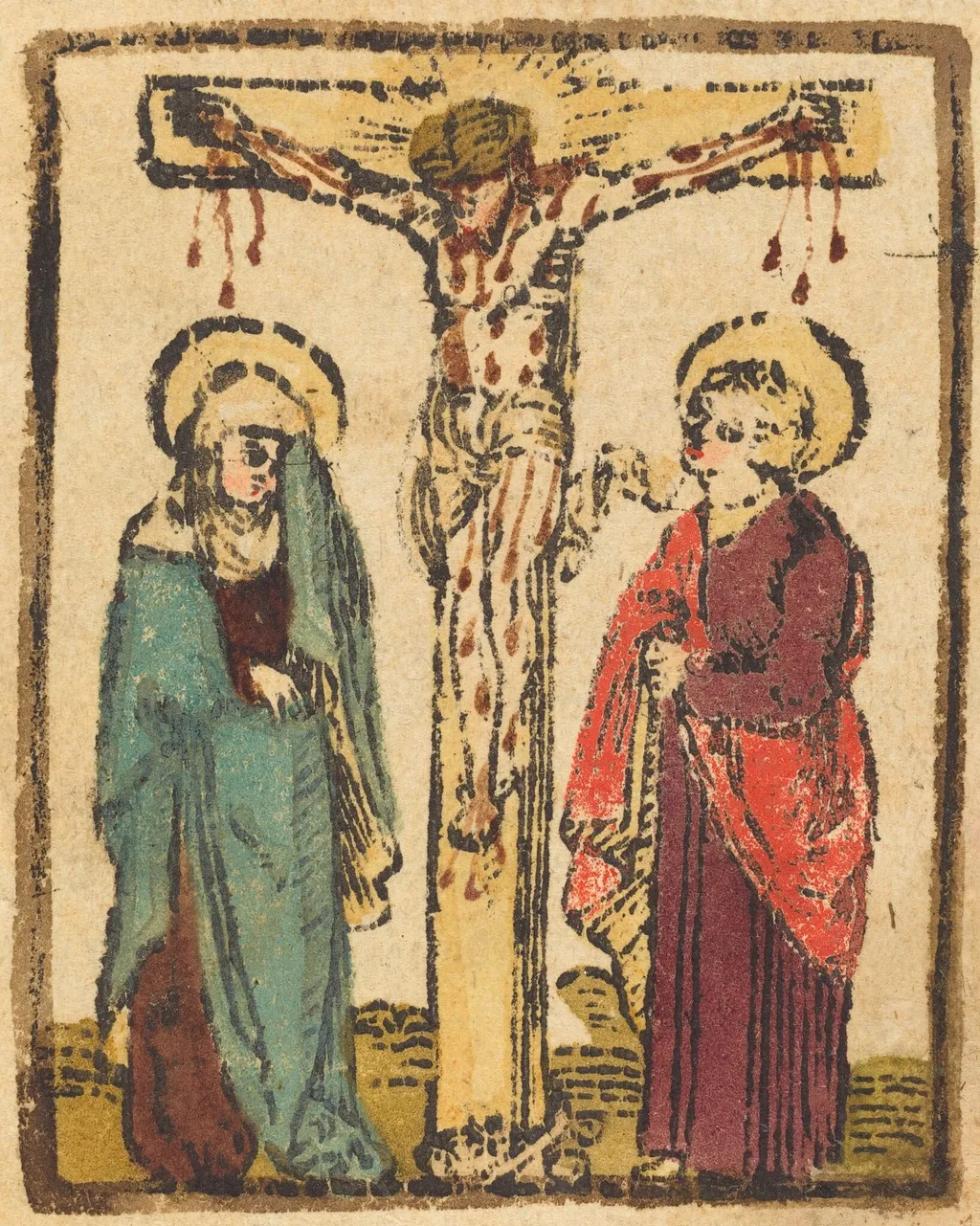
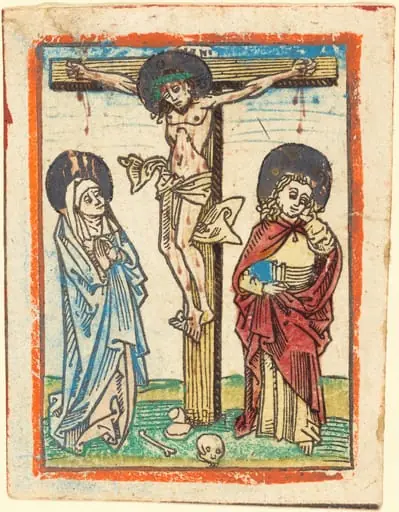
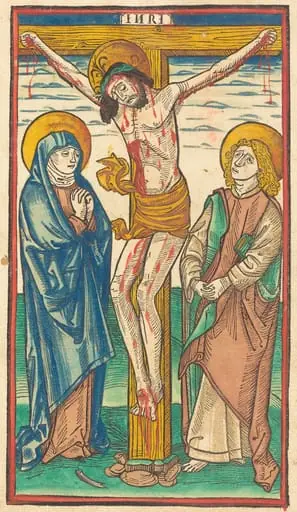
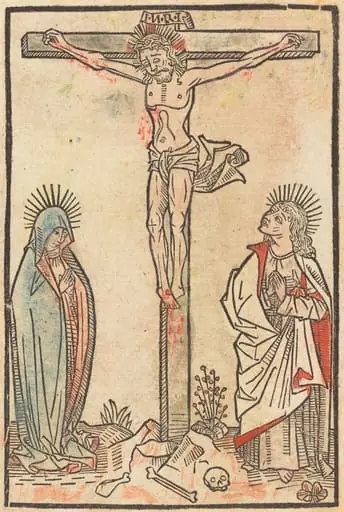
Christ on the Cross is an ink print by the Renaissance artist German 15th Century. It dates from 1495 and is held in the collection of the National Gallery of Art. This hand‑colored woodcut depicts a crucifixion scene composed of three standing figures before a stark, unadorned background.
About this work
Overview
Flanking the cross are two mourners: one in a blue‑green garment with a head covering, the other in a red dress trimmed with gold.
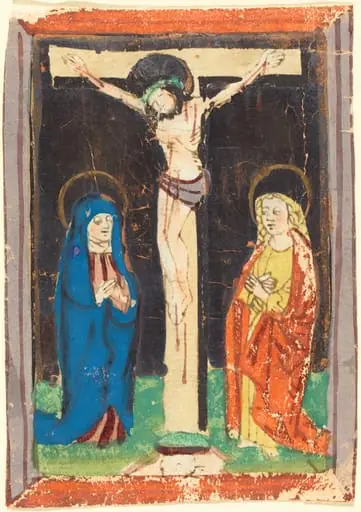
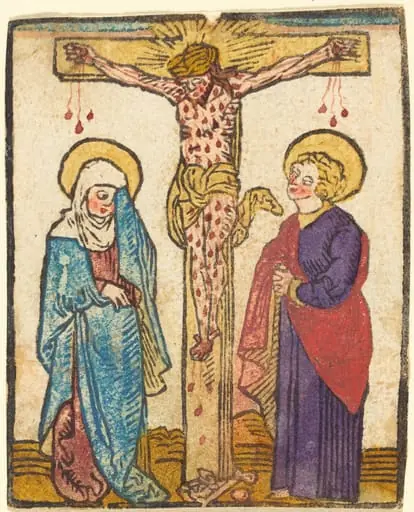
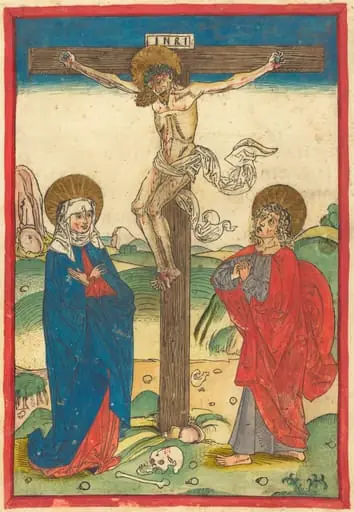
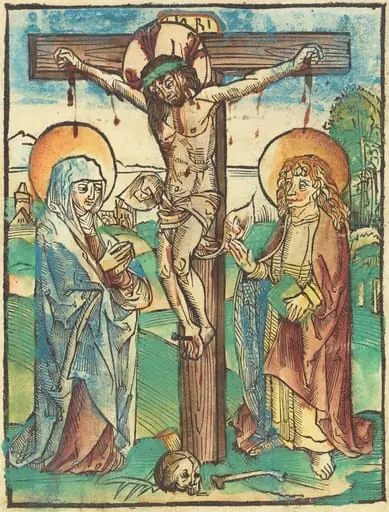
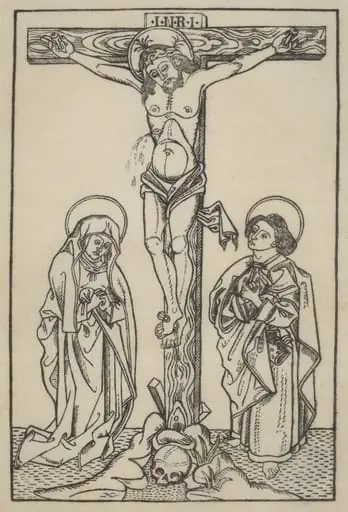
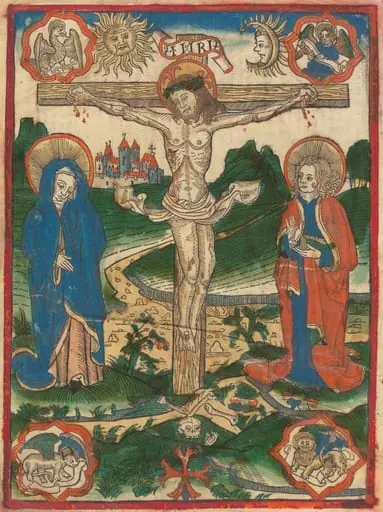
This hand‑colored woodcut depicts a crucifixion scene composed of three standing figures before a stark, unadorned background. Central to the composition is a figure on the cross, crowned with thorns and shown with blood flowing from the wounds. Flanking the cross are two mourners: one in a blue‑green garment with a head covering, the other in a red dress trimmed with gold. The image relies on bold outlines and flat areas of color.
Subject & Meaning
The work presents the Christian narrative of Christ’s crucifixion, emphasizing the physical suffering through the visible crown of thorns and dripping blood. The accompanying figures likely represent the Virgin Mary and Saint John, traditional witnesses to the event, their contrasting attire underscoring themes of sorrow and devotion. The plain backdrop focuses attention on the emotional gravity of the moment rather than on any surrounding landscape.
Technique & Style
Executed as a woodcut, the image was carved from a single block of wood, producing sharp, linear contours characteristic of the medium. After printing, the artist applied hand‑applied pigments in blue‑green, vermilion, lavender, brown, olive, and yellow, resulting in vivid yet slightly faded hues. The overall aesthetic is flat and graphic, lacking chiaroscuro or modeling, which reflects the conventions of early printmaking aimed at clear visual communication.
Context
Woodcut prints of religious subjects were widely circulated in the late medieval and early modern periods as affordable devotional images. The use of hand‑coloring allowed for richer visual appeal while maintaining the reproducibility of the woodcut. Such works often served both liturgical purposes and private contemplation, bridging the gap between elite manuscript illumination and emerging mass‑produced imagery.
Artist & collection

Artist
This 15th-century German artist carved vivid religious scenes into metal and wood, then hand-painted them in bright, symbolic colors.

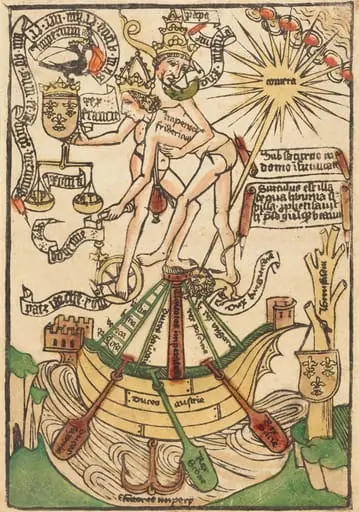 Allegory of the Meeting of Pope Paul II and Emperor Frederick III
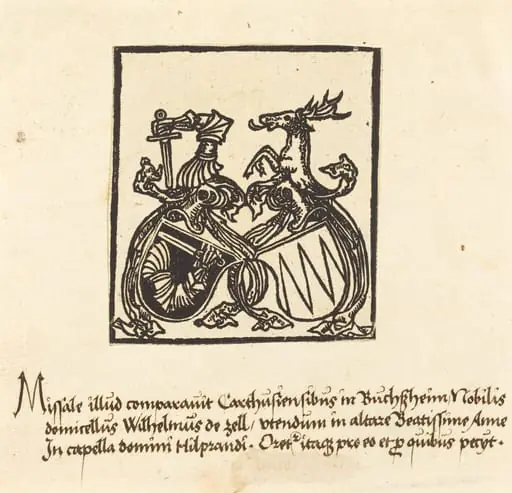 Bookplate of Wilhelm von Zell
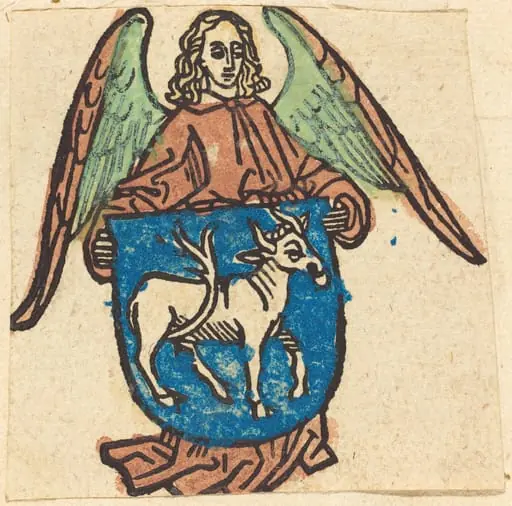 Bookplate of Hilprand Brandenburg of Bibrach
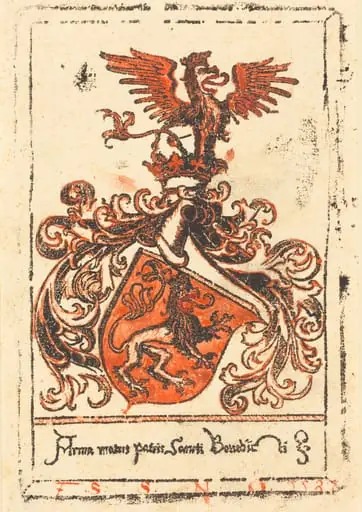 Bookplate of the Abbey of Ottobeuren
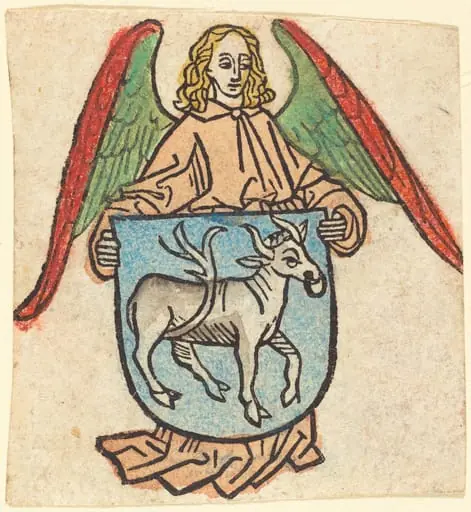 Bookplate of Hilprand Brandenburg of Bibrach
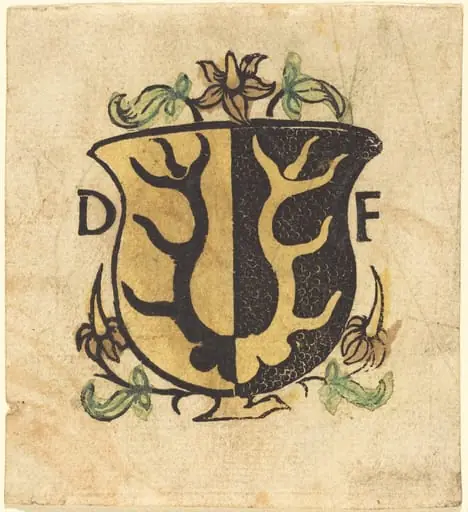 Bookplate of Dominicus Frauenfelder
![Studies for Six Figures (sheet from a model book) [recto], by German 15th Century](https://artifactworldgallery.com/img/german-15th-century--studies-for-six-figures-sheet-from-a-model-book-recto--4837429e0755bc3f-w320.webp) Studies for Six Figures (sheet from a model book) [recto]
Studies for Six Figures (sheet from a model book) [recto]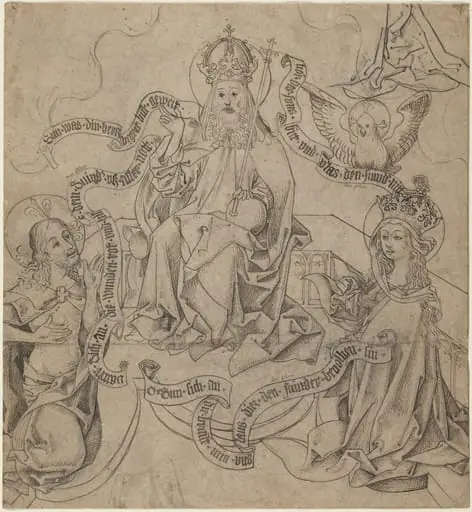 Christ and Mary Interceding with God the Father