Artwork
Man Walking Towards a Grave
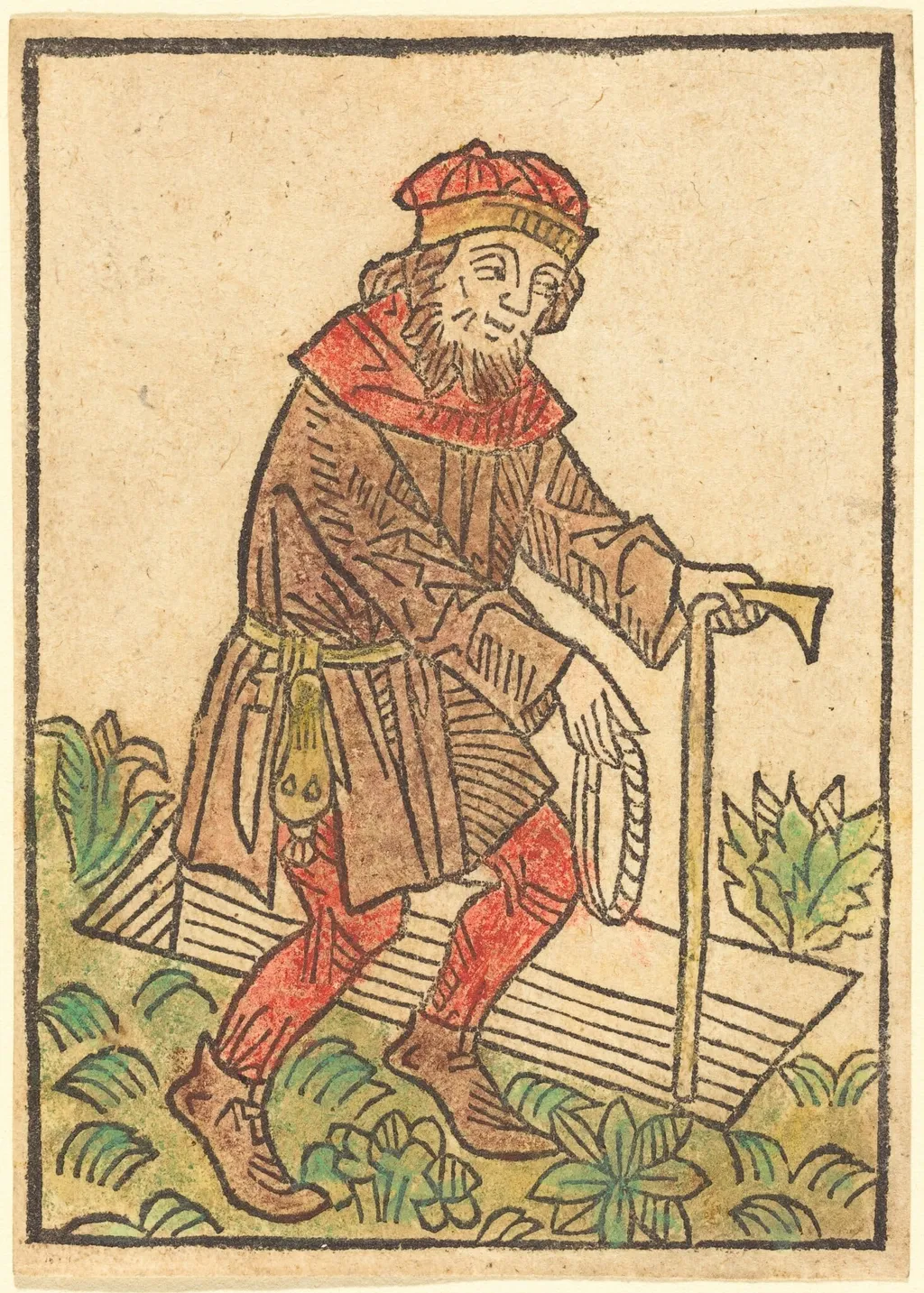
Man Walking Towards a Grave is an ink print by the Renaissance artist German 15th Century. It dates from 1495 and is held in the collection of the National Gallery of Art.
About this work
Overview
The print’s texture, shaped by carved woodblocks and hand-applied color, enhances its tactile presence without overt embellishment.
This hand-colored woodcut depicts a solitary figure approaching a grave, rendered in muted earth tones with subtle green accents suggesting natural surroundings. The man, clad in a brown robe with a red collar and hat, carries a cane and walks with a bowed posture. His downward gaze and stillness convey a quiet, inward focus. The print’s texture, shaped by carved woodblocks and hand-applied color, enhances its tactile presence without overt embellishment.
Subject & Meaning
The figure’s solitary march toward the grave suggests a meditation on mortality, loss, or personal reckoning. His averted gaze and somber demeanor imply introspection rather than grief, inviting contemplation rather than narrative. The absence of other figures or markers of identity universalizes the moment, framing it as a quiet, human encounter with finality — not as a religious or ceremonial scene, but as a private, unspoken passage.
Technique & Style
The image is produced through hand-colored woodcut, a method that combines carved relief printing with delicate brushwork. The artist used bold, linear cuts to define form and texture, then applied translucent pigments to modulate tone and depth. The result is a restrained palette of browns and greens, with the red collar and hat offering a muted contrast. The grain of the wood and the irregularity of hand-coloring lend the work an intimate, handmade quality.
History & Provenance
The work’s origin is undocumented in public records, and no known artist or date is securely attached. It likely dates to the late 19th or early 20th century, a period when woodcut revival movements in Europe and America emphasized expressive simplicity over academic detail. Its survival as a single impression suggests it was privately made or distributed, possibly as a personal or devotional object rather than a commercial print.
Context
This image emerges within a broader cultural interest in quiet, symbolic scenes of death during the late 1800s — a time when industrialization and secularization prompted renewed attention to personal spirituality and mortality. Unlike overtly religious funerary art, this work avoids iconography, instead relying on composition and mood to evoke reflection. It aligns with emerging modernist tendencies to distill emotion through minimal means.
Legacy
Though not widely exhibited or reproduced, the print contributes to a quieter lineage of printmaking that values emotional restraint and material honesty. Its survival as a singular artifact underscores its role as a personal or intimate expression rather than a public statement. Contemporary viewers may encounter it as a quiet counterpoint to more dramatic depictions of death, valued for its stillness and subtlety.
Artist & collection

Artist
This 15th-century German artist carved vivid religious scenes into metal and wood, then hand-painted them in bright, symbolic colors.

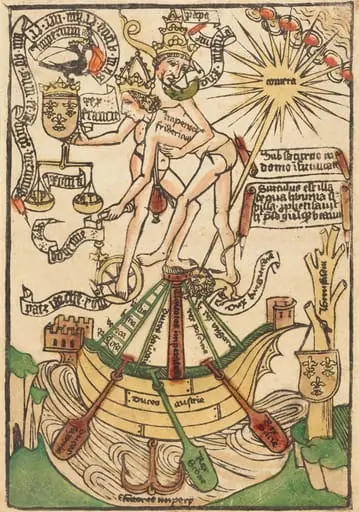 Allegory of the Meeting of Pope Paul II and Emperor Frederick III
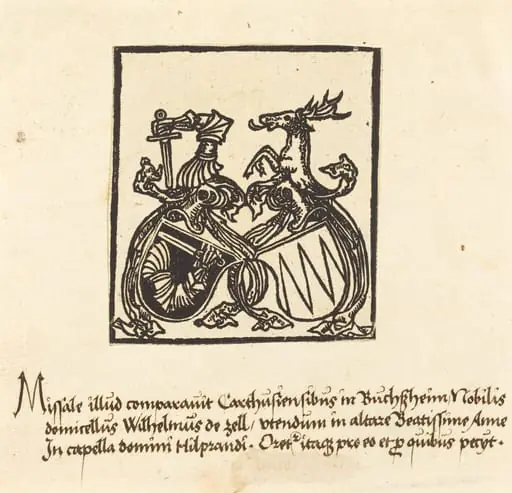 Bookplate of Wilhelm von Zell
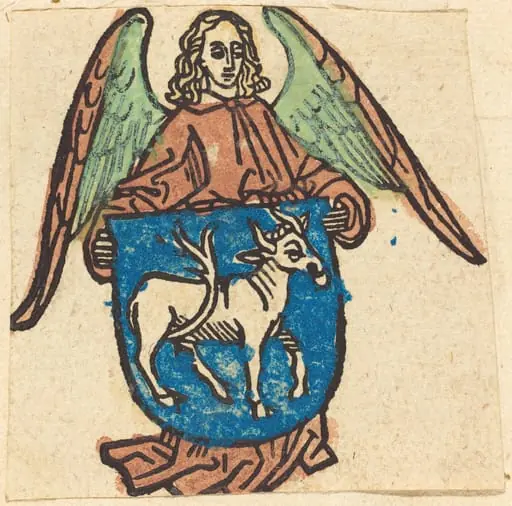 Bookplate of Hilprand Brandenburg of Bibrach
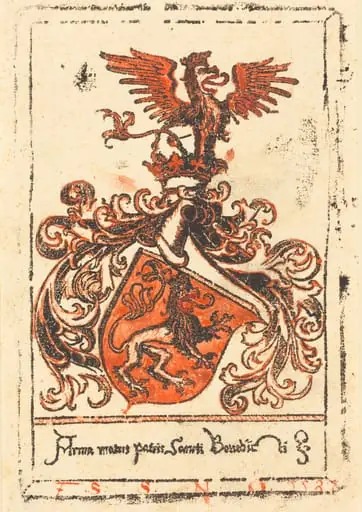 Bookplate of the Abbey of Ottobeuren
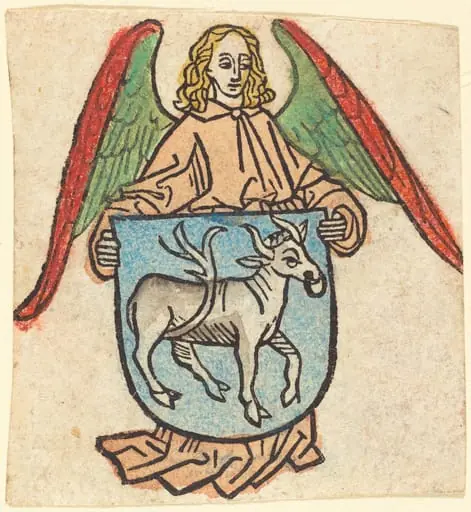 Bookplate of Hilprand Brandenburg of Bibrach
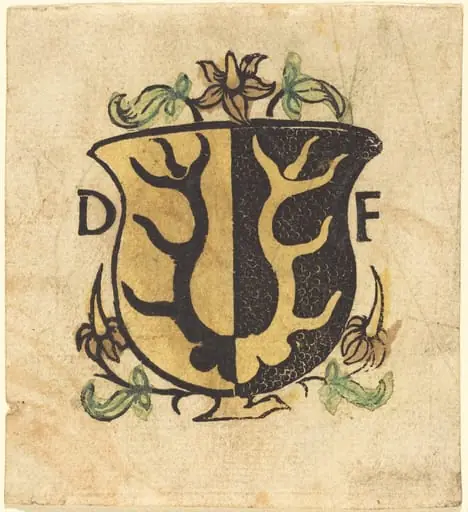 Bookplate of Dominicus Frauenfelder
![Studies for Six Figures (sheet from a model book) [recto], by German 15th Century](https://artifactworldgallery.com/img/german-15th-century--studies-for-six-figures-sheet-from-a-model-book-recto--4837429e0755bc3f-w320.webp) Studies for Six Figures (sheet from a model book) [recto]
Studies for Six Figures (sheet from a model book) [recto]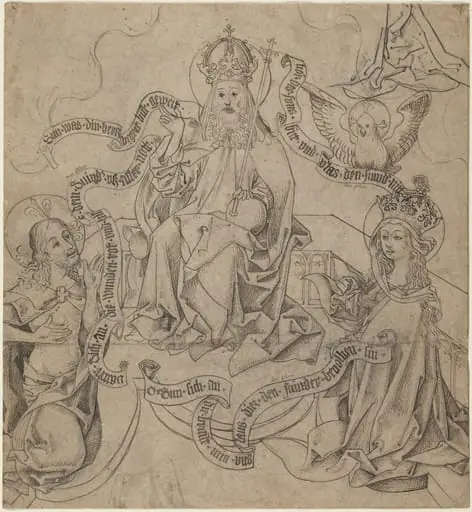 Christ and Mary Interceding with God the Father