Artwork
Playing Card
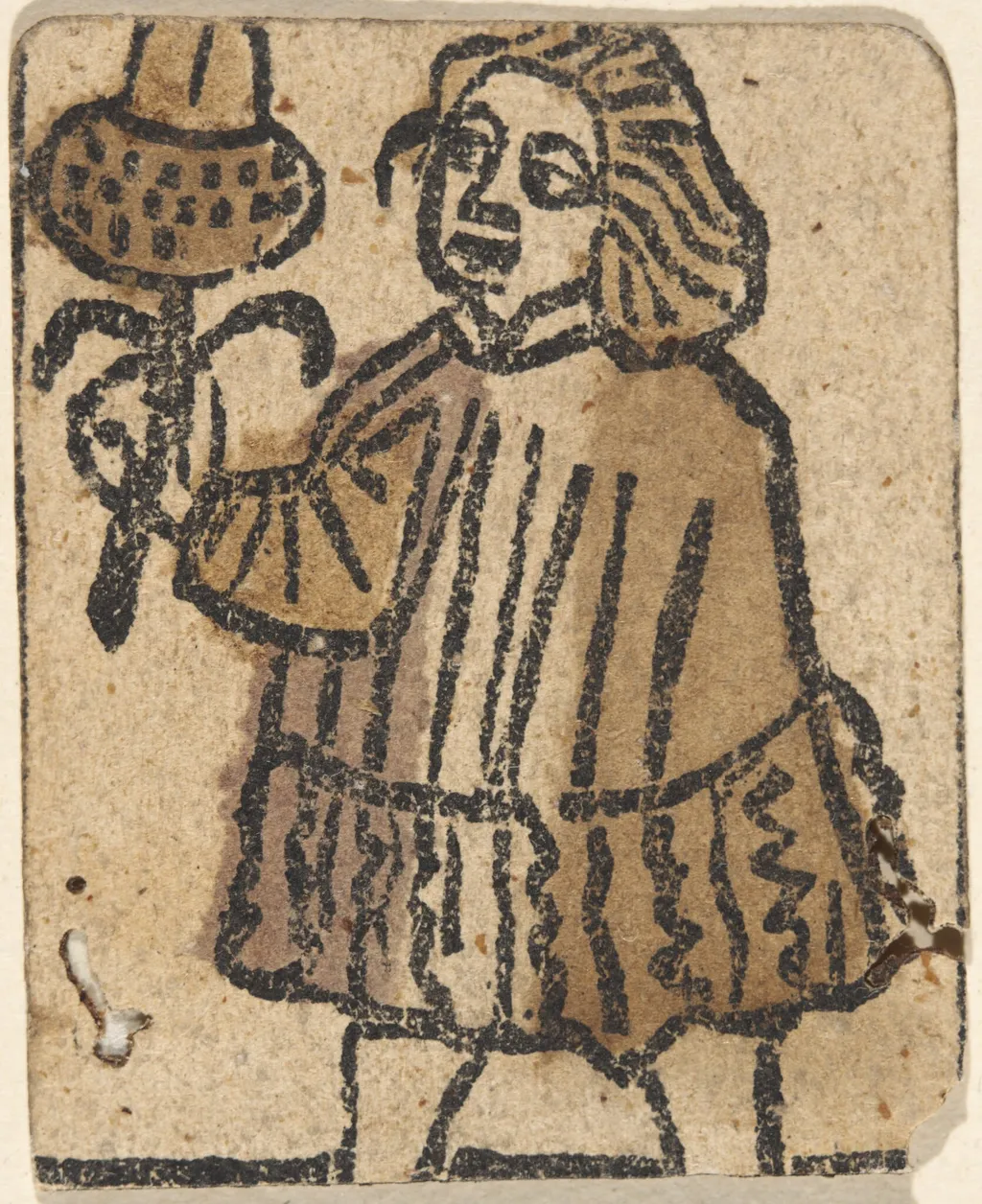
Playing Card is an ink print by the Renaissance artist German 15th Century. It dates from 1401 and is held in the collection of the National Gallery of Art.
About this work
Overview
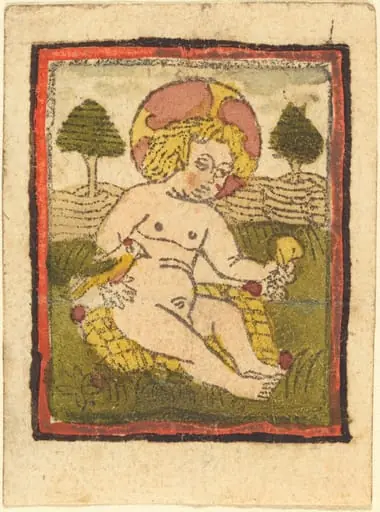
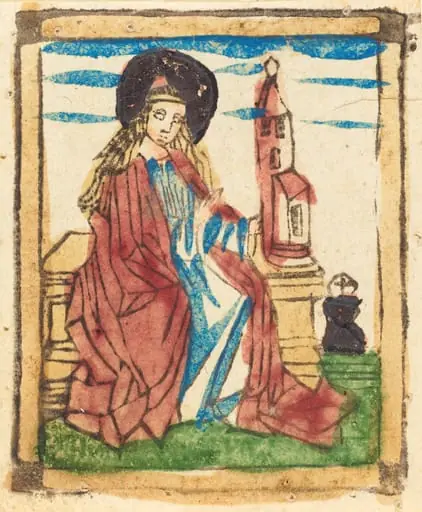
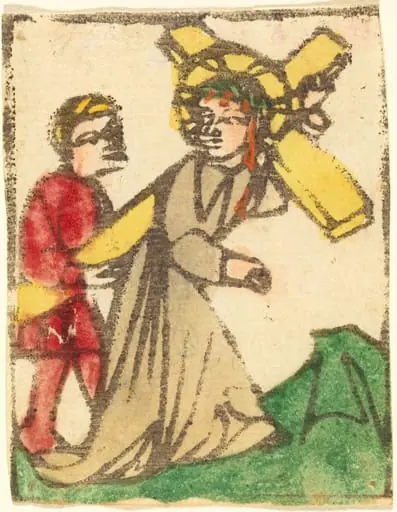
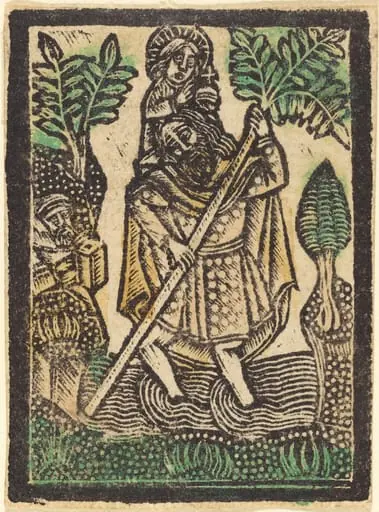
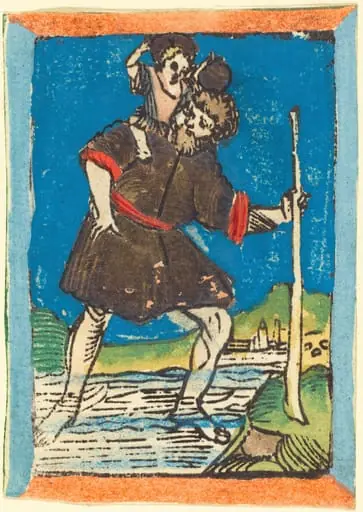
Playing Card is a hand-colored woodcut print featuring a simple, blocky figure in browns and blacks. The subject wears a long, lined robe and holds a small, round object, with a stern expression rendered through bold facial lines.
Subject & Meaning
The figure's identity and the object they hold (possibly a hat or ball) are ambiguous, suggesting a symbolic or representational purpose rather than a detailed portrait. The overall design appears more illustrative than realistic.
Technique & Style
Characteristic of 15th-century woodcut techniques, the print exhibits a rough, hand-drawn quality from the carved woodblock. The bold lines and limited color palette (browns and blacks) enhance its primitive, sketch-like appearance.
History & Provenance
Created in the 1400s, this woodcut reflects the common printing techniques of its time. Specific details about its creation, artist, or original context are not provided.
Context
Emerging from a period where woodcuts were a prevalent form of mass-produced imagery, Playing Card likely served a functional or decorative purpose, possibly as part of a larger set or series.
Legacy
As a typical example of 15th-century woodcut printing, Playing Card contributes to the understanding of early printmaking techniques and the aesthetic preferences of its era, though it does not stand out as a pioneering work within the medium.
Artist & collection

Artist
This 15th-century German artist carved vivid religious scenes into metal and wood, then hand-painted them in bright, symbolic colors.

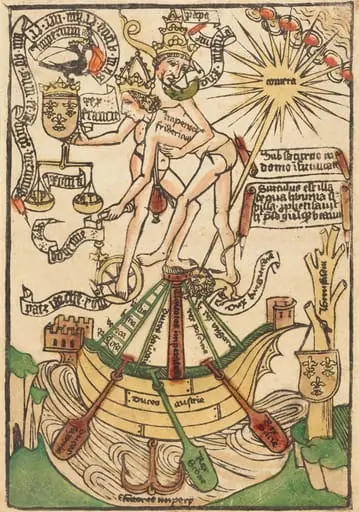 Allegory of the Meeting of Pope Paul II and Emperor Frederick III
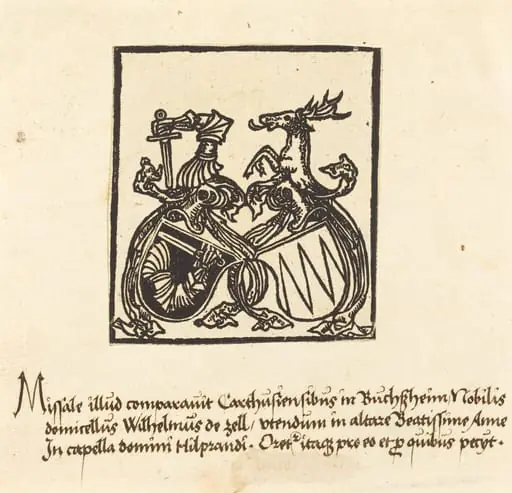 Bookplate of Wilhelm von Zell
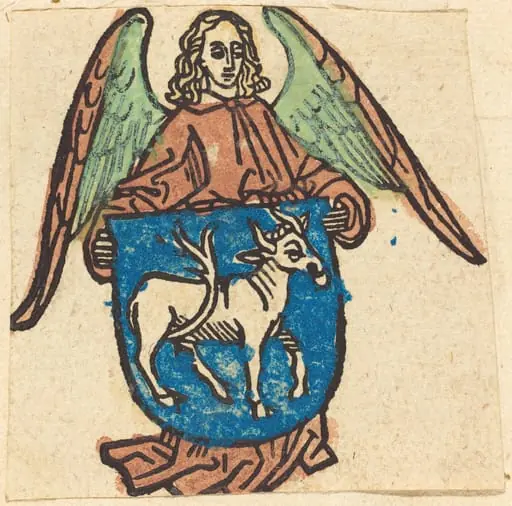 Bookplate of Hilprand Brandenburg of Bibrach
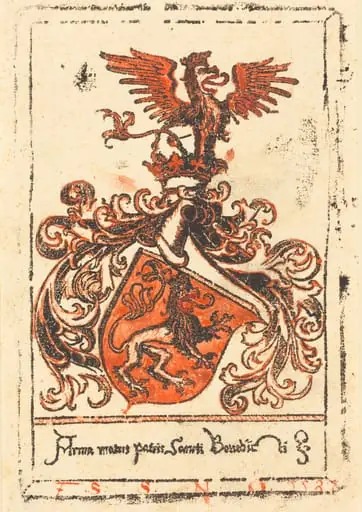 Bookplate of the Abbey of Ottobeuren
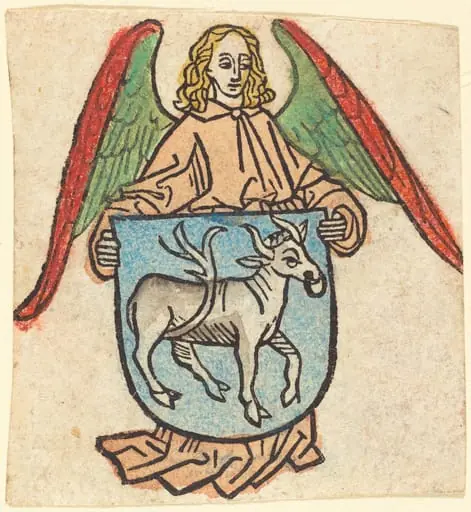 Bookplate of Hilprand Brandenburg of Bibrach
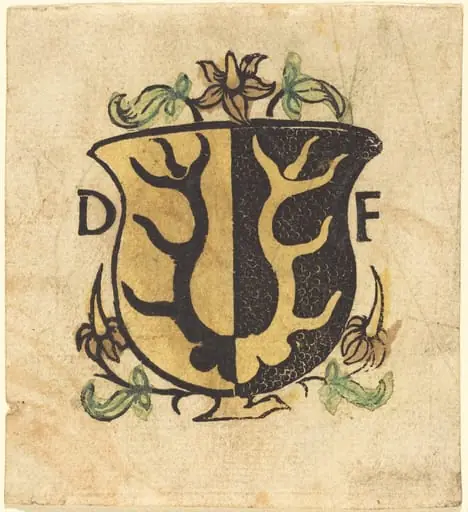 Bookplate of Dominicus Frauenfelder
![Studies for Six Figures (sheet from a model book) [recto], by German 15th Century](https://artifactworldgallery.com/img/german-15th-century--studies-for-six-figures-sheet-from-a-model-book-recto--4837429e0755bc3f-w320.webp) Studies for Six Figures (sheet from a model book) [recto]
Studies for Six Figures (sheet from a model book) [recto]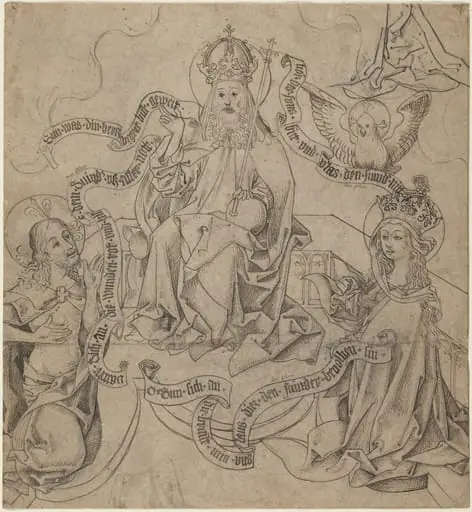 Christ and Mary Interceding with God the Father