Artwork
Saint Catherine
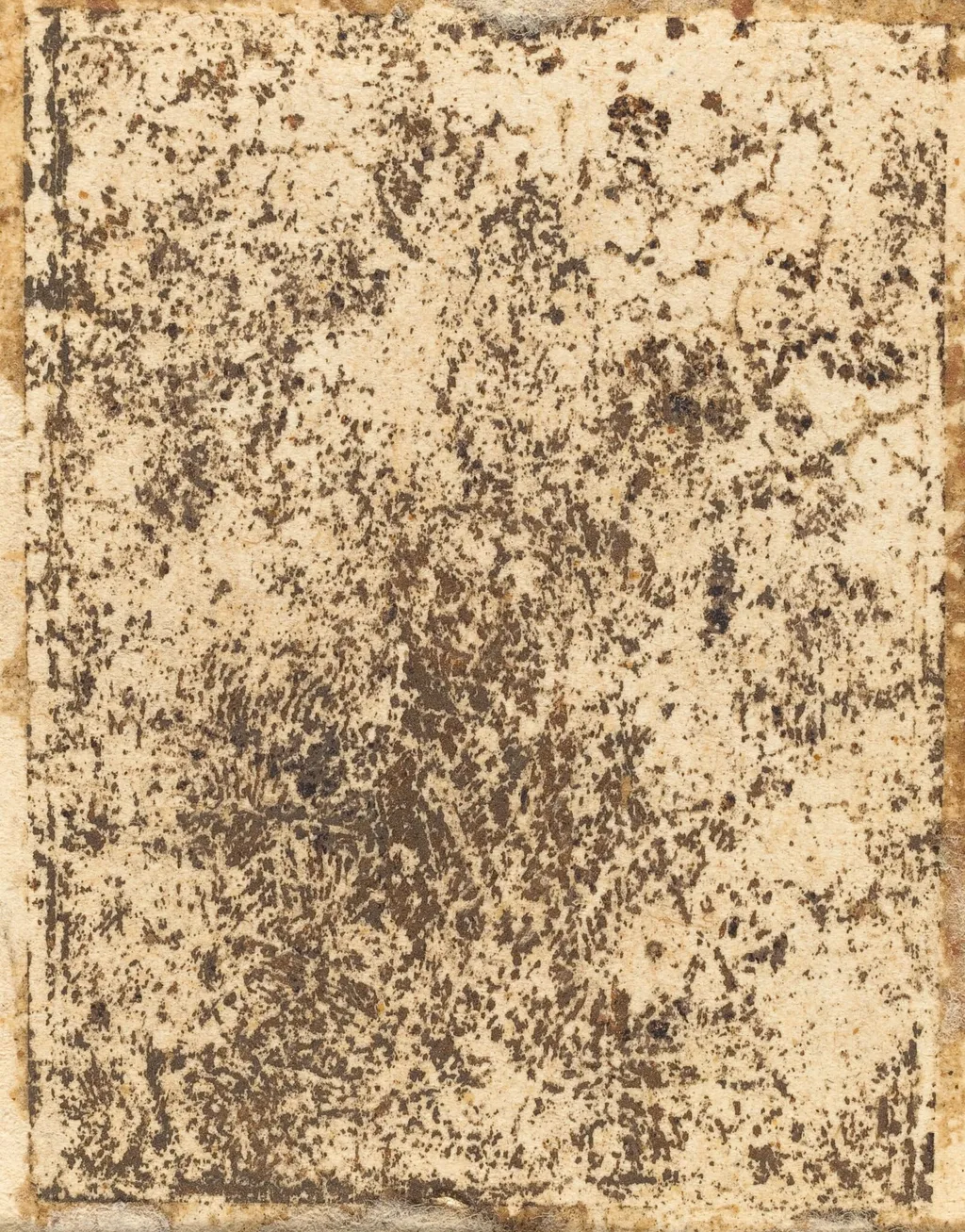
Saint Catherine is a print by the Renaissance artist German 15th Century. It dates from 1450 and is held in the collection of the National Gallery of Art.
About this work
Overview
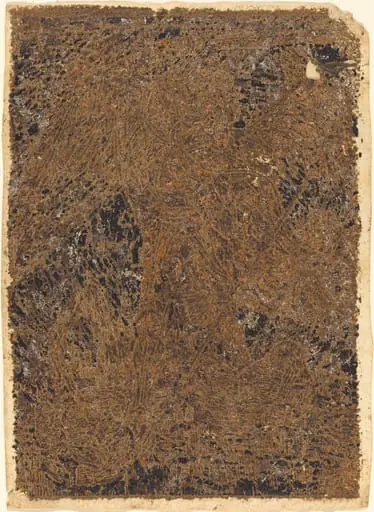
Saint Catherine is a print executed as a paste‑print counterproof on laid paper. The work presents a muted palette of pale yellow and brown tones, overlaid with a scattered pattern of fine black speckles that dominate the surface. The overall effect is one of a weathered, almost fragmentary image, where any representational content is obscured by the texture of the printing process.
Technique & Style
The counterproof stage creates a reversed impression, contributing to the irregular distribution of black dots.
The piece employs a paste‑print method, a technique in which pigment is transferred from a prepared matrix onto paper, often leaving a characteristic speckled texture. The counterproof stage creates a reversed impression, contributing to the irregular distribution of black dots. Although the composition is largely abstracted, the handling of light and dark suggests an awareness of chiaroscuro, using tonal contrast rather than line to suggest volume.
Subject & Meaning
The title references Saint Catherine, yet the visual evidence for the saint’s iconography—such as a wheel or a crown—is absent. The work may therefore be an experimental study of surface and tone, using the saint’s name as a conventional label rather than a literal depiction.
Context
Paste‑print counterproofs were common in the 18th and early 19th centuries as a means of testing designs before final publication. The use of laid paper, with its visible ribbing, further situates the piece within a period when printers explored texture as a compositional element, often to simulate the look of aged paintings or to create a tactile visual experience.
Legacy
While the print does not convey a narrative scene, it exemplifies the experimental edge of early printmaking, where artists and craftsmen manipulated material qualities to expand the visual vocabulary of the medium. It remains a reference point for studies of texture, reproduction techniques, and the interplay between print and painting conventions.
Artist & collection

Artist
This 15th-century German artist carved vivid religious scenes into metal and wood, then hand-painted them in bright, symbolic colors.

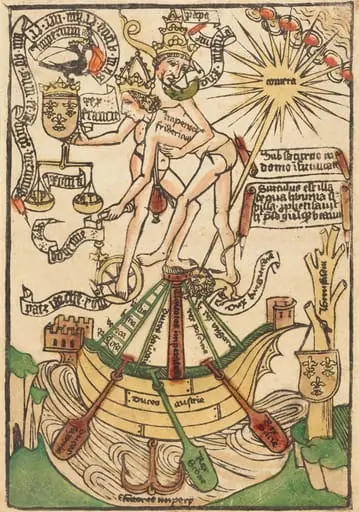 Allegory of the Meeting of Pope Paul II and Emperor Frederick III
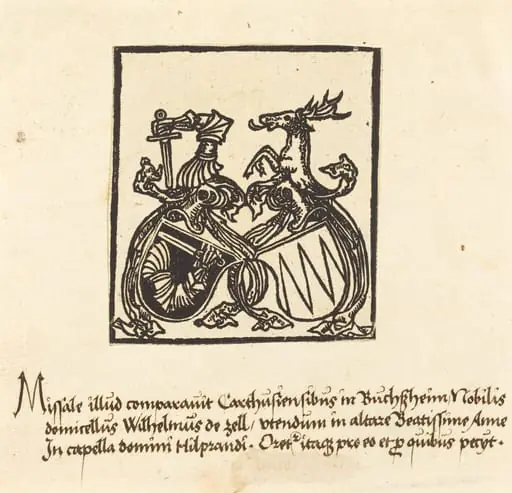 Bookplate of Wilhelm von Zell
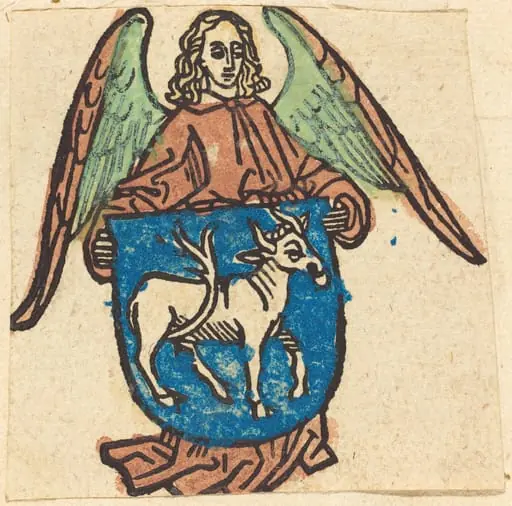 Bookplate of Hilprand Brandenburg of Bibrach
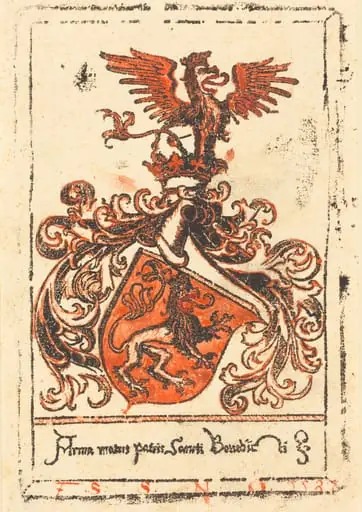 Bookplate of the Abbey of Ottobeuren
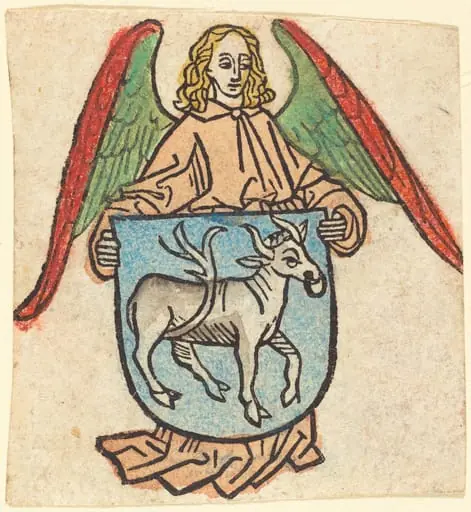 Bookplate of Hilprand Brandenburg of Bibrach
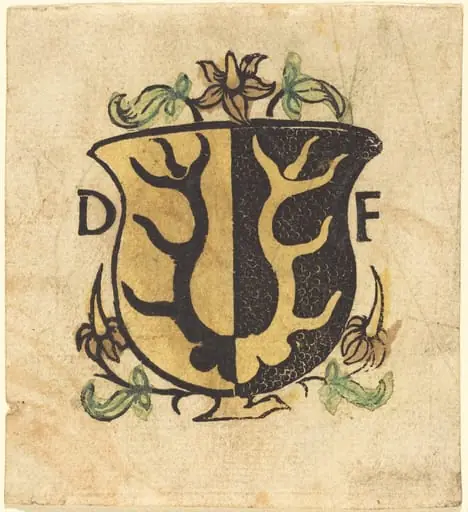 Bookplate of Dominicus Frauenfelder
![Studies for Six Figures (sheet from a model book) [recto], by German 15th Century](https://artifactworldgallery.com/img/german-15th-century--studies-for-six-figures-sheet-from-a-model-book-recto--4837429e0755bc3f-w320.webp) Studies for Six Figures (sheet from a model book) [recto]
Studies for Six Figures (sheet from a model book) [recto]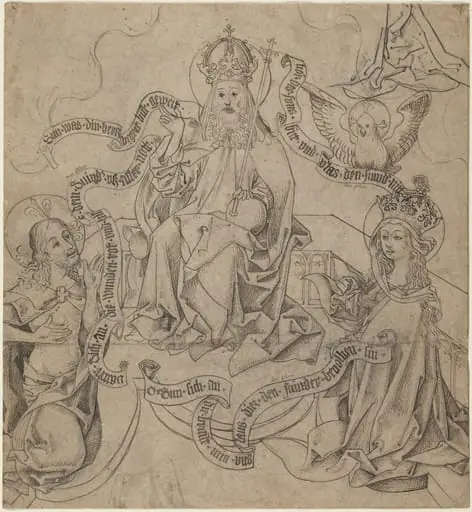 Christ and Mary Interceding with God the Father
 Icoana de factură catolică îl reprezintă pe sfântul Teodor Tiron (306 d. Hr) sărbătorit pe 17 februarie.Sf. Teodor înveșmântat ca oștean: coif cu pene, armura și mantie roșie. În dreapta ține un coif cu stânga sulița. În planul doi o biserică catolică. Pe fondul alb, de o parte și alta a sfântului câte tulpină cu o floare roșie. Cromatica: predomină roșul(inclusiv ca desen) albastru, bleu, negru, maro, auriu, verde deschis, verde închis, fond alb.Ramă îngustă, patru stinghiii îmbinate oblic la colțuri.
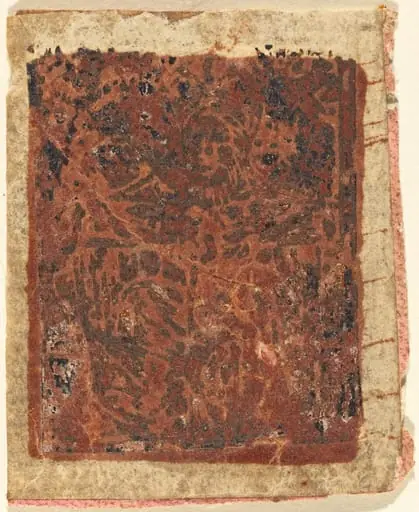 Trinity
 Desen după Gericault
 Saint Michael
 Sheet with Flower and Diamond Pattern
 Fragment of an Arch (tracing from recto) (verso)
 Page from Tales of a Parrot (Tuti-nama): blank page
 Saint Franciscus
 Madonna and Child
 Saint George
 The Flagellation of Christ
 Pescar din Babadag (schiță de portret - pentru studiu)