Artwork
Saint Catherine of Alexandria
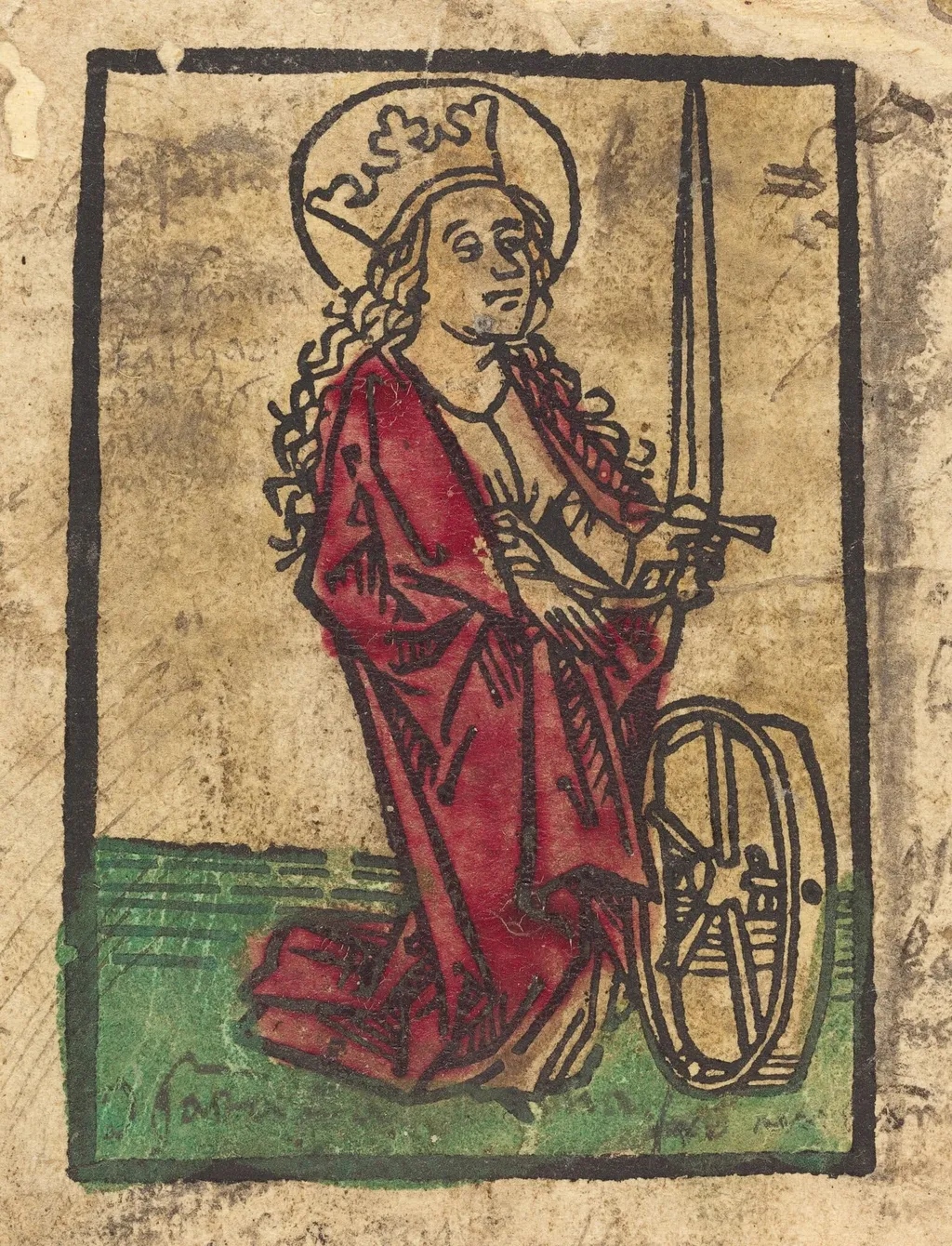
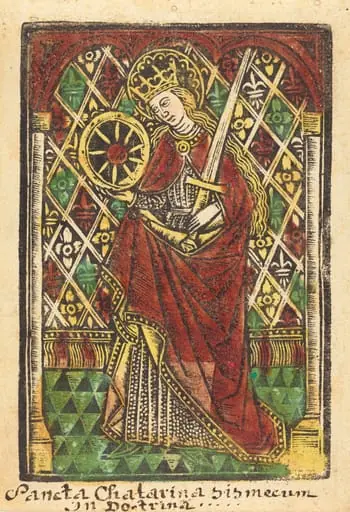
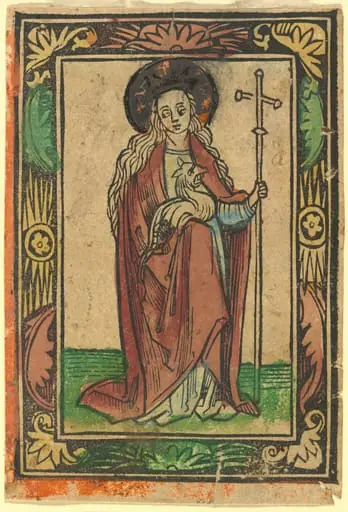
Saint Catherine of Alexandria is an ink print by the Renaissance artist German 15th Century. It dates from 1480 and is held in the collection of the National Gallery of Art.
About this work
Overview
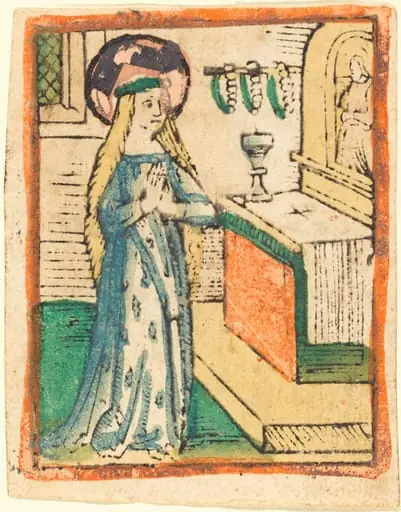
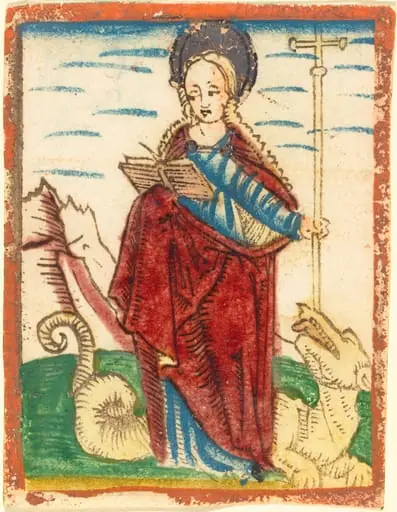
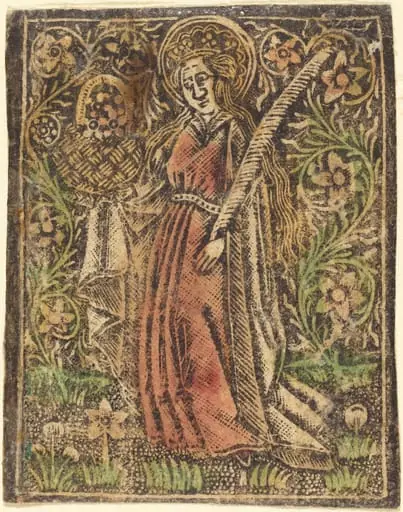
The work is a hand‑colored woodcut portraying Saint Catherine of Alexandria. Executed in a single printed sheet, the image is enhanced with red, green and yellow pigments applied after printing, giving the figure vivid accents against a modest background.
Subject & Meaning
Saint Catherine appears centrally, attired in elaborate medieval dress that signifies her noble status and martyrdom. Traditional attributes—such as a wheel or crown—are suggested by surrounding symbols, identifying her as the learned virgin who suffered for her faith.
Technique & Style
The image was produced by carving a design into a wooden block, inking the raised surfaces, and pressing paper onto it. After the print dried, artisans applied color by hand, a common practice in early modern Europe to enrich monochrome woodcuts with limited hues.
History & Provenance
The piece belongs to the tradition of devotional prints circulated in the 15th–16th centuries, when hand‑colored woodcuts served both private contemplation and wider religious instruction. Its specific origin and ownership history remain undocumented.
Context
Woodcut prints like this were affordable alternatives to painted panels, allowing the veneration of saints to reach a broader audience. The use of bright pigments reflects contemporary tastes for visually striking yet accessible religious imagery.
Artist & collection

Artist
This 15th-century German artist carved vivid religious scenes into metal and wood, then hand-painted them in bright, symbolic colors.

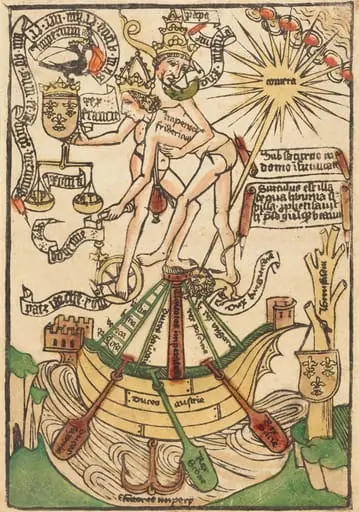 Allegory of the Meeting of Pope Paul II and Emperor Frederick III
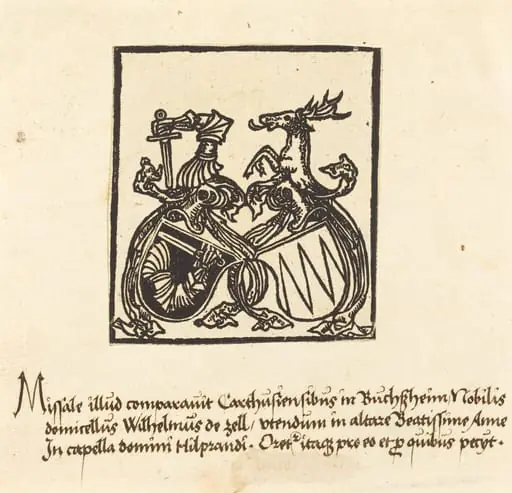 Bookplate of Wilhelm von Zell
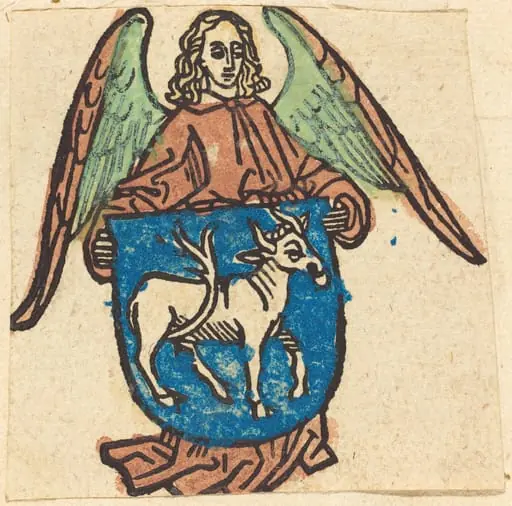 Bookplate of Hilprand Brandenburg of Bibrach
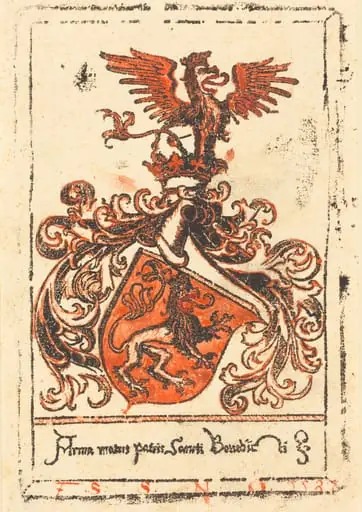 Bookplate of the Abbey of Ottobeuren
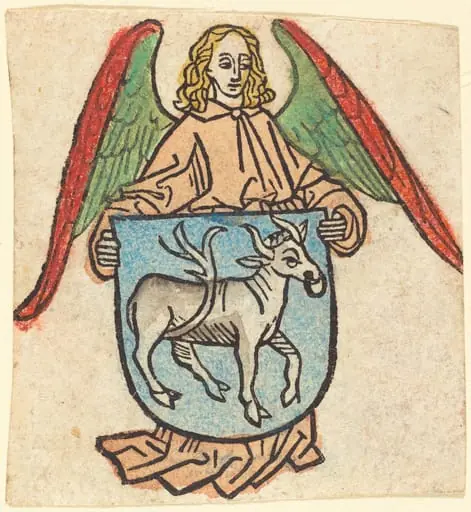 Bookplate of Hilprand Brandenburg of Bibrach
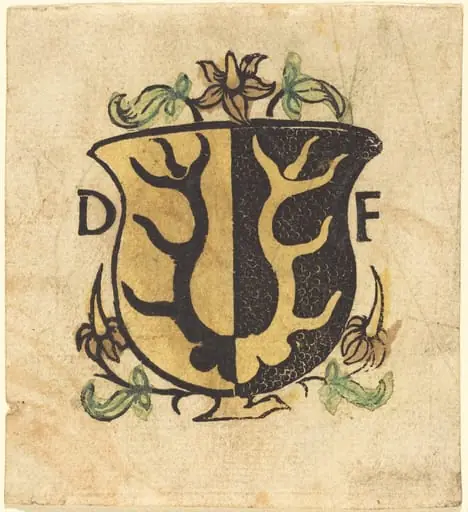 Bookplate of Dominicus Frauenfelder
![Studies for Six Figures (sheet from a model book) [recto], by German 15th Century](https://artifactworldgallery.com/img/german-15th-century--studies-for-six-figures-sheet-from-a-model-book-recto--4837429e0755bc3f-w320.webp) Studies for Six Figures (sheet from a model book) [recto]
Studies for Six Figures (sheet from a model book) [recto]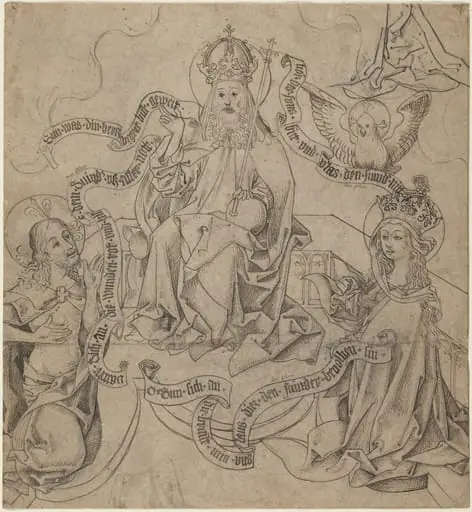 Christ and Mary Interceding with God the Father