Artwork
The Embalming of Christ
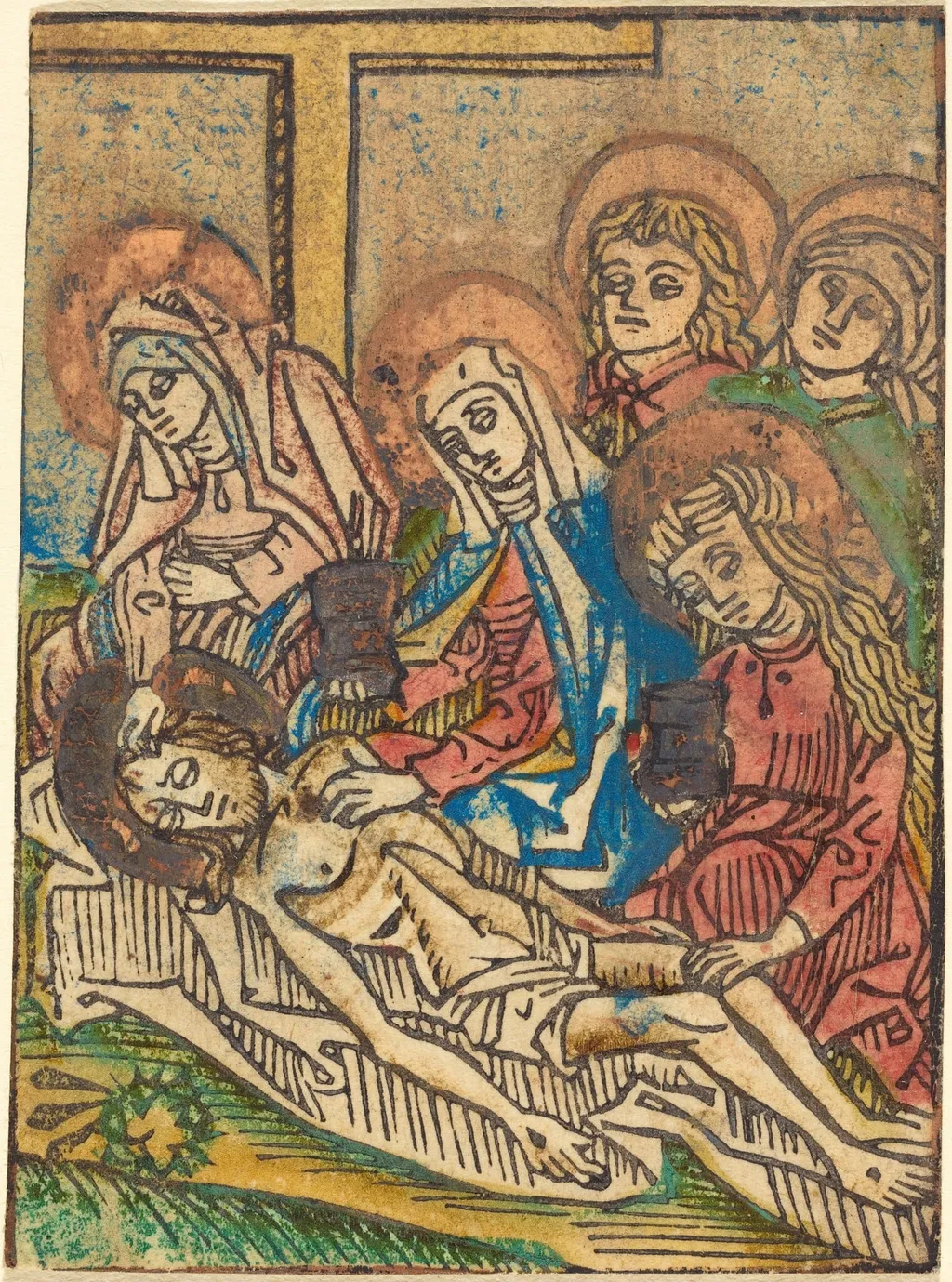
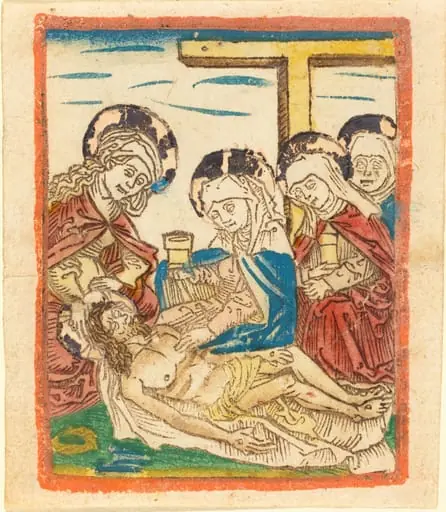
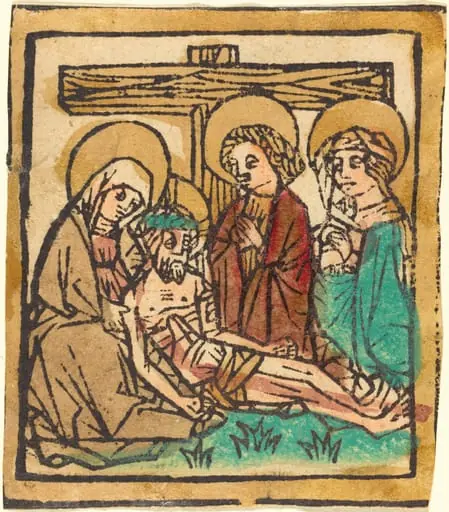
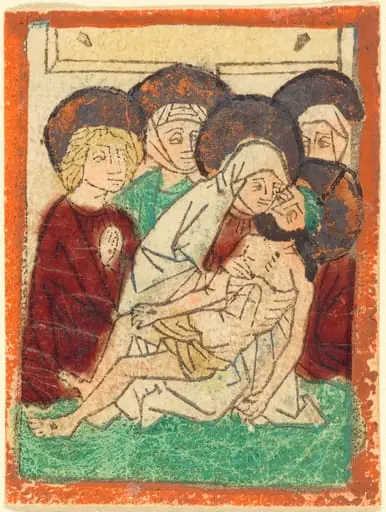
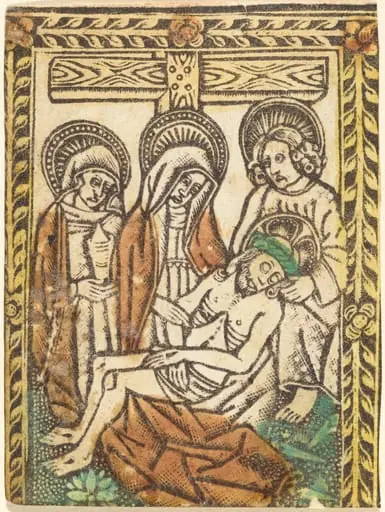
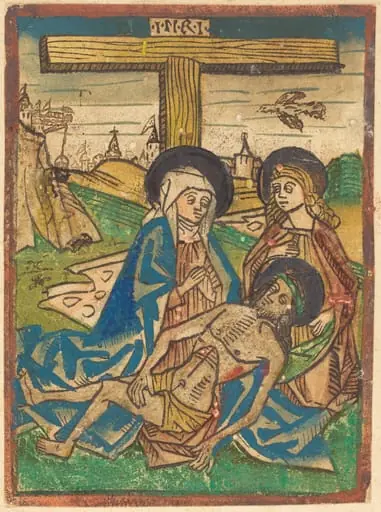
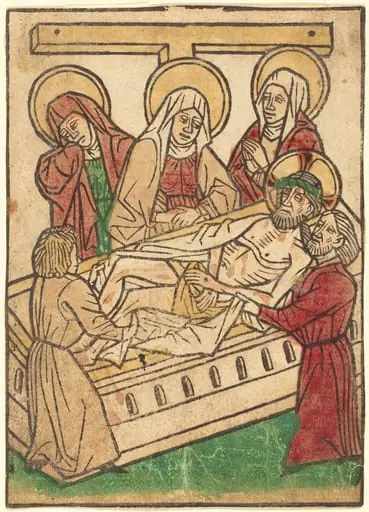
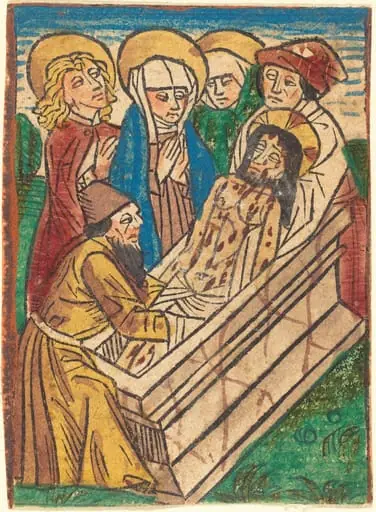
The Embalming of Christ is an ink print by the Renaissance artist German 15th Century. It dates from 1485 and is held in the collection of the National Gallery of Art. The work is a 15th‑century German woodcut that depicts the post‑mortem preparation of Christ.
About this work
The artist used a lot of red and gold, which were expensive colors at the time, showing the importance of the scene.
This painting shows a scene of Jesus being embalmed after his death.
It's a somber moment.
The colors used are mostly dark, which adds to the mood.
The artist used a lot of red and gold, which were expensive colors at the time, showing the importance of the scene.
This suggests the artist wanted to emphasize the significance of the event.
You can learn more about this style by looking at the work of the artist: German 15th Century.
Overview
The work is a 15th‑century German woodcut that depicts the post‑mortem preparation of Christ. Executed as a print, the image is enhanced with hand‑applied pigments—red lake, blue, green, yellow and gold—giving it a limited but striking palette.
Subject & Meaning
The scene captures the moment of Christ’s embalming, a rare visual focus on the physical handling of the dead body. The composition conveys a solemn atmosphere, emphasizing the humanity and sacrifice of the figure through its restrained, mournful tone.
Technique & Style
Carved from a single wood block, the print relies on line work to define form, while the subsequent hand‑coloring adds selective highlights. The use of costly pigments such as red lake and gold leaf underscores the devotional importance attributed to the subject within the medieval visual tradition.
History & Provenance
Produced in the German lands during the 1400s, the piece belongs to a period when woodcut prints were increasingly used for religious illustration. Its survival in a hand‑colored state suggests it was intended for a wealthy patron or ecclesiastical setting.
Context
In the late medieval era, the Passion narrative was frequently visualized, yet scenes of Christ’s preparation for burial were less common. This work reflects contemporary theological interest in the corporeal reality of the crucifixion and the reverence afforded to the body of Christ.
Artist & collection

Artist
This 15th-century German artist carved vivid religious scenes into metal and wood, then hand-painted them in bright, symbolic colors.

 Allegory of the Meeting of Pope Paul II and Emperor Frederick III
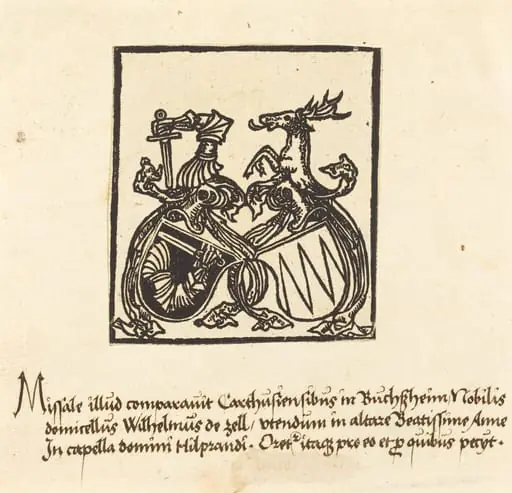 Bookplate of Wilhelm von Zell
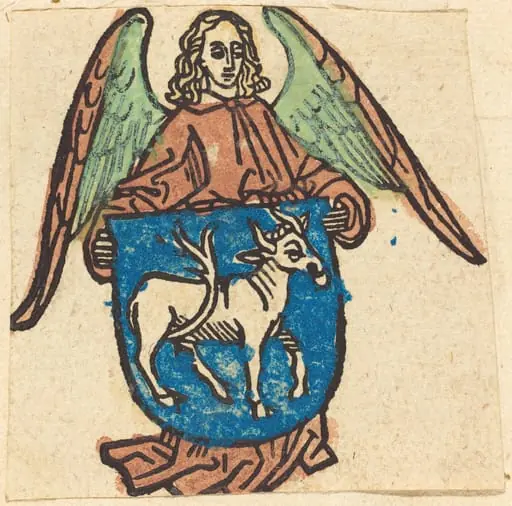 Bookplate of Hilprand Brandenburg of Bibrach
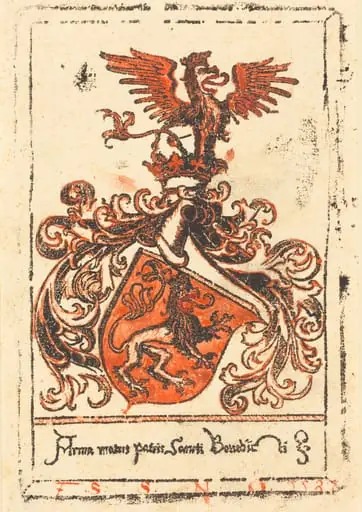 Bookplate of the Abbey of Ottobeuren
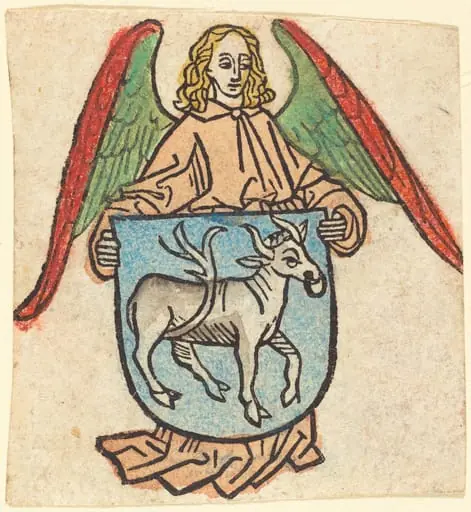 Bookplate of Hilprand Brandenburg of Bibrach
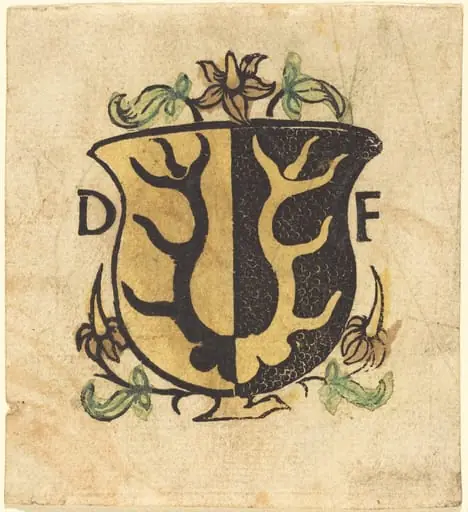 Bookplate of Dominicus Frauenfelder
![Studies for Six Figures (sheet from a model book) [recto], by German 15th Century](https://artifactworldgallery.com/img/german-15th-century--studies-for-six-figures-sheet-from-a-model-book-recto--4837429e0755bc3f-w320.webp) Studies for Six Figures (sheet from a model book) [recto]
Studies for Six Figures (sheet from a model book) [recto]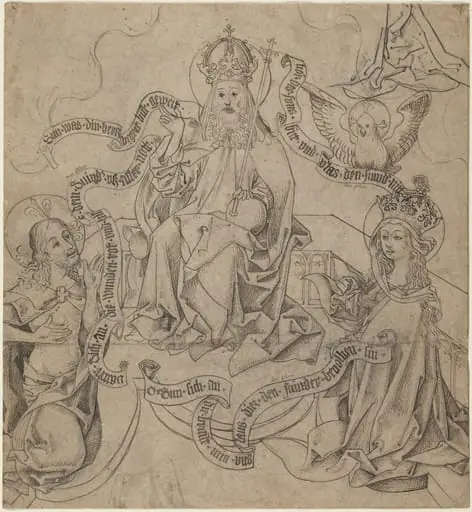 Christ and Mary Interceding with God the Father