Artwork
The Holy Ghost
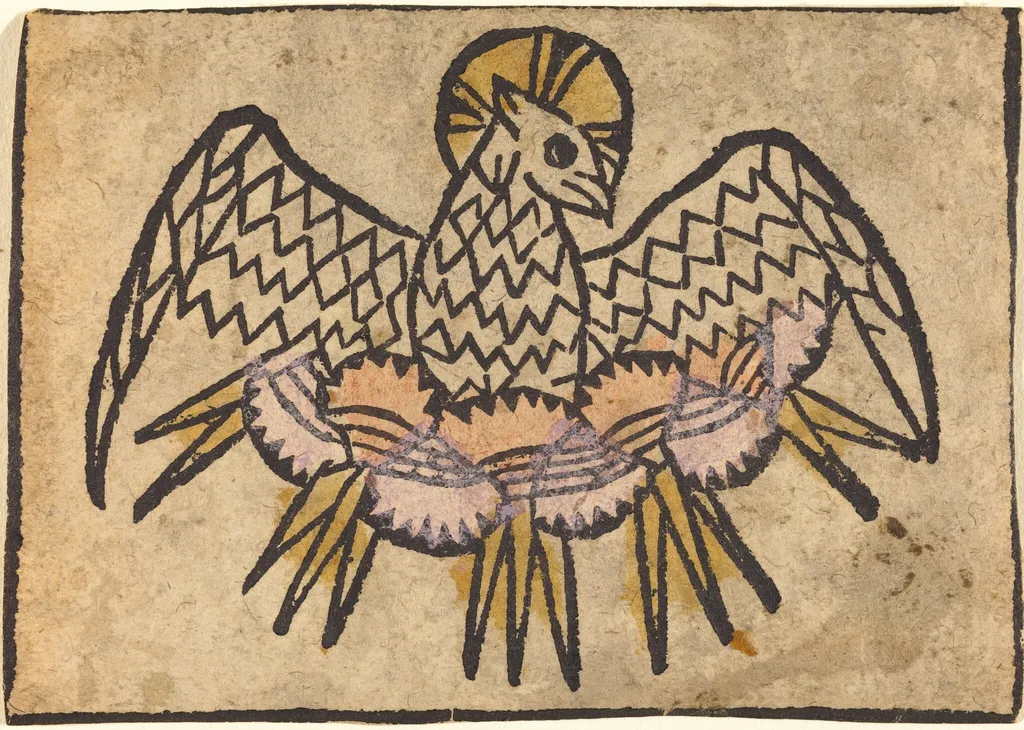
The Holy Ghost is an ink print by the Renaissance artist German 15th Century. It dates from 1465 and is held in the collection of the National Gallery of Art.
About this work
Overview
This woodcut print, hand-colored in yellow, lavender, and rose, presents a stylized avian form, traditionally interpreted as the Holy Ghost.
This woodcut print, hand-colored in yellow, lavender, and rose, presents a stylized avian form, traditionally interpreted as the Holy Ghost. Executed with clean, bold outlines and minimal shading, the image emphasizes flat, decorative surfaces over naturalistic depth. The warm beige background enhances the muted hues of the bird’s plumage, creating a quiet, meditative atmosphere consistent with devotional imagery of the period.
Subject & Meaning
The bird, rendered with outstretched wings, symbolizes the Holy Spirit in Christian iconography. Its geometric patterns on the body suggest divine order and spiritual harmony, aligning with Renaissance theological emphasis on symbolic structure. The simplicity of form and restrained palette reflect a focus on sacred essence rather than physical realism, inviting contemplation rather than narrative engagement.
Technique & Style
The image is a hand-colored woodcut, a technique common in early printed devotional works. Lines are crisp and unmodulated, with color applied sparingly in flat washes of yellow, lavender, and rose. The absence of shading and the use of repeating geometric motifs create a rhythmic, almost textile-like surface, characteristic of Northern European printmaking traditions that prioritized clarity and symbolic resonance over illusionism.
History & Provenance
The print is held in the collection of the National Gallery of Art in Washington, D.C., though its exact origin and maker remain undocumented. Likely produced in the early 16th century, it reflects the widespread use of printed images for private devotion during the Reformation era. Its survival in good condition suggests it was carefully preserved, possibly within a religious or scholarly household.
Context
Created during a period when printed images circulated widely among lay devotees, this work aligns with the rise of personal piety and the use of visual symbols to convey theological concepts. While Italian Renaissance painting favored naturalism, Northern European artists often favored symbolic abstraction, especially in prints. This piece exemplifies that regional preference, merging spiritual symbolism with the accessibility of print technology.
Legacy
Though not attributed to a known artist, the print contributes to the broader understanding of how sacred imagery was adapted for mass reproduction. Its restrained aesthetic influenced later devotional prints and remains a quiet example of how simplicity could convey theological depth. It stands as a testament to the role of print in shaping individual religious experience in early modern Europe.
Artist & collection

Artist
This 15th-century German artist carved vivid religious scenes into metal and wood, then hand-painted them in bright, symbolic colors.

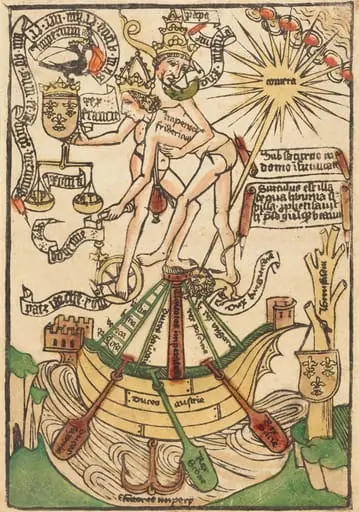 Allegory of the Meeting of Pope Paul II and Emperor Frederick III
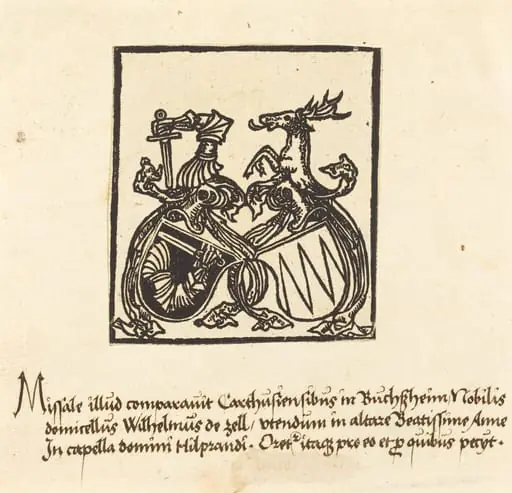 Bookplate of Wilhelm von Zell
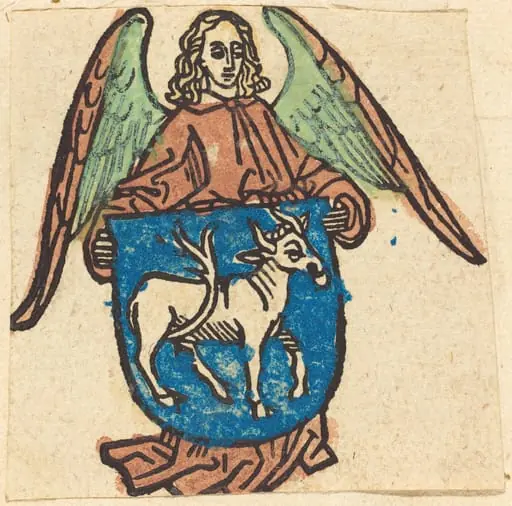 Bookplate of Hilprand Brandenburg of Bibrach
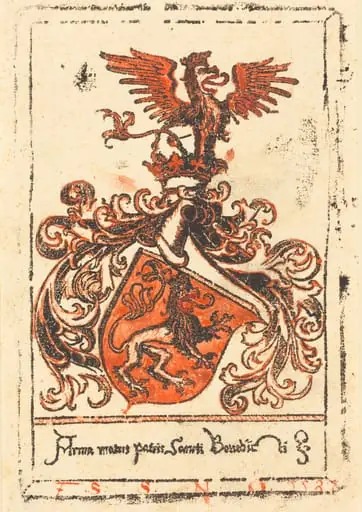 Bookplate of the Abbey of Ottobeuren
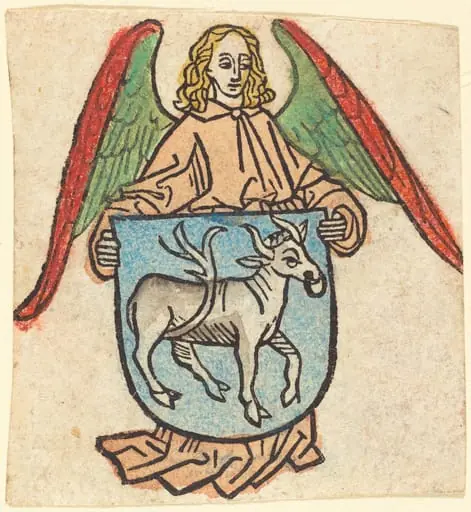 Bookplate of Hilprand Brandenburg of Bibrach
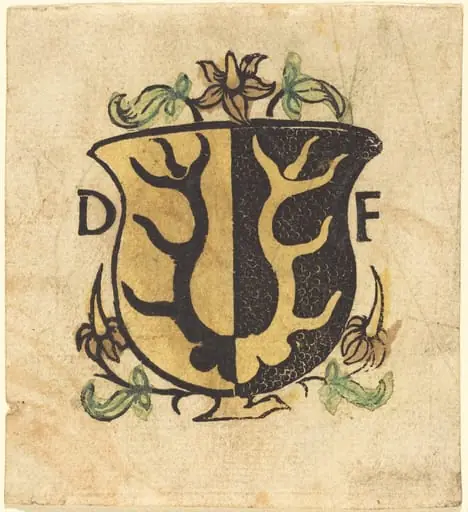 Bookplate of Dominicus Frauenfelder
![Studies for Six Figures (sheet from a model book) [recto], by German 15th Century](https://artifactworldgallery.com/img/german-15th-century--studies-for-six-figures-sheet-from-a-model-book-recto--4837429e0755bc3f-w320.webp) Studies for Six Figures (sheet from a model book) [recto]
Studies for Six Figures (sheet from a model book) [recto]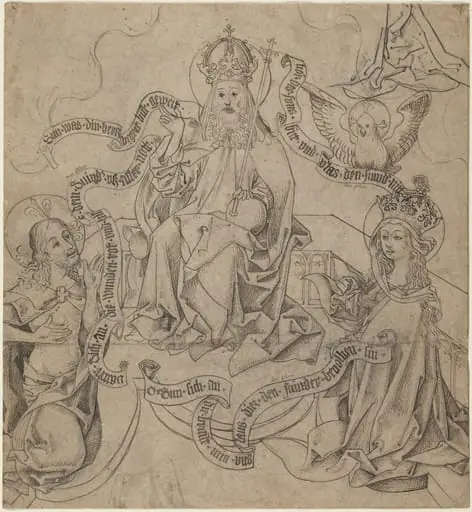 Christ and Mary Interceding with God the Father
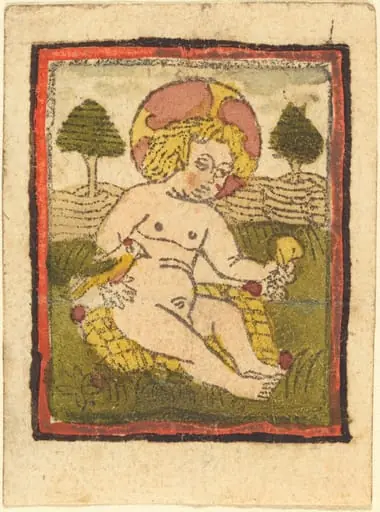 Christ Child with Bird
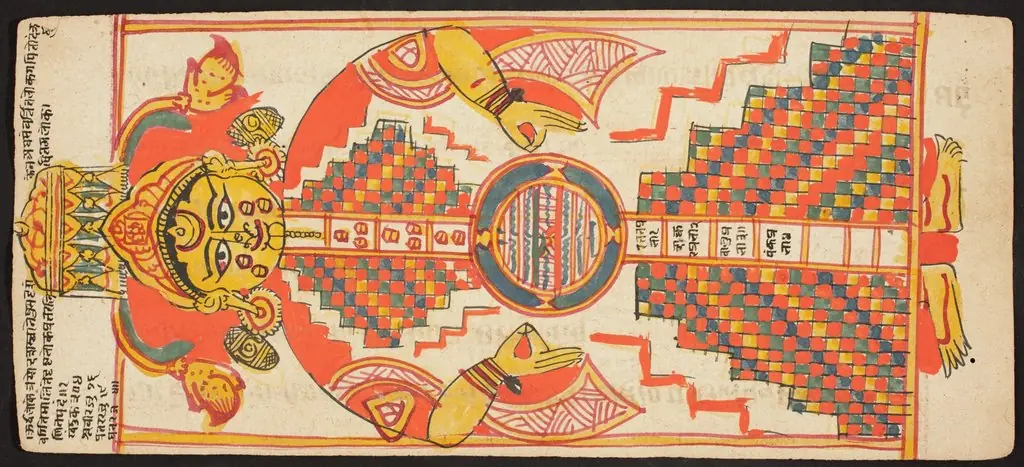 Tantric Manuscript "Sangrahani Sutra"
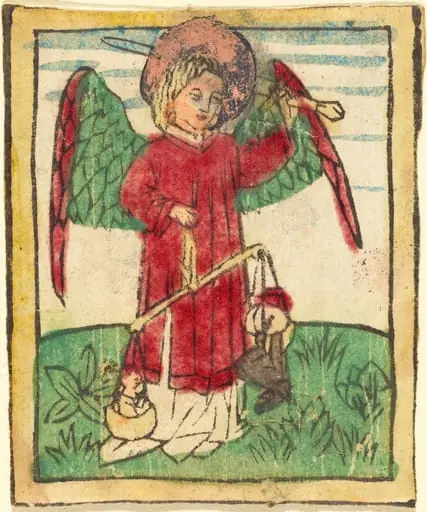 Saint Michael
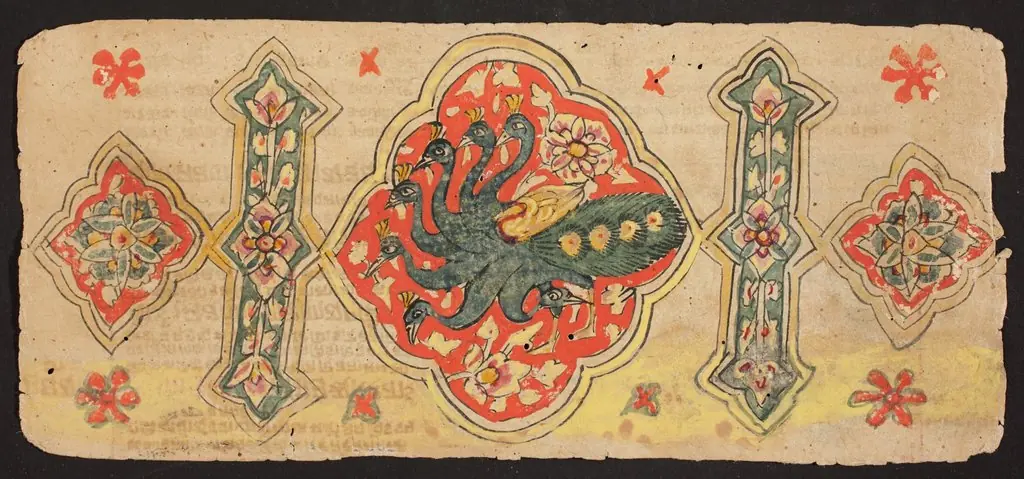 Tantric Manuscript "Sangrahani Sutra"
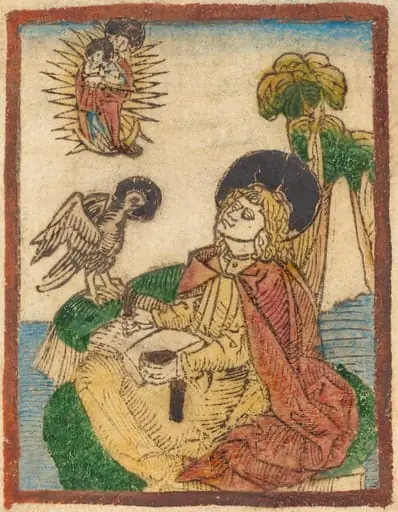 Saint John on the Island of Patmos
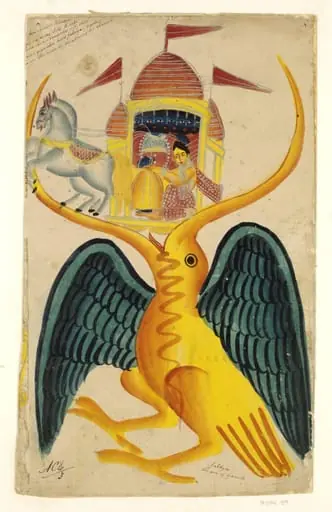 Ravana, Sita and Jatayu
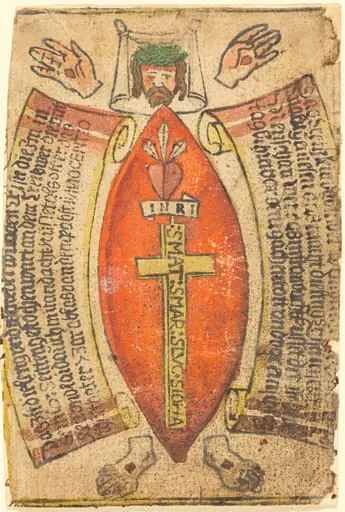 The Measure of the Side Wound and the Body of Christ
 Untitled
 Untitled
 Tantric Manuscript "Sangrahani Sutra"
 Jatayu hinders Ravana’s chariot, trying to prevent the abduction of Sita (recto), from a Kalighat album
 Tantric Manuscript "Sangrahani Sutra"