Artwork
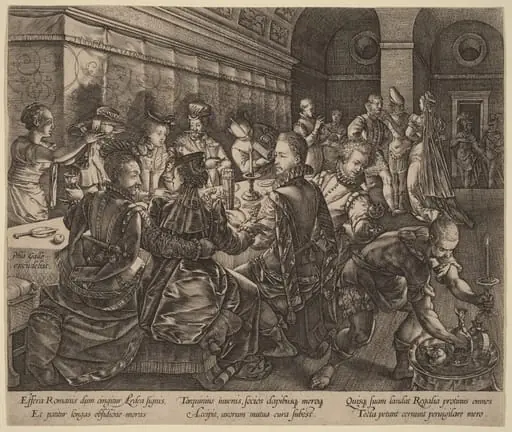
Liblich singen wir avs der Mass den Tenor discant Alt und Bass
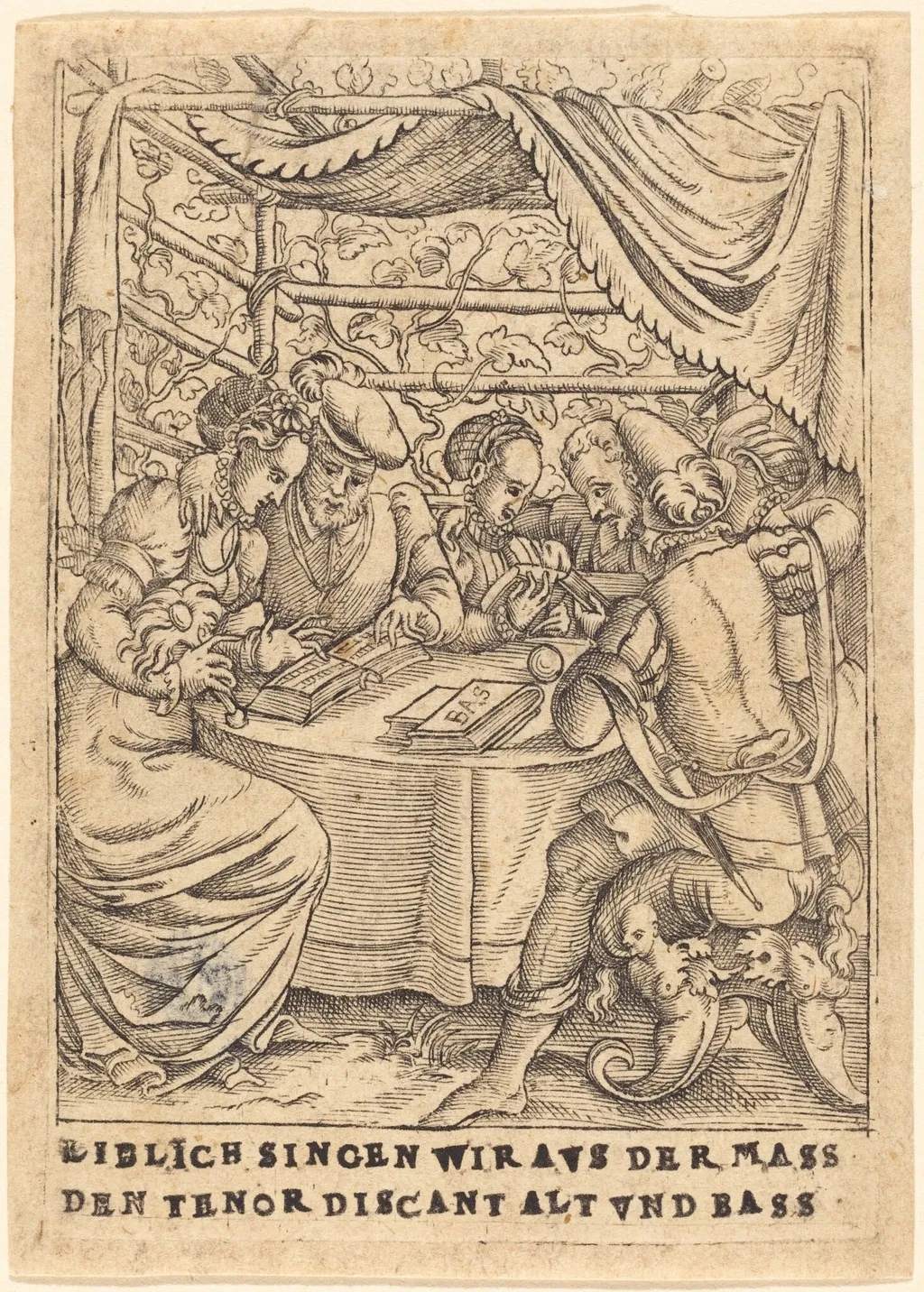
Liblich singen wir avs der Mass den Tenor discant Alt und Bass is an ink print by the Renaissance artist German 16th Century. It dates from 1580 and is held in the collection of the National Gallery of Art.
About this work
Overview
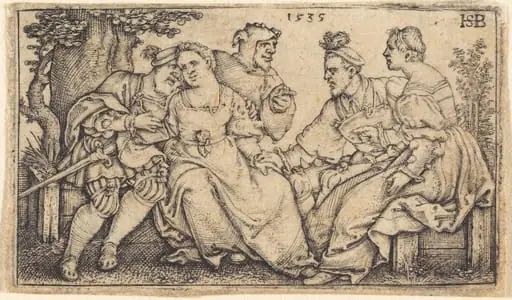
The work titled *Liblich singen wir avs der Mass den Tenor discant Alt und Bass* is an engraved print. Executed on paper, the image depicts a group of singers gathered around a music book, each turned toward the centre and reading from the same sheet. The composition is rendered with fine cross‑hatching that creates a sense of shadow and three‑dimensionality.
Subject & Meaning
The scene illustrates a communal act of worship, likely a liturgical mass, in which participants perform vocal parts designated as tenor, discant, alto and bass. By showing the singers in a circle, the print emphasizes collective participation and the shared focus on the sacred text.
Technique & Style
Engraving, the chosen technique, involves incising lines into a metal plate with a burin. The artist filled these incised grooves with ink and transferred the image onto paper under pressure. The work is distinguished by dense hatch work that models light, fabric folds, and the spatial relationships among the figures.
History & Provenance
The print is part of a broader corpus of early modern religious prints. Comparable examples are held by institutions such as the National Gallery of Art in Washington, D.C., indicating that the image circulated within a network of devotional prints during its period of production.
Artist & collection

Artist
A German artist from the late 1500s drew lively scenes of knights clashing in parades and mock battles.

![Abraham Entertaining the Angels [verso], by German 16th Century](https://artifactworldgallery.com/img/german-16th-century--abraham-entertaining-the-angels-verso--69d1b25f4eba0a53-w320.webp)