Artwork
Endpaper with the Twelve Months
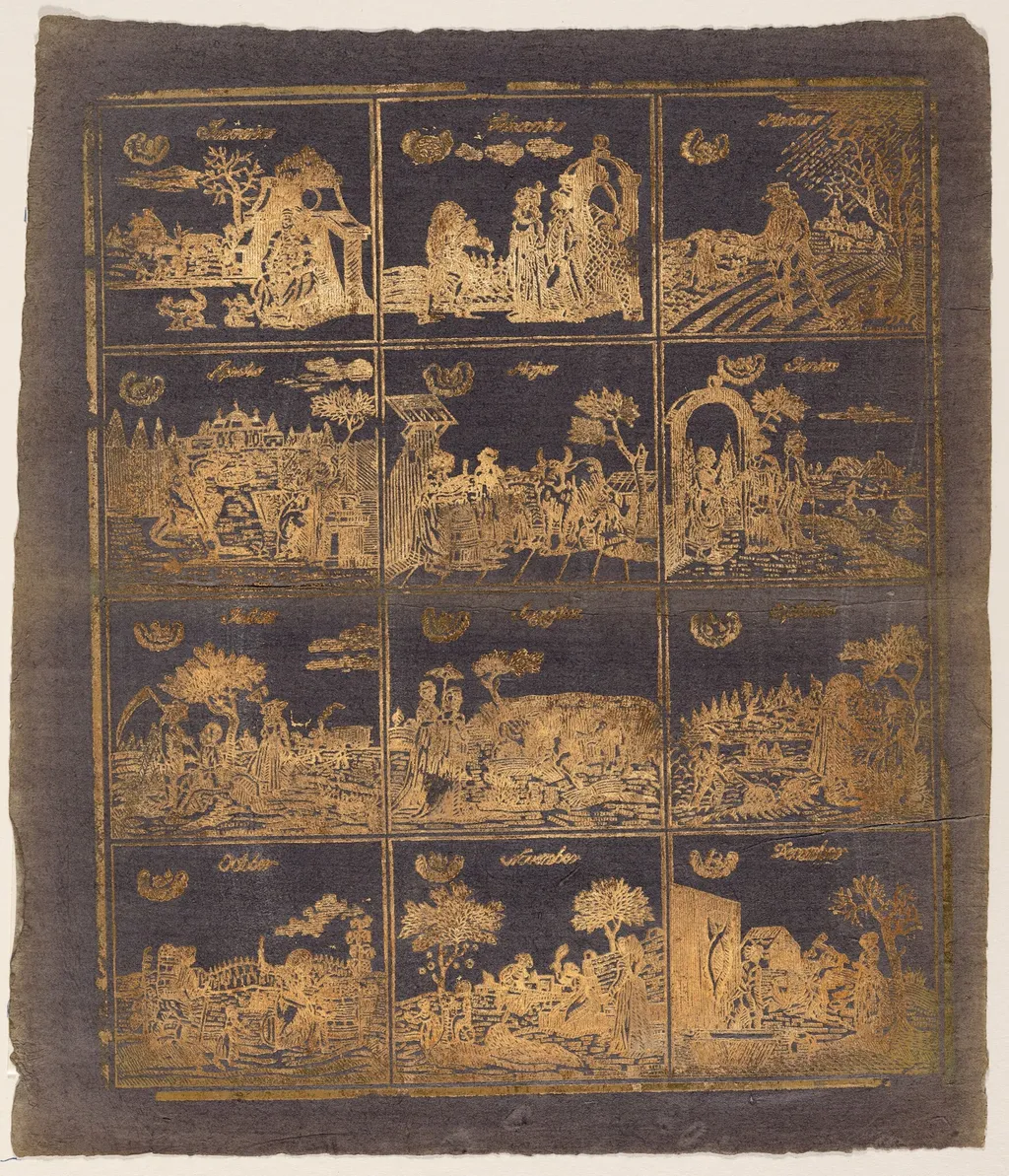
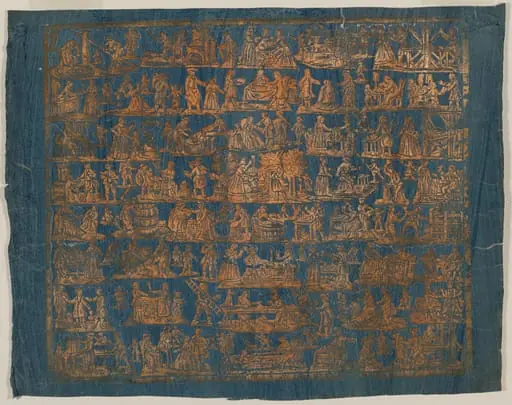
Endpaper with the Twelve Months is an ink print by the Baroque artist German 18th Century. It dates from 1750 and is held in the collection of the National Gallery of Art. This printed endpaper features twelve small scenes, each representing a month of the year, arranged in a uniform grid.
About this work
Overview
The deep violet background enhances the luminous quality of the gold, creating a subtle contrast that draws attention to the seasonal activities depicted.
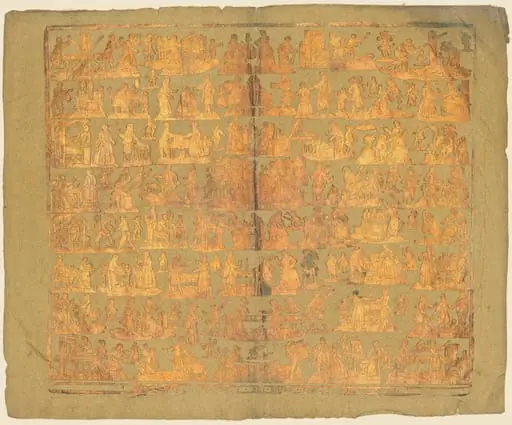
This printed endpaper features twelve small scenes, each representing a month of the year, arranged in a uniform grid. Executed as a woodcut in gold metallic ink on hand-washed purple paper, the design combines intricate detail with restrained color. The deep violet background enhances the luminous quality of the gold, creating a subtle contrast that draws attention to the seasonal activities depicted. The entire composition is contained within a clean, framing border.
Subject & Meaning
Each of the twelve squares illustrates a typical labor or seasonal ritual associated with its corresponding month—harvesting, pruning, feasting, or resting. These vignettes reflect the agrarian calendar, grounding the design in the rhythms of rural life. The scenes are not narrative but symbolic, serving as a visual almanac. Their quiet repetition suggests the cyclical nature of time, offering a meditative structure rather than a story.
Technique & Style
The image was produced using a woodcut technique, where carved blocks were inked and pressed onto paper. Gold metallic ink was applied selectively to highlight figures and details, creating a luminous effect against the dark purple ground. The precision of the lines and the uniformity of the grid indicate careful planning. The paper’s hand-washed texture adds a tactile softness, contrasting with the sharpness of the carved forms.
History & Provenance
This endpaper likely originated in a late medieval or early Renaissance manuscript, used to line the inside covers of bound books. Its survival in good condition suggests it was protected within a volume of value. While its exact origin is unrecorded, similar examples are found in Northern European bookbinding traditions, where decorative endpapers served both aesthetic and protective functions.
Context
In the pre-printing era, such decorative sheets were often produced for liturgical or scholarly volumes, reinforcing the passage of time through visual cues. The use of gold ink, though costly, was reserved for works of religious or elite significance. The twelve-month cycle aligns with medieval ecclesiastical calendars, linking daily labor to the broader rhythms of the Church year and agricultural life.
Legacy
Though not widely known today, this type of decorative print influenced later bookbinding practices and calendar illustrations. Its combination of function and artistry reflects a pre-industrial approach to design, where utility and beauty coexisted. Surviving examples like this one offer insight into how ordinary objects were elevated through craftsmanship and symbolic content.
Artist & collection
Artist
This artist kept meticulous endpapers—like secret notebooks—filled with tiny gold figures standing in a row.

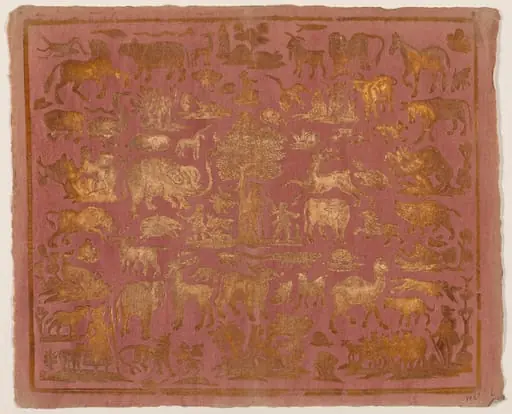
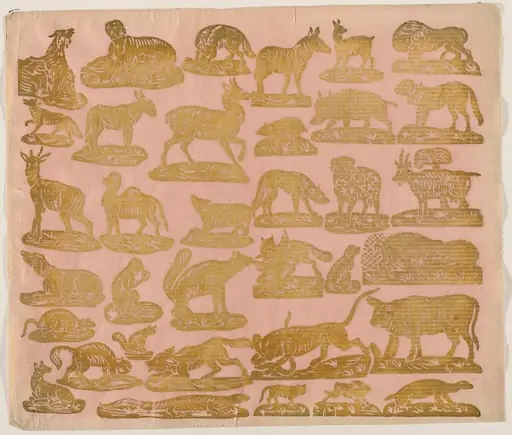 Endpaper with Animals
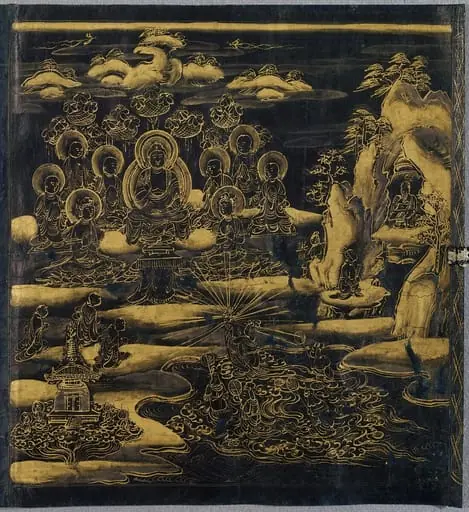 『妙法蓮華経』 「提婆達多品第十二」|“Devadatta,” Chapter 12 of the Lotus Sutra (Hoke-kyō, Daibadatta-bon)
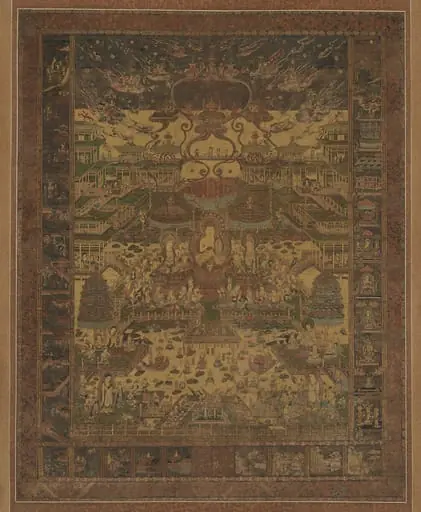 当麻曼荼羅図|Taima Mandala
 Endpaper with Scenes of the Trades
 Endpaper with Scenes from the Life of a Knight
 當麻曼荼羅図 |Taima Mandala
 Playing Card
 Album of Daoist and Buddhist Themes: Procession of Daoist Deities: Leaf 3
 Endpaper with Scenes of the Trades
 Endpaper with Animals