Artwork
Endpaper - "Zwarg Gesellschaft"
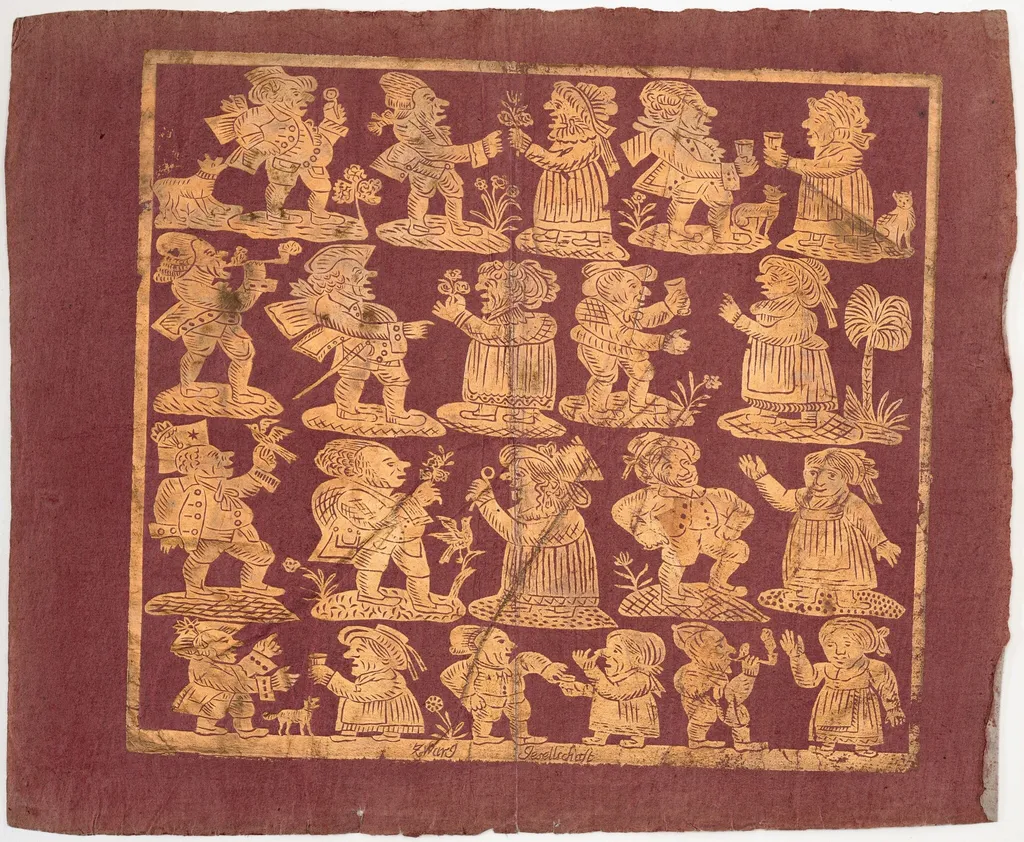
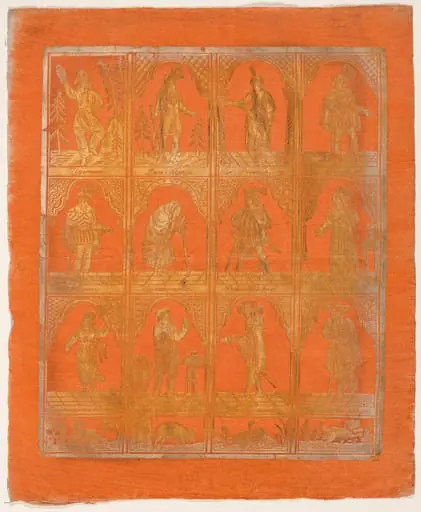
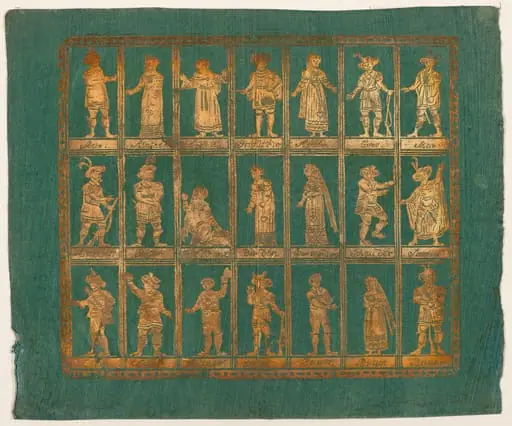
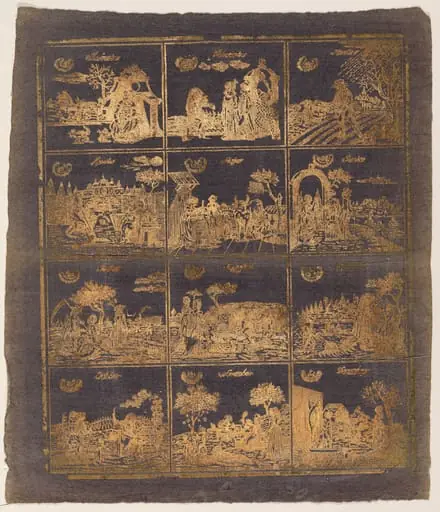
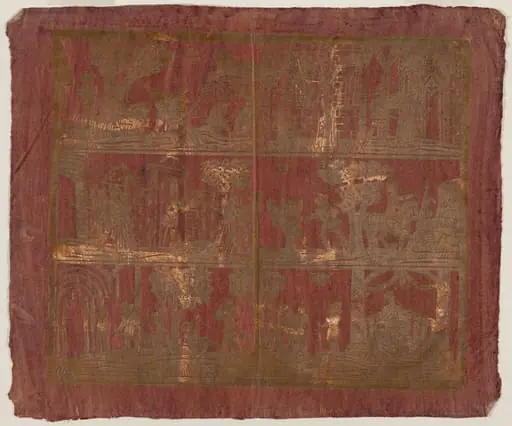
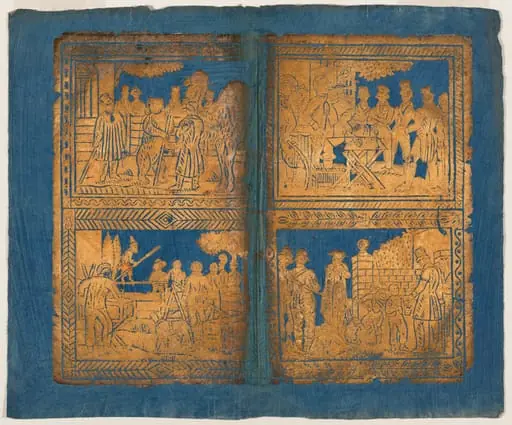
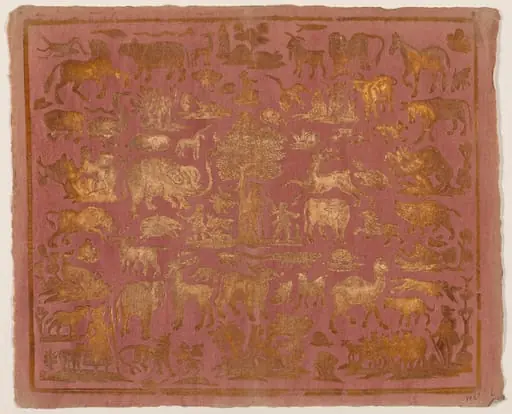
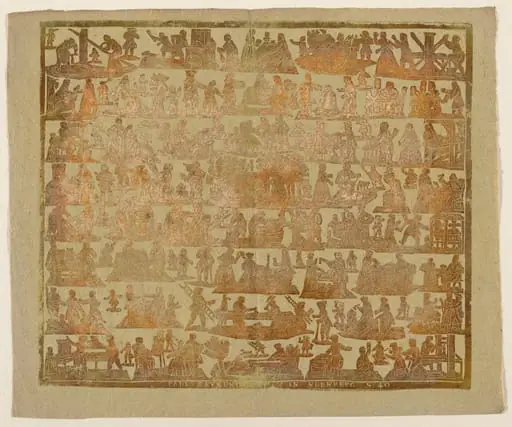
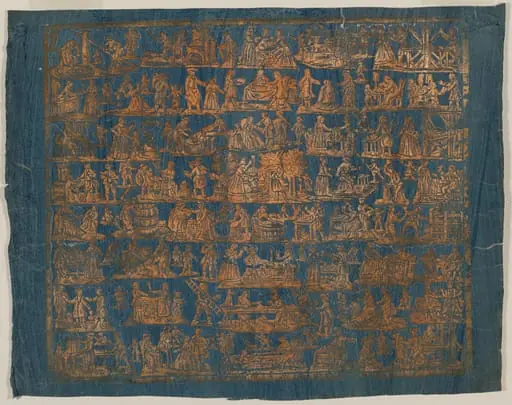
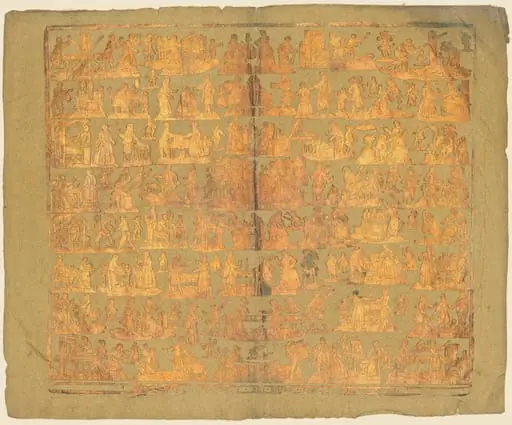
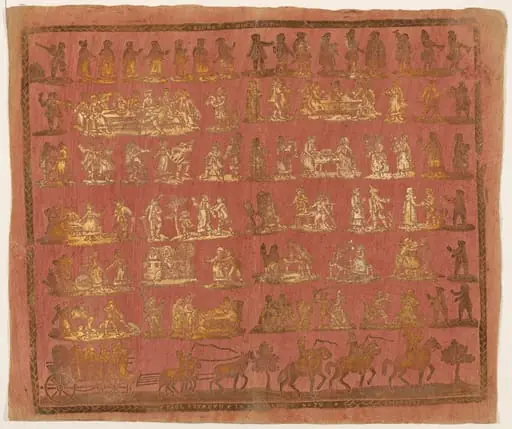
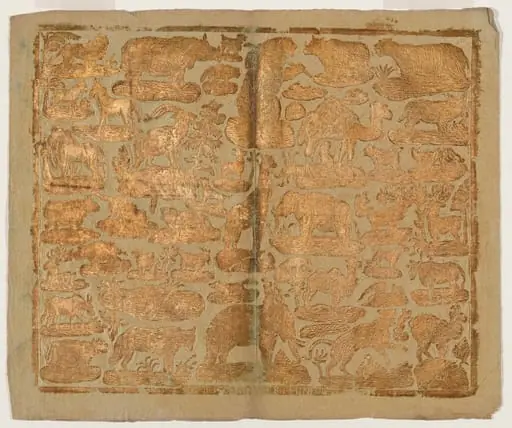
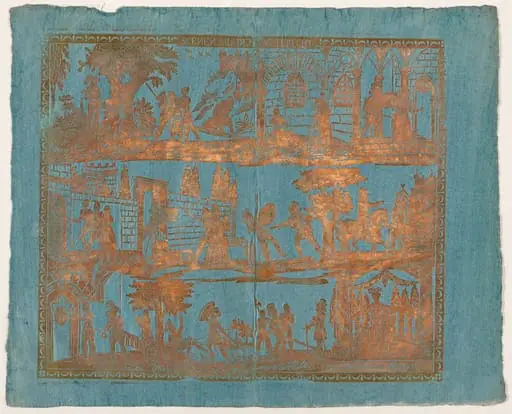
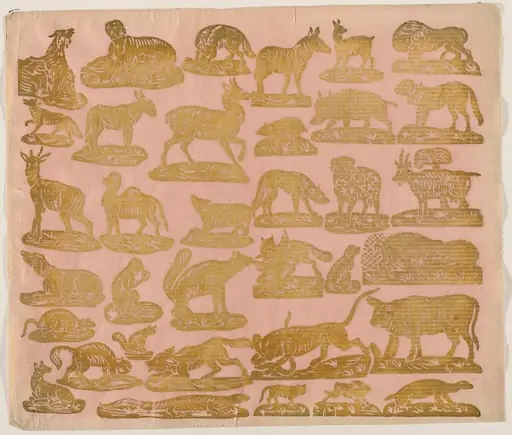
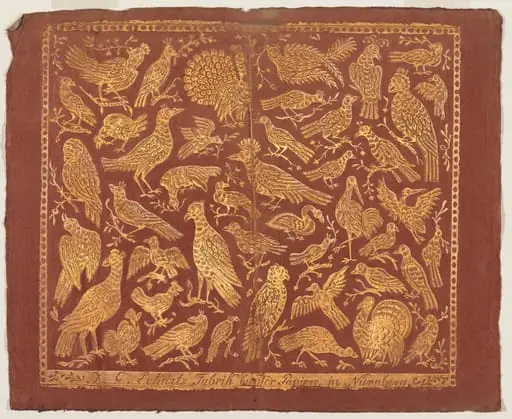
Endpaper - "Zwarg Gesellschaft" is an ink print by the Romanticist artist German 18th Century. It dates from 1780 and is held in the collection of the National Gallery of Art. Endpaper - 'Zwarg Gesellschaft' is a woodcut print on brocade endpaper, characterized by a deep rose paper background and gold outlines.
About this work
Overview
Endpaper - 'Zwarg Gesellschaft' is a woodcut print on brocade endpaper, characterized by a deep rose paper background and gold outlines. The composition features a lively, patterned arrangement of numerous small, eccentric figures.
Subject & Meaning
The scene depicts a gathering of oddly dressed individuals, conveying a sense of communal festivity. Figures engage in various activities, such as playing musical instruments or holding cups, evoking a atmosphere of joy and solemnity. The eccentric attire and expressions suggest a commentary on societal diversity or satire.
Technique & Style
Executed as a woodcut, the piece utilizes bold, gold outlines on a rich, deep rose prepared paper. The contrast between the golden figures and red background creates visual vibrancy, while the arranged rows of figures imply a blend of spontaneity and compositional order.
Context
The work's themes of communal gathering and potential social commentary situate it within a tradition of satirical or observational prints, common in European art historical contexts where woodcuts were used to convey social messages.
Legacy
While specific influence or direct legacy of 'Zwarg Gesellschaft' is not detailed here, its style and technique reflect a broader appreciation for woodcut art, encouraging viewers to explore the medium further.
Artist & collection
Artist
This artist kept meticulous endpapers—like secret notebooks—filled with tiny gold figures standing in a row.