Artwork
The Triumphs of Caesar: The Elephants
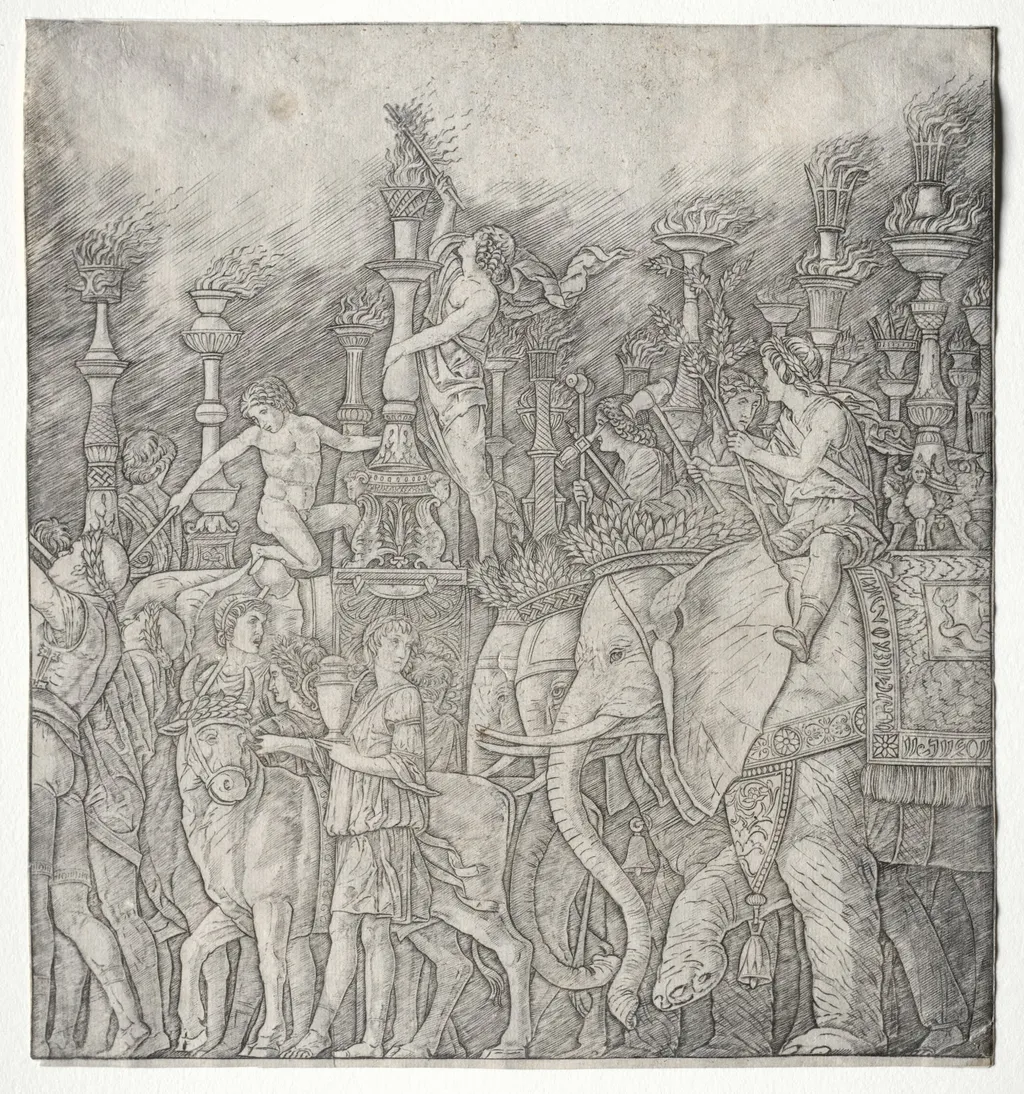
The Triumphs of Caesar: The Elephants is a print by the Renaissance artist Giovanni Antonio da Brescia. It dates from 1490 and is held in the collection of the Cleveland Museum of Art.
About this work
Overview
It captures a ceremonial procession from ancient Rome, emphasizing the spectacle of war trophies, particularly elephants bearing torch-lit towers.
Created around 1490 by Giovanni Antonio da Brescia, an Italian engraver active in northern Italy, this print is one of nine in the series *The Triumphs of Caesar*. It captures a ceremonial procession from ancient Rome, emphasizing the spectacle of war trophies, particularly elephants bearing torch-lit towers. The work exemplifies early Renaissance printmaking, showcasing technical precision and narrative ambition. It is now part of the Cleveland Museum of Art’s permanent collection.
Subject & Meaning
The scene illustrates the display of elephants captured during Caesar’s military campaigns, presented as symbols of imperial power and exotic conquest. The animals, adorned with torch-bearing structures, are central to a larger procession of soldiers, attendants, and architectural elements. The composition reflects Roman tradition, where triumphal parades celebrated military victories through staged spectacle, reinforcing the authority of the victor and the reach of Roman dominion.
Technique & Style
Da Brescia employed fine, controlled lines to render dense detail across a crowded composition. Shading is used selectively to define volume and depth, guiding the viewer’s eye through layers of figures and structures. The perspective is compressed but deliberate, creating a sense of procession without full linear depth. The engraving’s clarity and rhythmic repetition of forms—torches, spears, elephant trunks—convey movement and order within chaos.
History & Provenance
Giovanni Antonio da Brescia initially signed works with the monogram 'Z.A.' before adopting more formal inscriptions by the early 1500s, indicating his growing reputation. *The Triumphs of Caesar* series was widely circulated among collectors and artists, influencing later Renaissance depictions of antiquity. The Cleveland Museum of Art acquired the print as part of its broader collection of Italian Renaissance prints, preserving its historical and artistic significance.
Context
This print emerged during a period of renewed interest in classical antiquity, when humanist scholars and artists sought to revive Roman imagery. The Triumphs series drew from textual sources and surviving Roman iconography, filtered through contemporary Northern Italian aesthetics. Engravings like this served both as artistic studies and as portable records of ancient grandeur, accessible to a growing educated elite.
Legacy
Da Brescia’s *Triumphs of Caesar* contributed to the standardization of classical themes in print form, influencing generations of engravers and painters. The series helped codify visual narratives of Roman triumph, shaping how later audiences imagined ancient processions. Though not widely known today, the work remains a key example of how Renaissance artists translated historical texts into compelling visual sequences through the medium of engraving.
Artist & collection

Artist
Giovanni Antonio da Brescia was an Italian engraver of northern Italy, active in the approximate period 1490–1519, during the Italian Renaissance.

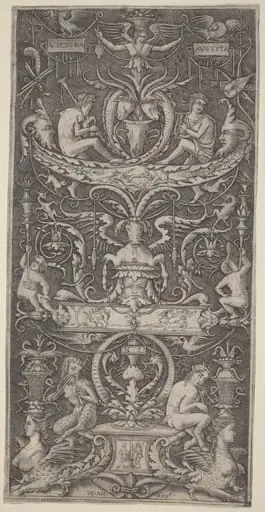
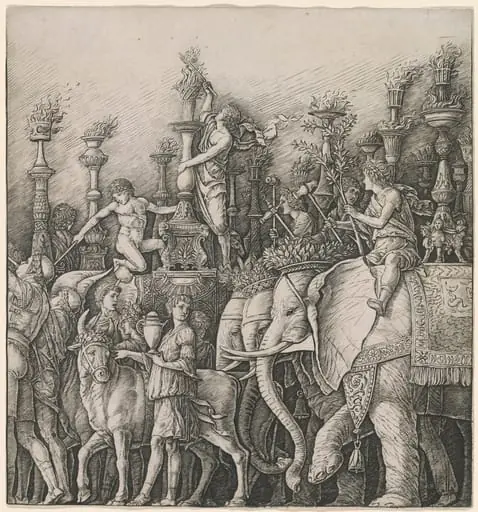 The Triumph of Caesar: The Elephants
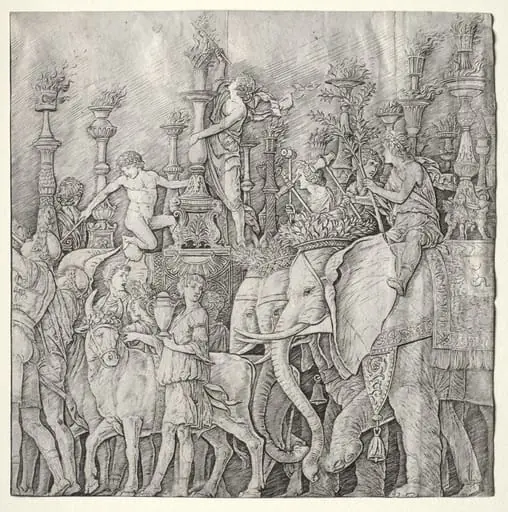 The Triumphs of Caesar: The Elephants
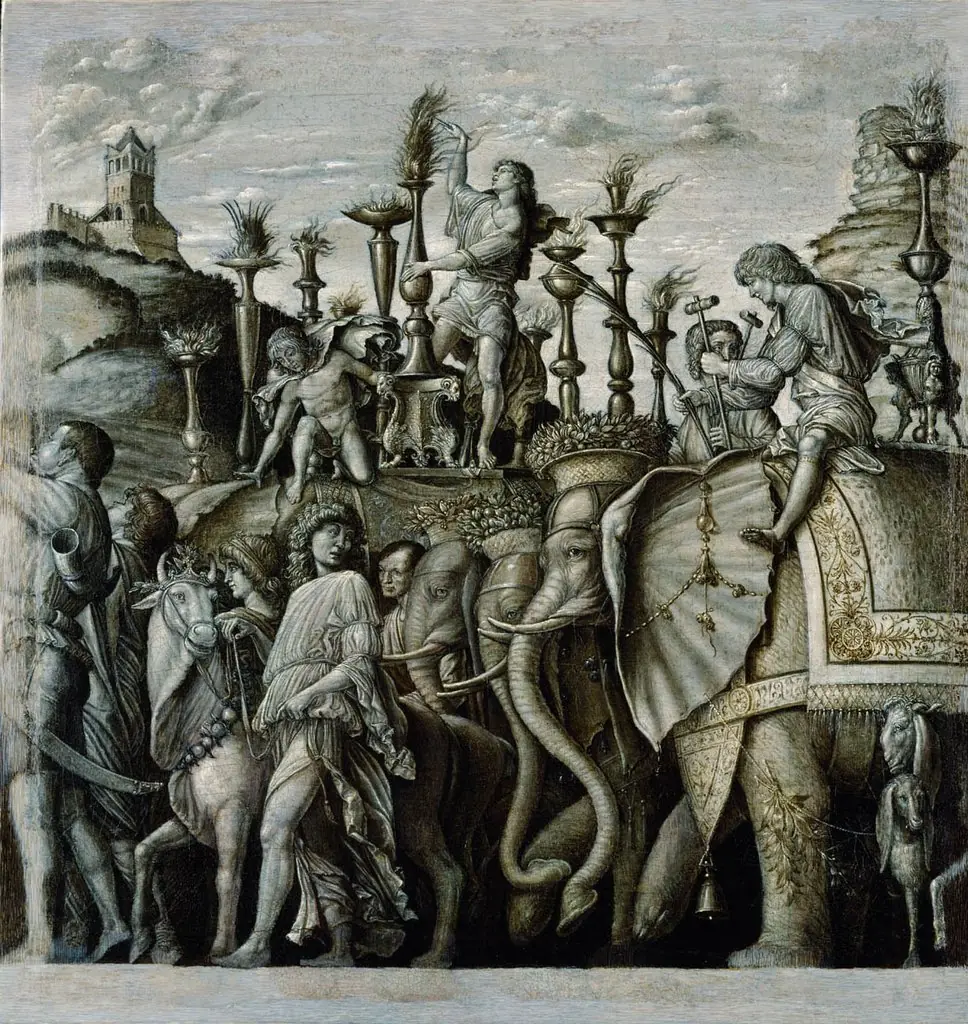 The Triumphs of Caesar: Elephants
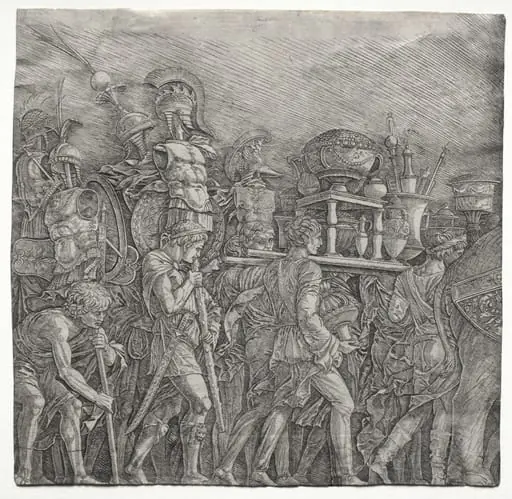 The Triumphs of Caesar: The Corselet Bearers
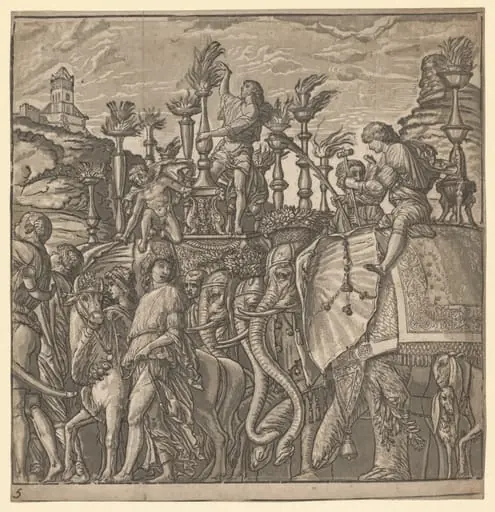 The Triumph of Julius Caesar: Elephants Carrying Torches
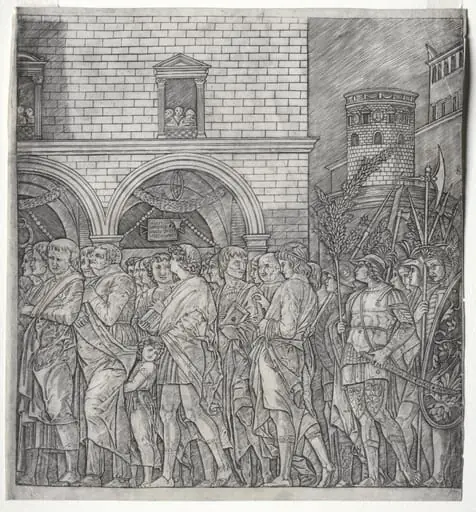 Triumph of Caesar: The Senators
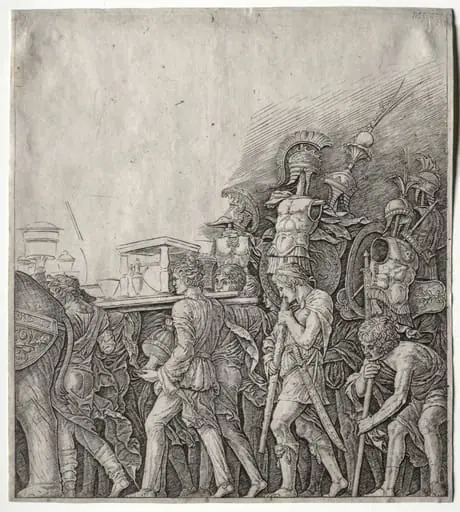 The Triumphs of Caesar: The Corselet Bearers
![The Triumph of Julius Caesar [no.3 and 4 plus 2 columns], by Andrea Andreani](https://artifactworldgallery.com/img/andrea-andreani--the-triumph-of-julius-caesar-no-3-and-4-plus-2-columns--58c944449efc96df-w320.webp) The Triumph of Julius Caesar [no.3 and 4 plus 2 columns]
The Triumph of Julius Caesar [no.3 and 4 plus 2 columns]![The Triumph of Julius Caesar [no.5 and 6 plus 2 columns], by Andrea Andreani](https://artifactworldgallery.com/img/andrea-andreani--the-triumph-of-julius-caesar-no-5-and-6-plus-2-columns--89574bdb08c8732e-w320.webp) The Triumph of Julius Caesar [no.5 and 6 plus 2 columns]
The Triumph of Julius Caesar [no.5 and 6 plus 2 columns]![The Triumph of Julius Caesar [no.9 plus 2 columns], by Andrea Andreani](https://artifactworldgallery.com/img/andrea-andreani--the-triumph-of-julius-caesar-no-9-plus-2-columns--26f4d2249baf2916-w320.webp) The Triumph of Julius Caesar [no.9 plus 2 columns]
The Triumph of Julius Caesar [no.9 plus 2 columns]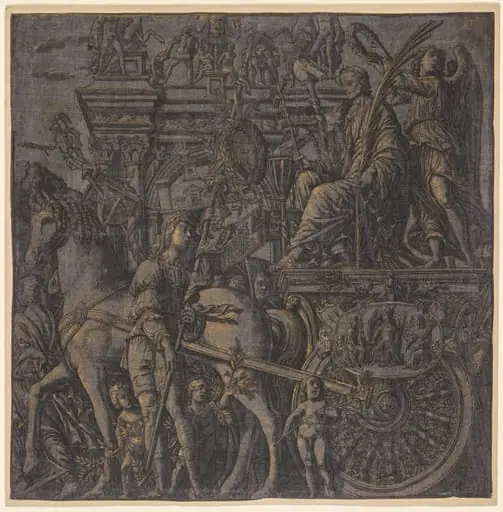 The Triumph of Julius Caesar: Caesar Triumphant