Artwork
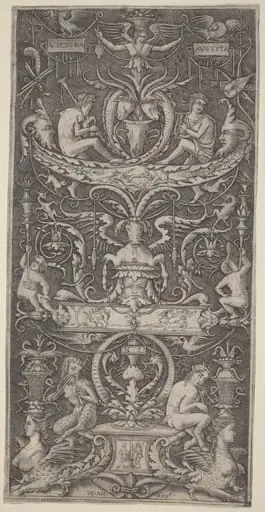
Upright Arabesque with Masks, Cupids and Nereids
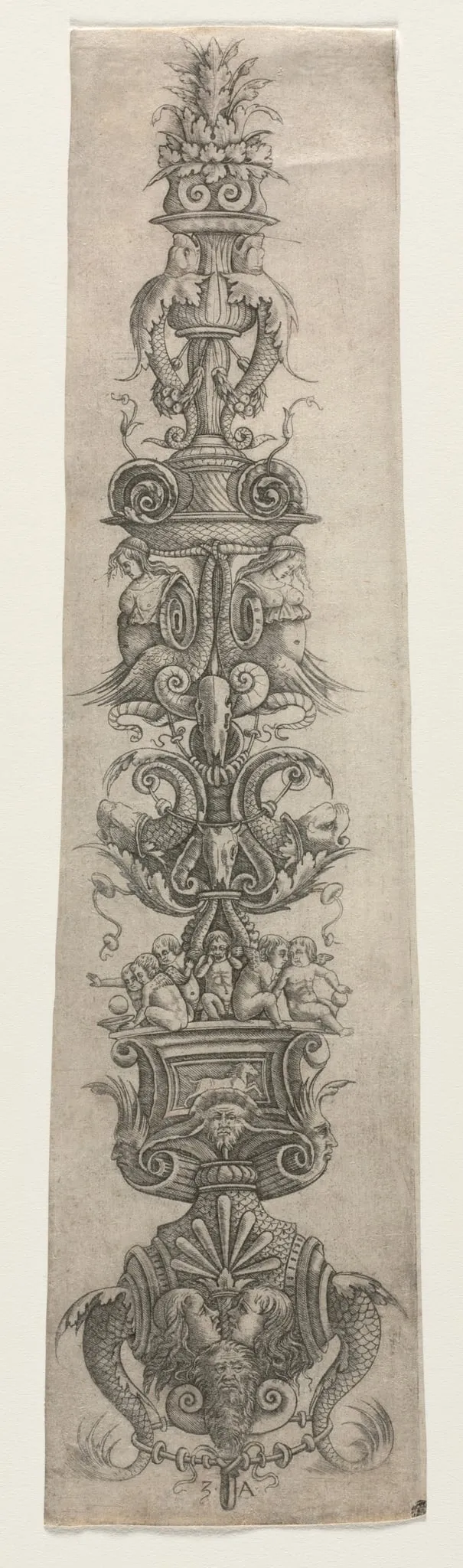
Upright Arabesque with Masks, Cupids and Nereids is a print by the Renaissance artist Giovanni Antonio da Brescia. It dates from 1490 and is held in the collection of the Cleveland Museum of Art.
About this work
Overview
His signature evolved from simple initials to more elaborate Latinized forms, reflecting his growing technical and professional maturity during this period.
Created around 1490 by Giovanni Antonio da Brescia, this engraving presents a vertical decorative composition rooted in Renaissance ornamental traditions. The artist, active in northern Italy, employed intricate line work to assemble a dense arrangement of mythological and fantastical elements. His signature evolved from simple initials to more elaborate Latinized forms, reflecting his growing technical and professional maturity during this period.
Subject & Meaning
The print unites masks, winged Cupids, and Nereids—sea nymphs from classical mythology—within a single architectural-like framework. These figures, interwoven with vines and marine motifs, suggest a symbolic celebration of nature, desire, and the supernatural. The arrangement evokes the Renaissance fascination with antiquity, blending pagan imagery into a harmonious, if complex, visual narrative that served as a model for decorative arts.
Technique & Style
Giovanni Antonio employed fine, controlled engraving lines to render dense, flowing forms with precision. The composition’s verticality and rhythmic curves reflect the influence of classical arabesques, while the delicate rendering of scales, wings, and facial expressions reveals a mastery of detail. His style bridges the ornamental exuberance of the late Quattrocento with emerging Mannerist tendencies, emphasizing complexity over spatial clarity.
History & Provenance
The print circulated among collectors and artisans in northern Italy, likely used as a pattern source for decorative objects, frescoes, and metalwork. Though no early ownership records are documented, its survival in multiple museum collections suggests it was widely copied and admired. The artist’s evolving signature helps date the work to the early 1490s, placing it among his most refined engravings.
Context
This work emerged during a period when Italian artists were reinterpreting ancient Roman decorative motifs through the lens of humanist scholarship. Architectural frames, mythological figures, and naturalistic flora were combined in prints to inspire designers across media. Giovanni Antonio’s engravings contributed to a broader visual vocabulary that linked fine art with applied ornament in Renaissance workshops.
Legacy
The print influenced later decorative cycles in fresco and stucco, particularly in Venetian and Lombard interiors. Its dense, layered compositions became a reference for Mannerist designers seeking to amplify complexity. Though not widely known today, its technical finesse and imaginative synthesis of classical themes secured its place in the evolution of Renaissance ornamental printmaking.
Artist & collection

Artist
Giovanni Antonio da Brescia was an Italian engraver of northern Italy, active in the approximate period 1490–1519, during the Italian Renaissance.

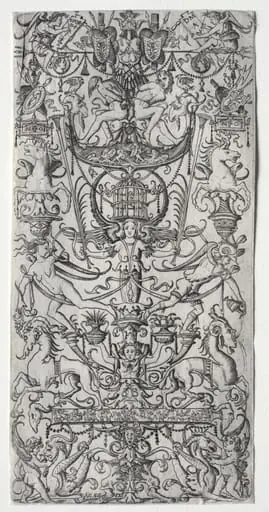 Ornament Panel with a Bird Cage
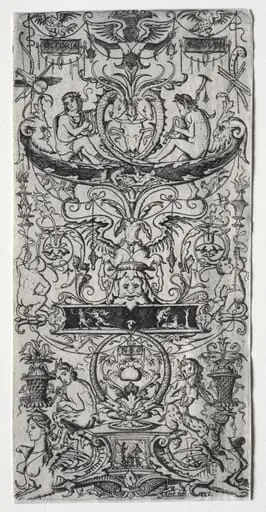 Ornament Panel Inscribed Victoria Augusta
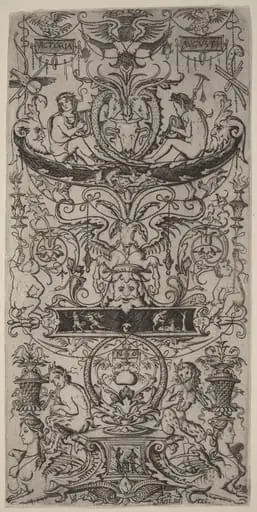 Ornament Panel: Victoria Augusta
 Ornament Panel: Two Children Wearing Helmets
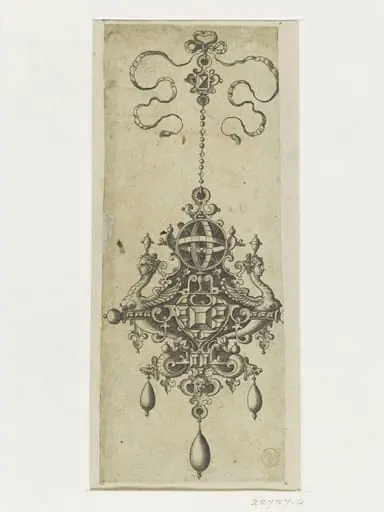 Designs for Necklaces, Pendants and Earrings of the Highest Skill
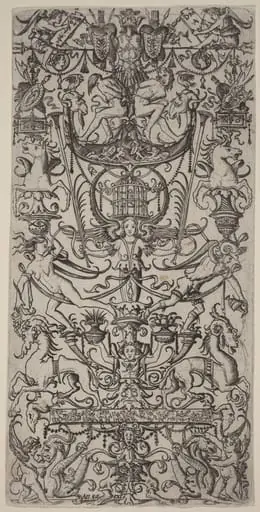 Ornament Panel with a Birdcage
 Ornament Panel: Triton and Two Infant Satyrs
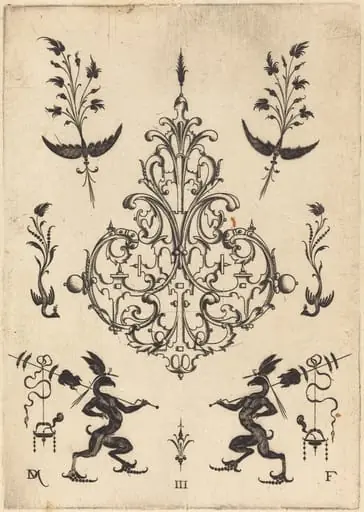 Brooch with Sprigs at Top and Griffins with Trophies at Bottom
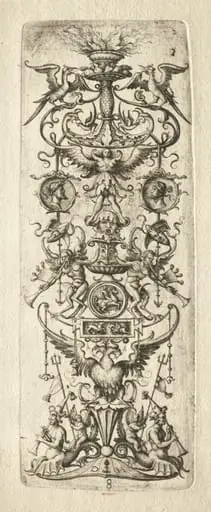 Ornament Fillet
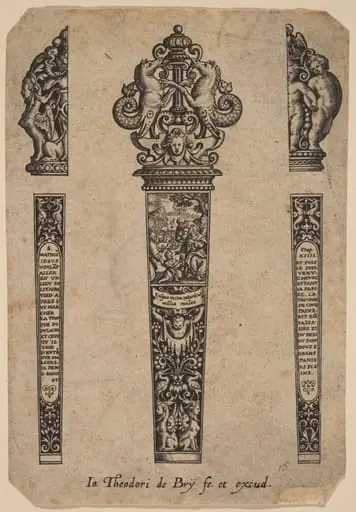 Ornament for Knife Handle
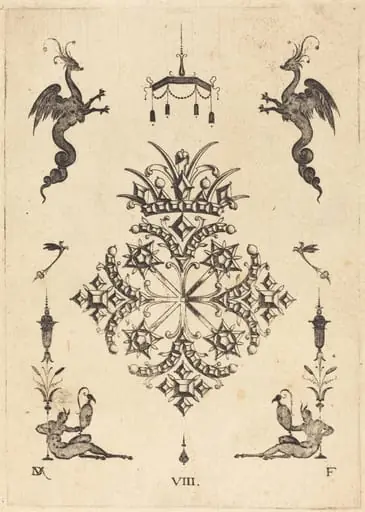 Brooch with Fantasy Animals at Top and Fauns with Vases at Bottom