Artwork
Frederick IV
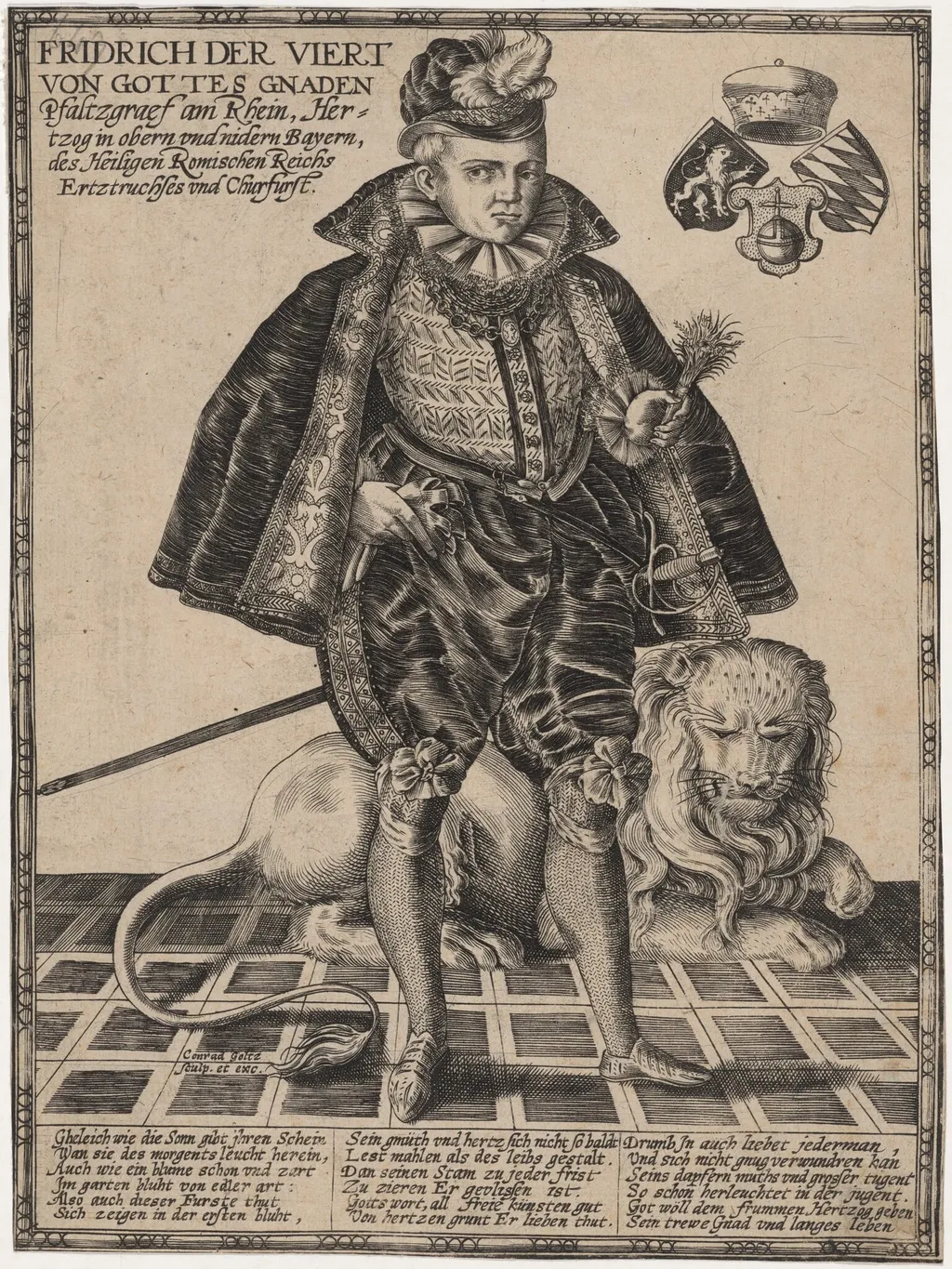
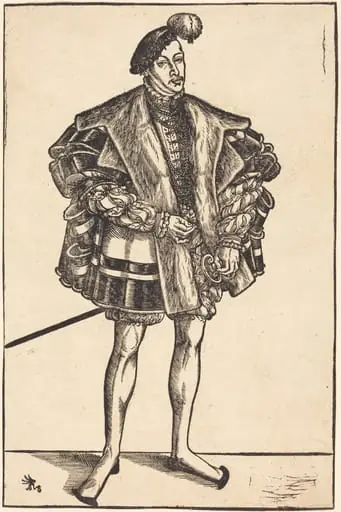
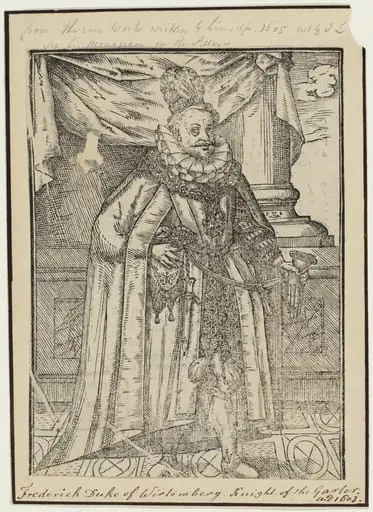
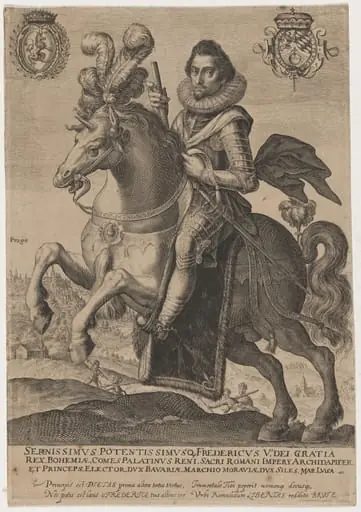
Frederick IV is an ink print by the Renaissance artist Conrad Goltzius. It dates from 1607 and is held in the collection of the National Gallery of Art.
About this work
Overview
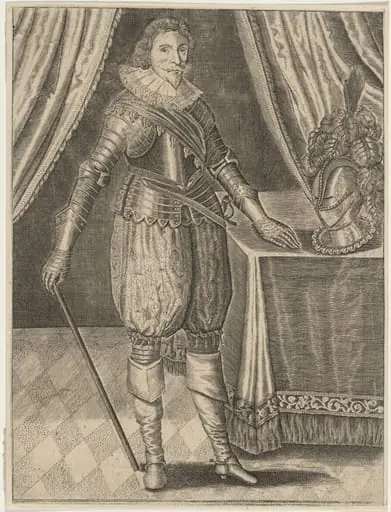
Conrad Goltzius’s 1607 engraving presents a formal portrait of Frederick IV, rendered in black‑and‑white line work. The composition places the ruler in elaborate, period costume, framed by heraldic and symbolic elements that convey status and authority.
Subject & Meaning
The sitter, identified by the German inscription “Friedrich der Viert,” is depicted with a lion at his side and a skull looming behind him. The lion traditionally signifies strength and sovereignty, while the skull introduces a memento mori motif, reminding viewers of mortality even for the powerful.
Technique & Style
Executed as an engraving, the image was incised onto a metal plate, allowing for fine, precise lines and a high degree of detail in the patterned coat, feathered hat, and ornamental background. Goltzius’s handling of line creates a contrast between the richly textured attire and the stark symbolic objects.
History & Provenance
Created in the early seventeenth century, the print likely served as a commemorative or propagandistic image for the nobleman’s court. Its survival in collections suggests it was circulated among patrons interested in portraiture and heraldic representation.
Context
The early 1600s saw a flourishing of portrait engravings that combined realistic likenesses with allegorical symbols. Goltzius’s work aligns with this trend, integrating personal identification with broader themes of power, lineage, and the transience of life.
Artist & collection