Artwork
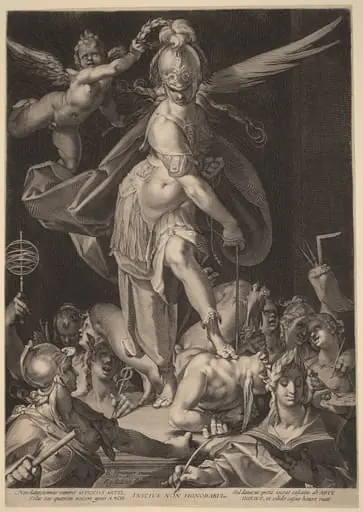
The Allegory of Fame and History
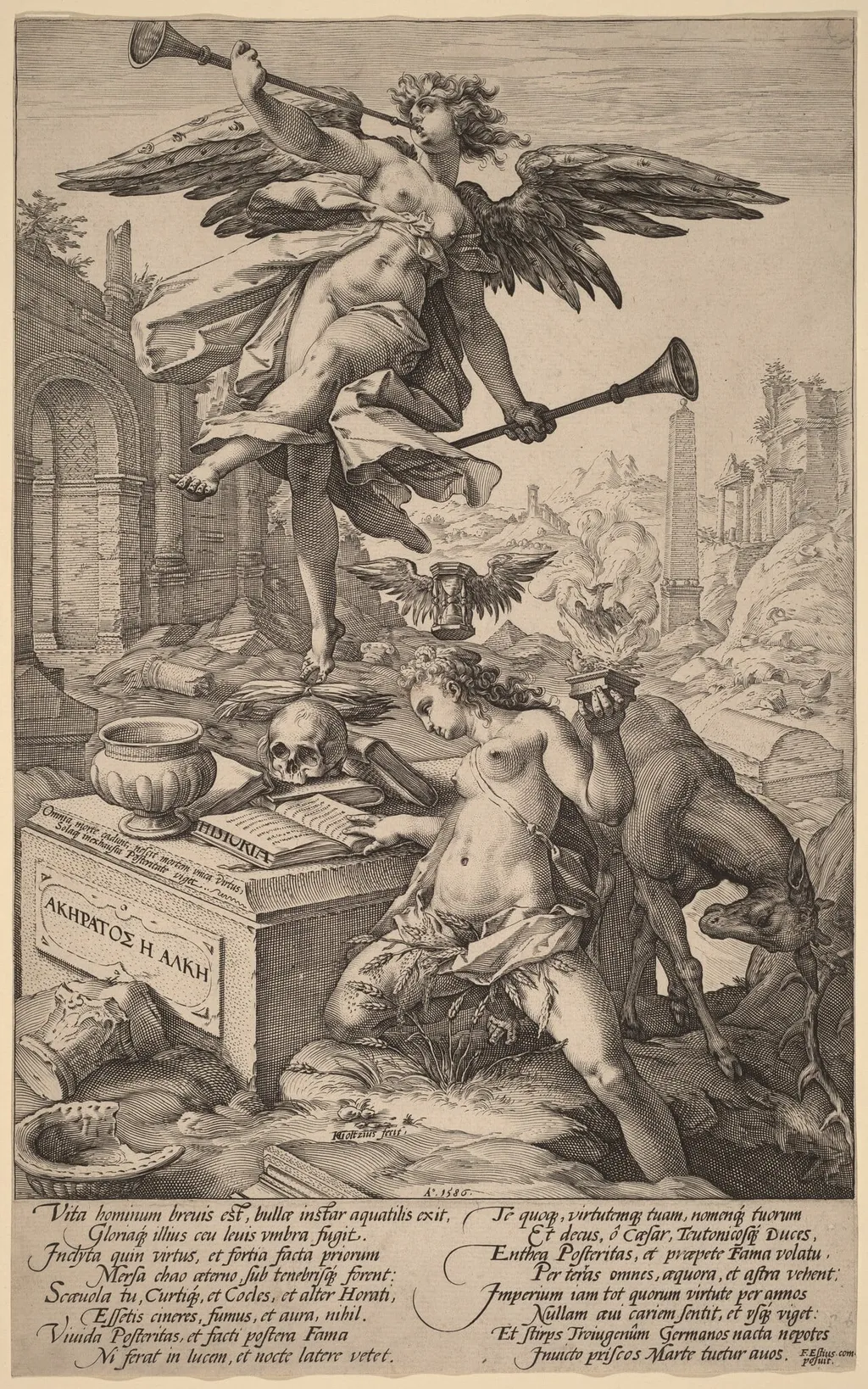
The Allegory of Fame and History is an ink print by the Renaissance artist Hendrik Goltzius. It dates from 1586 and is held in the collection of the National Gallery of Art.
About this work
Overview
The Allegory of Fame and History is a 1586 engraving on laid paper by Hendrick Goltzius, a prominent Dutch printmaker and draftsman of the early Baroque/Northern Mannerism period.
Subject & Meaning
The allegorical print depicts two winged figures amidst chaos, symbolizing Fame (with trumpet and torch) and History (beside a broken column, surrounded by books, a skull, and a trumpet), conveying a sense of struggle between the two concepts.
Technique & Style
Goltzius showcased his technical mastery through fine engraved lines, capturing dynamic movement and tension. Sharp lines, dark shadows, and detailed textures enhance the dramatic intensity of the scene.
History & Provenance
Created in 1586, the work exemplifies Goltzius's renowned engraving skills, characteristic of his contributions to Northern Mannerism.
Context
The chaotic backdrop of crumbling buildings, smoke, and fire may allude to the turmoil of the Dutch Revolt or broader European upheavals of the late 16th century.
Legacy
As a seminal work by a leading Dutch engraver, it influences the development of Baroque printmaking and the depiction of allegorical themes in Northern European art.
Artist & collection
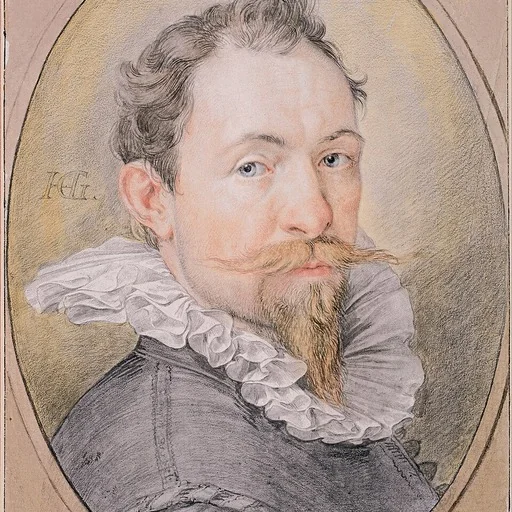
Artist
Hendrick Goltzius (German: , Dutch: ; né Goltz; January or February 1558 – 1 January 1617) was a German-born Dutch printmaker, draftsman, and painter.