Artwork
Calliope
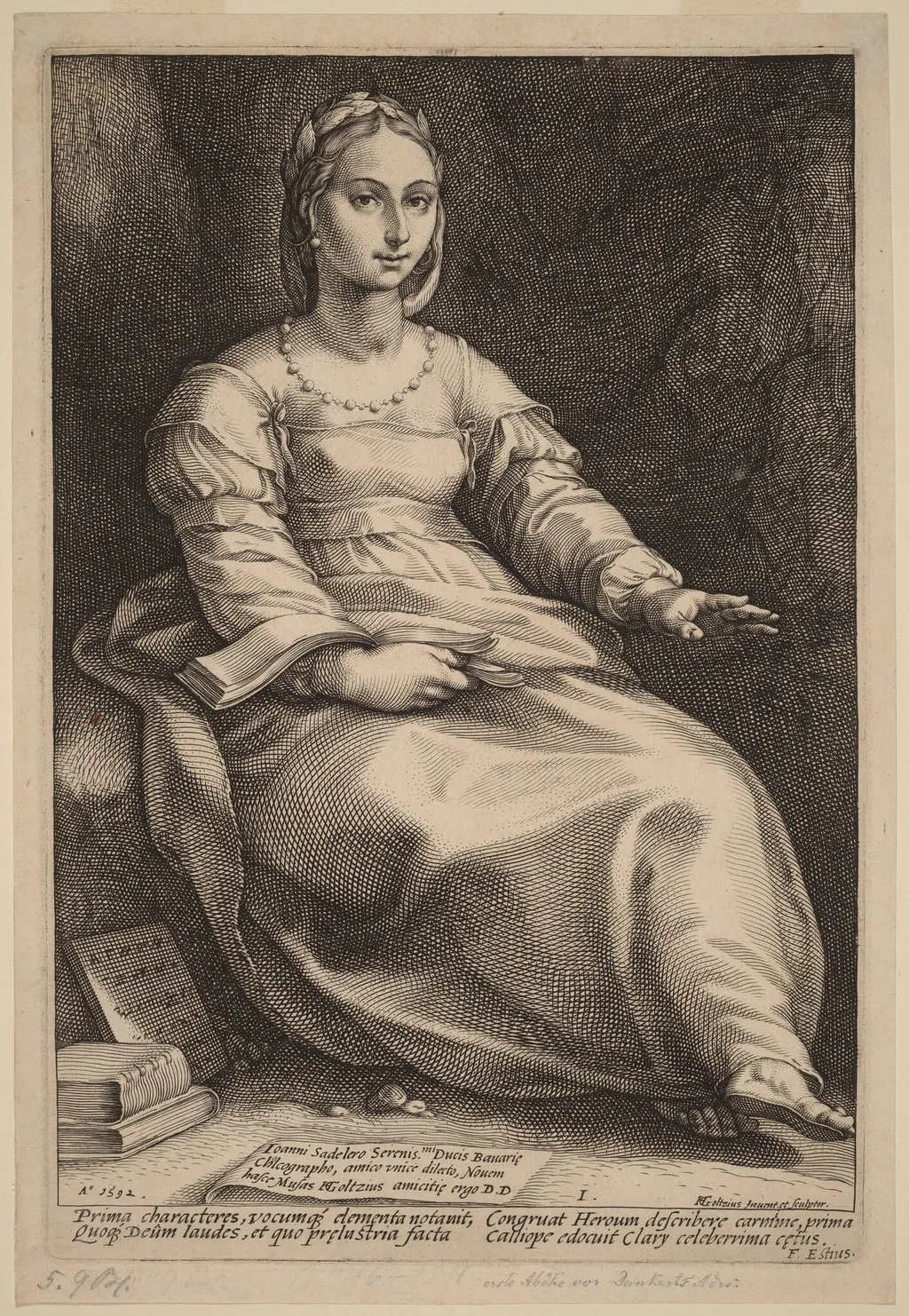
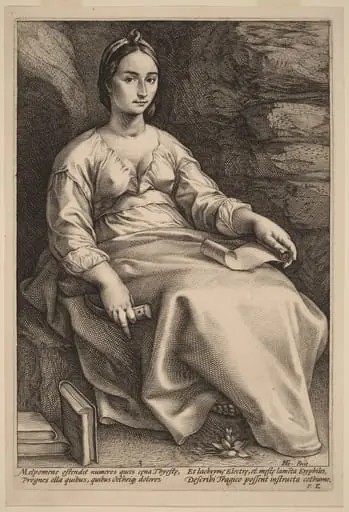
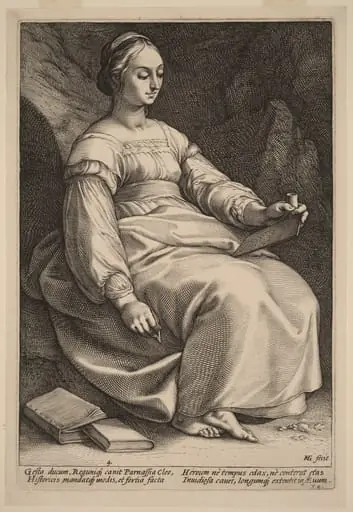
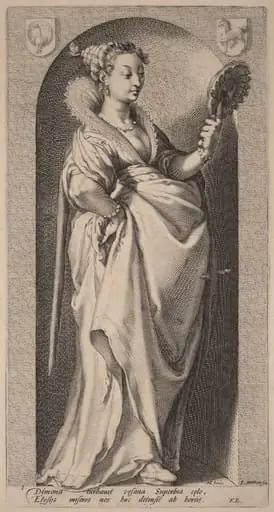
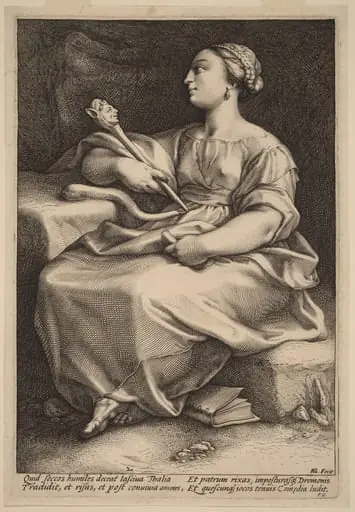
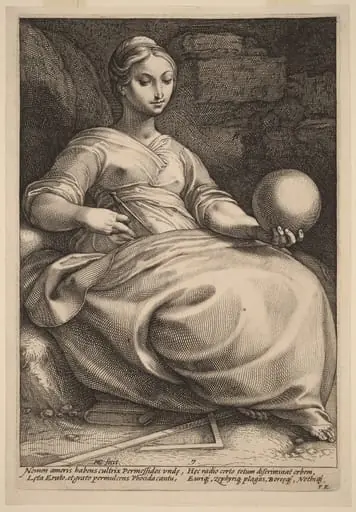
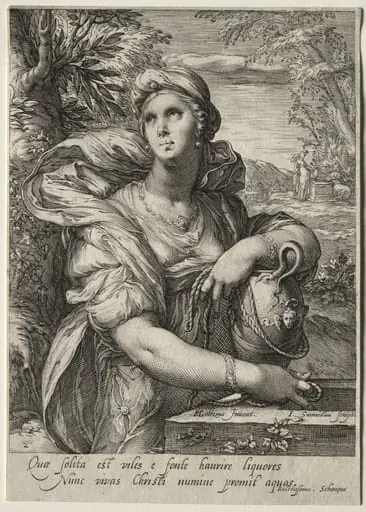
Calliope is an ink print by the Renaissance artist Hendrik Goltzius. It dates from 1592 and is held in the collection of the National Gallery of Art.
About this work
Overview
Calliope is an engraving created by Hendrick Goltzius in 1592, exemplifying the artist's mastery of Northern Mannerism and early Baroque printmaking techniques.
Subject & Meaning
The engraving portrays Calliope, the muse of epic poetry, in a contemplative pose, emphasizing her association with literary arts through the scroll she holds.
Technique & Style
Goltzius employed intricate linework and cross-hatching to achieve three-dimensional depth, rendering the subject's fabric and skin with pronounced texture and volume.
History & Provenance
Created in 1592 by Goltzius, a renowned German-born Dutch printmaker, the work reflects his characteristic elaborate composition style prevalent during his active period.
Context
As a leading figure in Dutch engraving during the late 16th century, Goltzius's *Calliope* embodies the aesthetic transition towards Baroque sensibilities in Northern European art.
Legacy
While specific lasting impacts of *Calliope* are not detailed, Goltzius's overall contribution to the evolution of engraving techniques and Northern Mannerism remains significant.
Artist & collection
Artist
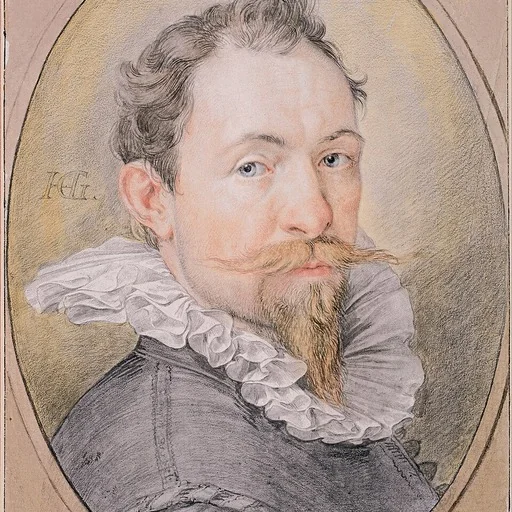
Hendrick Goltzius (German: , Dutch: ; né Goltz; January or February 1558 – 1 January 1617) was a German-born Dutch printmaker, draftsman, and painter.