Artwork
Great Black Woodpecker (Dryocopus martius)
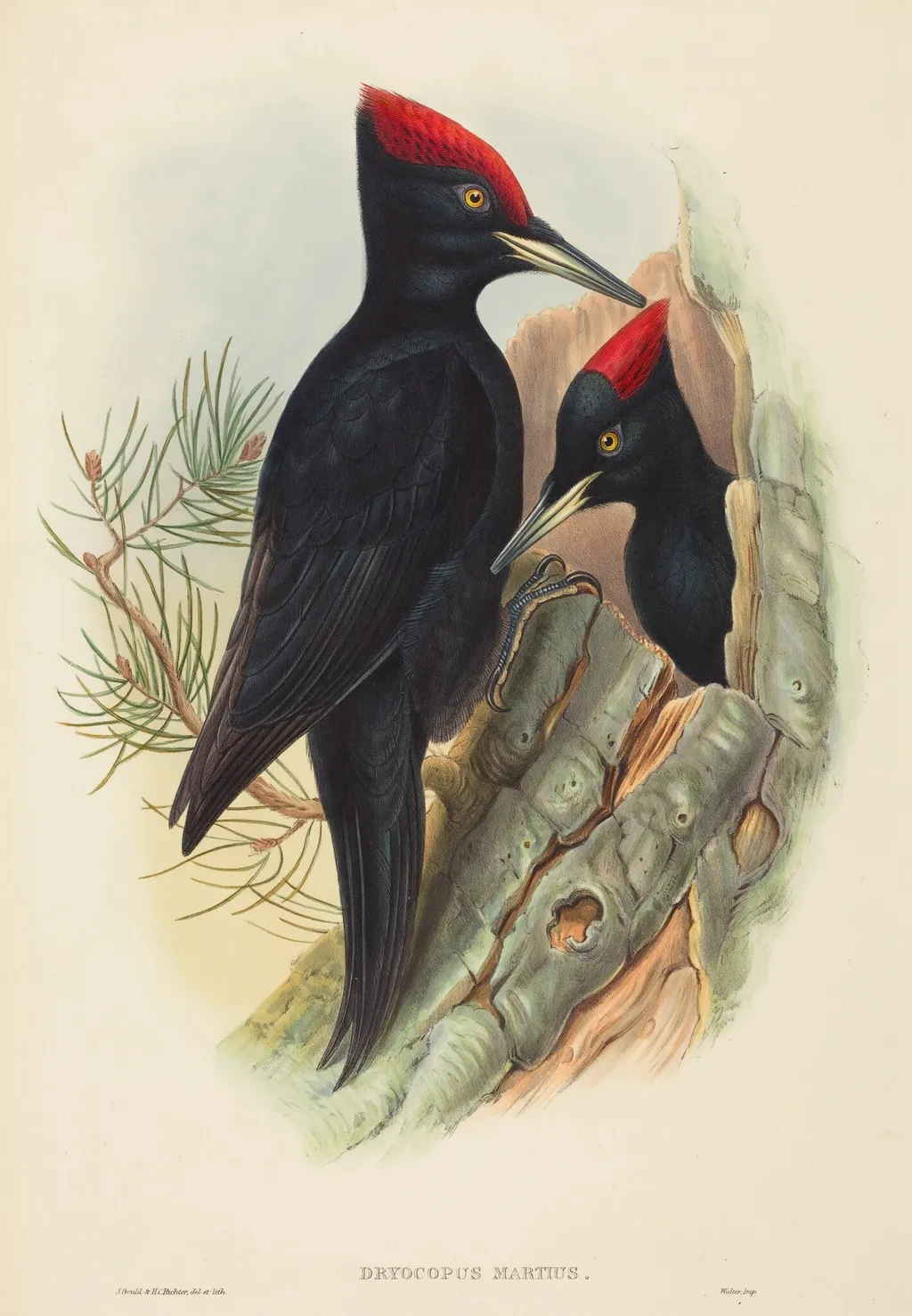
Great Black Woodpecker (Dryocopus martius) is an ink print by the Romanticist artist John Gould. It dates from 1842 and is held in the collection of the National Gallery of Art.
About this work
Overview
Produced as part of a larger ornithological project, the print was hand-colored using lithographic techniques on wove paper.
This 1842 lithograph by John Gould depicts the Great Black Woodpecker, a species native to Eurasian forests. Produced as part of a larger ornithological project, the print was hand-colored using lithographic techniques on wove paper. Gould, a prominent English ornithologist, relied on skilled artists to translate specimens into detailed visual records, contributing to the scientific documentation of avian biodiversity during the 19th century.
Subject & Meaning
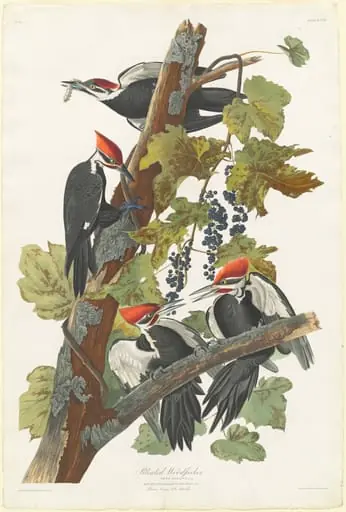
The image shows two male Great Black Woodpeckers perched on a moss-covered tree trunk, one facing forward and the other in profile. Both exhibit the species’ defining features: entirely black plumage, bright red crests, long pointed beaks, and yellow eyes. The composition emphasizes anatomical accuracy over narrative, serving as a taxonomic record rather than a symbolic or emotional portrayal of nature.
Technique & Style
The print was created using hand-colored lithography, a method allowing precise reproduction of detailed line work. Colors were applied manually after printing, ensuring subtle gradations in black, brown, and green tones. Textures of feathers, bark, and moss are rendered with fine lines and careful shading, reflecting a commitment to scientific realism rather than romantic idealization.
History & Provenance
The plate was produced for Gould’s ornithological publications, likely as part of a series documenting European bird species. It was executed under his direction by artists including Henry Constantine Richter, who frequently handled lithographic coloring for his projects. The work reflects the collaborative nature of 19th-century natural history illustration, where scientific accuracy and artistic skill were jointly pursued.
Context
In the mid-1800s, European naturalists were systematically cataloging global fauna, often using illustrated volumes to disseminate findings. Gould’s publications were part of this broader movement, supported by colonial networks that supplied specimens. While the image lacks overt romantic flourishes, its meticulous detail aligns with contemporary scientific ideals that valued observation over imagination.
Legacy
Gould’s woodpecker plate remains a reference in ornithological literature for its precision and clarity. Though not widely exhibited as fine art, it endures as a specimen of scientific illustration, illustrating the intersection of art and biology in an era before photography. Its influence persists in modern field guides that prioritize anatomical fidelity.
Artist & collection
Artist
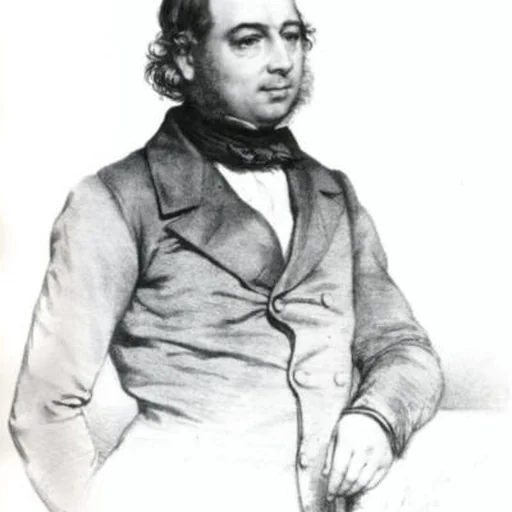
John Gould (; 14 September 1804 – 3 February 1881) was an English ornithologist who published monographs on birds, illustrated by plates produced by his wife, Elizabeth Gould, and several other artists, including Edward…

 Docimastes ensiferus (Sword-billed Hummingbird)
 Lesbia Amaryllis
 Eriocnemis cupreiventris (Coppery-vented Puff-Leg)
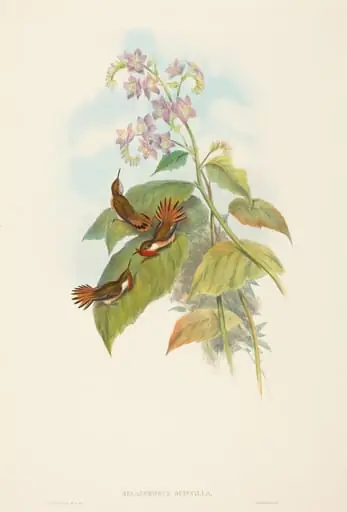 Selashorus scintilla (Scintillant Hummingbird)
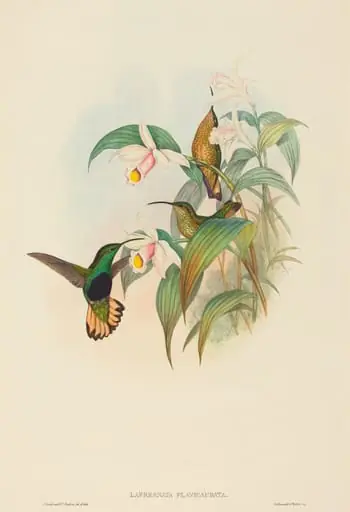 Lafresnaya flavicaudata (Buff-tailed Velvet-breast)
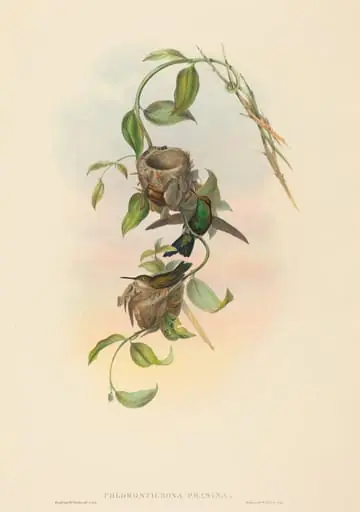 Chlorostilbona prasina (Puncheran's Emerald)
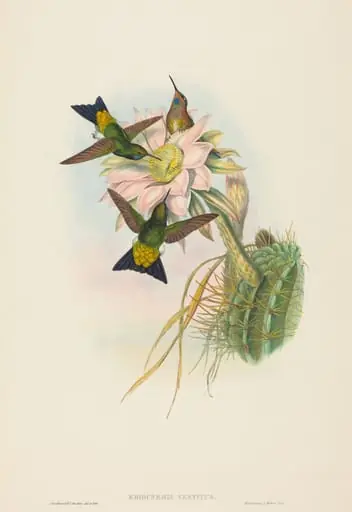 Eriocnemis vestitus (Glowing Puff-Leg)
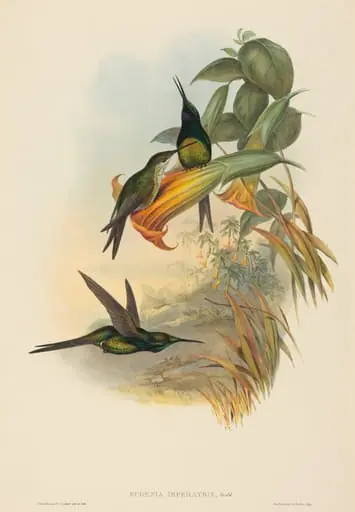 Eugenia imperatrix (Empress Hummingbird)