Artwork
Black-bellied Darter
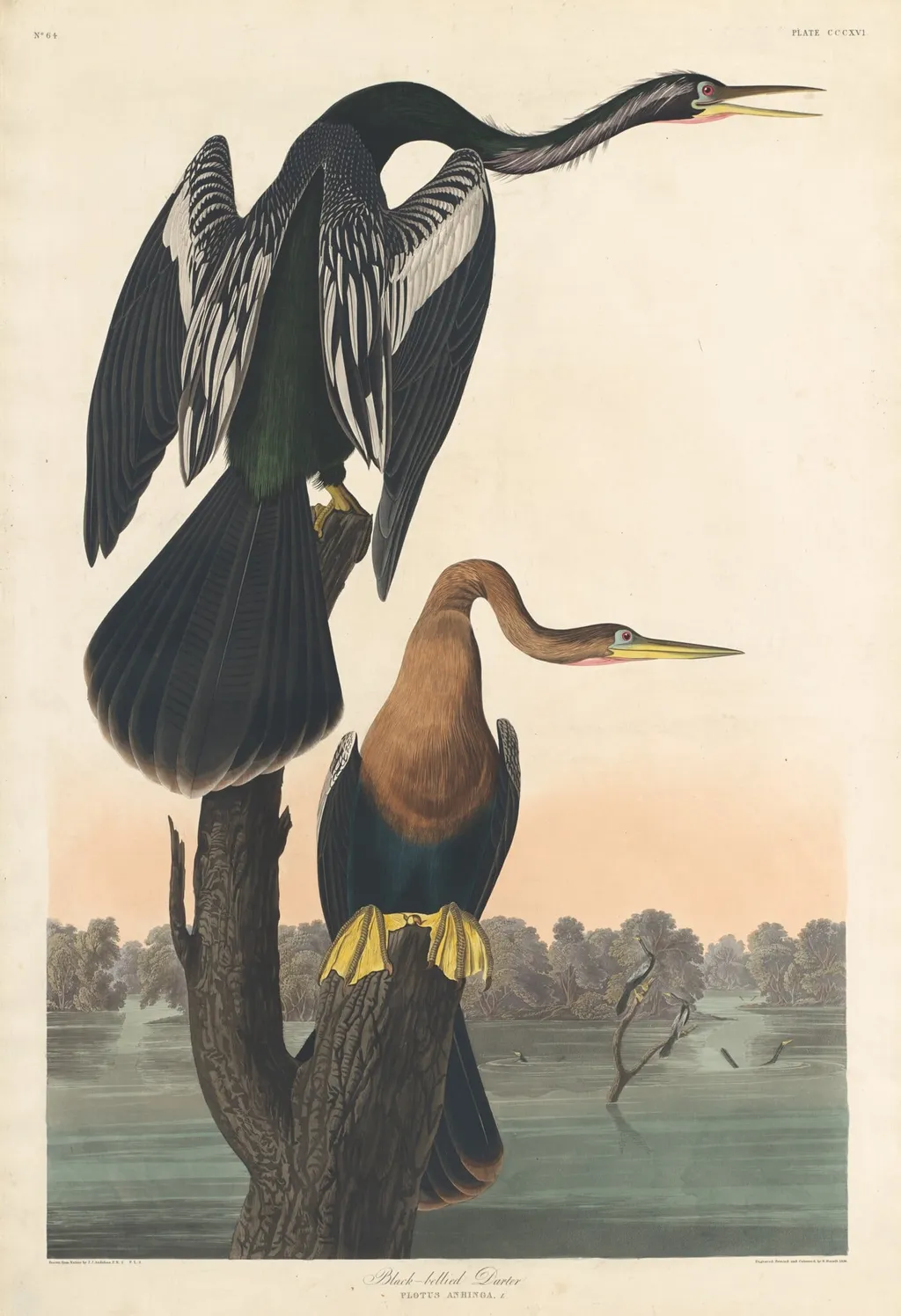
Black-bellied Darter is an ink print by the Romanticist artist Robert Havell Jr.. It dates from 1836 and is held in the collection of the National Gallery of Art.
About this work
Overview
Part of a broader series of avian studies, the work reflects the Havell family’s long-standing engagement with natural history illustration.
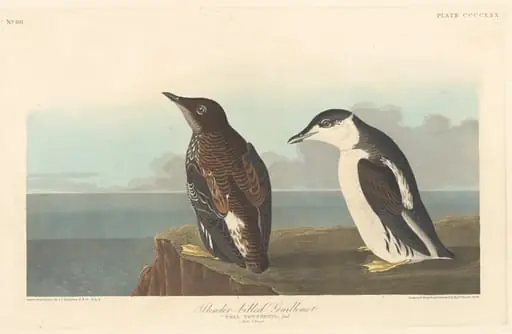
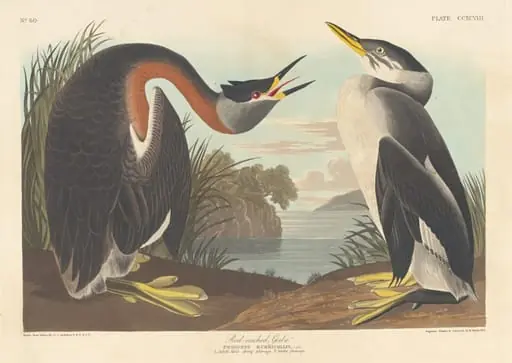
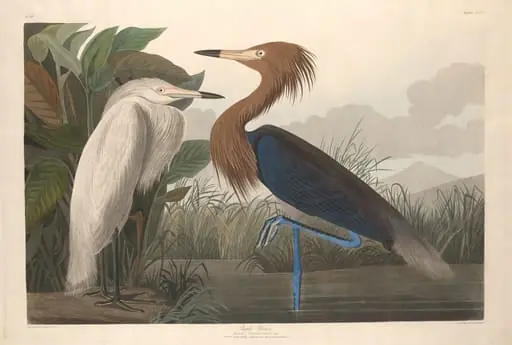
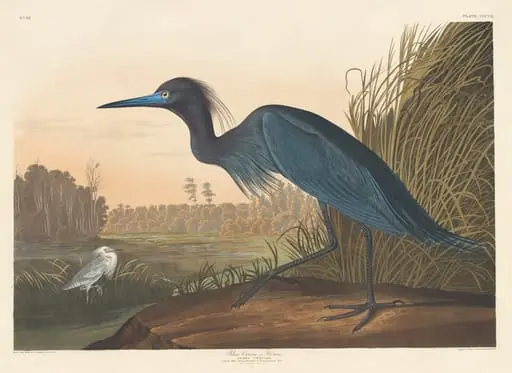
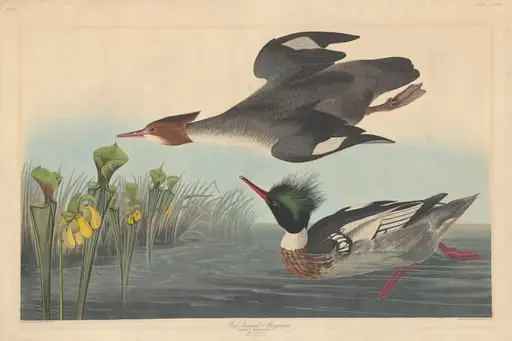
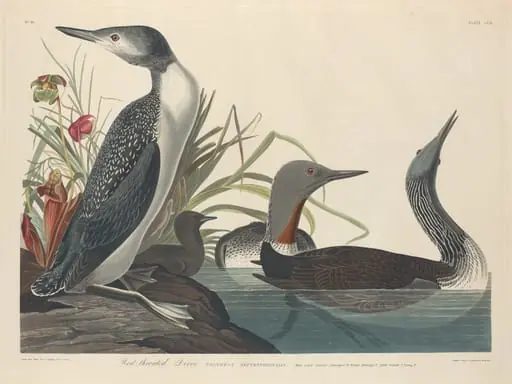
Created in 1836 by Robert Havell Jr., this hand-colored engraving and aquatint on Whatman wove paper depicts a pair of darters perched on a branch beside still water. Part of a broader series of avian studies, the work reflects the Havell family’s long-standing engagement with natural history illustration. The technique combines precise line work with delicate tonal gradations, achieved through aquatint and meticulous hand coloring.
Subject & Meaning
The print portrays two darters, a species of waterbird, in a quiet, natural setting. The larger bird, with black plumage and white wing markings, rests above a smaller, browner individual with a pale chest. Their placement suggests a moment of rest rather than action, emphasizing observation over drama. The scene conveys no overt symbolism; its purpose lies in documenting form and behavior with scientific clarity, aligned with early 19th-century naturalist priorities.
Technique & Style
Havell employed engraving for fine linear detail in feathers and bark, augmented by aquatint to create soft atmospheric tones. Hand coloring was applied with restraint, using muted hues to preserve realism. The misty background, rendered in subtle washes, recedes gently, isolating the birds without distraction. The texture of wet wood, ruffled feathers, and water’s stillness is rendered with quiet precision, reflecting technical discipline over theatrical effect.
History & Provenance
Robert Havell Jr. inherited his craft from his father, Robert Havell the Elder, and uncle, Luke Havell, both established engravers with ties to natural history publishing. The family’s work often supported scientific publications, including those on Indian fauna. This print likely originated from a larger project documenting regional birdlife, though its exact publication context remains unconfirmed. Its survival reflects the enduring value placed on such illustrated records.
Context
In the 1830s, natural history illustration flourished alongside colonial scientific exploration. Artists like Havell worked closely with naturalists to produce accurate depictions of species, often from specimens or sketches made in the field. Though the darter is not native to Britain, the Havells’ involvement in Indian-themed projects suggests this image may have been based on specimens collected in South Asia, reflecting broader imperial networks of biological documentation.
Legacy
Havell’s work contributed to a tradition of precise, non-sentimental natural history prints that prioritized observational accuracy. While less celebrated than some contemporaries, his prints remain valuable for their technical consistency and fidelity to avian anatomy. The piece endures as an example of how printmaking served science before photography, preserving details now lost to habitat change or extinction.
Artist & collection

Artist
The Havell family of Reading, Berkshire, England, included a number of notable engravers, etchers and painters, as well as writers, publishers, educators, and musicians.