Artwork
Hairy Woodpecker
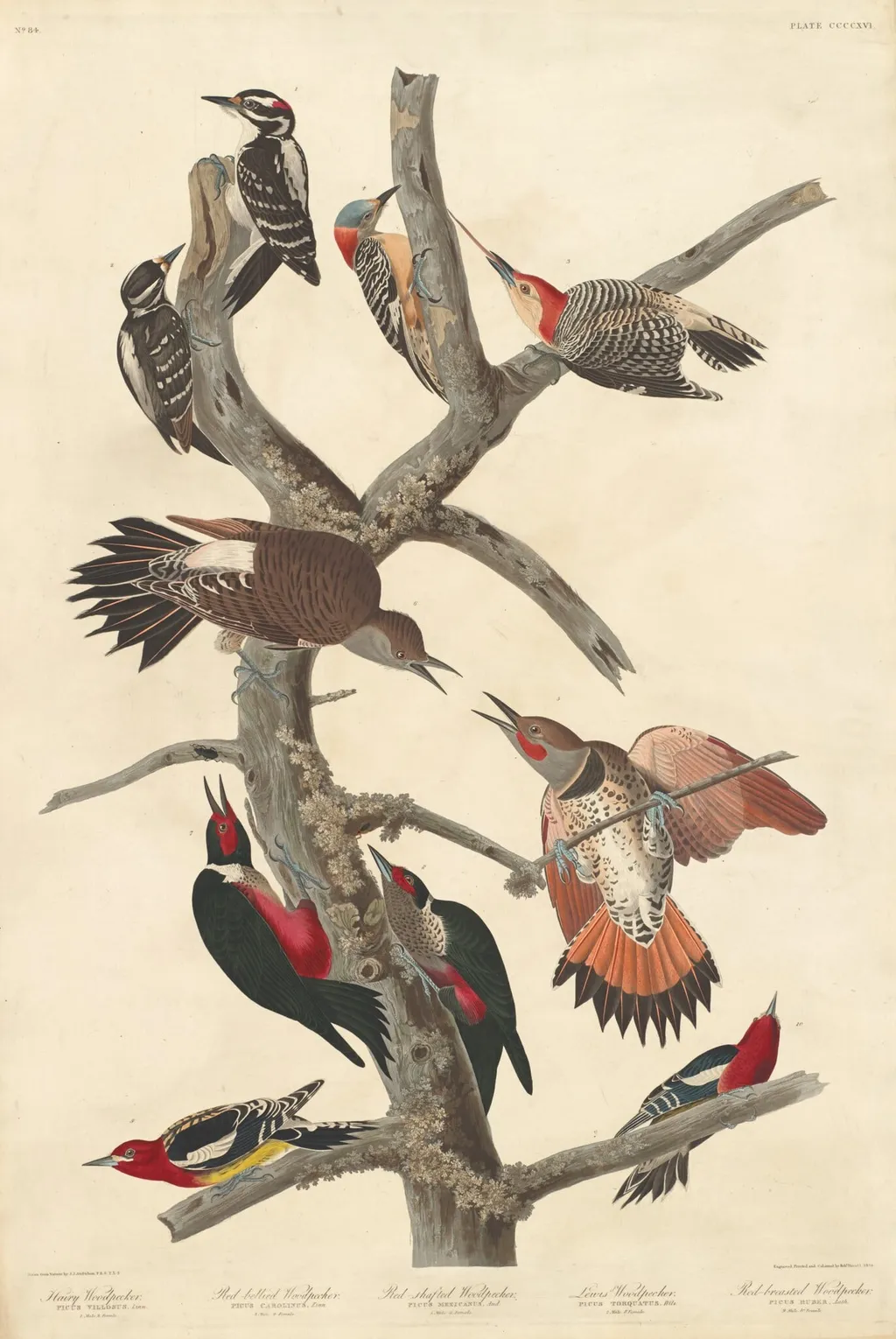
Hairy Woodpecker is an ink print by the Romanticist artist Robert Havell Jr.. It dates from 1838 and is held in the collection of the National Gallery of Art.
About this work
Overview
Havell, part of a family of printmakers, employed precise techniques to render natural subjects with scientific clarity and aesthetic care.
Created in 1838 by Robert Havell Jr., this print is a hand-colored engraving and aquatint on Whatman wove paper. It belongs to a series of ornithological illustrations produced during the early 19th century, reflecting the period’s interest in documenting North American wildlife. Havell, part of a family of printmakers, employed precise techniques to render natural subjects with scientific clarity and aesthetic care.
Subject & Meaning
The image portrays seven Hairy Woodpeckers in varied poses—perched, flying, and turning their heads—around a twisted tree branch. Each bird displays distinct plumage: black-and-white striped bodies, red caps, and subtle yellow or orange markings. The composition emphasizes individuality within the species, serving as both a biological record and a study of avian behavior in natural settings.
Technique & Style
Havell combined engraving with aquatint to achieve fine detail and tonal gradation. The feathers are rendered with delicate lines, while the bark and moss on the branch show intricate texture through controlled etching. Hand-coloring applied over the printed base enhances realism, with vivid hues contrasting against a pale background to isolate each figure. This method was standard for natural history prints of the era.
History & Provenance
Robert Havell Jr. was a member of a well-established English printmaking family based in Reading, Berkshire. Though often associated with illustrations of Indian subjects, his work on North American birds was part of a broader scientific publishing effort. This print likely originated as a plate in a larger ornithological publication, circulated among naturalists and collectors in Europe and America.
Context
In the 1830s, detailed natural history illustrations were vital to scientific communication before photography. Artists like Havell worked closely with naturalists to ensure anatomical accuracy while maintaining visual appeal. The emphasis on lifelike poses and habitat elements reflected a growing interest in ecology and species classification, aligning with contemporary developments in biology and taxonomy.
Legacy
Havell’s work contributed to the visual language of American ornithology, influencing later illustrators and field guides. While his prints were once tools for scientific study, they are now valued for their craftsmanship and historical insight into how nature was observed and recorded. The blend of precision and artistry in this piece remains representative of early 19th-century naturalist printmaking.
Artist & collection

Artist
The Havell family of Reading, Berkshire, England, included a number of notable engravers, etchers and painters, as well as writers, publishers, educators, and musicians.

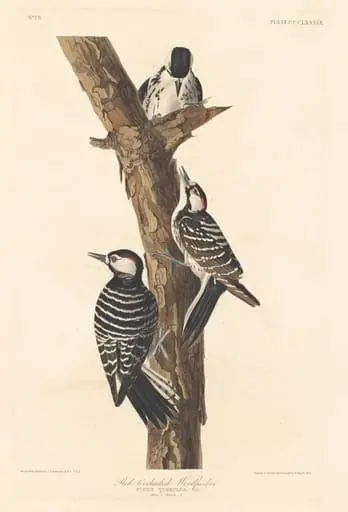 Red-cockaded Woodpecker
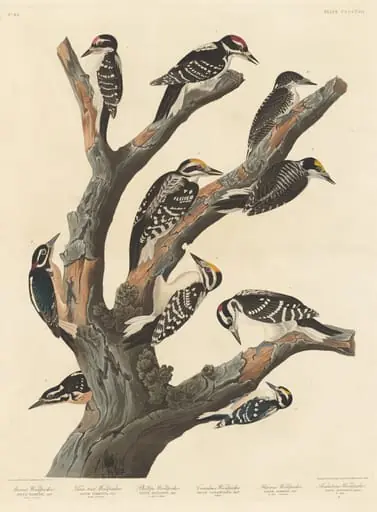 Maria's Woodpecker
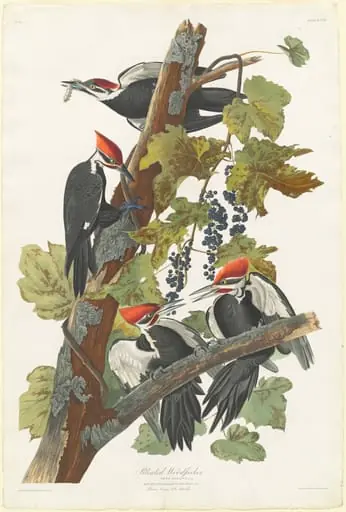 Pileated Woodpecker
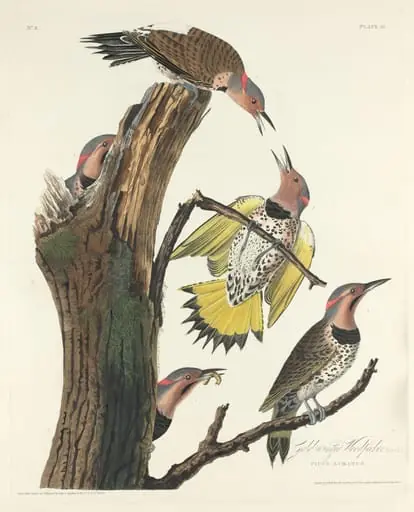 Gold-winged Woodpecker
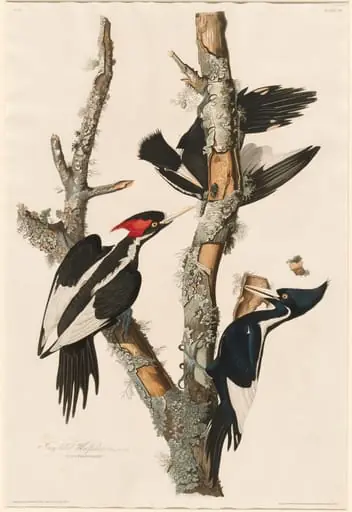 Ivory-billed Woodpecker
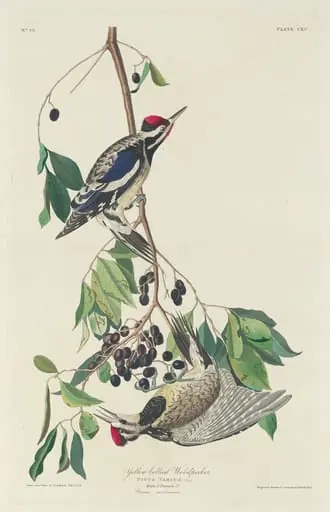 Yellow-bellied Woodpecker
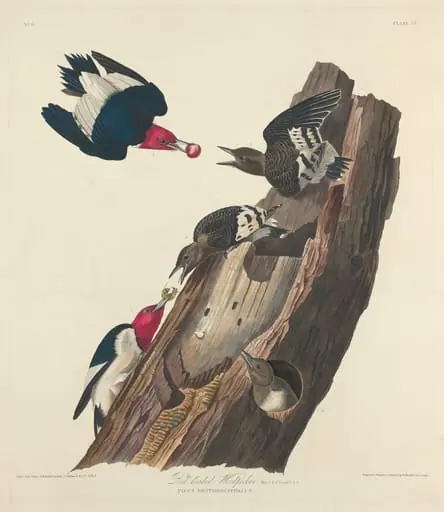 Red-headed Woodpecker
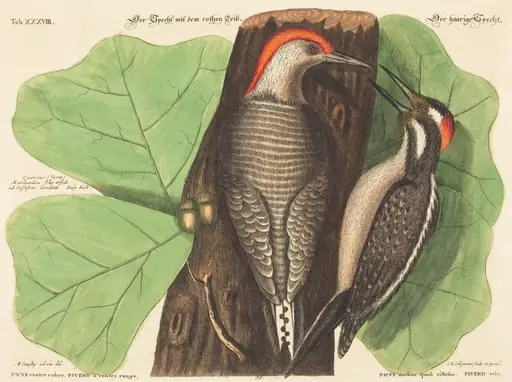 The Red Bellied Woodpecker (Picus Carolinus)
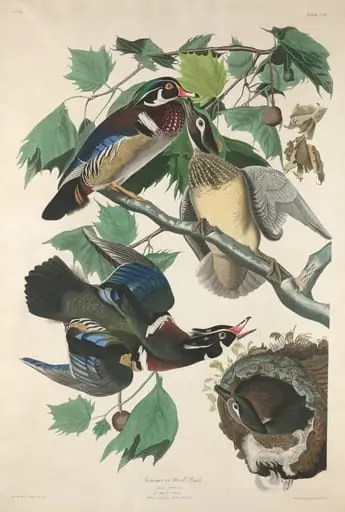 Summer or Wood Duck
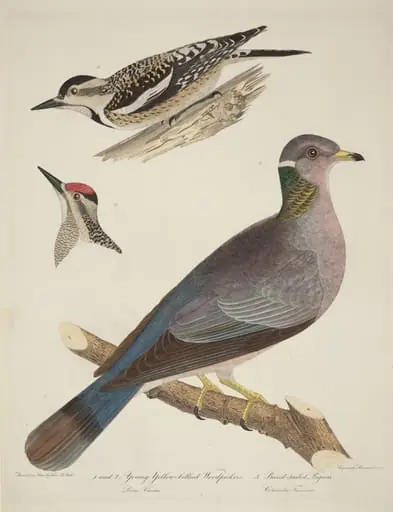 Young Yellow-bellied Woodpeckers and Band-tailed Pigeon
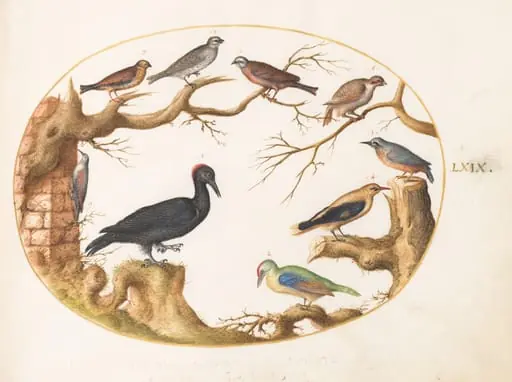 Plate 69: Black Woodpecker, European Green Woodpecker, Nuthatch, and Other Birds