Artwork
Maria's Woodpecker
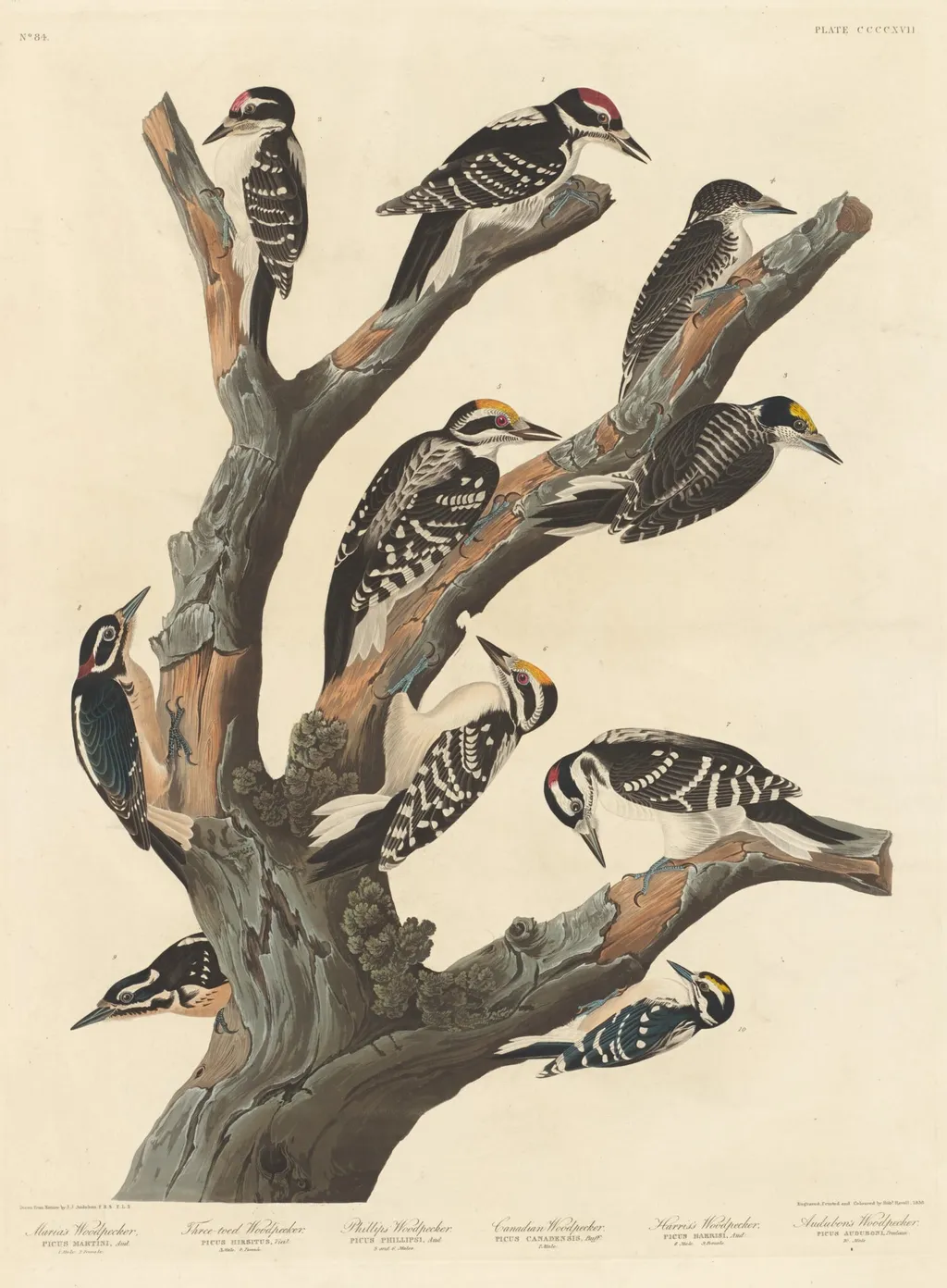
Maria's Woodpecker is an ink print by the Romanticist artist Robert Havell Jr.. It dates from 1838 and is held in the collection of the National Gallery of Art.
About this work
Overview
It belongs to a series of natural history illustrations produced during a period of heightened interest in ornithological documentation.
Created in 1838 by Robert Havell Jr., *Maria's Woodpecker* is a hand-colored engraving and aquatint on Whatman wove paper. It belongs to a series of natural history illustrations produced during a period of heightened interest in ornithological documentation. The work exemplifies the Havell family’s technical expertise in printmaking and their sustained involvement in scientific illustration, particularly through collaborations with naturalists and collectors.
Subject & Meaning
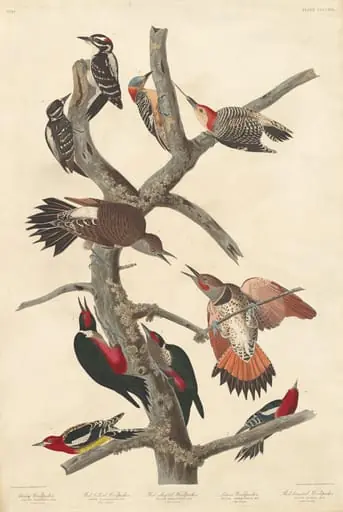
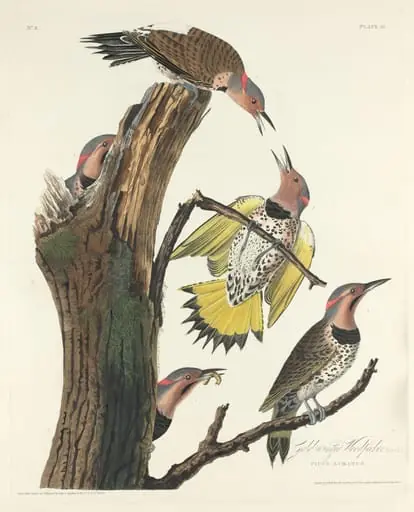
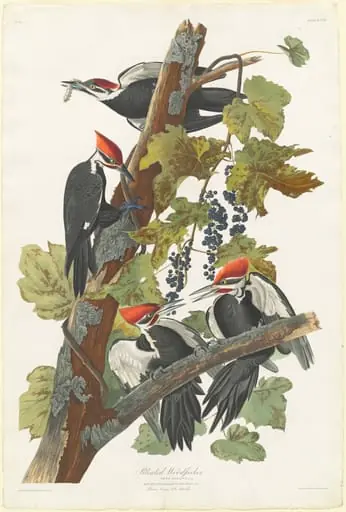
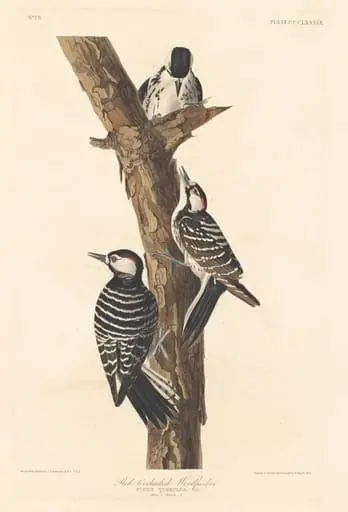
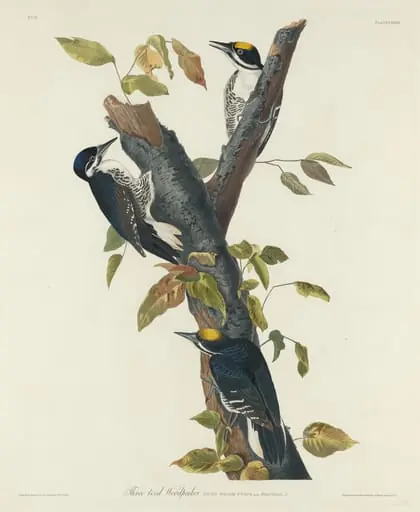
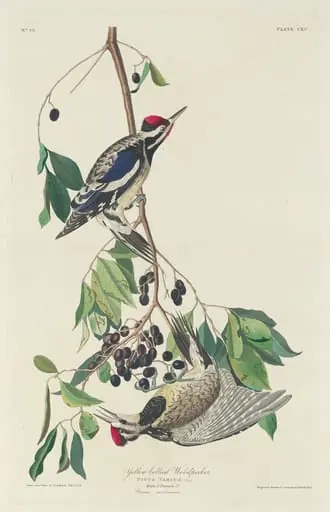
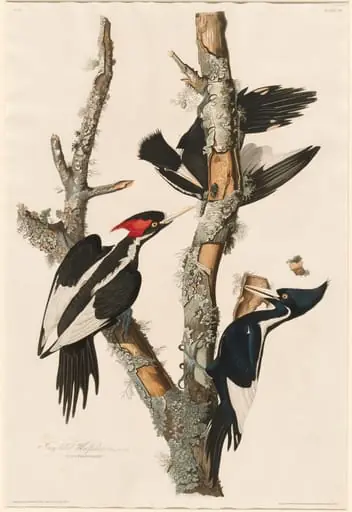
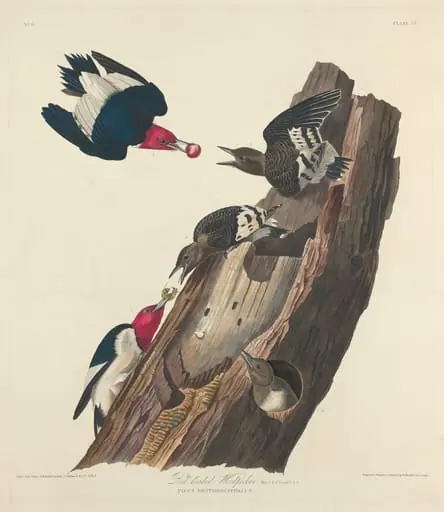
The print portrays six woodpeckers arranged along a twisted tree branch, each labeled with a name, including Maria. The birds are rendered with anatomical precision, their plumage marked by contrasting black, white, and vivid red or yellow head markings. The inclusion of individual names suggests a personal or taxonomic identification, reflecting the era’s practice of assigning human-like identifiers to specimens in natural history collections, blurring scientific and sentimental approaches to nature.
Technique & Style
Havell employed fine-line engraving and aquatint to achieve detailed textures in the birds’ feathers and the bark of the branch. Hand-coloring was applied meticulously to enhance the natural hues of each species. The branch’s sinuous form anchors the composition, while minute details—buds, cracks, and grain—convey a sense of tactile realism. The small, legible labels beneath each bird indicate an intent to serve both aesthetic and scientific purposes.
History & Provenance
Robert Havell Jr. was part of a multi-generational family of engravers based in Reading, Berkshire, known for their work on natural history publications. His father and uncle were prominent in the field, and Robert continued their legacy through collaborations with scientific illustrators. *Maria's Woodpecker* likely originated as part of a larger project documenting avian species, possibly linked to British colonial-era naturalist endeavors in India, where the Havells had previously worked.
Context
In the early 19th century, European naturalists increasingly sought to classify and visually document global biodiversity. Printmaking played a vital role in disseminating these findings to academic and private audiences. Havell’s work emerged within this context, aligning with publications like Audubon’s *Birds of America*, though his focus was narrower and more closely tied to British scientific networks and colonial collecting practices.
Legacy
Though not widely exhibited today, *Maria's Woodpecker* remains a representative example of 19th-century scientific printmaking. It illustrates the intersection of art, taxonomy, and colonial science, preserving not only the appearance of species but also the methods and values of its time. The print’s survival in institutional collections underscores its value as a historical artifact of natural history illustration.
Artist & collection

Artist
The Havell family of Reading, Berkshire, England, included a number of notable engravers, etchers and painters, as well as writers, publishers, educators, and musicians.