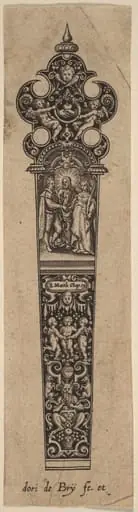
Artwork
Ornament for Knife Handle
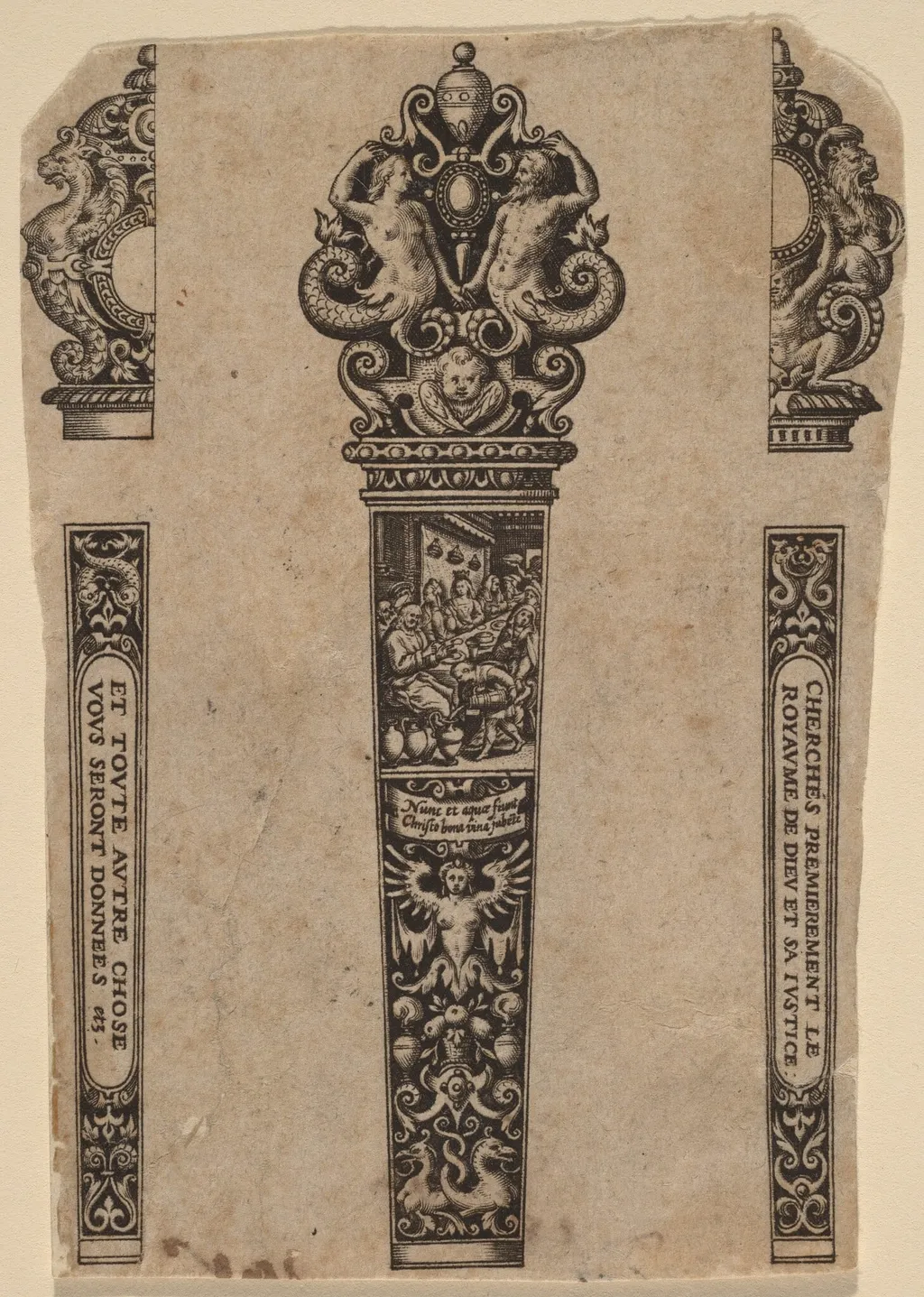
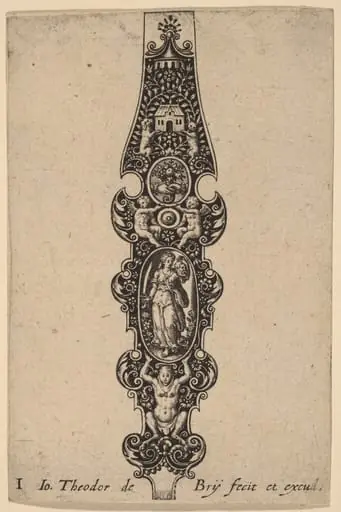
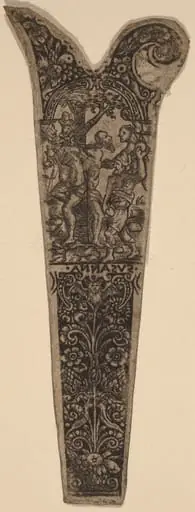
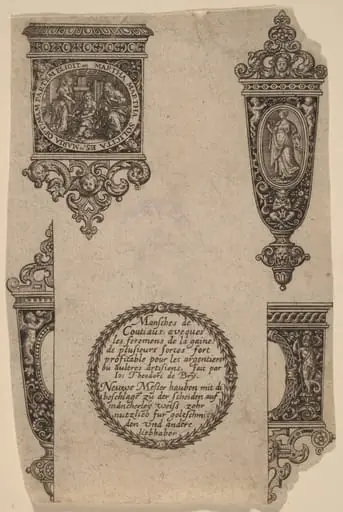
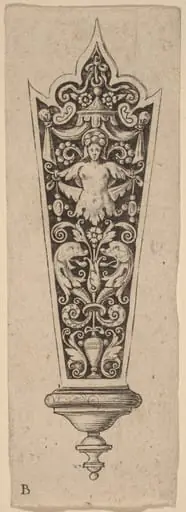
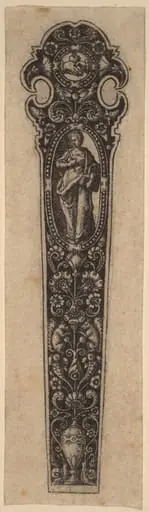
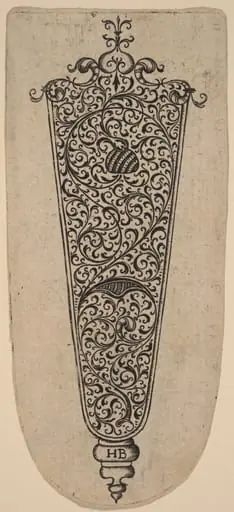
Ornament for Knife Handle is an ink print by the Renaissance artist Theodor de Bry. It dates from 1563 and is held in the collection of the National Gallery of Art.
About this work
Overview
De Bry, a Walloon artist who relocated to Frankfurt due to religious persecution, specialized in intricate printmaking and metalwork.
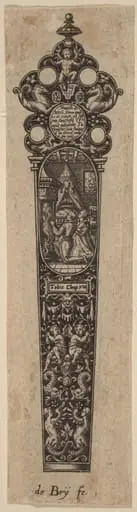
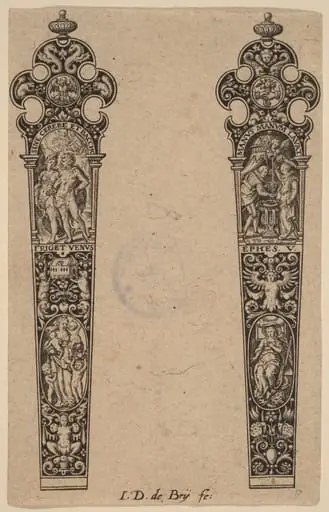
Created in 1563 by Theodor de Bry, this engraving was designed as a decorative pattern for a knife handle. De Bry, a Walloon artist who relocated to Frankfurt due to religious persecution, specialized in intricate printmaking and metalwork. The piece exemplifies his technical precision and reflects the Northern Renaissance emphasis on fine detail and ornamental design, serving both aesthetic and functional purposes in elite material culture.
Subject & Meaning
The design centers on two mermaids cradling a vase, with a human face above them, suggesting mythological or allegorical themes. Below, a banquet scene implies communal ritual or feasting, possibly evoking ideals of hospitality or abundance. Flanking elements include a mermaid and a hybrid bird-like figure, common in Renaissance decorative vocabularies. The imagery blends classical, folk, and fantastical motifs, typical of period ornamentation meant to convey sophistication and symbolic richness.
Technique & Style
Executed as a fine-line engraving, the work demonstrates de Bry’s mastery of cross-hatching and fine linear detail to model form and texture. The composition is rigorously symmetrical, with balanced motifs on either side, characteristic of Northern Renaissance design principles. The dense patterning and controlled ink lines reflect the precision required for transferring designs onto metal surfaces, bridging printmaking and metalwork traditions.
History & Provenance
Produced in Frankfurt during de Bry’s active years as a publisher and engraver, the piece likely circulated as a pattern book illustration or a prototype for craftsmen. Though not part of his famous American expedition series, it aligns with his broader output of decorative engravings. Its survival suggests it was valued within artisanal or noble circles, though its specific early ownership remains undocumented.
Context
In mid-16th-century Europe, engraved ornament patterns were essential tools for goldsmiths and metalworkers, especially in Protestant regions where religious imagery was restricted. De Bry’s work emerged amid a flourishing market for printed design sources, catering to artisans seeking refined motifs. This piece reflects the intersection of print culture, craft practice, and the secularization of decorative arts in Northern Europe.
Legacy
Though lesser known than his colonial illustrations, this engraving illustrates de Bry’s versatility and influence in decorative arts. His pattern books helped standardize ornamental forms across workshops in Germany and beyond. The work stands as a quiet testament to the role of print in disseminating artistic ideas beyond fine art into everyday material culture.
Artist & collection
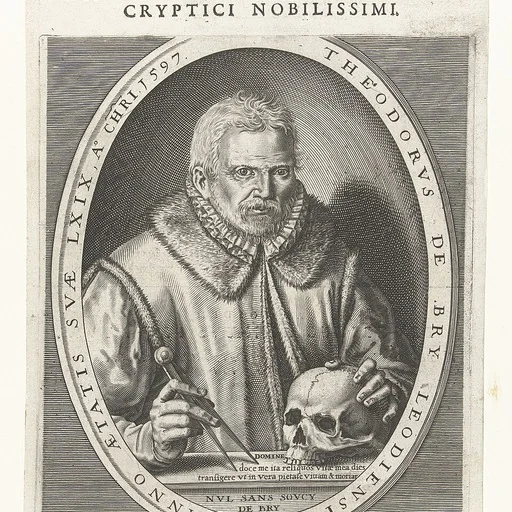
Artist
Theodor de Bry (also Theodorus de Bry; 1528 – 27 March 1598) was a Walloon engraver, goldsmith, editor and publisher, famous for his depictions of early European expeditions to the Americas.