Artwork
Second Day, Second Story: Rinaldo d'Asti and the Widow
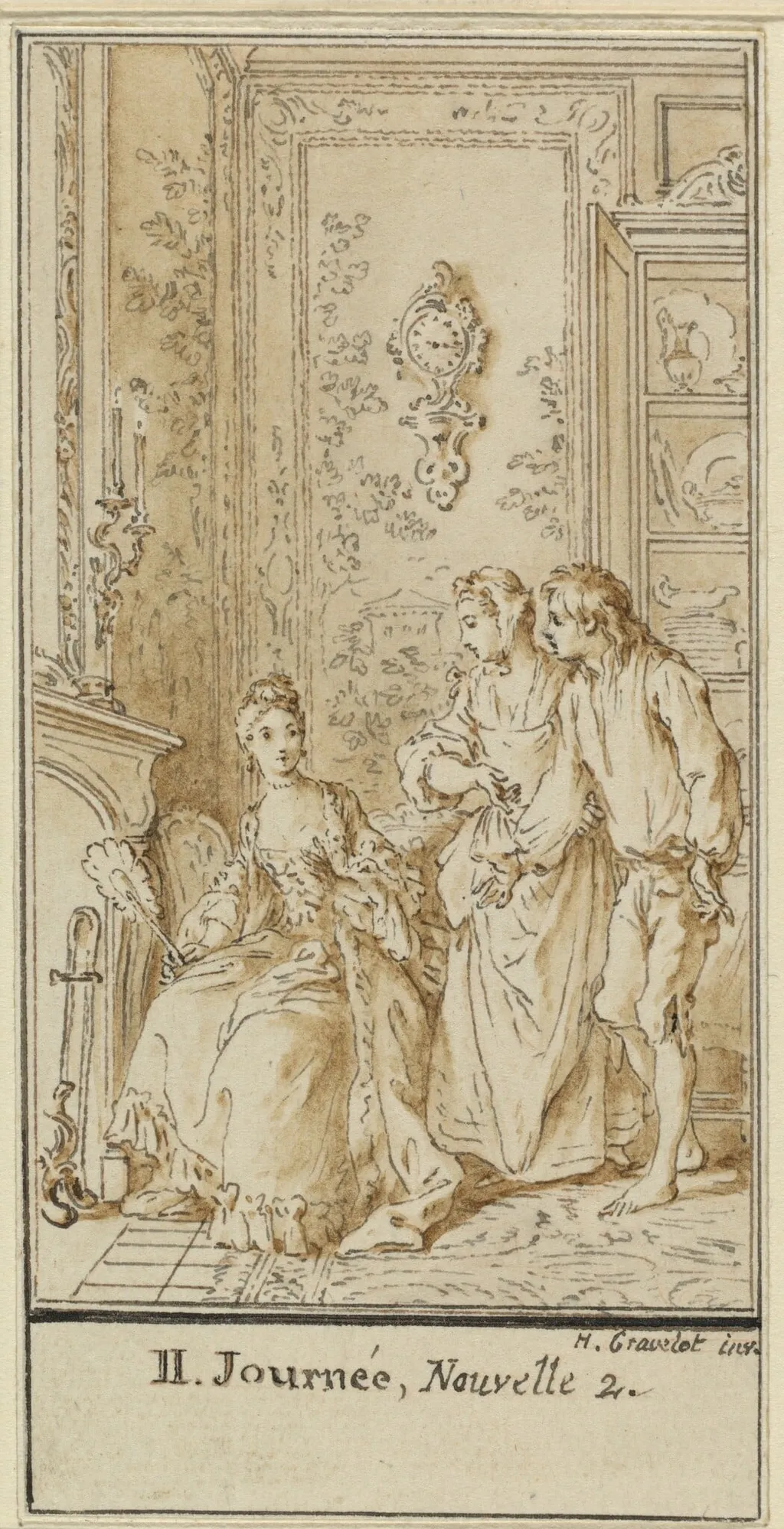
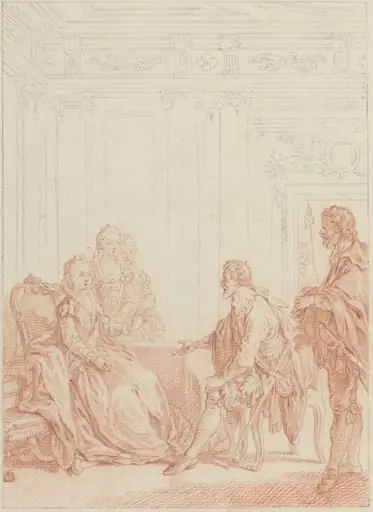
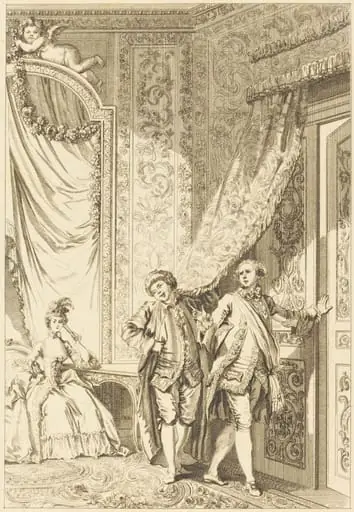
Second Day, Second Story: Rinaldo d'Asti and the Widow is an ink drawing by the Romanticist artist Hubert François Gravelot. It dates from 1757 and is held in the collection of the National Gallery of Art.
About this work
Overview
Created around 1757, this drawing by Hubert François Gravelot is executed in pen and gray ink with brown wash over faint traces of red chalk on laid paper.
Created around 1757, this drawing by Hubert François Gravelot is executed in pen and gray ink with brown wash over faint traces of red chalk on laid paper. It was later mounted on a backing sheet, a common conservation practice of the period. The work belongs to a series illustrating literary narratives, reflecting Gravelot’s role in translating textual stories into visual form during his time in London.
Subject & Meaning
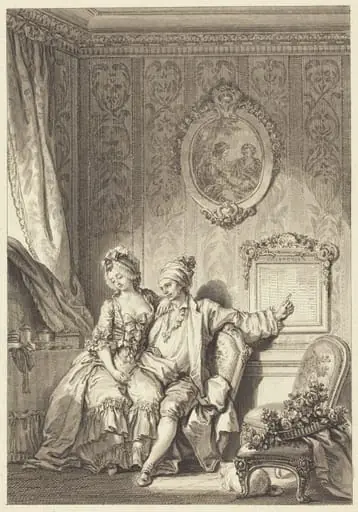
The scene portrays Rinaldo d'Asti, a character from Italian romance literature, in conversation with a widow, while a third figure observes from a seated position. The interaction suggests a moment of quiet negotiation or emotional exchange, likely drawn from a serialized tale. The restrained gestures and intimate setting emphasize psychological nuance over dramatic action, aligning with 18th-century literary illustration conventions.
Technique & Style
Gravelot employed fine pen lines to define form, layered with soft brown washes to model volume and shadow, while red chalk underdrawing guided composition. The use of laid paper and delicate tonal gradations creates a sense of spatial depth without heavy modeling. The restrained palette and precise linework reflect Rococo elegance, prioritizing clarity and atmospheric suggestion over bold contrast.
History & Provenance
Gravelot, originally from Paris, settled in London in 1732 and became influential in British decorative arts through his book illustrations. This drawing likely originated as a preparatory study for an engraved plate in a published narrative. Its survival as a standalone work suggests it was valued for its draft quality, though its early ownership remains undocumented in public records.
Context
In mid-18th-century London, illustrated literary series were popular among the middle class. Gravelot’s drawings supported this market, adapting continental Rococo aesthetics to English tastes. His work bridged French draftsmanship and British publishing, contributing to the visual language of domestic scenes in printed books, even as the style gradually gave way to Neoclassical ideals.
Legacy
Though Gravelot is less known today than his contemporaries, his drawings helped standardize the visual grammar of literary illustration in Britain. This piece exemplifies the quiet, refined approach to narrative that influenced later illustrators. Its preservation offers insight into the transition from hand-drawn studies to mass-produced engravings in the pre-industrial print economy.
Artist & collection

Artist
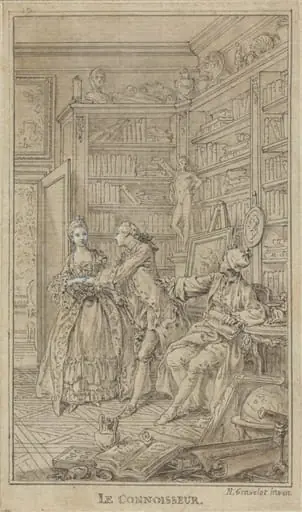
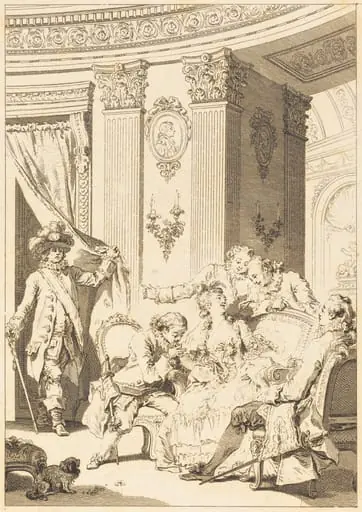
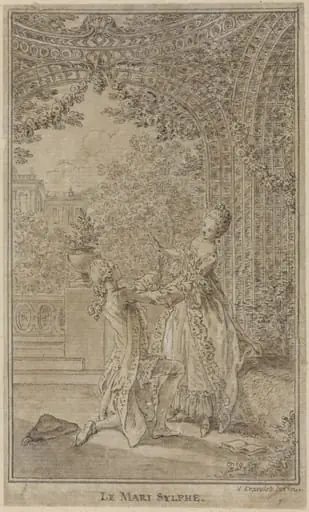
Hubert-François Bourguignon, commonly known as Gravelot (26 March 1699 – 20 April 1773), was a French engraver, a famous book illustrator, designer and drawing-master.

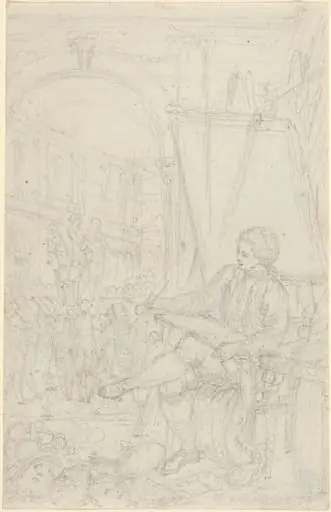 Self-Portrait
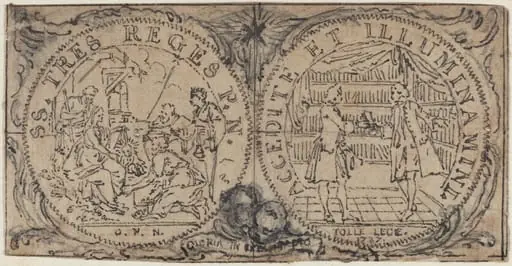 Ornamental Medallions with the Adoration of the Magi and Two Bibliophiles
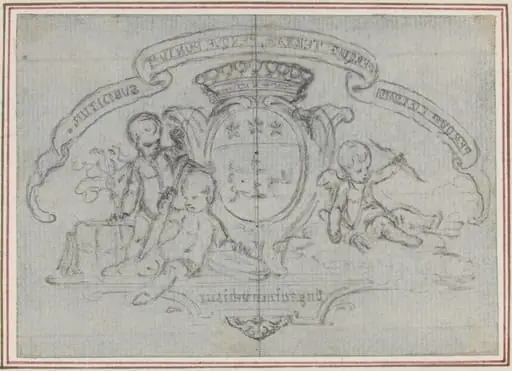 Coat of Arms with Three Putti
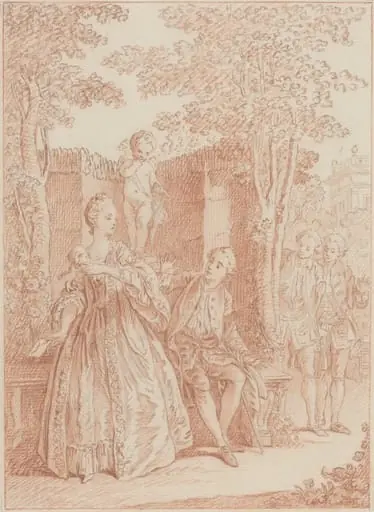 Oui, je la connais Traitre, et je connais ton Coeur
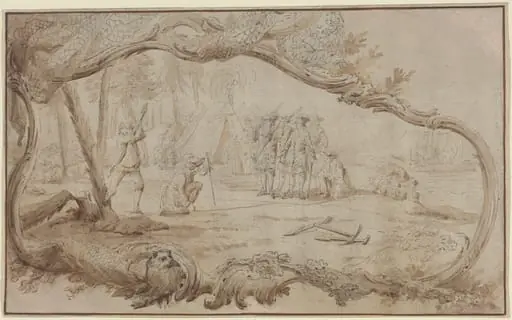 The Landing of the Dutch Expedition Party in New York
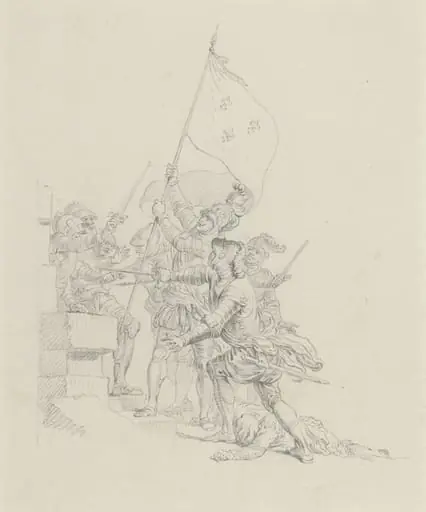 Il monte: il a déjà de ses mains triomphantes...
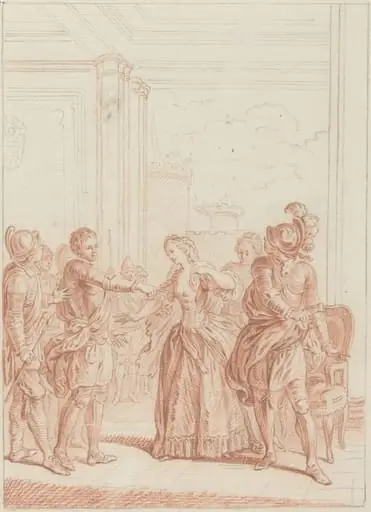 Je suis vengé de toi: l'on te hait, et l'on m'aime
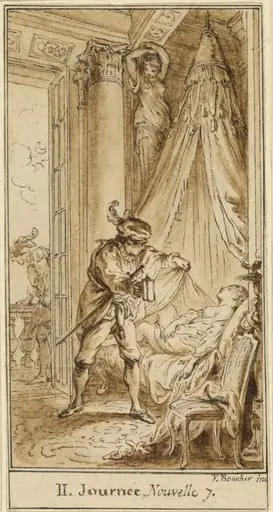 Second Day, Seventh Story: The Duke of Athens Contemplating the Sleeping Princess Alatiel