Artwork
General View of Martand Temple, Liddar Valley, Kashmir
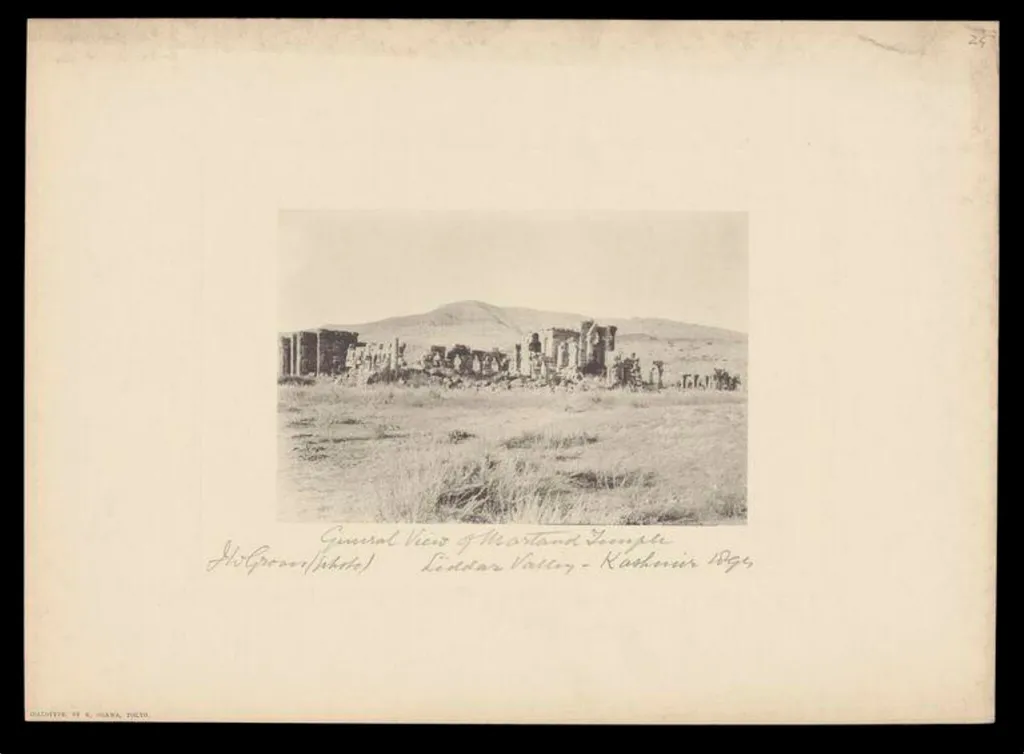
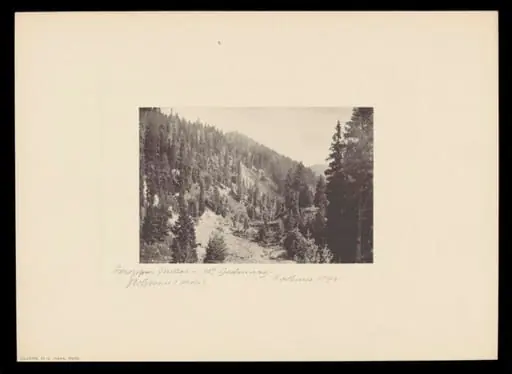
General View of Martand Temple, Liddar Valley, Kashmir is a photographic photography by the Impressionist artist J.W. Groves. It dates from 1894 and is held in the collection of the Victoria and Albert Museum. A black-and-white photograph from 1894 captures the ruins of the Martand Temple in the Liddar Valley, Kashmir.
About this work
The ruins sit on a hillside, with a few scattered trees and people in the distance.
This black-and-white photo shows an old temple half-buried in grass and rubble. The ruins sit on a hillside, with a few scattered trees and people in the distance. The light is soft, making the shapes look faded but still clear.
The photo was taken in 1894, showing how weather and time wear down buildings. The artist, Groves, focused on real details rather than idealized scenes.
Check out the Victoria and Albert Museum to see more works like this.
Overview
A black-and-white photograph from 1894 captures the ruins of the Martand Temple in the Liddar Valley, Kashmir. Taken by an unknown photographer, the image presents the temple’s stone remains as they appeared after centuries of exposure to the elements. The composition is unadorned, emphasizing the structure’s decay against a quiet, rolling landscape. No embellishment or staging is evident—only the quiet persistence of time.
Subject & Meaning
The Martand Temple, once a grand Hindu shrine dedicated to the sun god Surya, stands here as a silent relic of medieval Kashmiri architecture. Its partial collapse and overgrowth reflect centuries of abandonment and natural reclamation. The photograph does not romanticize the ruin but documents its physical state, inviting reflection on cultural loss and the impermanence of sacred spaces.
Technique & Style
The photograph employs natural light and a straightforward perspective to render the temple’s fragmented columns, terraces, and arches with clarity. The soft illumination reduces contrast, lending the scene a muted, contemplative tone. The absence of human focus or dramatic framing aligns with documentary practices of the period, prioritizing accuracy over aesthetic manipulation.
History & Provenance
The image was made in 1894 during a period of increased British colonial documentation of South Asian heritage sites. Though the photographer’s full identity remains unconfirmed, the work likely originated from a survey or archival effort. It entered the Victoria and Albert Museum’s collection as part of a broader initiative to preserve visual records of endangered monuments.
Context
In the late 19th century, European and colonial photographers systematically recorded India’s architectural heritage, often in response to concerns about decay and neglect. The Martand Temple, already in ruins since the 15th century, became a subject of scholarly interest. This photograph contributes to a growing visual archive that sought to catalog, rather than restore, historical sites.
Legacy
The image endures as a factual record of the temple’s condition before modern conservation efforts. It informs archaeological studies and serves as a baseline for understanding structural deterioration over time. Though not widely exhibited, it remains a quiet reference point in the study of South Asian heritage documentation and early photographic archiving.
Artist & collection
Artist
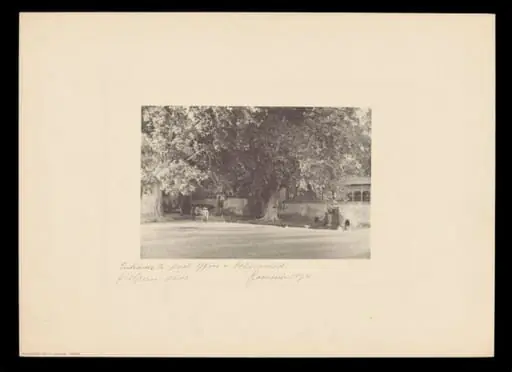
Photographer J.W. Groves captured Kashmir in the 1890s, leaving behind glass-plate prints of landmarks like Nedou’s Hotel in Gulmarg and the post office entrance in Islamabad. His lens framed scenes where locals and…

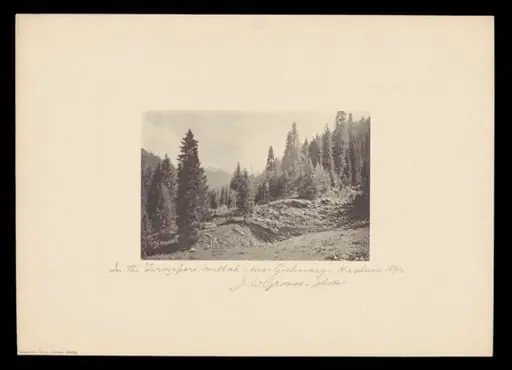
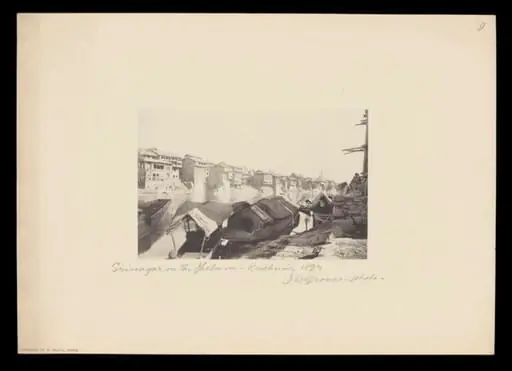
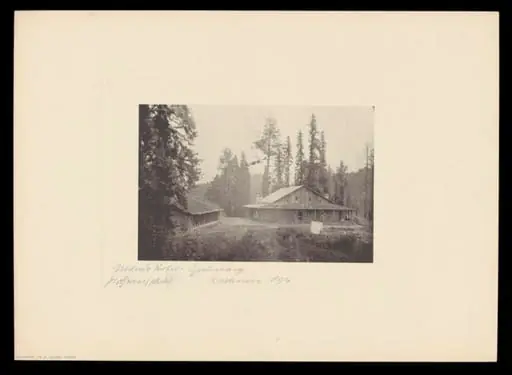
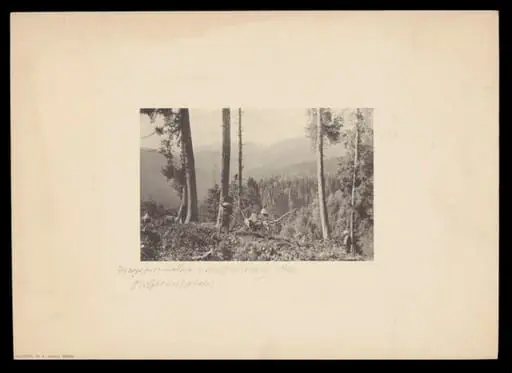
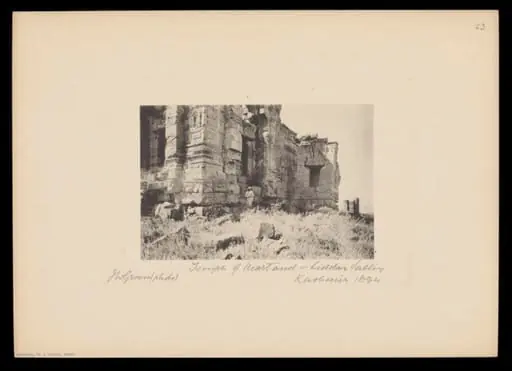 Temple of Martand, Liddar Valley, Kashmir
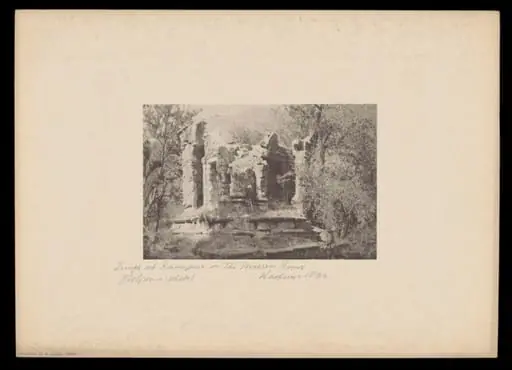 Temple at Rampur on The Murree Road, Kashmir
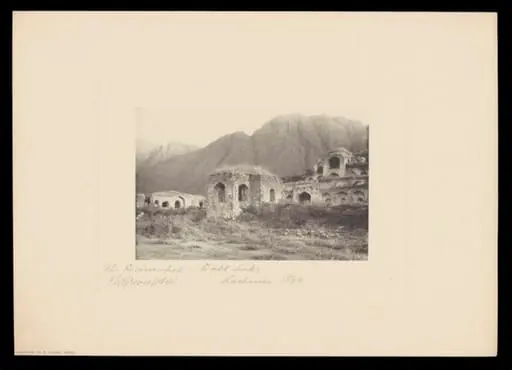 The Pari Mahal, Dahl Lake, Kashmir
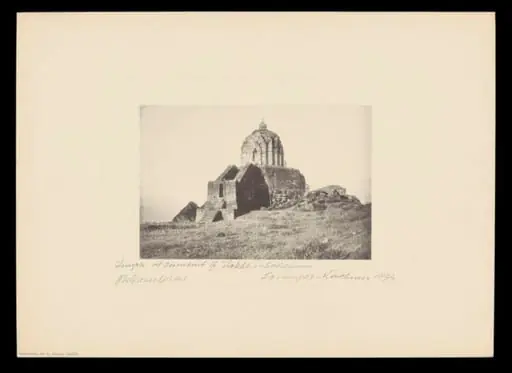 Temple at summit of Shankaracharya, Srinagar, Kashmir
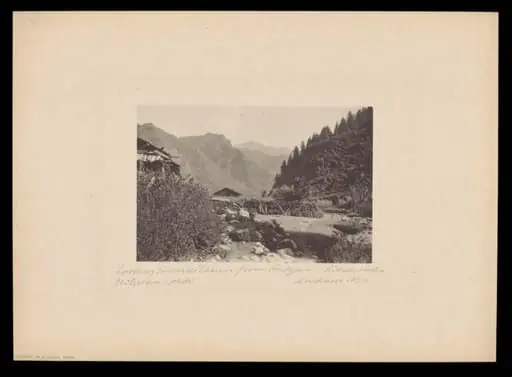 Looking towards Tauin from Pahalgam, Lidder Valley, Kashmir
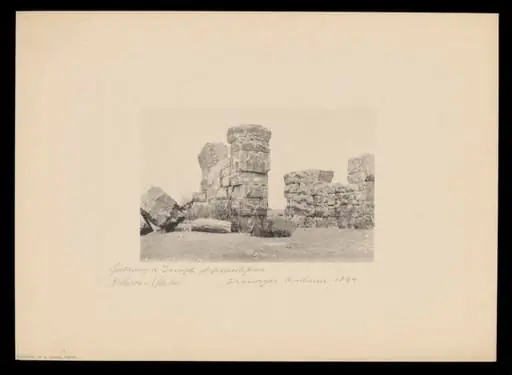 Gateway to Temple at Avantipur, Srinagar, Kashmir
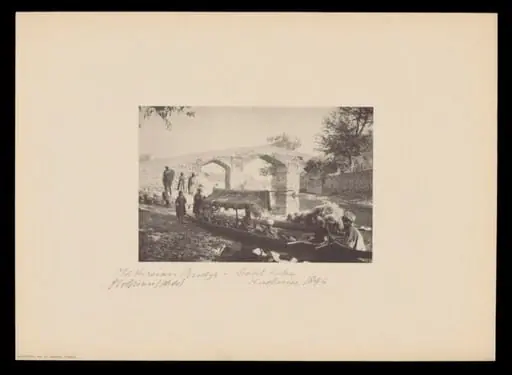 Bridge, Dahl Lake, Kashmir
 Gulmarg, Kashmir