Artwork
The Pari Mahal, Dahl Lake, Kashmir
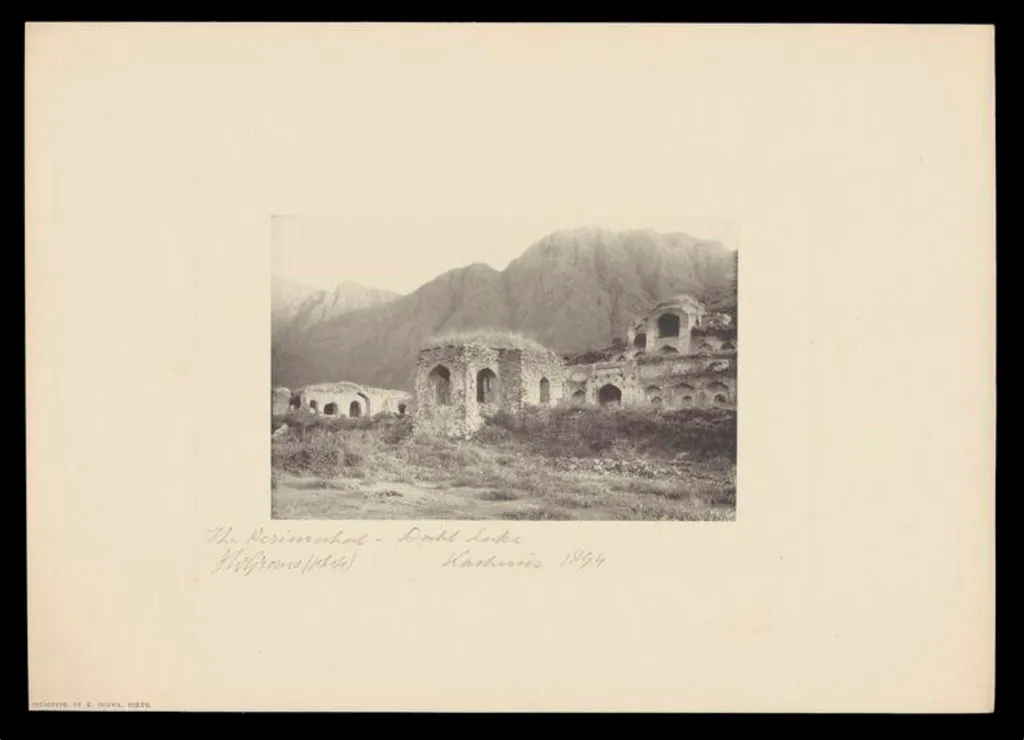
The Pari Mahal, Dahl Lake, Kashmir is a photographic photography by the Impressionist artist J.W. Groves. It dates from 1894 and is held in the collection of the Victoria and Albert Museum. A black-and-white photograph taken in 1894 by J.
About this work
If you're interested in learning more about this style of photography, you might want to check out the work of other Realist photographers, like J.
This photograph shows the Pari Mahal, Dahl Lake, Kashmir, taken by J.W. Groves in 1894. The image is in black and white, with the building in the center and mountains in the background. The building has several arches and windows, with a grassy area in front of it.
The photograph is a great example of Realism, with its focus on everyday life and accurate depiction of the scene. The use of black and white also adds to the realism, as it gives the image a sense of simplicity and honesty.
If you're interested in learning more about this style of photography, you might want to check out the work of other Realist photographers, like J.W. Groves.
Overview
A black-and-white photograph taken in 1894 by J.W. Groves captures the Pari Mahal, a historic structure on the slopes above Dal Lake in Kashmir. The image presents the building’s arched corridors and low, vegetated roofs with quiet clarity, framed by the steep, distant peaks of the Himalayas. The composition emphasizes spatial depth and architectural detail without embellishment, reflecting the documentary aims of late 19th-century photographic practice.
Subject & Meaning
The Pari Mahal, originally a Mughal-era garden pavilion and later a Sufi learning center, appears here in a state of quiet decay. Its terraced form, nestled against the mountains, suggests a fusion of human design and natural topography. The photograph does not idealize the site but records its physical presence, offering a glimpse into the cultural landscape of Kashmir under colonial observation.
Technique & Style
Shot with a large-format camera, the image employs natural light and a long exposure to render fine textures in stone, grass, and sky. The absence of color focuses attention on tonal gradations and structural form. The composition is balanced and static, avoiding dramatic angles or human figures, aligning with the observational rigor characteristic of early documentary photography.
History & Provenance
The photograph was taken during J.W. Groves’s travels in northern India, likely as part of a broader survey of architectural sites. It entered institutional collections in the early 20th century, preserved as a record of Kashmir’s built heritage. Its survival as an unmounted print suggests it was used for study or archival purposes rather than public display.
Context
In the 1890s, British administrators and amateur photographers increasingly documented South Asian architecture, often to catalog or classify regional styles. Groves’s image fits within this trend, yet avoids overt exoticism. The Pari Mahal, though historically significant, is shown without ceremony, reflecting a shift toward empirical recording over romanticized representation.
Legacy
The photograph remains a reference for historians studying Kashmir’s architectural evolution and early photographic documentation in the region. Its restrained aesthetic has influenced later ethnographic projects that prioritize factual clarity over narrative flourish. It stands as a quiet testament to the site’s endurance through political and cultural change.
Artist & collection
Artist
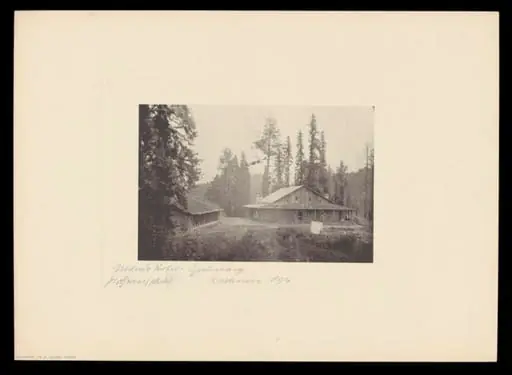
Photographer J.W. Groves captured Kashmir in the 1890s, leaving behind glass-plate prints of landmarks like Nedou’s Hotel in Gulmarg and the post office entrance in Islamabad. His lens framed scenes where locals and…

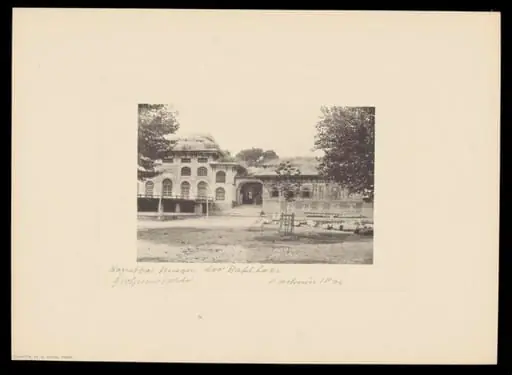 Hazratbal Mosque, Dahl Lake, Kashmir
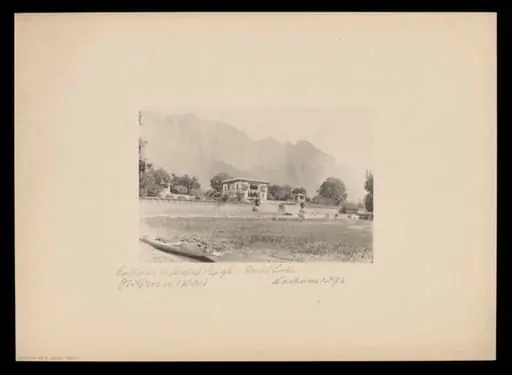 Entrance to Nishat Bagh, Dahl Lake, Kashmir
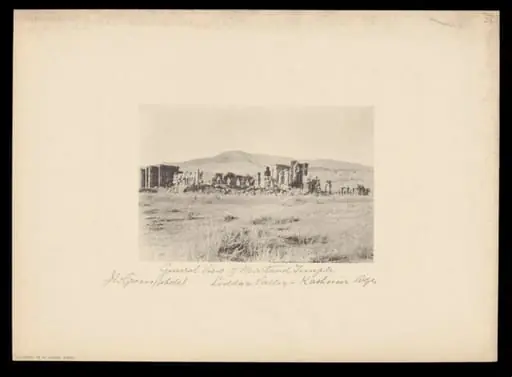 General View of Martand Temple, Liddar Valley, Kashmir
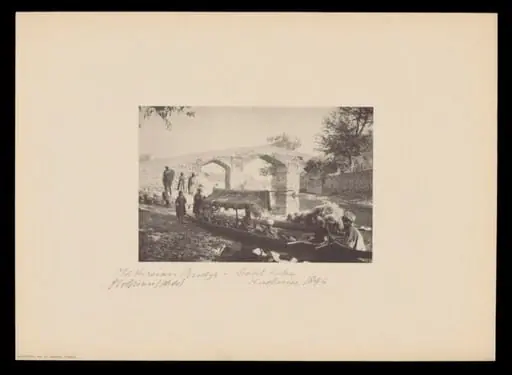 Bridge, Dahl Lake, Kashmir
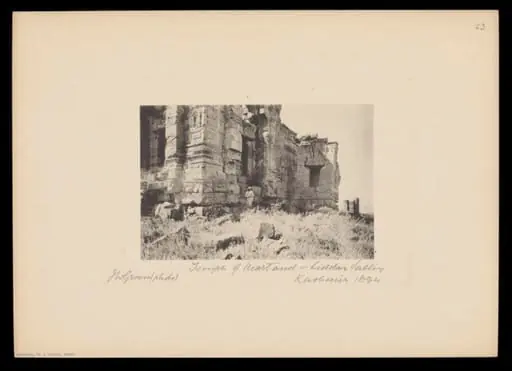 Temple of Martand, Liddar Valley, Kashmir
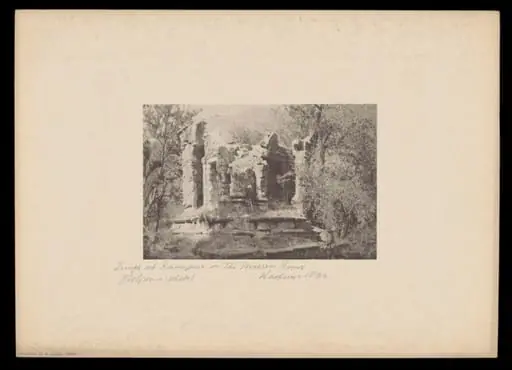 Temple at Rampur on The Murree Road, Kashmir
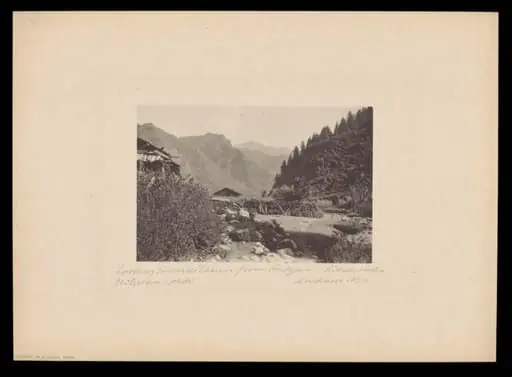 Looking towards Tauin from Pahalgam, Lidder Valley, Kashmir
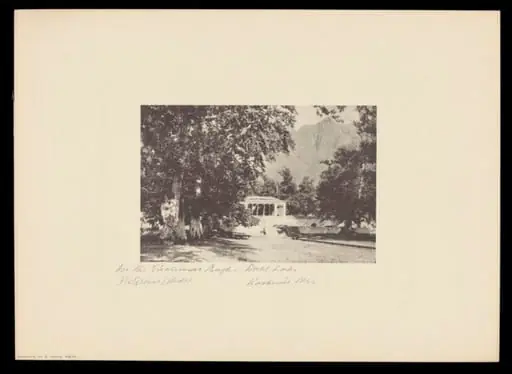 In the Shalimar Bagh, Dahl Lake, Kashmir
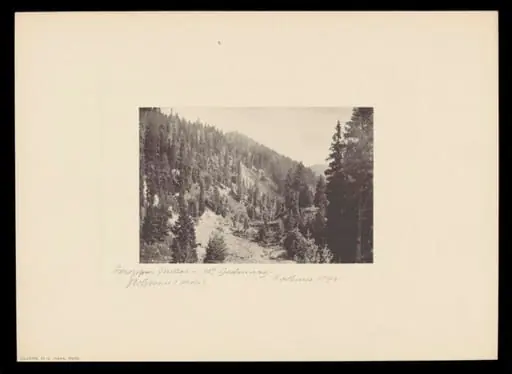 Gulmarg, Kashmir