Artwork
Baalbek
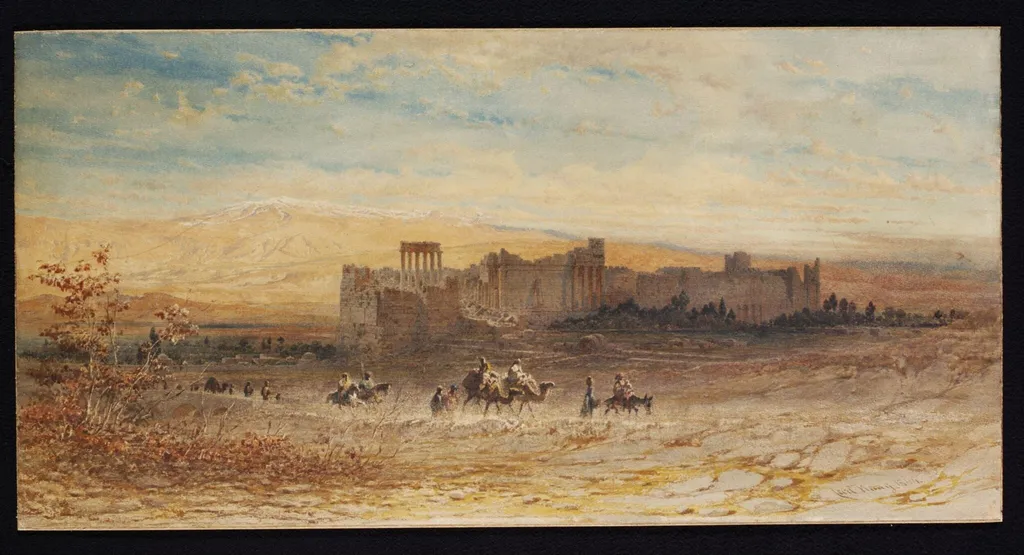
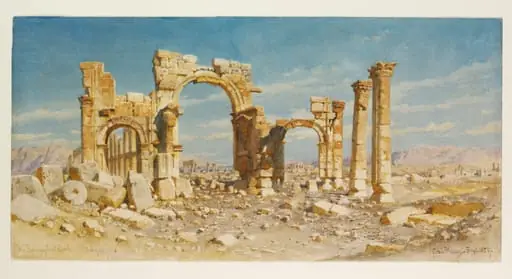
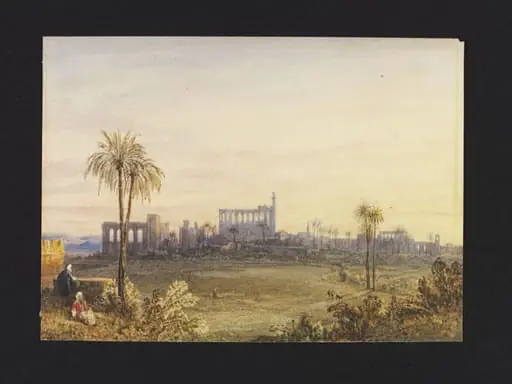
Baalbek is a watercolor work on paper by the Impressionist artist Carl Haag. It dates from 1864 and is held in the collection of the Victoria and Albert Museum.
About this work
Overview
Haag exhibited related views at the Old Water-Colour Society in the early 1860s, suggesting a sustained engagement with the subject.
Carl Haag created this watercolour in 1864, based on sketches made during his visit to Baalbek in November 1859. The work reflects his interest in documenting ancient Near Eastern architecture through direct observation. At least two versions exist, one commissioned by Colonel Pennant and now at Penrhyn Castle. Haag exhibited related views at the Old Water-Colour Society in the early 1860s, suggesting a sustained engagement with the subject.
Subject & Meaning
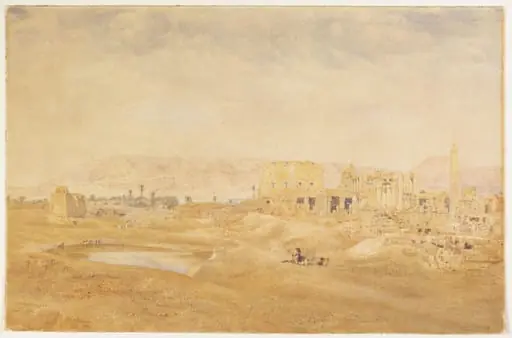
The scene portrays the monumental ruins of Baalbek amid an arid, empty landscape. Small figures on horseback and donkeys underscore the scale and abandonment of the ancient structures. The composition emphasizes silence and decay, with human presence rendered as fleeting against enduring stone. No narrative is imposed; instead, the image invites contemplation of time’s erosion of human achievement.
Technique & Style
Haag employed loose, transparent watercolour washes to suggest texture and atmosphere. Warm earth tones—ochres, browns, and pale blues—dominate, harmonizing with the desert light. Delicate brushwork captures the crumbling masonry and distant sky without sharp definition, creating a hazy, atmospheric effect. The technique avoids detail in favor of mood, aligning with the Romantic tradition of evoking awe through subtlety.
History & Provenance
The painting was acquired in August 1967 from R. Appleby, though its earlier ownership is not fully documented. One variant was commissioned by Colonel Pennant and remains at Penrhyn Castle. Haag exhibited related Baalbek views at the Old Water-Colour Society between 1862 and 1865, indicating the subject held public interest. The work’s survival in multiple versions suggests it was valued as both artistic and documentary output.
Context
Haag’s visit to Baalbek occurred during a period of growing European interest in Levantine antiquities, spurred by archaeological exploration and travel literature. His watercolours contributed to a visual record of sites before modern restoration. Unlike later photographers, he emphasized mood over precision, aligning with artistic conventions of the time that prioritized emotional resonance over topographical accuracy.
Legacy
Haag’s Baalbek watercolours remain part of a broader 19th-century effort to visually archive ancient sites. While not widely known today, they represent a quiet, observational approach to archaeology through art. Their presence in institutional collections, including Penrhyn Castle and the Victoria and Albert Museum, affirms their role as historical documents within the watercolour tradition.
Artist & collection
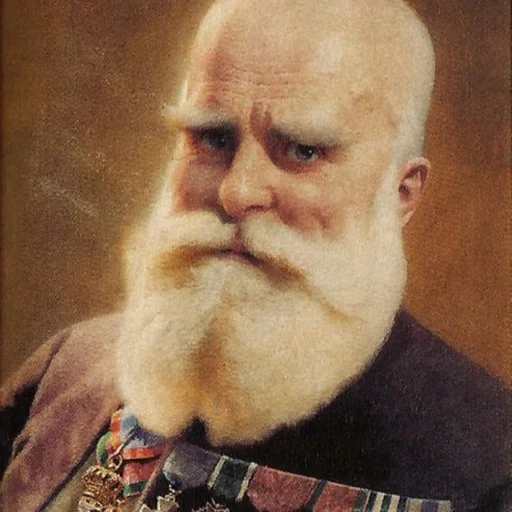
Artist
Carl Haag was a Bavarian-born painter who became a naturalized British subject and was court painter to the duke of Saxe-Coburg and Gotha.