Artwork
Vabhruvahana Approaches Arjuna, page from the Khan Khanan's Razm-nama
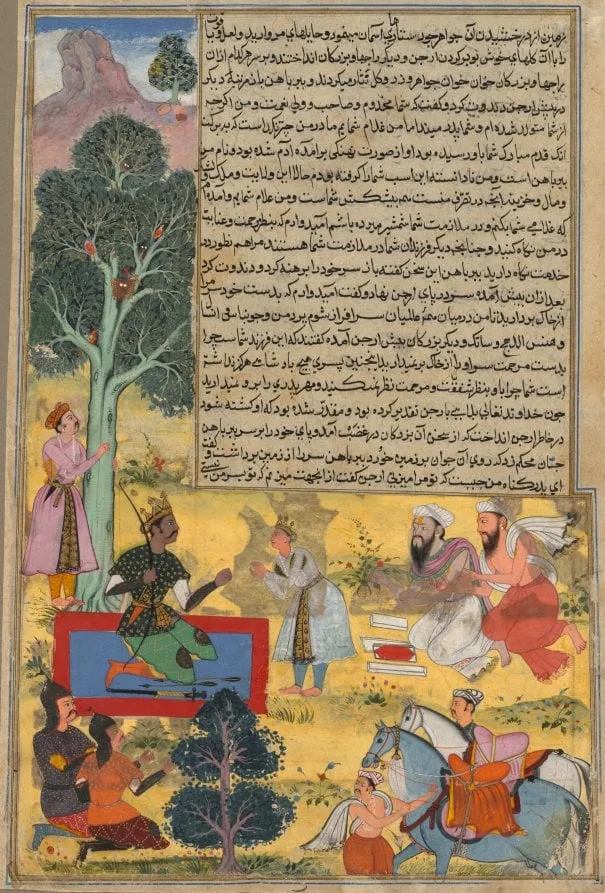
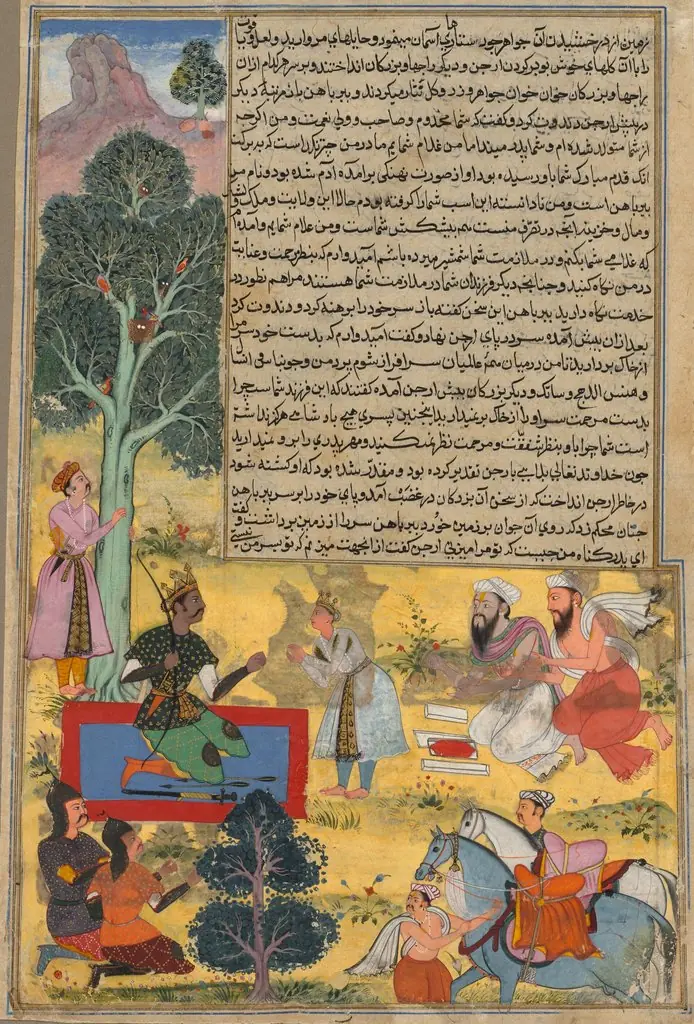
Vabhruvahana Approaches Arjuna, page from the Khan Khanan's Razm-nama is an unspecified painting by the Baroque artist Sur Das Gujarati. It dates from 1610 and is held in the collection of the Cleveland Museum of Art.
About this work
Overview
The miniature illustrates a moment from the Persian Razm‑nama, depicting the hero Arjuna reclining on a blanket beneath a tree with a mint‑green trunk. A bird‑filled canopy frames the scene, while Arjuna holds his bow as his son Vabhruvahana approaches to offer an apology.
Subject & Meaning
The narrative captures Vabhruvahana’s contrition after seizing a horse intended for a royal sacrifice, an act considered a serious breach. By presenting the son’s apology to his renowned father, the image emphasizes themes of duty, remorse, and the restoration of honor within the epic’s moral framework.
Technique & Style
Rendered in the miniature tradition, the work combines delicate line work with vivid pigments, especially the unusual mint‑green hue of the tree trunk. The composition balances intricate natural details—birds, nests, and eggs—with the human figures, creating a harmonious yet narrative‑driven tableau.
History & Provenance
This page belongs to the Khan Khanan’s Razm‑nama, a Persian illustrated manuscript. The miniature is part of the collection of the Cleveland Museum of Art, acquired through the museum’s acquisitions program focused on South Asian and Persian illustrated texts.
Context
The Razm‑nama adapts stories from the Indian epic Mahābhārata for a Persian audience, integrating local artistic conventions. The scene reflects the cross‑cultural exchange of the early modern period, where Indian heroic tales were re‑interpreted within Persian literary and visual idioms.
Artist & collection
Artist
Sur Das Gujarati painted scenes from Mughal life and epic tales at the court of Akbar.

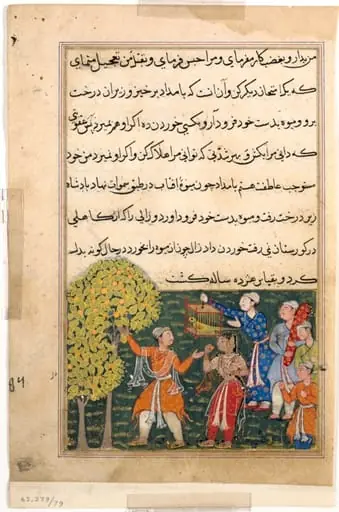 The king plucks fruit from the Tree of Life with his own hands and feeds it to a lady, from a Tuti-nama (Tales of a Parrot): Ninth Night
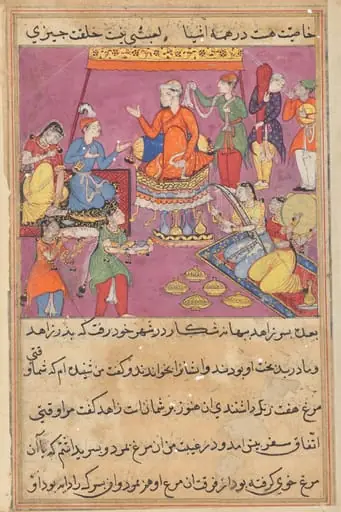 The king gives his daughter in marriage to the pious man’s son, from a Tuti-nama (Tales of a Parrot): Fifty-second Night
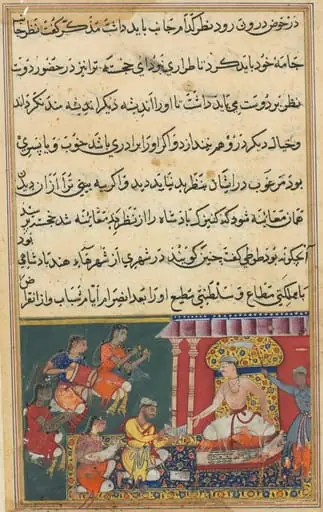 The astrologer predicts a calamity for the newly born prince in his thirteenth year, but one which he would be able to overcome, from a Tuti-nama (Tales of a Parrot): Eighth Night
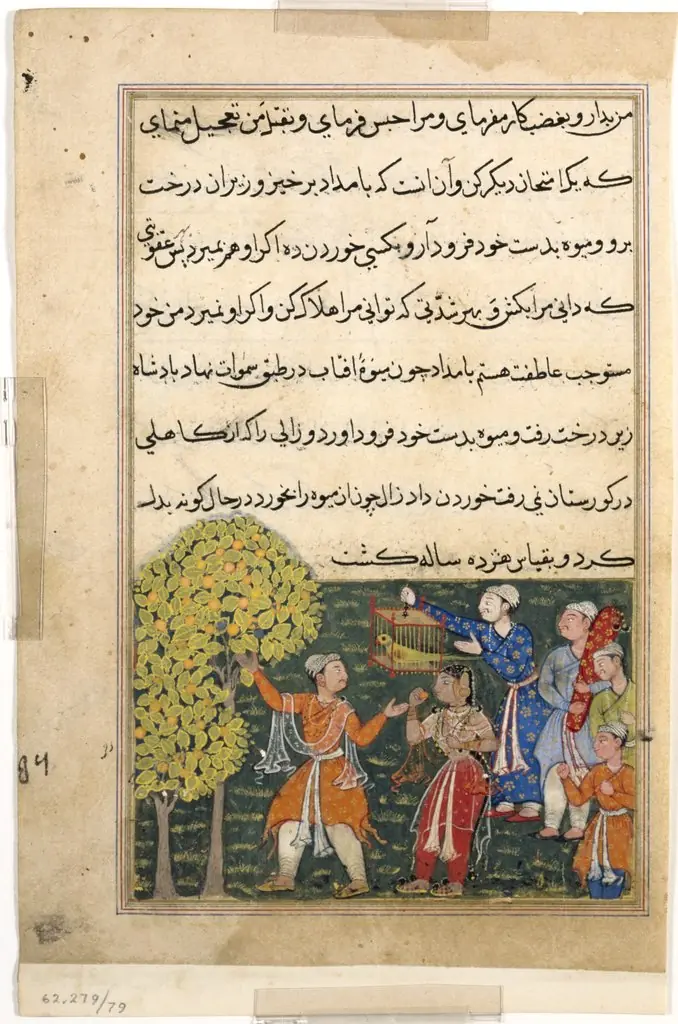 The king plucks fruit from the Tree of Life with his own hands and feeds it to a lady, from a Tuti-nama (Tales of a Parrot): Ninth Night
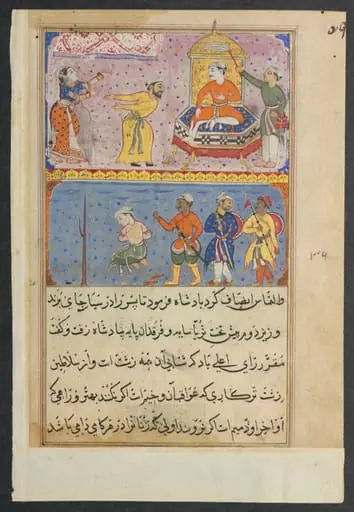 The prince, once reprieved, is returned to the palace of execution a second time on the plea of the king’s handmaiden, from a Tuti-nama (Tales of a Parrot): Eighth Night
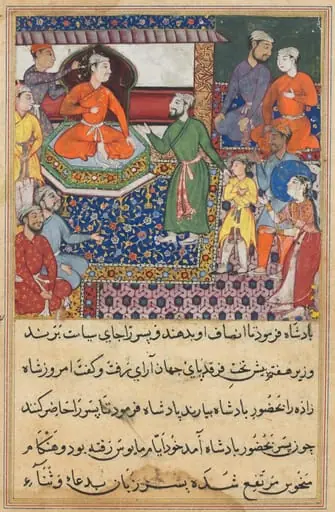 The handmaiden again pleads for the death of the prince, from a Tuti-nama (Tales of a Parrot): Eighth Night
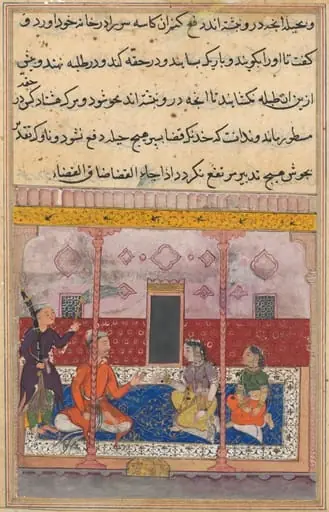 The merchant has the hateful skull ground and put into a box, from a Tuti-nama (Tales of a Parrot): Twenty-third Night
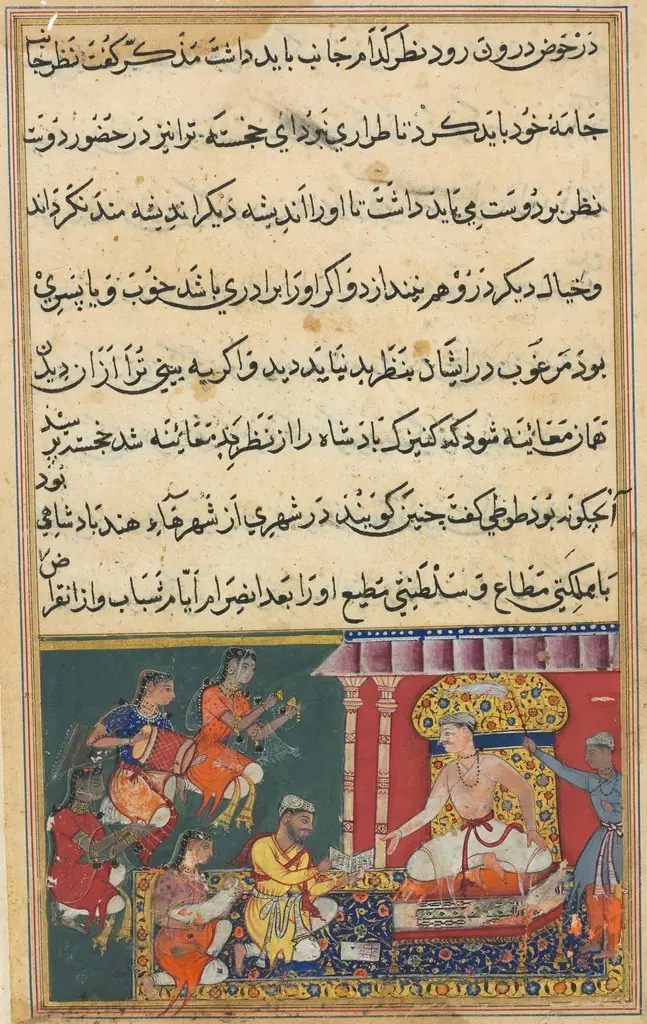 The astrologer predicts a calamity for the newly born prince in his thirteenth year, but one which he would be able to overcome, from a Tuti-nama (Tales of a Parrot): Eighth Night
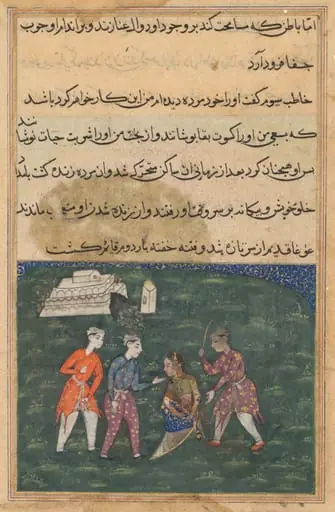 The third suitor strikes the devotee’s daughter and thus restores her to life, from a Tuti-nama (Tales of a Parrot): Twentieth Night