Artwork
The Labors of Hercules: Hercules Dragging Cerberus from the Underworld
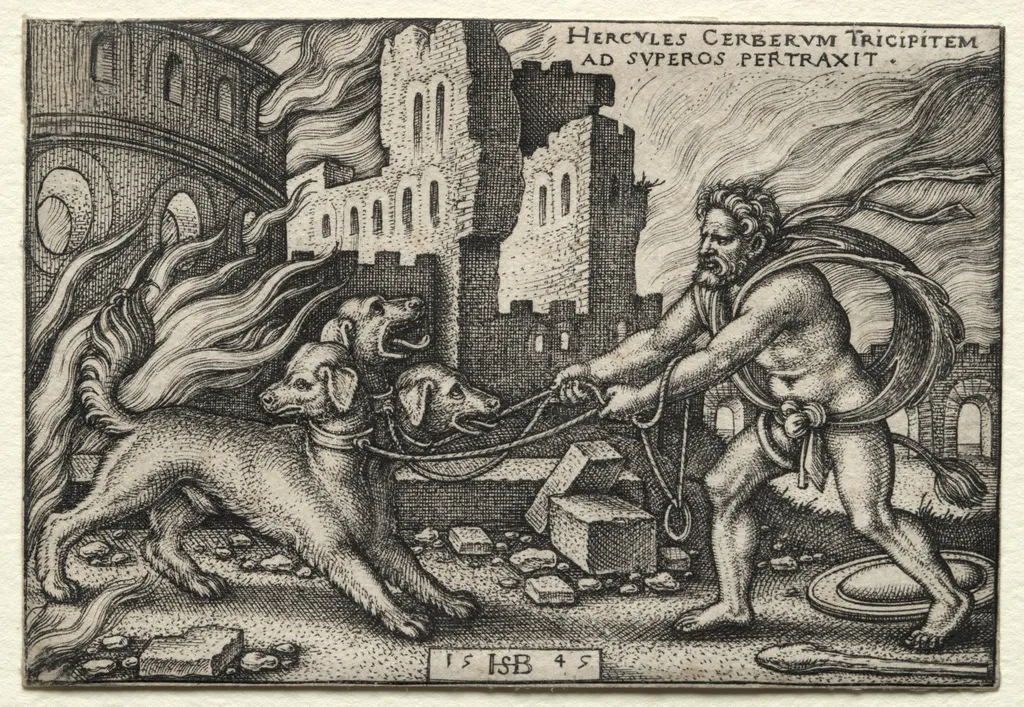
The Labors of Hercules: Hercules Dragging Cerberus from the Underworld is a print by the Renaissance artist Sebald Beham. It dates from 1545 and is held in the collection of the Cleveland Museum of Art.
About this work
Look up Hans Sebald Beham (German, 1500–1550) to see more of his mini mythologies.
Hercules drags a snarling Cerberus up from darkness by one of his three heads. The dog’s claws scrape stone as light hits their bodies. Beham packs this myth into a tiny copper plate.
He was one of the “Little Masters.” They carved scenes so small, a whole battle or labor fits in your palm. This print is less than three inches tall.
Look up Hans Sebald Beham (German, 1500–1550) to see more of his mini mythologies.
Overview
This small print, less than three inches tall, is part of a series by Hans Sebald Beham depicting the life and labors of Hercules. Executed on a tiny copper plate, it showcases Beham's skill as one of the 'Little Masters,' a group of German printmakers renowned for their miniature engravings.
Subject & Meaning
The print illustrates Hercules dragging Cerberus, the three-headed dog of the Underworld, upwards into the light. This labor, one of Hercules' penances for a tragic act of madness, highlights the hero's dual nature as both mortal and divine, embodying the moral and physical trials that made him a beloved classical figure in Renaissance art.
Technique & Style
Beham's engraving packs intricate detail into a diminutive space, characteristic of the 'Little Masters.' The contrast between light and darkness, as well as the dynamic pose of Cerberus, demonstrates Beham's mastery of composition and storytelling within the constraints of a tiny format.
History & Provenance
Part of a series including 12 stories of Hercules, this print is one of three depicting his famous labors. Created by Hans Sebald Beham, a prominent figure among the 'Little Masters,' its exact provenance is not detailed here, but it reflects the Renaissance fascination with classical themes in miniature art forms.
Context
The appeal of such tiny, detailed prints lay in their novelty as miniature curiosities, catering to collectors of the time who cherished small, intricately crafted objects. The subject matter tapped into the Renaissance revival of interest in classical mythology.
Artist & collection
Artist
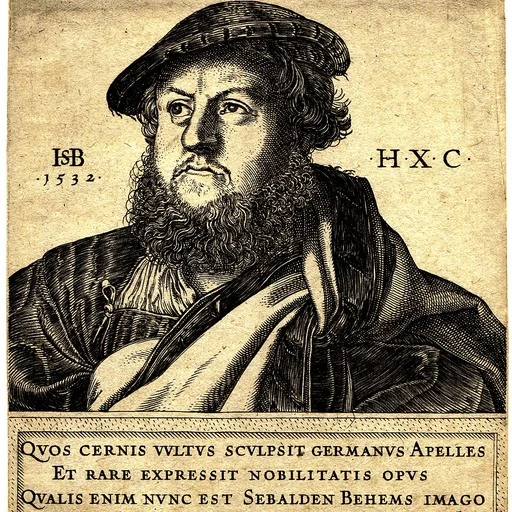
Sebald Beham (1500–1550) was a German painter and printmaker, mainly known for his very small engravings.


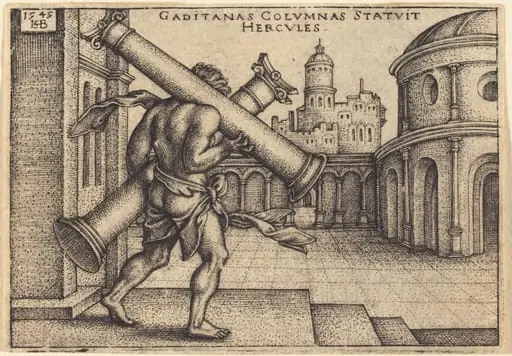
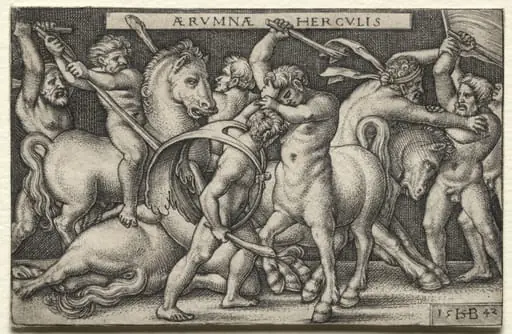 The Labors of Hercules
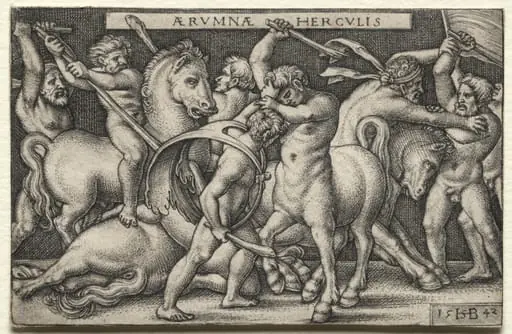 The Labors of Hercules: Hercules Defeating the Centaurs
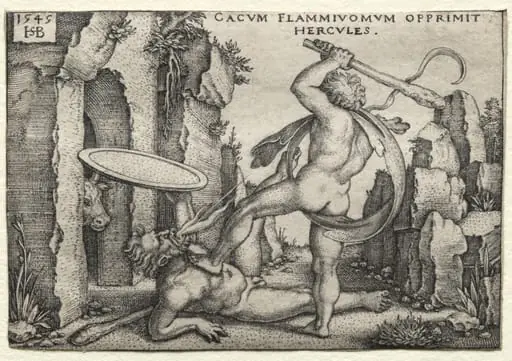 The Labors of Hercules: Hercules Killing the Giant Cacus
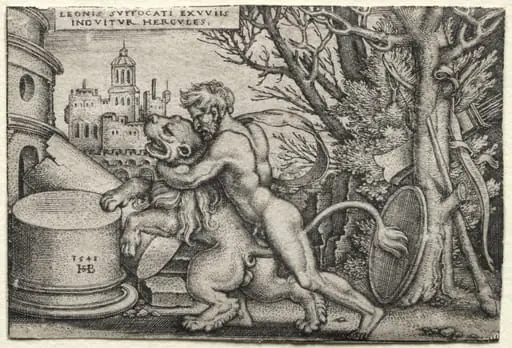 The Labors of Hercules: Hercules Strangling the Nemean Lion
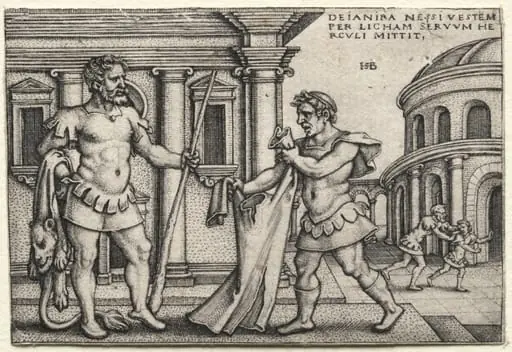 The Labors of Hercules: Hercules Receiving the Garment Steeped in Nessus's Blood
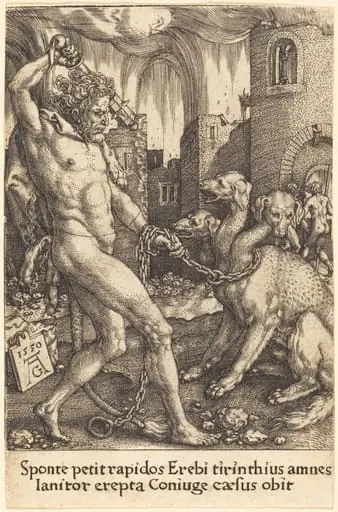 Hercules and Cerberus
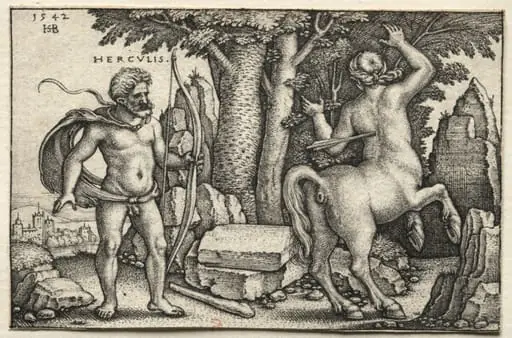 The Labors of Hercules: Hercules Shooting Nessus
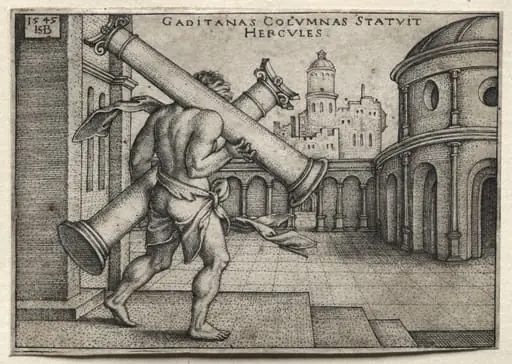 The Labors of Hercules: Hercules Carrying the Columns of Gades
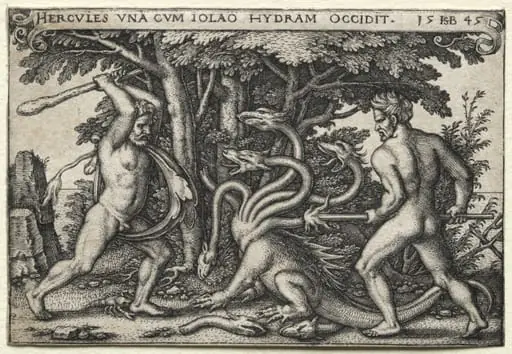 The Labors of Hercules: Hercules Killing the Lernean Hydra
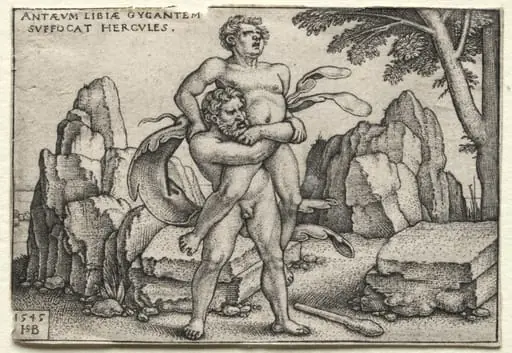 The Labors of Hercules: Hercules Crushing Antaeus
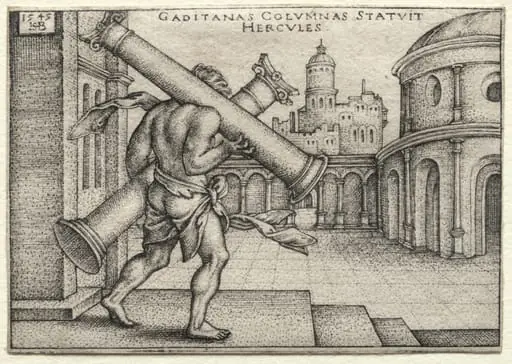 The Labors of Hercules: Hercules and the Columns of Gades