Artwork
The Man of Sorrows
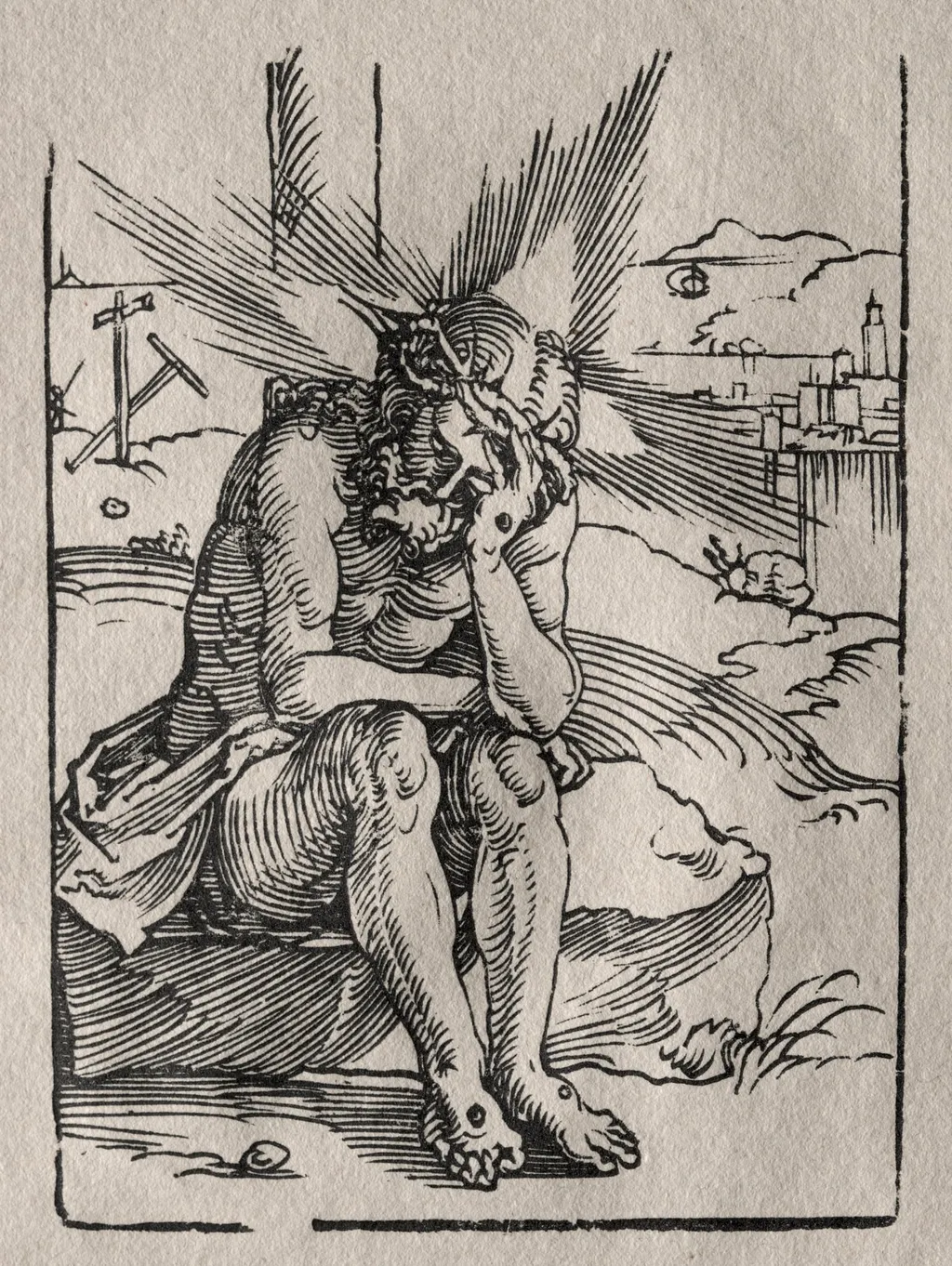
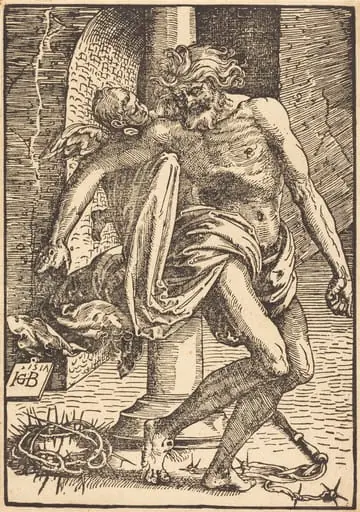
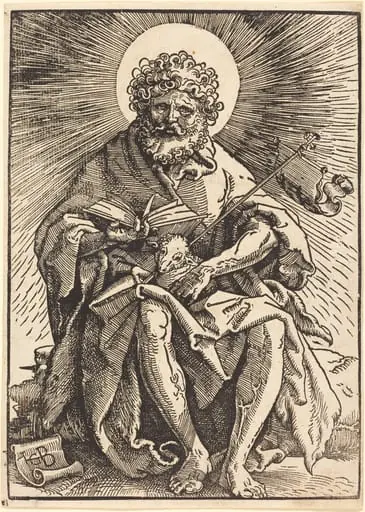
The Man of Sorrows is a print by Sebald Beham. It dates from 1535 and is held in the collection of the Cleveland Museum of Art.
About this work
Overview
This print captures Christ in a moment of private grief, rendered with technical mastery suited to the miniature scale of copperplate engraving.
Created around 1535 by Hans Sebald Beham, *The Man of Sorrows* is a small engraving that exemplifies the precision and emotional restraint characteristic of the German Little Masters. Beham, known for his intricate graphic work, adapted traditional religious iconography into intimate, finely detailed compositions. This print captures Christ in a moment of private grief, rendered with technical mastery suited to the miniature scale of copperplate engraving.
Subject & Meaning
The image presents Christ seated alone on a rocky outcrop, his head bowed and hands clasped over his face, expressing profound sorrow. Bare except for a loincloth, his exposed body underscores vulnerability. A faint halo marks his divine identity, while the distant cityscape and cross suggest the earthly context of his suffering. The composition invites quiet contemplation, emphasizing inner anguish over dramatic spectacle, aligning with devotional practices of the time.
Technique & Style
Beham employed fine, controlled lines typical of copperplate engraving to model form and shadow with remarkable subtlety. The contrast between the darkened, textured rock and the softly lit figure creates depth without heavy chiaroscuro. Delicate hatching defines the folds of the loincloth and the contours of the face, while the background city is rendered in minimal, receding strokes. The precision reflects the Little Masters’ focus on craftsmanship over grandeur.
History & Provenance
The print emerged during a period of religious upheaval in Germany, when devotional imagery was both in demand and under scrutiny. Beham, a Nuremberg artist influenced by Dürer, produced such works for private collectors and clergy. While no specific early ownership records survive, similar engravings by Beham circulated widely in Protestant and Catholic households, serving as aids for personal meditation during the Reformation.
Context
In the 1530s, as the Reformation reshaped religious practice, images of Christ’s suffering remained potent across denominations. Beham’s quiet, introspective approach contrasted with the more theatrical depictions of Catholic altarpieces. His small-scale prints catered to individual piety, offering a portable, contemplative alternative to large-scale religious art, reflecting a broader shift toward private devotion in early modern Europe.
Legacy
Beham’s *The Man of Sorrows* exemplifies how graphic art extended devotional imagery beyond church walls. Though overshadowed by larger Renaissance works, his engravings influenced later generations of Northern artists in their use of intimacy and detail. The print’s enduring presence in museum collections attests to its role as a quiet but significant artifact of Reformation-era spirituality and artistic discipline.
Artist & collection
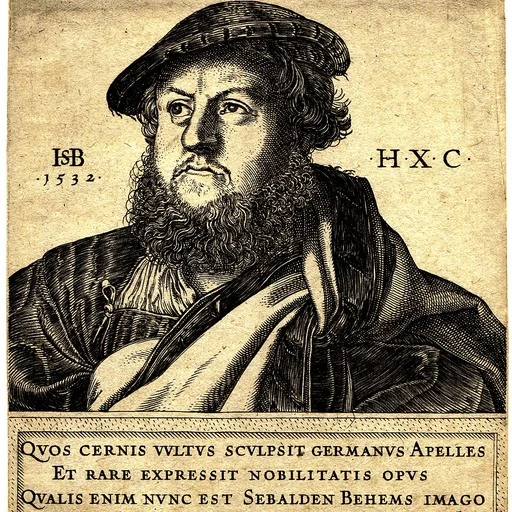
Artist
Sebald Beham (1500–1550) was a German painter and printmaker, mainly known for his very small engravings.