Artwork
Bachmans Finch
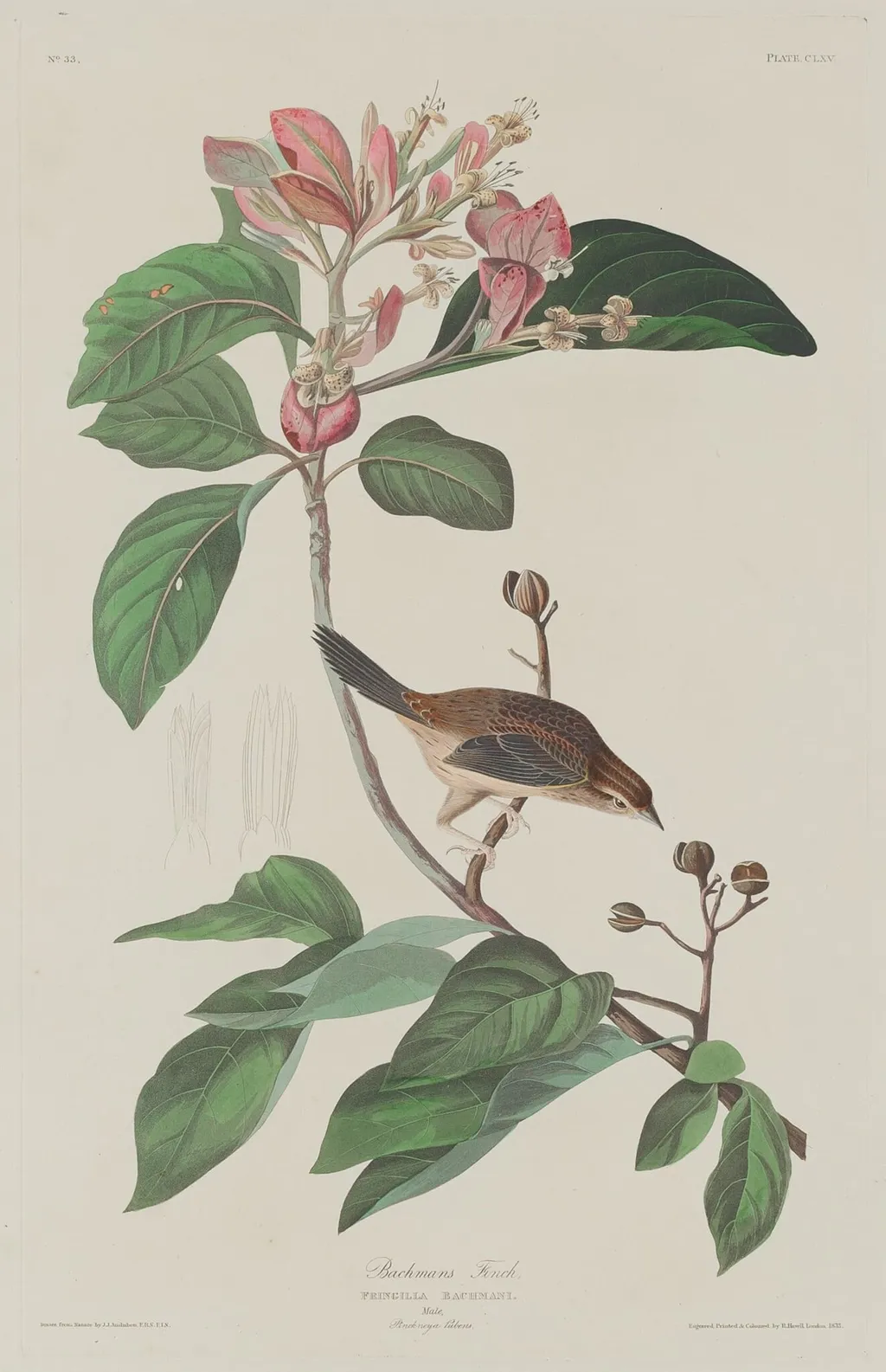
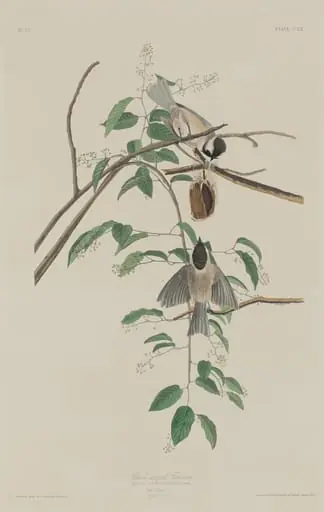
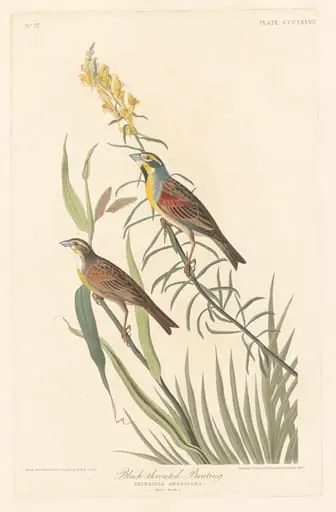
Bachmans Finch is an ink print by the Romanticist artist Robert Havell Jr.. It dates from 1833 and is held in the collection of the National Gallery of Art.
About this work
Overview
, *Bachman’s Finch* is a hand-colored engraving and aquatint on Whatman wove paper.
Created in 1833 by Robert Havell Jr., *Bachman’s Finch* is a hand-colored engraving and aquatint on Whatman wove paper. It belongs to a series of ornithological illustrations produced during the early 19th century, reflecting the period’s growing interest in natural history documentation. Havell, trained in his family’s printmaking tradition, employed meticulous techniques to render biological detail with precision, aligning his work with scientific rather than purely decorative aims.
Subject & Meaning
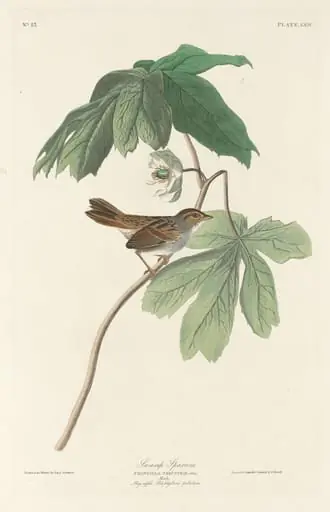
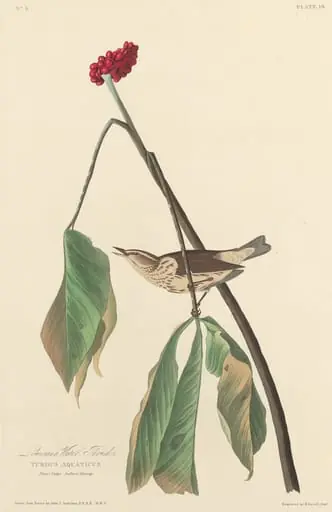
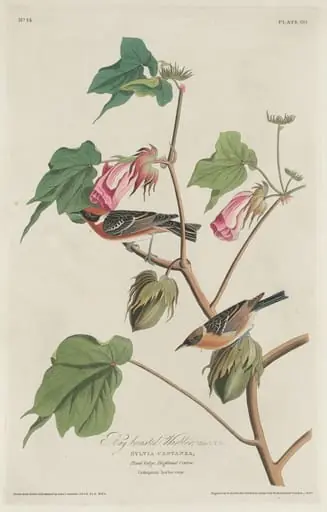
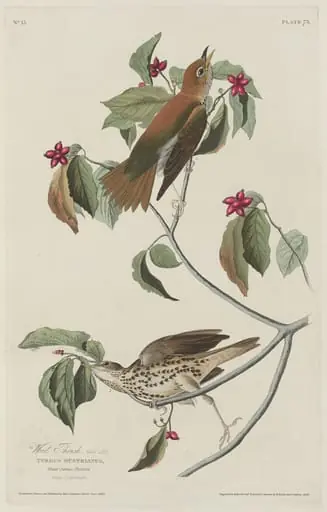
The image depicts a Bachman’s Finch, a small bird native to the southeastern United States, perched on a branch amid flowering vegetation. Its brown, streaked plumage and pointed beak are rendered with observational accuracy, suggesting an intent to document the species for scientific study. The inclusion of native flora—pink blossoms and glossy leaves—anchors the bird in its natural habitat, reinforcing the illustration’s role as a record of ecological context rather than mere aesthetic display.
Technique & Style
Havell used engraving and aquatint to achieve fine gradations of tone and texture, particularly in the bird’s feathers and the leaves’ surfaces. Hand-coloring added subtle chromatic depth, enhancing realism without overwhelming detail. The precision of line work reflects the influence of scientific illustration traditions, where clarity and accuracy took precedence over artistic flourish. The use of Whatman paper, known for its durability and smooth surface, supported the intricate inking and coloring required for high-quality reproductive prints.
History & Provenance
Robert Havell Jr. was part of a family of engravers based in Reading, Berkshire, whose workshop produced numerous natural history illustrations in the early 1800s. His father, Robert Havell the Elder, had established a reputation for technical excellence in printmaking. This particular print was likely made as part of a larger project documenting North American birds, possibly linked to the work of naturalist John James Audubon, with whom Havell collaborated on similar publications.
Context
In the 1830s, natural history illustration was a vital bridge between science and public knowledge. Artists like Havell worked closely with scientists to produce accurate visual records of newly classified species. The demand for such images grew alongside expeditions and collections, as institutions and private patrons sought to catalog biodiversity. These prints were not only scientific tools but also cultural artifacts reflecting the era’s fascination with exploration and classification.
Legacy
Havell’s work contributed to the standardization of ornithological illustration, influencing later generations of natural history artists. His technical discipline and commitment to fidelity helped elevate printmaking as a legitimate medium for scientific documentation. Though the species depicted is now known as the Bachman’s Warbler, the print remains a valuable historical record of 19th-century methods in biological representation and the collaborative nature of natural science at the time.
Artist & collection

Artist
The Havell family of Reading, Berkshire, England, included a number of notable engravers, etchers and painters, as well as writers, publishers, educators, and musicians.