Artwork
White-eyed Fly Catcher
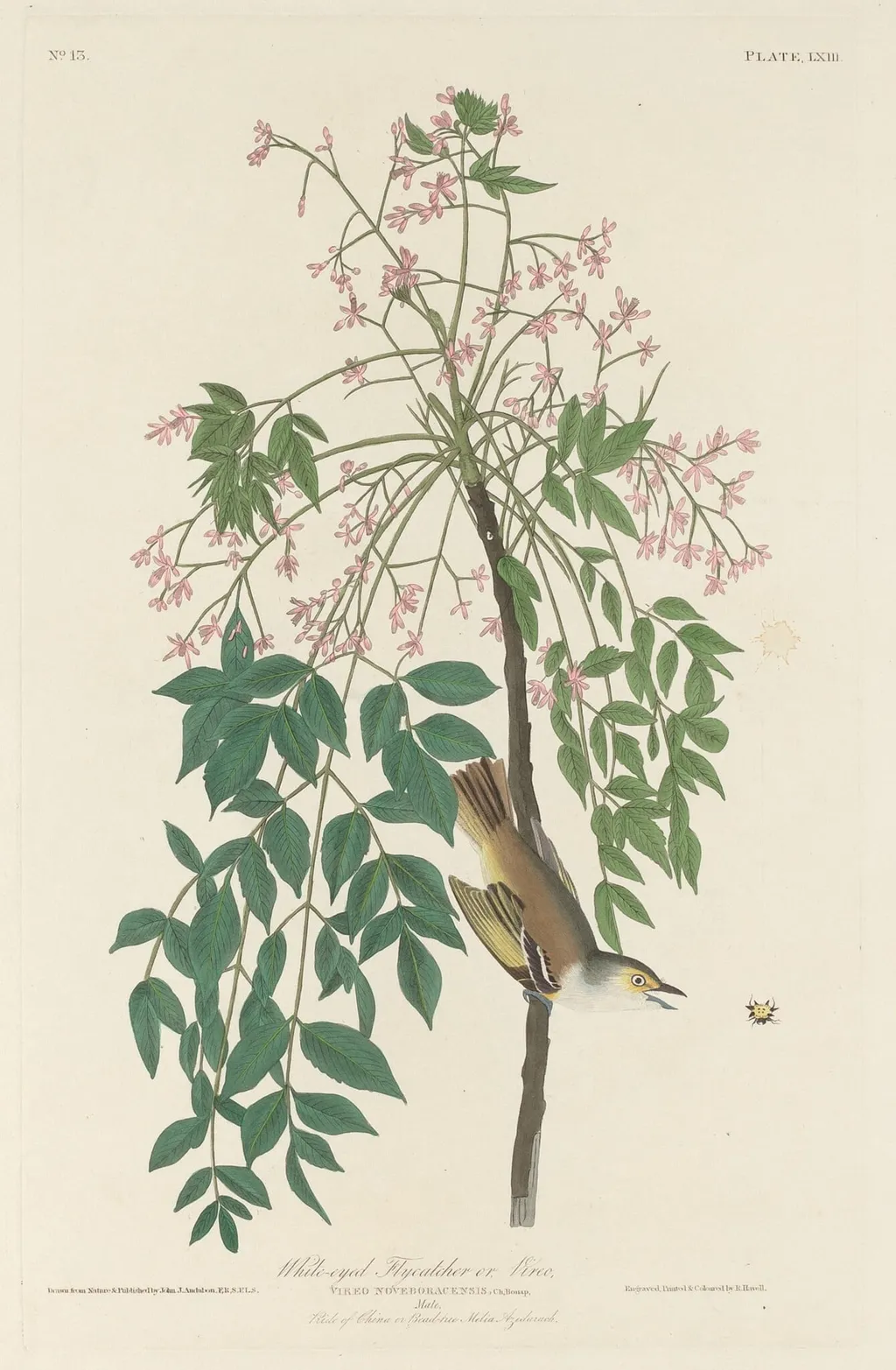
White-eyed Fly Catcher is an ink print by the Romanticist artist Robert Havell Jr.. It dates from 1829 and is held in the collection of the National Gallery of Art. Created in 1829, *White‑eyed Fly Catcher* is a hand‑coloured engraving combined with aquatint, printed on smooth Whatman wove paper.
About this work
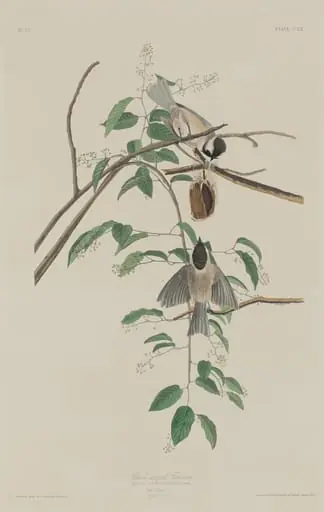
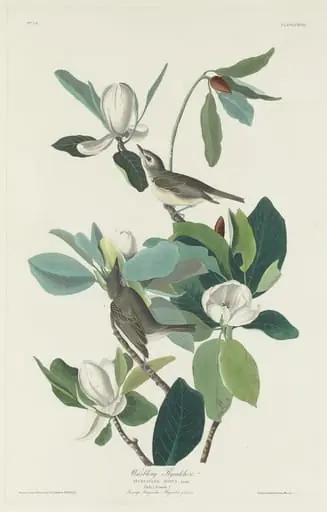
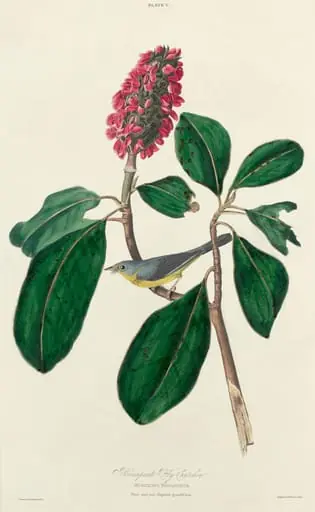
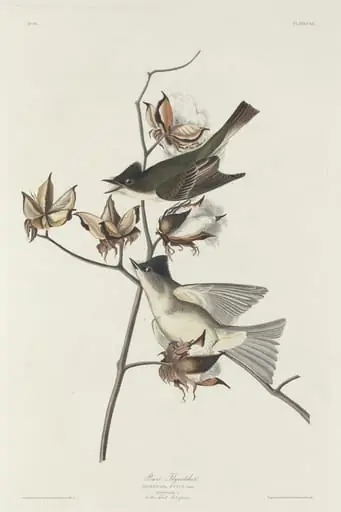
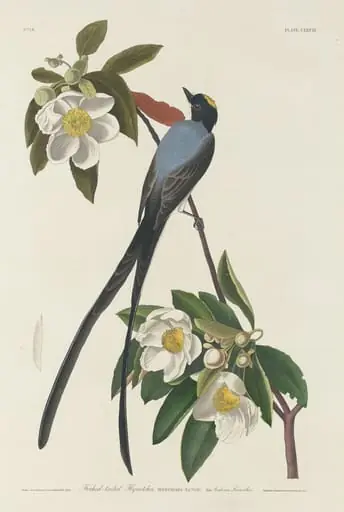
This picture shows a bird perched on a branch. The bird has a white eye and brown feathers. Pink flowers grow on the branch behind it. The leaves are bright green.
The artist used careful lines to draw every leaf and flower. This type of drawing is called *engraving*. It was made in 1829.
Look up *engraving* to see how artists made prints like this.
Overview
The work exemplifies early‑nineteenth‑century British natural‑history illustration, balancing scientific accuracy with decorative appeal.
Created in 1829, *White‑eyed Fly Catcher* is a hand‑coloured engraving combined with aquatint, printed on smooth Whatman wove paper. The image presents a small bird perched on a branch, its eye highlighted in white, surrounded by vivid green leaves and pink blossoms. The work exemplifies early‑nineteenth‑century British natural‑history illustration, balancing scientific accuracy with decorative appeal.
Subject & Meaning
The print portrays a white‑eyed flycatcher, a passerine bird noted for its distinctive pale eye and brown plumage. Positioned on a flowering branch, the composition emphasizes the bird’s habitat, suggesting a tranquil observation of nature. While primarily a visual record, the image also reflects contemporary interest in cataloguing and celebrating the diversity of avian life.
Technique & Style
Havell employed fine engraving lines to delineate the bird’s feathers, leaves, and blossoms, while aquatint provided subtle tonal washes that model form and depth. Hand‑applied colour enhances the natural hues, particularly the pink of the flowers and the bright green of the foliage. The integration of line work and tonal shading creates a nuanced, three‑dimensional effect uncommon in earlier British prints.
History & Provenance
The piece originates from the Havell workshop in Reading, Berkshire, a family renowned for its printmaking expertise. Robert Havell Jr., son of Robert Havell Sr. and nephew of Luke Havell, continued the lineage’s focus on high‑quality natural‑history plates, a tradition that also included collaborations with Indian artists. The print likely circulated among collectors of scientific illustration in the 19th century.
Context
During the 1820s, British interest in ornithology and exotic fauna surged, spurred by expanding global exploration and the rise of illustrated scientific publications. The Havell family contributed significantly to this movement, producing detailed plates for works such as *The Birds of America*. *White‑eyed Fly Catcher* fits within this broader cultural moment, merging artistic skill with emerging standards of natural‑history documentation.
Artist & collection

Artist
The Havell family of Reading, Berkshire, England, included a number of notable engravers, etchers and painters, as well as writers, publishers, educators, and musicians.