Artwork
Blue-headed Pigeon
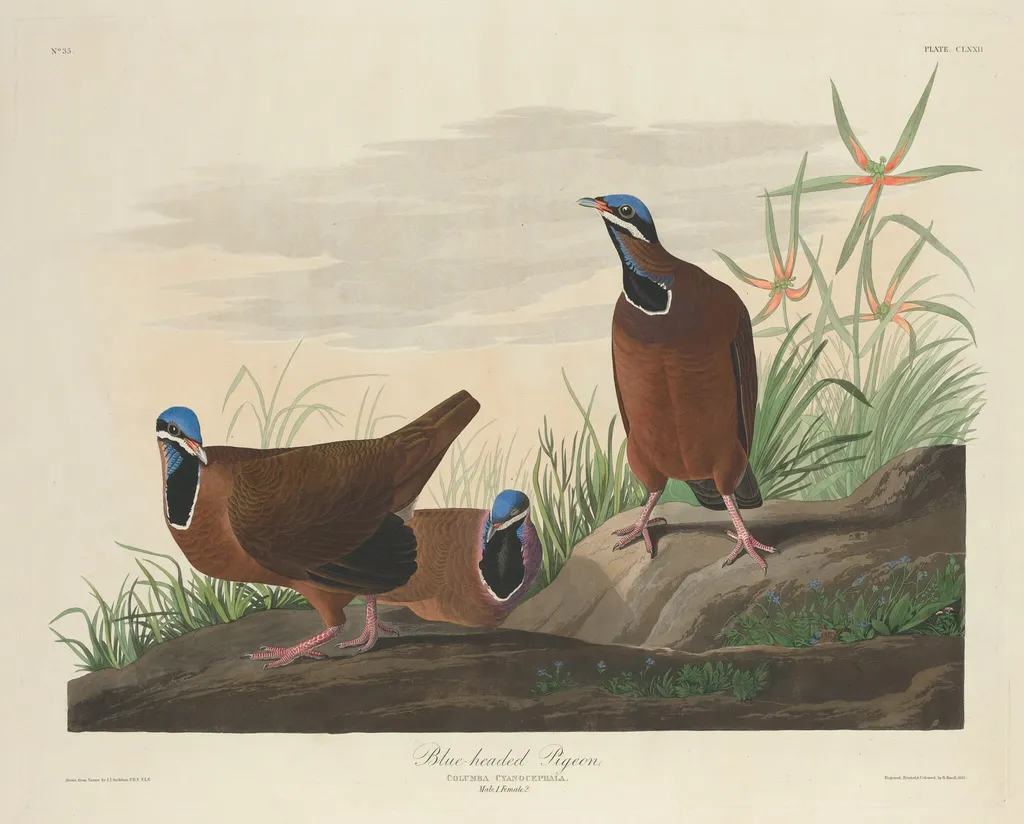
Blue-headed Pigeon is an ink print by the Romanticist artist Robert Havell Jr.. It dates from 1833 and is held in the collection of the National Gallery of Art.
About this work
Overview
Blue-headed Pigeon is a 1833 print by Robert Havell Jr., combining hand-colored engraving and aquatint on Whatman wove paper.
Subject & Meaning
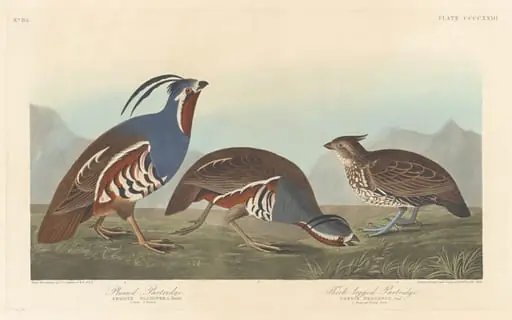
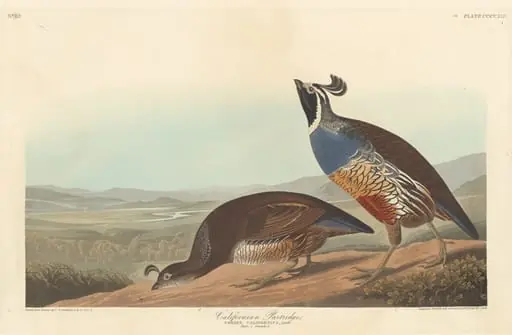
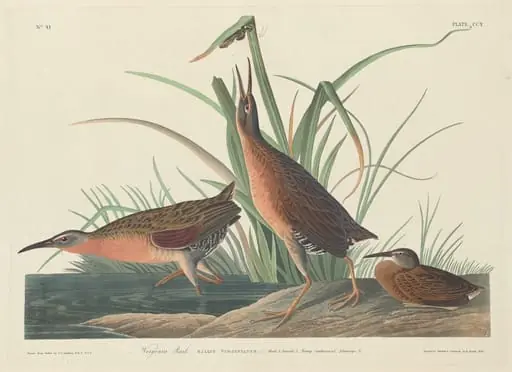
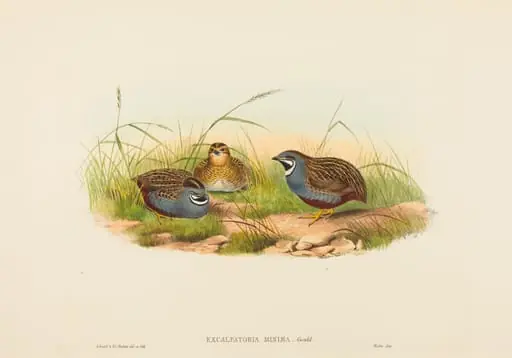
The print depicts three blue-headed pigeons on rocks and grass, with the male and female distinguished by their plumage. The birds are the primary focus, set against a simple background of plants and pale sky. The labeling of the birds as 'Male 1' and 'Female 2' suggests a scientific purpose.
Technique & Style
The work showcases the Havell family's expertise in aquatint, a technique that allows for tonal subtleties. The combination of engraving and aquatint achieves a detailed and precise representation of the birds.
History & Provenance
Robert Havell Jr. was part of a family of engravers and publishers, being the son of Robert Havell the Elder and nephew of Luke Havell. The family's background in engraving and their exposure to Indian art and culture likely influenced their work.
Context
The print was created as a detailed scientific record, reflecting the period's interest in natural history documentation.
Artist & collection

Artist
The Havell family of Reading, Berkshire, England, included a number of notable engravers, etchers and painters, as well as writers, publishers, educators, and musicians.