Artwork
Least Stormy Petrel
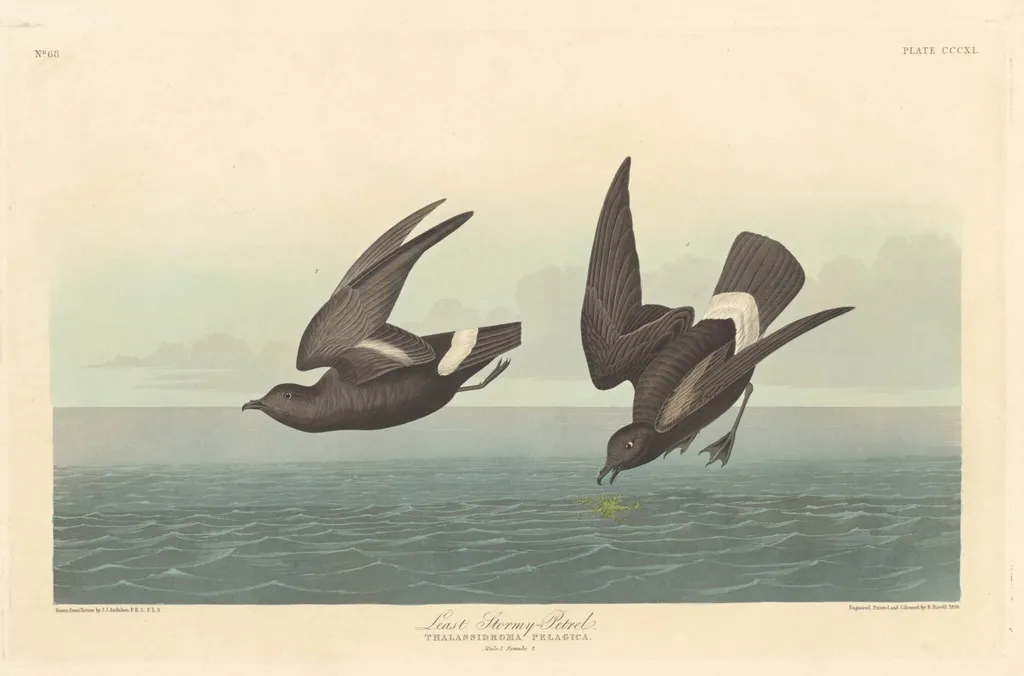
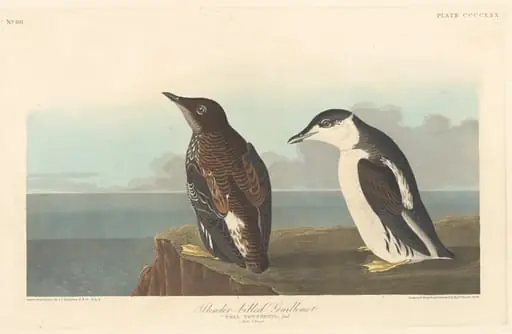
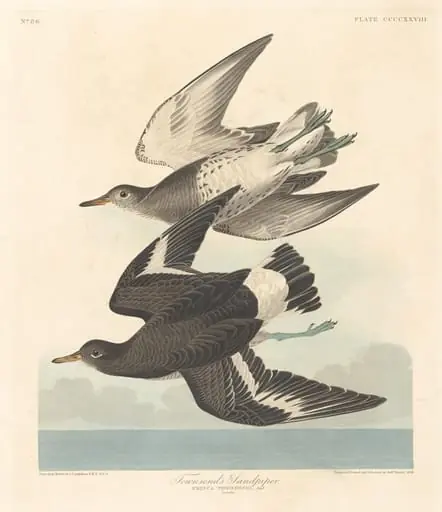
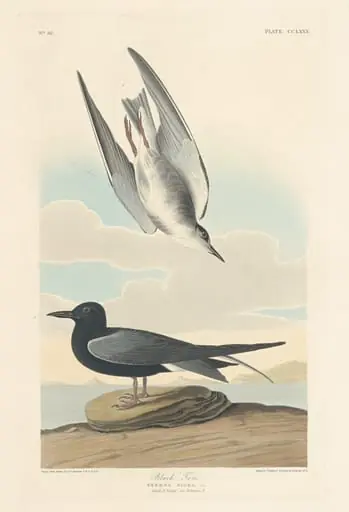
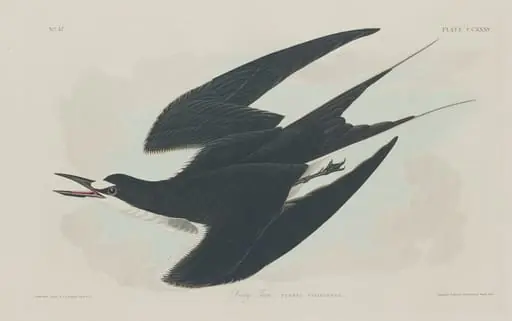
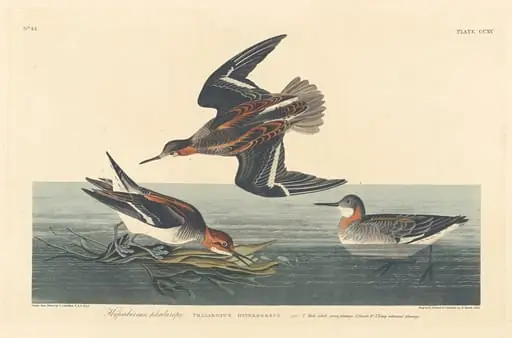
Least Stormy Petrel is an ink print by the Romanticist artist Robert Havell Jr.. It dates from 1836 and is held in the collection of the National Gallery of Art.
About this work
Overview
Created in 1836, *Least Stormy Petrel* is a hand‑colored engraving combined with aquatint, printed on smooth Whatman wove paper. The image depicts two small seabirds, rendered in delicate line work, gliding low over a textured sea under a pale sky.
Subject & Meaning
The work portrays the least stormy petrel, a real oceanic bird known for skimming the water’s surface. By focusing on the birds’ dark wings, lighter tips, and pointed beaks, the print emphasizes their swift, low‑level flight and the fragile interface between feather and sea.
Technique & Style
Havell employed a fine engraving to delineate the birds’ plumage and the rippling water, while the aquatint layer supplies broad tonal washes that suggest sky and sea. Hand‑coloring adds subtle hues, enhancing the contrast between the dark silhouettes and the pale background.
History & Provenance
The print belongs to the Havell family’s long‑standing tradition of aquatint work. Robert Havell Jr., following the practices established by his father Robert Havell the Elder and uncle Luke Havell, continued the family’s reputation for high‑quality printmaking, especially in works that engaged with natural subjects.
Context
During the early nineteenth century, British printmakers increasingly explored natural history subjects, and the Havells were noted for their collaborations with scientific illustrators and for integrating Indian artistic influences into their prints. *Least Stormy Petrel* reflects this period’s interest in detailed, accurate depictions of wildlife.
Artist & collection

Artist
The Havell family of Reading, Berkshire, England, included a number of notable engravers, etchers and painters, as well as writers, publishers, educators, and musicians.