Artwork
Pine Grosbeak
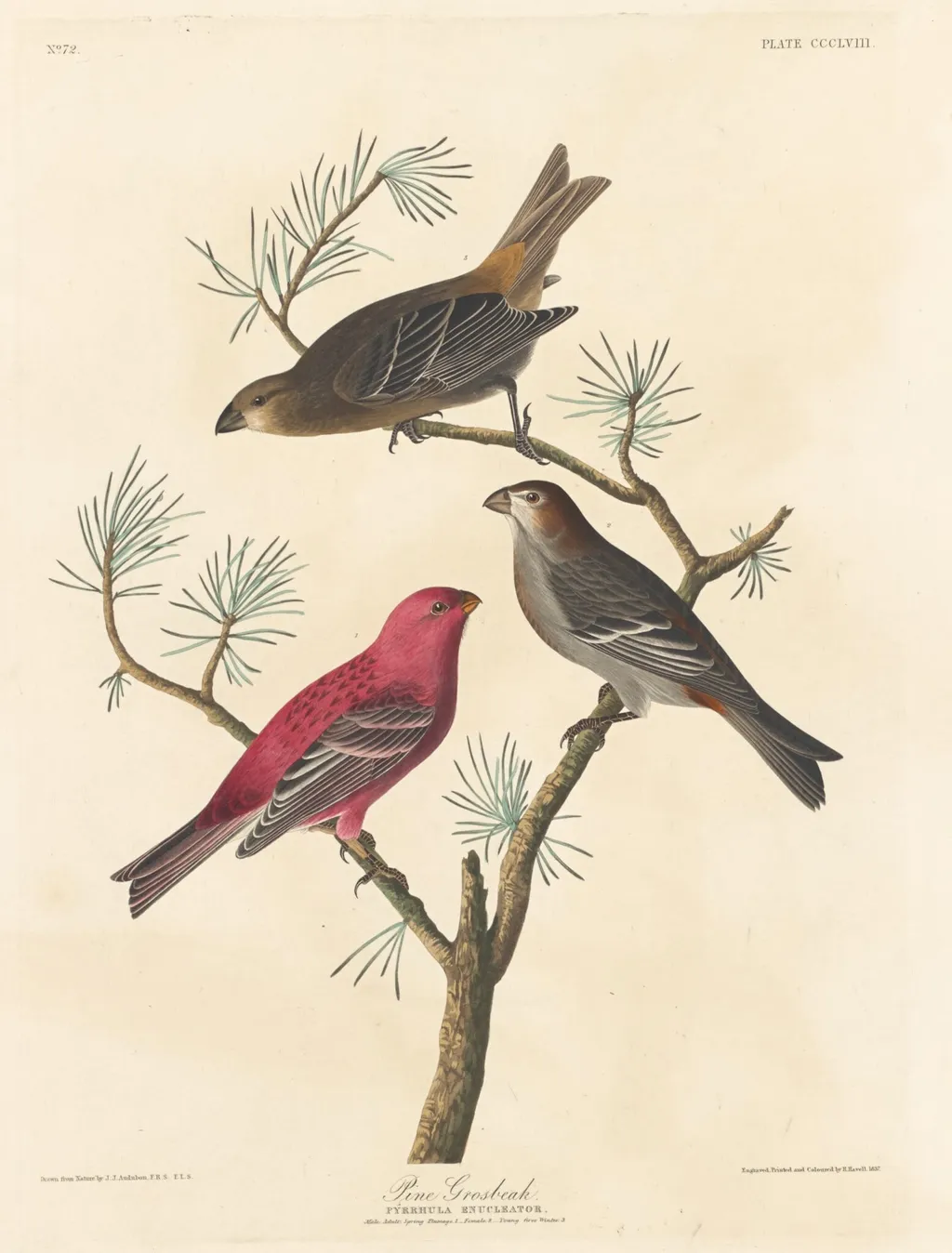
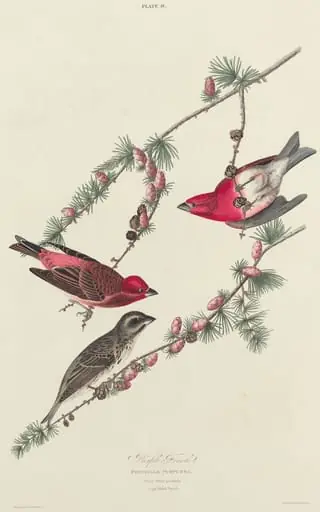
Pine Grosbeak is an ink print by the Romanticist artist Robert Havell Jr.. It dates from 1837 and is held in the collection of the National Gallery of Art.
About this work
The bird on the left is bright pink with dark wings, the middle one is brownish with a black head, and the one on the right is gray and white with a red eye.
This image shows three birds perched on pine branches. The bird on the left is bright pink with dark wings, the middle one is brownish with a black head, and the one on the right is gray and white with a red eye. The branches are detailed with small pine needles, and the whole scene looks precise and carefully colored.
The text at the bottom names the birds "Pine Grosbeak," and the image was printed in 1837. The artist used careful shading to make the feathers look real.
If you like this style, look up engraving to see how artists created such detailed prints.
Overview
Pine Grosbeak is a hand-colored engraving and aquatint print created by Robert Havell Jr. in 1837 on Whatman wove paper, a high-quality medium typical of fine engravings during that era.
Subject & Meaning
The print depicts three Pine Grosbeak birds perched on intricately detailed pine branches, showcasing variations in plumage: bright pink with dark wings, brownish with a black head, and gray and white with a distinctive red eye.
Technique & Style
Havell employed precise engraving and aquatint techniques, coupled with careful hand-coloring, to achieve realistic feather textures and subtle shading, emphasizing naturalistic detail.
History & Provenance
Robert Havell Jr., part of the renowned Havell family from Reading, Berkshire, known for their aquatint expertise and association with Indian art, produced this work in 1837.
Artist & collection

Artist
The Havell family of Reading, Berkshire, England, included a number of notable engravers, etchers and painters, as well as writers, publishers, educators, and musicians.

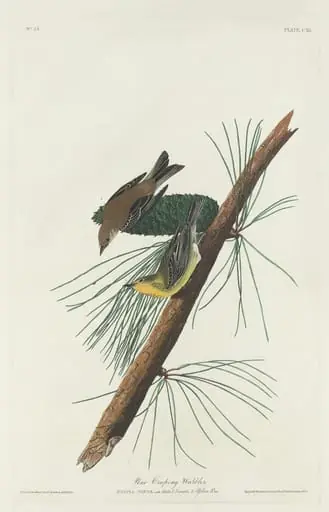 Pine Creeping Warbler
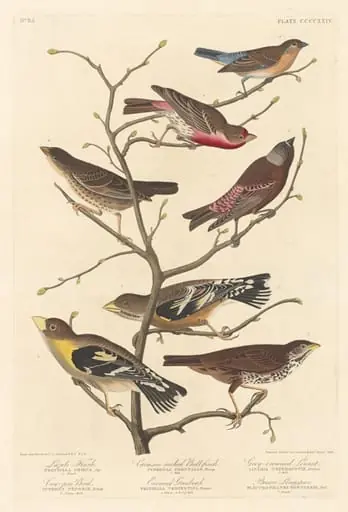 Lazuli Finch
 Purple Finch
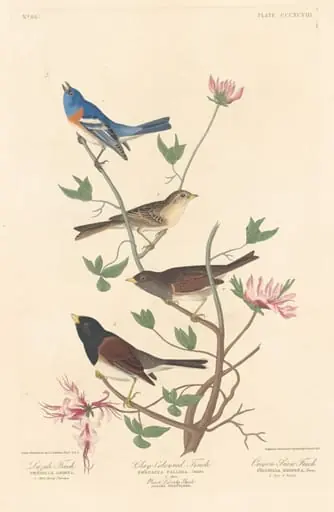 Lazuli Finch, Clay-colored Finch and Oregon Snow Finch
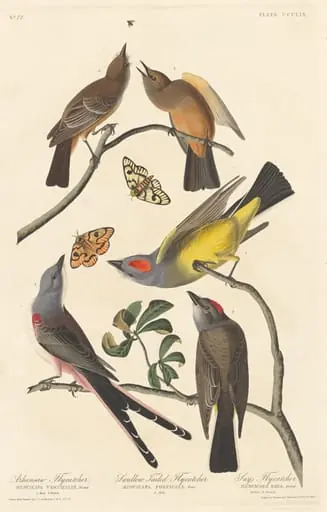 Arkansaw Flycatcher, Swallow-tailed Flycatcher and Says Flycatcher
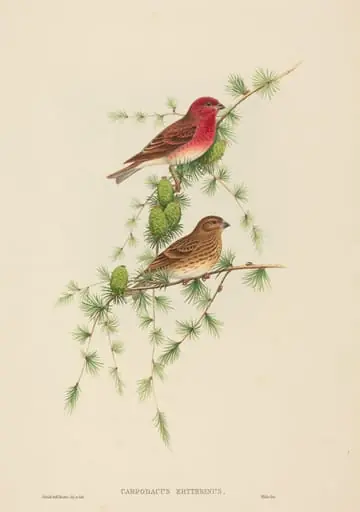 Carpodacus erythrinus (Common Rose Finch)
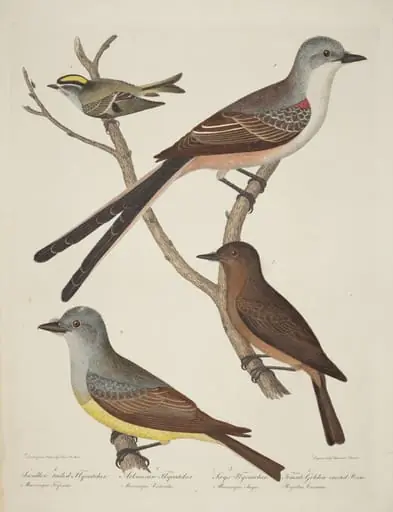 Swallow-tailed Flycatcher, Arkansas Flycatcher, Say's Flycatcher, and Female Golden-crested Wren