Artwork
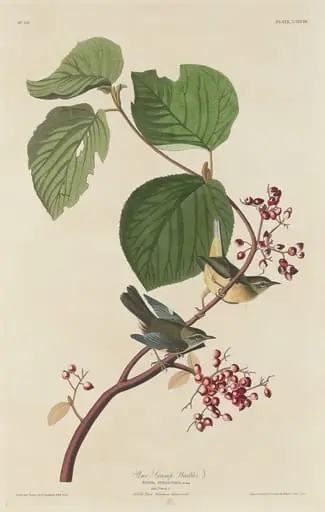
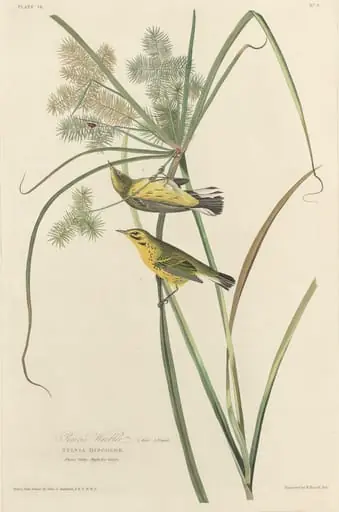
Pine Creeping Warbler
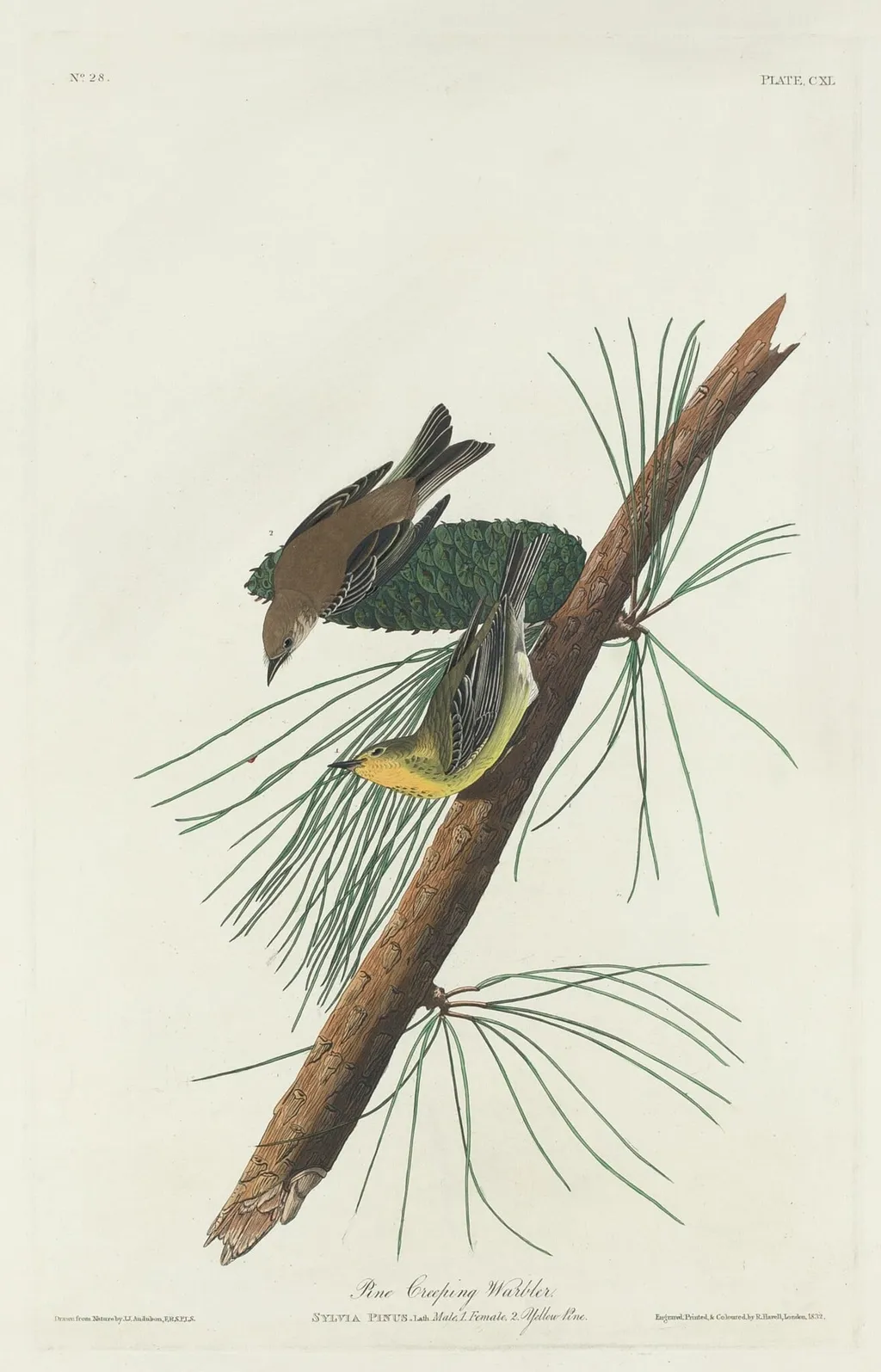
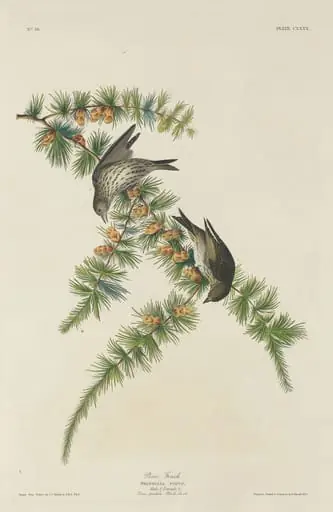
Pine Creeping Warbler is an ink print by the Romanticist artist Robert Havell Jr.. It dates from 1832 and is held in the collection of the National Gallery of Art.
About this work
Overview
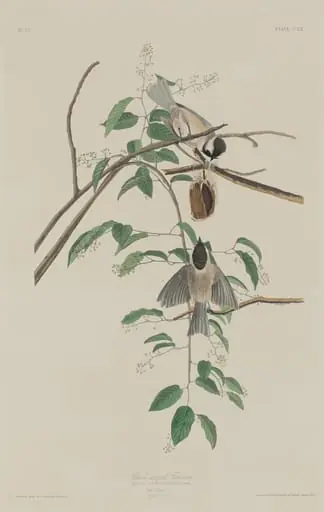
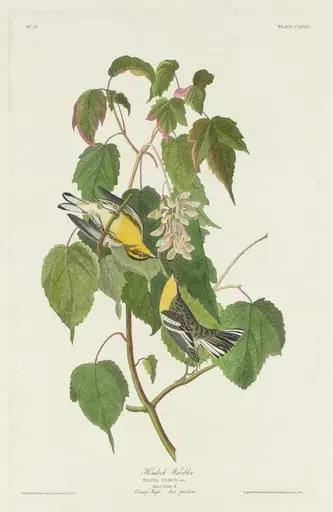
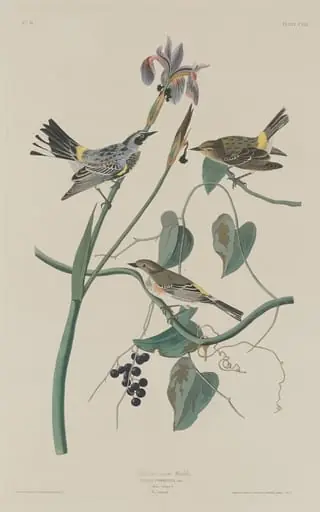
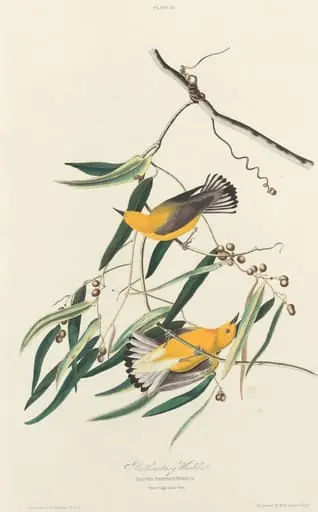
Created in 1832, *Pine Creeping Warbler* is a hand‑colored engraving combined with aquatint, executed on smooth Whatman wove paper. The print presents two small North American songbirds perched on a pine branch, rendered with fine line work and subtle washes of color that differentiate plumage and foliage.
Subject & Meaning
The composition focuses on a pine‑creeping warbler—a diminutive, brown‑backed bird with a greenish hue—paired with a brighter yellow‑vented companion. By isolating the birds on a detailed branch, the image emphasizes natural observation and the delicate beauty of avian life, reflecting 19th‑century interests in scientific illustration and ornithology.
Technique & Style
Havell employed traditional engraving to define the birds’ forms and the pine’s bark, then applied aquatint to produce tonal gradations that suggest texture and depth. Hand‑coloring adds selective pigments to the feathers and needles, a common practice among British printmakers seeking both accuracy and visual appeal.
History & Provenance
Robert Havell Jr., a member of the prominent Havell family of engravers, produced the work during a period when the family was renowned for mastering aquatint. Their workshop, linked to earlier collaborations with Indian art and natural history publications, supplied the technical expertise evident in this print.
Context
The print belongs to a broader Victorian tradition of detailed bird studies that served both scientific and decorative purposes. As part of the Havell output, it illustrates the era’s convergence of art, taxonomy, and emerging print technologies, influencing later natural‑history illustrators and collectors of fine botanical and zoological prints.
Artist & collection

Artist
The Havell family of Reading, Berkshire, England, included a number of notable engravers, etchers and painters, as well as writers, publishers, educators, and musicians.