Artwork
Spotted Grous
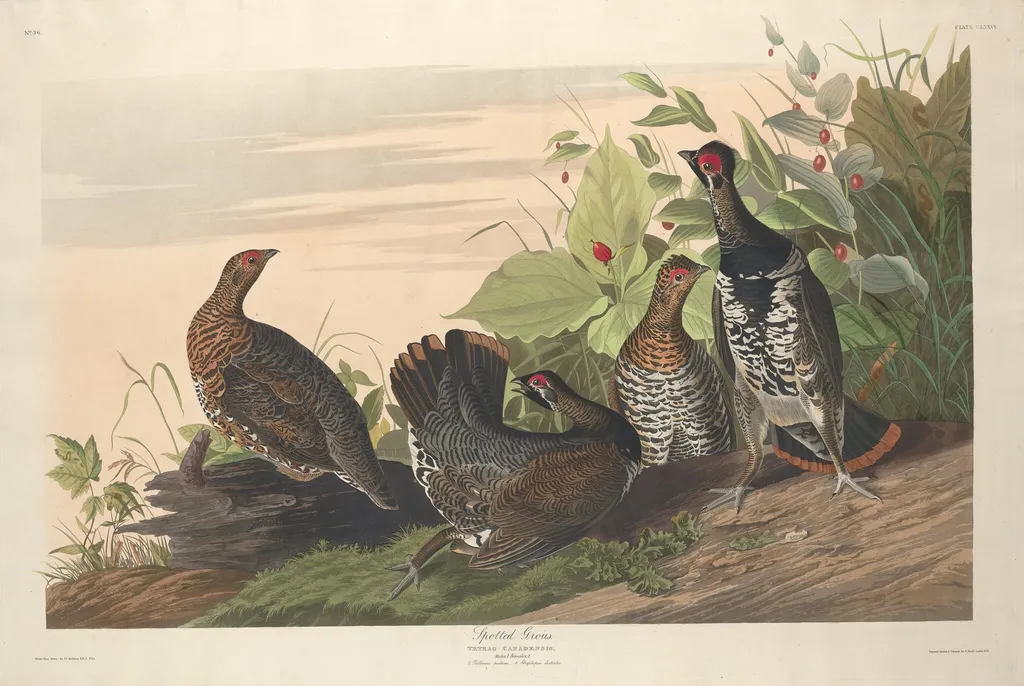
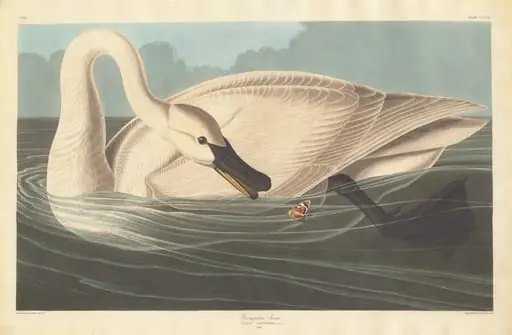
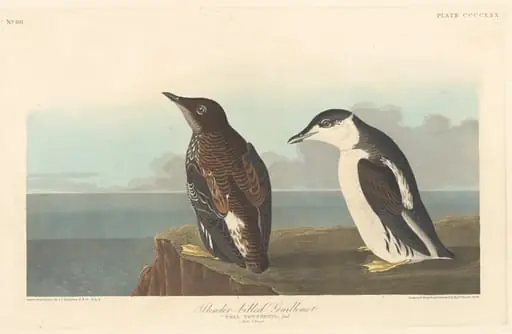
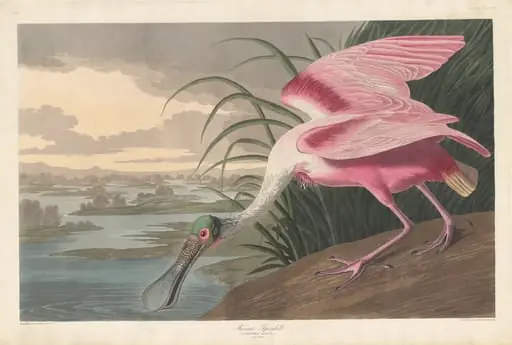
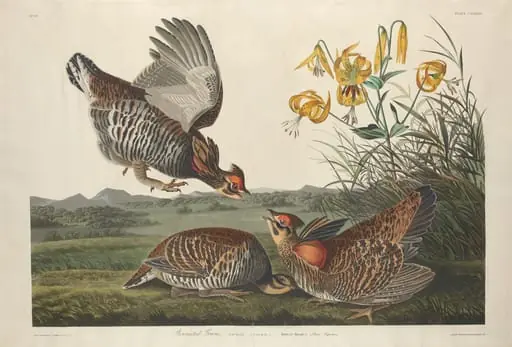
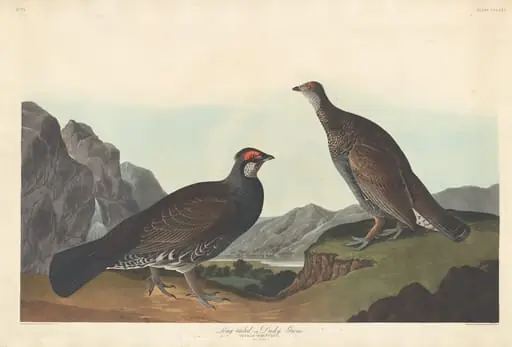
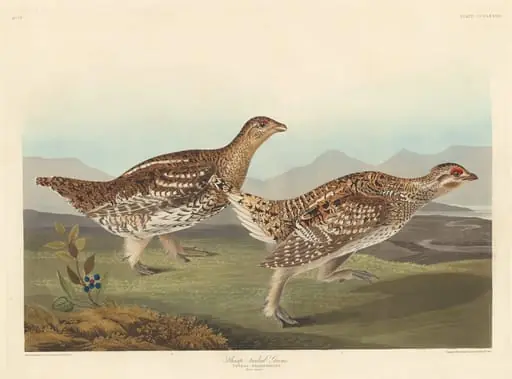
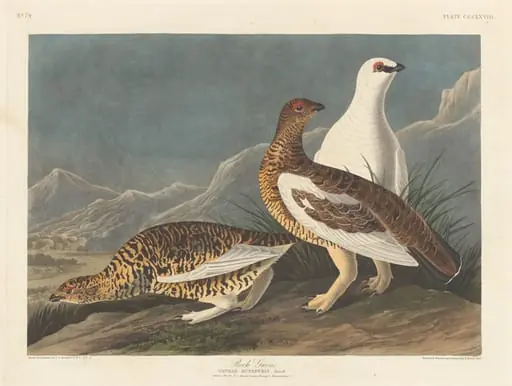
Spotted Grous is an ink print by the Romanticist artist Robert Havell Jr.. It dates from 1833 and is held in the collection of the National Gallery of Art.
About this work
Overview
Spotted Grouse is a hand-colored engraving and aquatint print on Whatman wove paper, created by Robert Havell Jr. in 1833. The work showcases the artist's meticulous technique and attention to detail.
Subject & Meaning
The print depicts three spotted grouse on a rocky outcrop, set against a backdrop of green foliage with red berries and a pale blue sky. The birds are rendered in precise detail, with bold black-and-white stripes and distinctive red facial patches.
Technique & Style
The piece exemplifies the Havell family's renowned expertise in aquatint. Fine lines and intricate details, characteristic of scientific illustrations from the era, are used to define each feather and leaf, highlighting the artist's skill in capturing naturalistic textures.
History & Provenance
Robert Havell Jr.'s creation of Spotted Grouse in 1833 reflects his family's long-standing involvement in British and Indian art and culture as engravers, publishers, and artists. His father, Robert Havell Sr., was also a prominent figure in this context.
Context
Produced during a period when scientific illustration emphasized accuracy and detail, Spotted Grouse aligns with contemporary standards for natural history artworks, blending artistic expression with observational precision.
Legacy
While specific lasting impacts of Spotted Grouse on broader art historical movements are not prominently documented, it remains a testament to the Havell family's technical prowess in aquatint and their contribution to the visual representation of natural subjects during the 19th century.
Artist & collection

Artist
The Havell family of Reading, Berkshire, England, included a number of notable engravers, etchers and painters, as well as writers, publishers, educators, and musicians.