Artwork
Rose-breasted Grosbeak
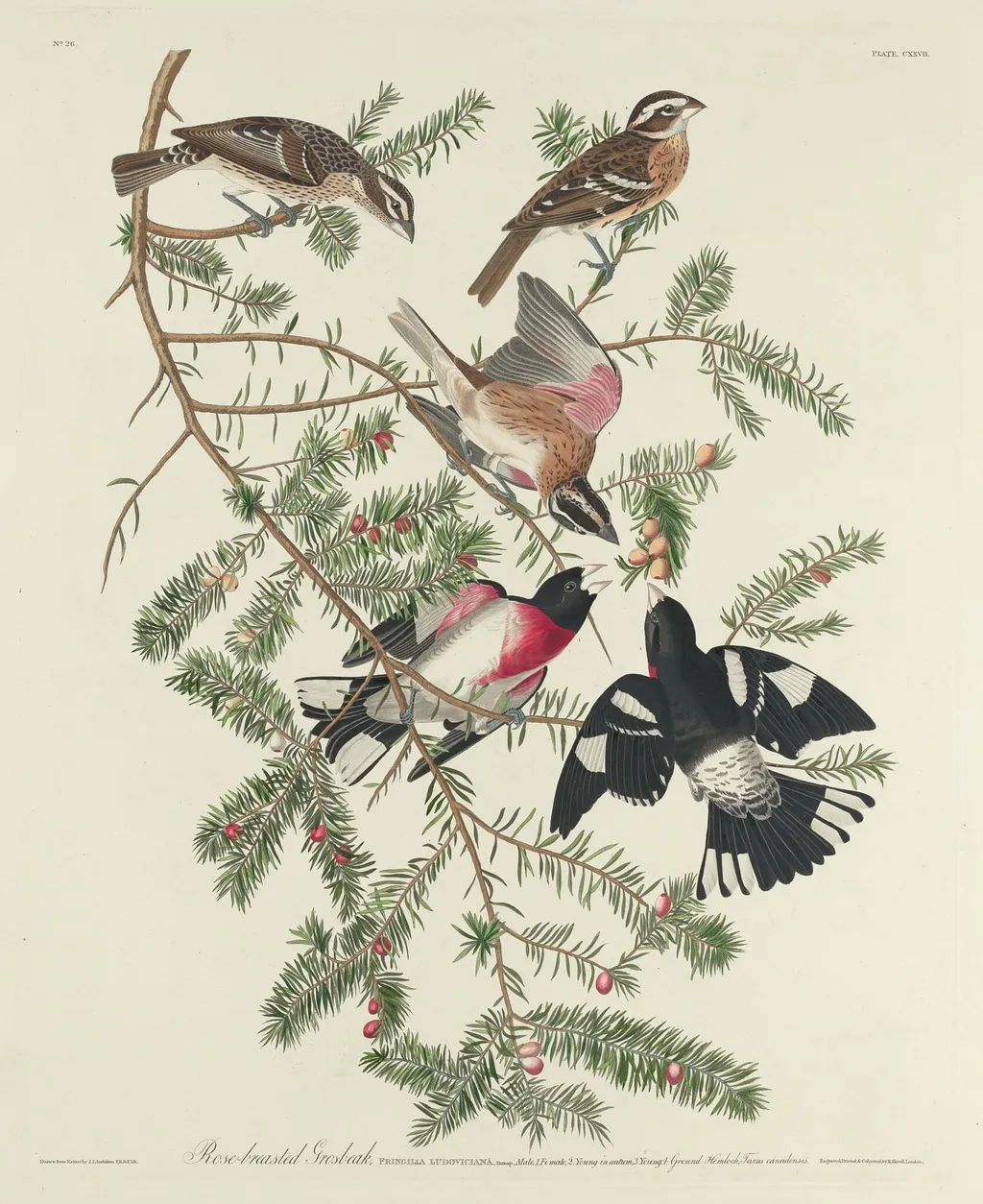
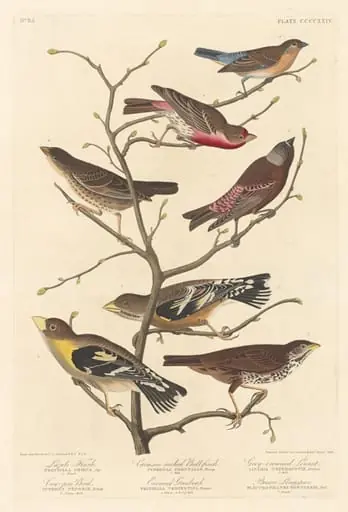
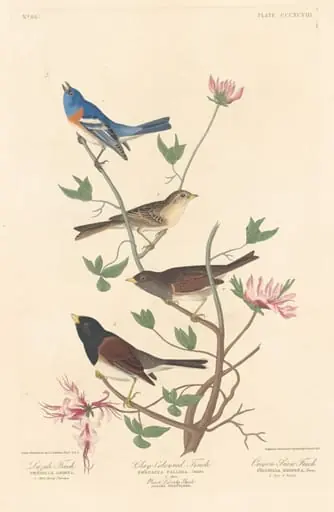
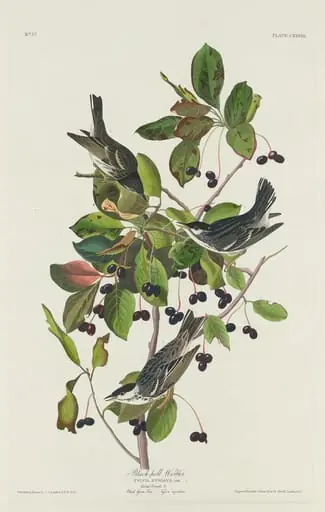
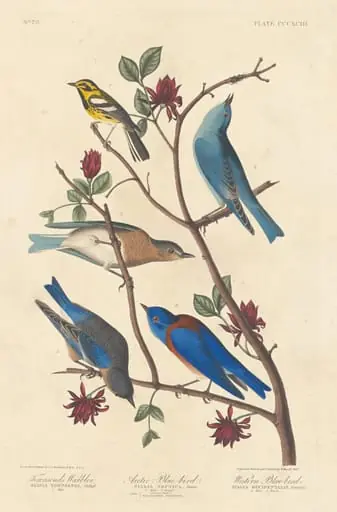
Rose-breasted Grosbeak is an ink print by the Romanticist artist Robert Havell Jr.. It dates from 1832 and is held in the collection of the National Gallery of Art. Created in 1832, the hand‑colored engraving and aquatint titled *Rose‑breasted Grosbeak* was produced on Whatman wove paper.
About this work
Overview
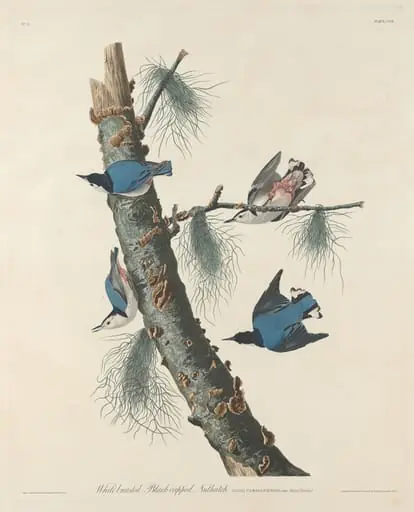
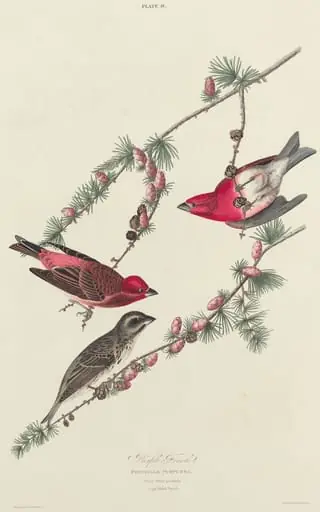
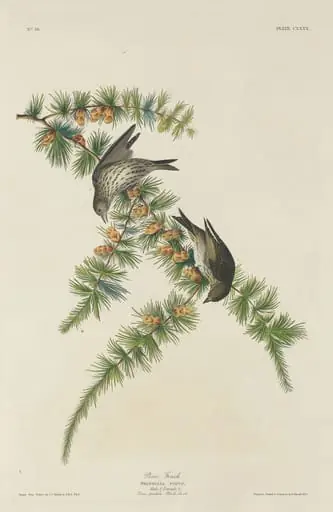
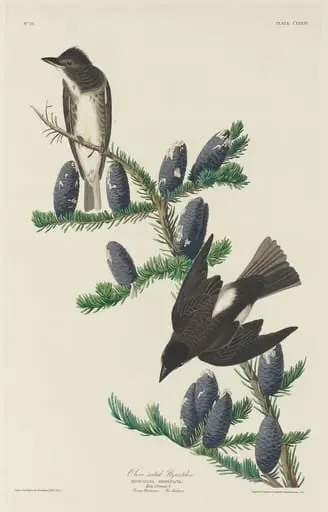
Created in 1832, the hand‑colored engraving and aquatint titled *Rose‑breasted Grosbeak* was produced on Whatman wove paper. The print presents a group of five birds perched on a pine branch, rendered with precise line work that captures feather detail and the surrounding foliage, including green needles and red berries.
Subject & Meaning
The central figure is a rose‑breasted grosbeak, distinguished by its pink‑toned chest, while the surrounding birds display contrasting black‑white and brown‑gray plumage. The composition highlights the diversity of avian coloration and the natural setting of coniferous habitat.
Technique & Style
Robert Havell Jr. employed a combination of engraving for fine line definition and aquatint to achieve tonal variation, then applied color manually to the printed surface. This layered process allowed for subtle shading and vivid hues that enhance the realism of the birds and foliage.
History & Provenance
The work originates from the Havell family workshop in Reading, Berkshire, a lineage noted for its expertise in aquatint and connections to Indian artistic circles. Robert Havell Jr. continued the family tradition established by his father, Robert Havell the Elder, and his uncle, Luke Havell, as both artist and publisher.
Context
During the early nineteenth century, natural history illustration flourished in Britain, driven by scientific interest and public fascination with exotic species. Prints such as this served both educational and decorative purposes, reflecting contemporary tastes for detailed, hand‑colored depictions of wildlife.
Artist & collection

Artist
The Havell family of Reading, Berkshire, England, included a number of notable engravers, etchers and painters, as well as writers, publishers, educators, and musicians.