Artwork
Traill's Flycatcher
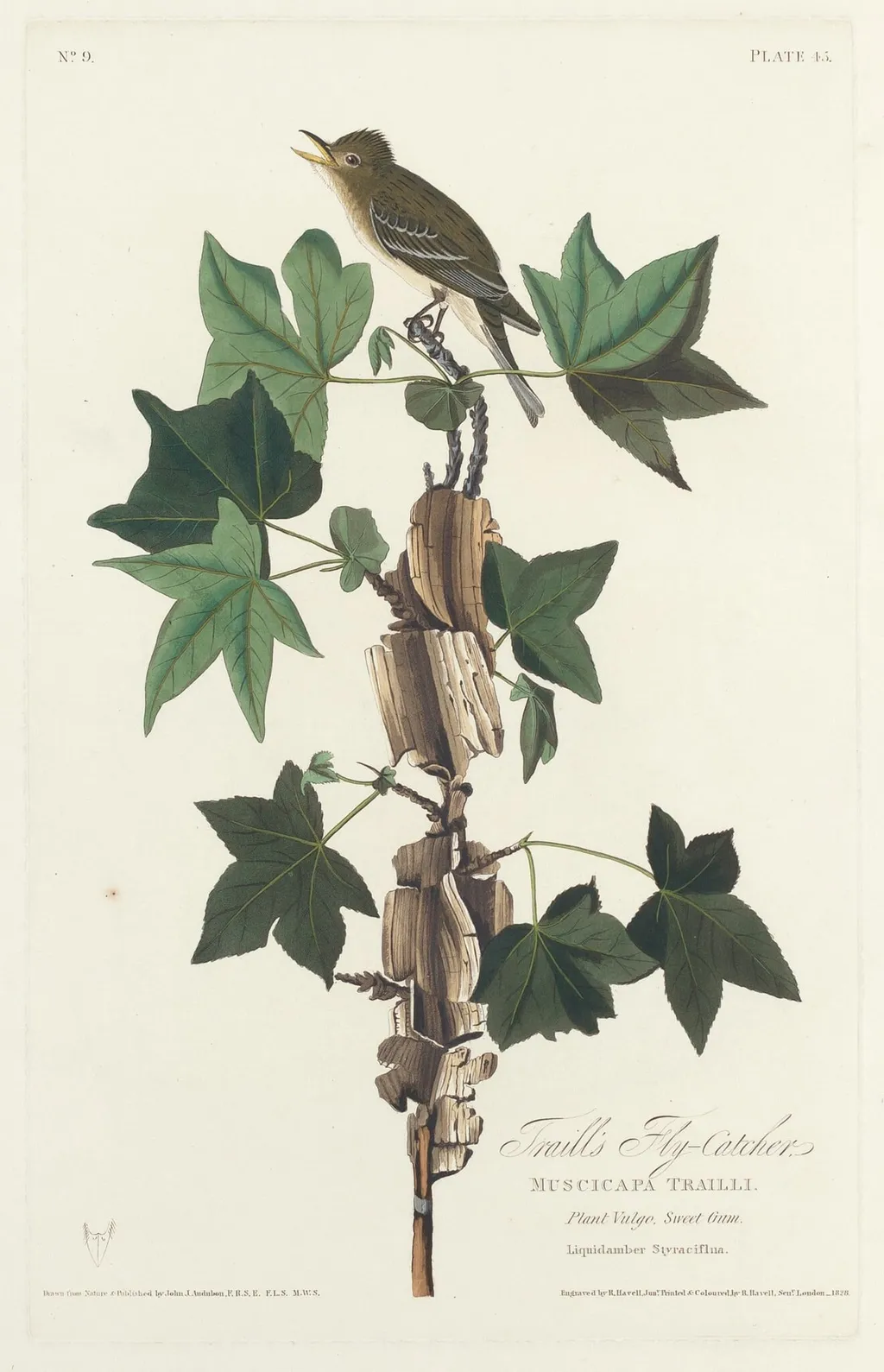
Traill's Flycatcher is an ink print by the Romanticist artist Robert Havell Jr.. It dates from 1828 and is held in the collection of the National Gallery of Art.
About this work
Overview
Traill's Flycatcher is a hand-colored engraving and aquatint print created by Robert Havell Jr. in 1828 on Whatman wove paper. It showcases a detailed study of a bird perched on a branch, highlighting the artist's meticulous attention to naturalistic detail.
Subject & Meaning
The print depicts a Traill's Flycatcher bird with a brown body and pale belly, perched on a weathered branch of Liquidamber Styraciflua, complete with buds and leaves. The subject reflects the Havell family's tradition of natural history illustration.
Technique & Style
The work exemplifies the Havell family's expertise in aquatint, achieving subtle tonal gradations reminiscent of watercolor. Intricate details, such as leaf textures and bird feathers, demonstrate the precision of hand-colored engraving.
History & Provenance
Robert Havell Jr.'s creation of Traill's Flycatcher in 1828 was influenced by his family's background in engraving, etching, and aquatint, with notable connections to Indian art and culture through his relatives, including Robert Havell the Elder and Daniel Havell.
Context
Produced within a family of renowned engravers, this piece sits within the broader context of 19th-century natural history art, characterized by detailed illustrations of flora and fauna.
Legacy
While specific lasting impacts of Traill's Flycatcher are not prominently documented, it contributes to the Havell family's overall legacy in the development and popularization of aquatint techniques in natural history illustration.
Artist & collection

Artist
The Havell family of Reading, Berkshire, England, included a number of notable engravers, etchers and painters, as well as writers, publishers, educators, and musicians.

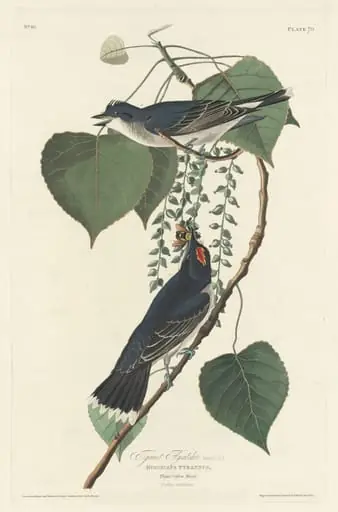 Tyrant Flycatcher
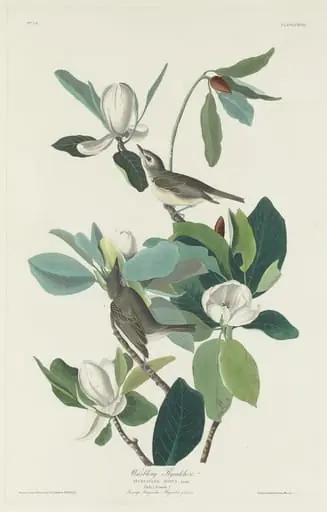 Warbling Flycatcher
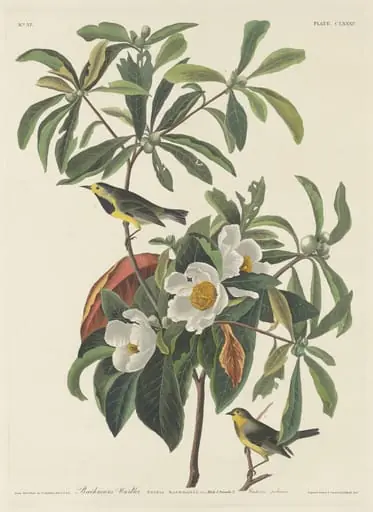 Bachman's Warbler
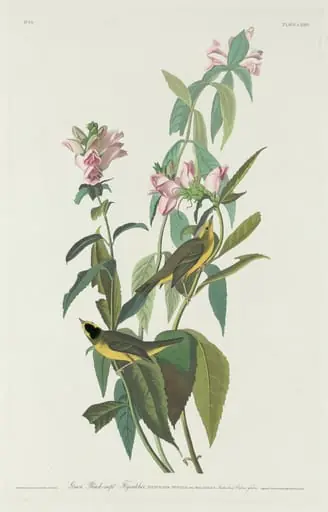 Green Black-Capt Flycatcher
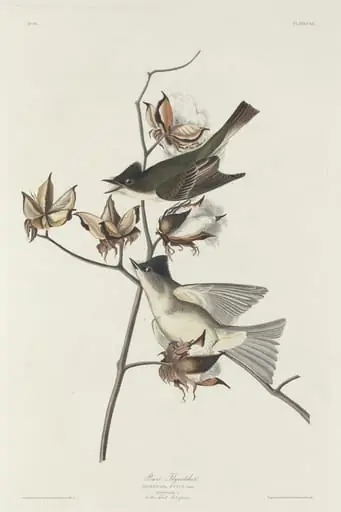 Pewit Flycatcher
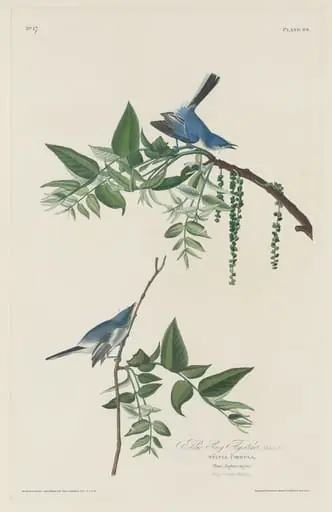 Blue-grey Flycatcher
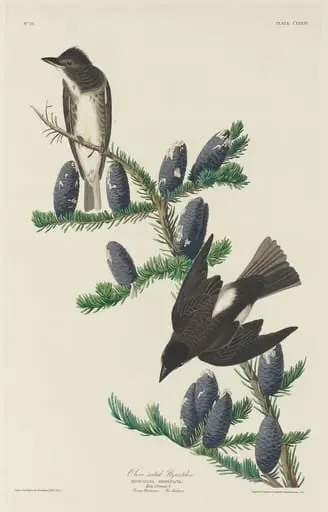 Olive-sided Flycatcher
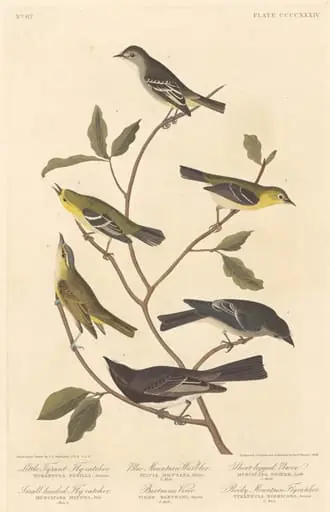 Little Tyrant Flycatcher, Small-Headed Flycatcher, Blue Mountain Warbler, Bartram's Vireo, Short-Legged Pewee, and Rocky Mountain Flycatcher
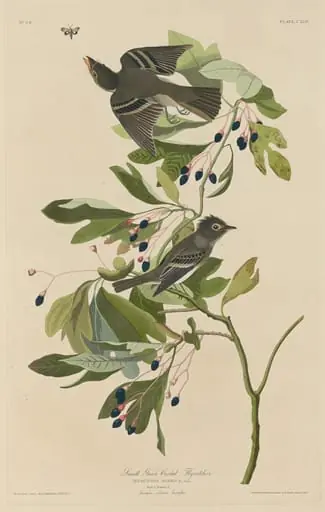 Small Green-Crested Flycatcher
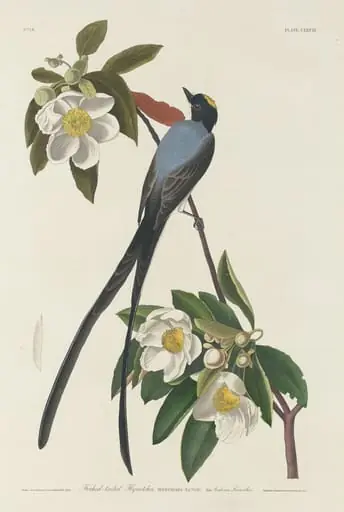 Forked-tail Flycatcher