Artwork
Two-colored Sparrow
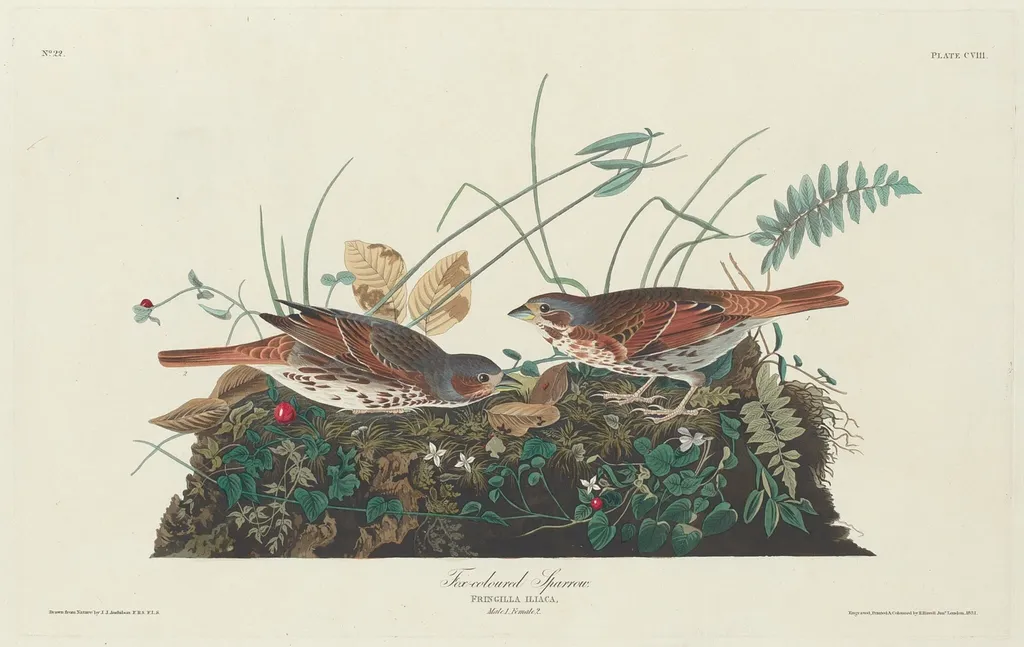
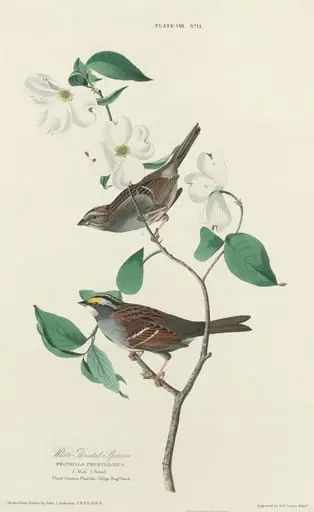
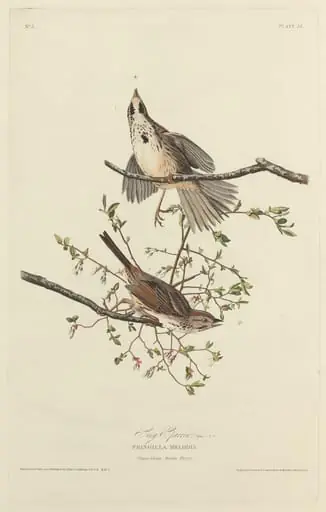
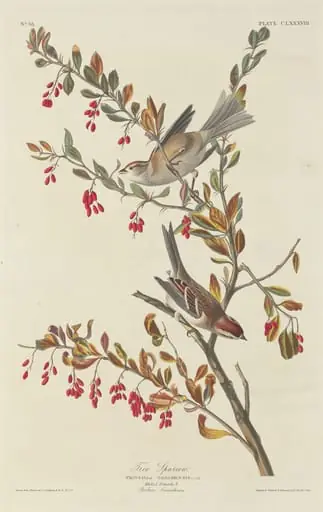
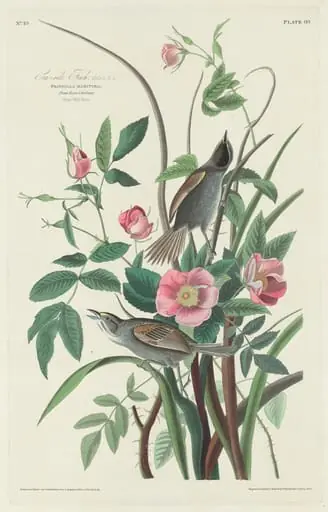
Two-colored Sparrow is an ink print by the Romanticist artist Robert Havell Jr.. It dates from 1831 and is held in the collection of the National Gallery of Art.
About this work
Overview
The work belongs to a series of ornithological prints produced by the Havell family, known for their technical precision in printmaking and color application.
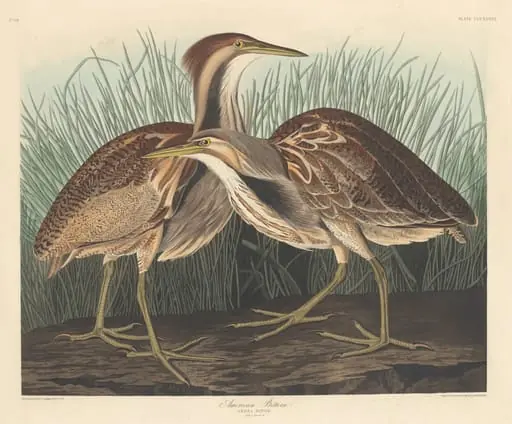
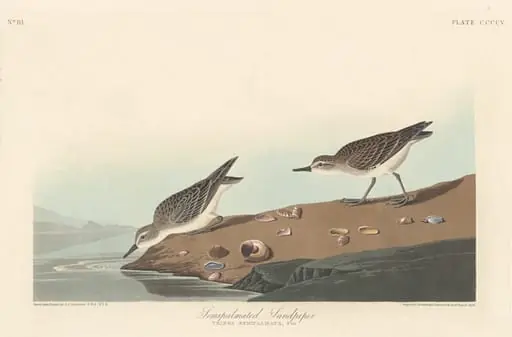
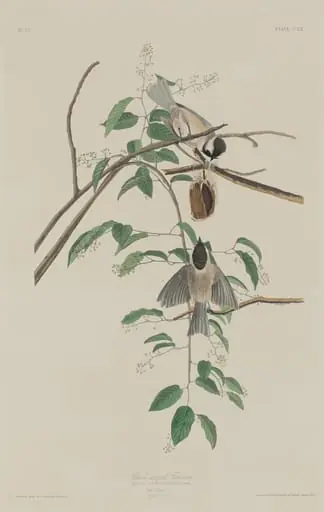
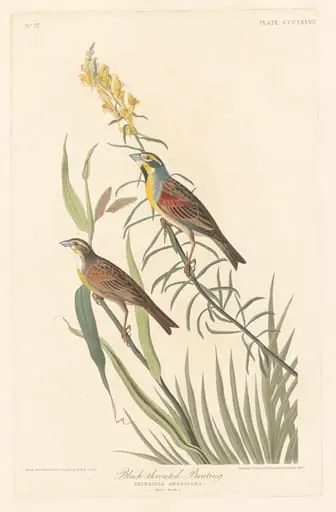
Created in 1831 by Robert Havell Jr., this hand-colored engraving and aquatint on Whatman wove paper portrays two sparrows in a naturalistic setting. The work belongs to a series of ornithological prints produced by the Havell family, known for their technical precision in printmaking and color application. The composition emphasizes quiet observation over dramatic effect, aligning with the scientific illustration traditions of the era.
Subject & Meaning
The two birds, rendered in brown and white plumage, face each other with open beaks, suggesting vocal exchange. Perched on a mossy branch amid scattered leaves and twigs, they appear engaged in a moment of natural behavior. The scene avoids anthropomorphism, instead presenting the birds as subjects of quiet study, reflecting the 19th-century interest in documenting avian life with accuracy and restraint.
Technique & Style
Havell employed aquatint for subtle tonal gradations and hand-coloring to achieve lifelike feather textures. The muted beige background isolates the birds without distraction, allowing fine details—individual barbs of feathers, the curve of a twig—to emerge through careful ink control and layered washes. The technique prioritizes fidelity to nature over decorative flourish, characteristic of the Havell workshop’s approach to natural history imagery.
History & Provenance
Part of a larger body of work tied to the Havell family’s printmaking enterprise, this piece extends the legacy begun by Robert Havell the Elder and Luke Havell. The family’s prints were often linked to publications documenting Indian fauna, though this particular subject may reflect broader ornithological interests. Its production aligns with the period’s surge in illustrated natural history texts, supported by collectors and scientific societies.
Context
In early 19th-century Britain, detailed natural history illustrations gained prominence as scientific inquiry and colonial exploration expanded. The Havells operated within this milieu, producing images that served both scholarly and aesthetic purposes. While European audiences favored exotic species, this print’s modest subject suggests an interest in common birds, possibly reflecting local observation or accessible specimens.
Legacy
Though not widely exhibited today, the work exemplifies the Havell family’s contribution to the transition from artistic representation to scientific documentation in natural history printing. Their methodical use of aquatint and hand-coloring influenced later illustrators and preserved visual records of species at a time when field observation was still developing. The print remains a quiet testament to precision in pre-photographic naturalism.
Own this work as a print
Artist & collection

Artist
The Havell family of Reading, Berkshire, England, included a number of notable engravers, etchers and painters, as well as writers, publishers, educators, and musicians.