Artwork
Yellow Bird or American Goldfinch
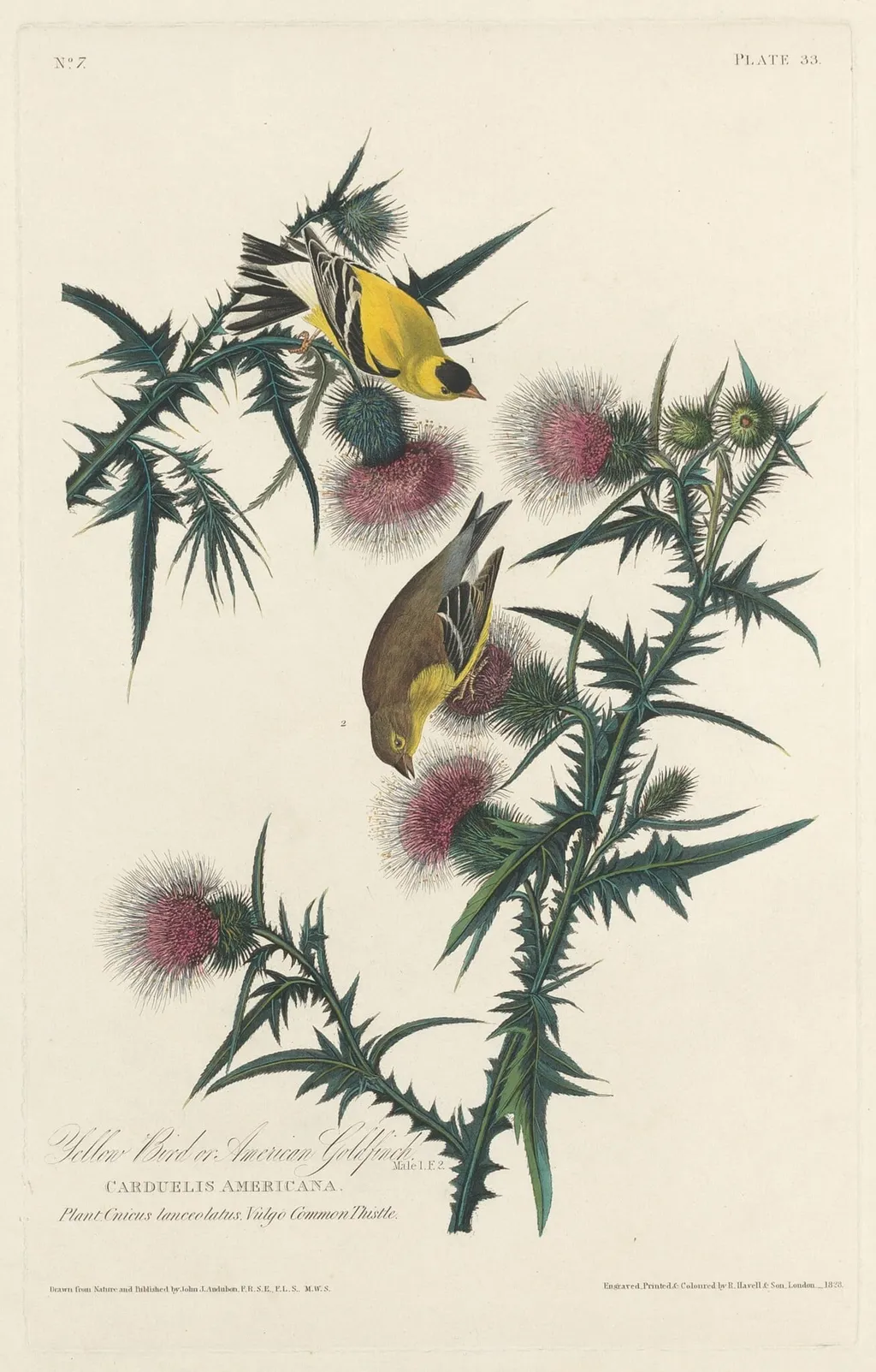
Yellow Bird or American Goldfinch is an ink print by the Romanticist artist Robert Havell Jr.. It dates from 1828 and is held in the collection of the National Gallery of Art.
About this work
Overview
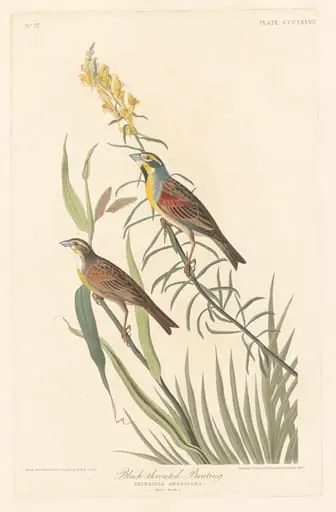
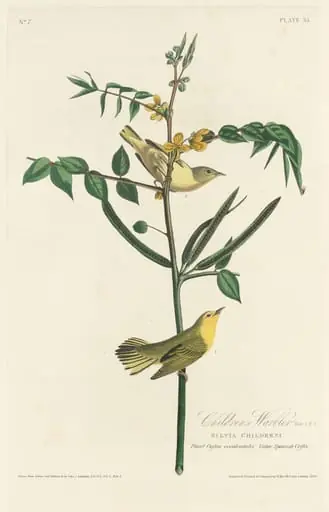
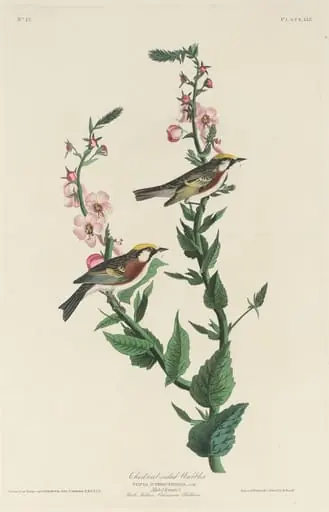
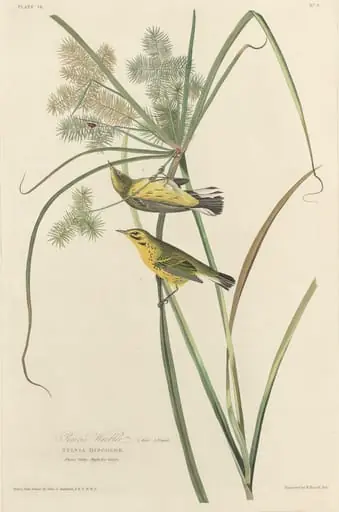
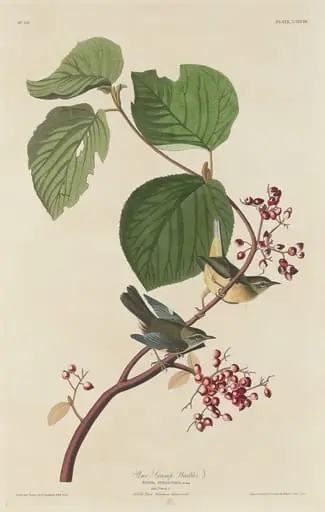
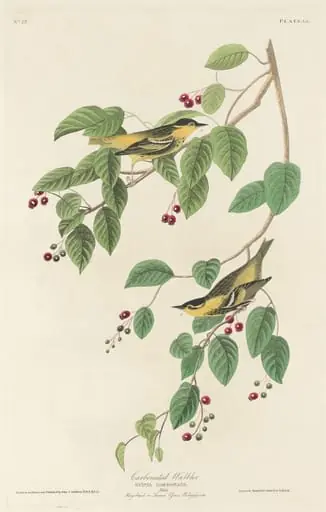
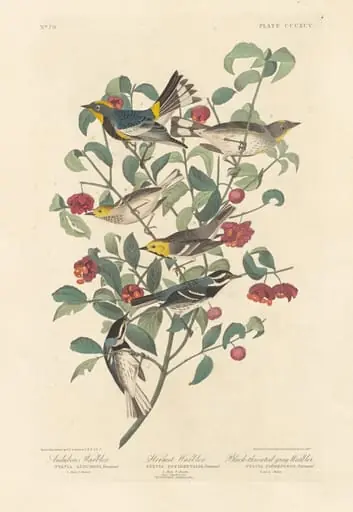
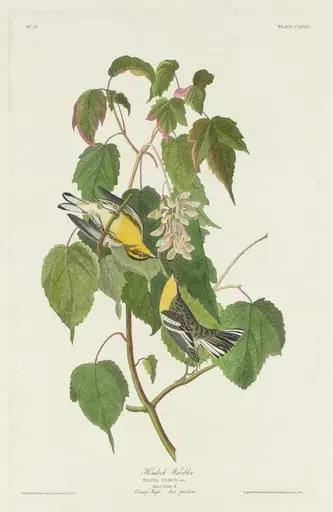
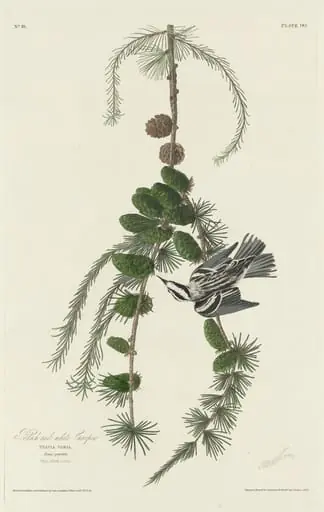
Created in 1828, this hand‑colored engraving and aquatint presents a pair of vivid yellow birds against a backdrop of spiky green foliage and purple buds. Rendered on fine Whatman wove paper, the composition balances delicate line work with subtle watercolor washes, highlighting the birds’ plumage and the texture of the surrounding thistle‑like plants.
Subject & Meaning
The work portrays two American goldfinches, commonly called yellow birds, positioned on a common thistle. One bird faces forward with an alert posture, while the other turns sideways, suggesting a moment of quiet observation in nature. The pairing emphasizes the species’ bright coloration and the interplay between fauna and flora in a domestic setting.
Technique & Style
Executed by Robert Havell Jr., the piece combines engraving—a process of incising lines into a metal plate—with aquatint, which creates tonal areas through powdered resin. After printing, each copy was finished by hand‑applying watercolor pigments, a labor‑intensive method that allowed for nuanced hues and a painterly surface while retaining the precision of the printed lines.
History & Provenance
His father, Robert Havell the Elder, and uncle, Daniel Havell, were well‑known for similar work, especially in reproducing Indian art.
Robert Havell Jr. belonged to a prominent family of English printmakers based in Reading, Berkshire. His father, Robert Havell the Elder, and uncle, Daniel Havell, were well‑known for similar work, especially in reproducing Indian art. This 1828 print reflects the family’s continued expertise in engraving and aquatint, extending their reputation beyond Oriental subjects to European natural history illustration.
Context
During the early nineteenth century, interest in natural history illustration grew alongside scientific exploration. Prints like this served both educational and decorative purposes, providing detailed visual records of species such as the American goldfinch while appealing to collectors who valued the combination of scientific accuracy and aesthetic appeal.
Artist & collection

Artist
The Havell family of Reading, Berkshire, England, included a number of notable engravers, etchers and painters, as well as writers, publishers, educators, and musicians.