Artwork
The Wandering Jew: The Desert: The Crucifixion
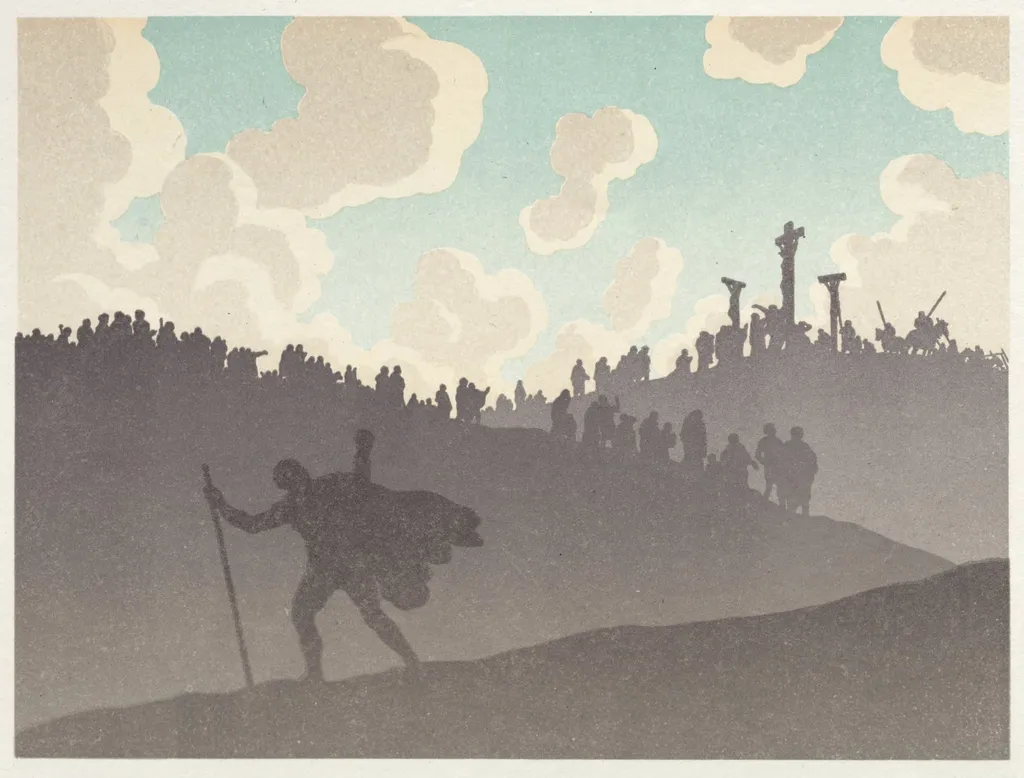
The Wandering Jew: The Desert: The Crucifixion is a work on paper by the Impressionist artist Henri Rivière. It dates from 1896 and is held in the collection of the Cleveland Museum of Art.
About this work
Overview
Created in 1896 by French artist Henri Rivière, this print is one of twelve in the portfolio titled *The Wandering Jew*.
Created in 1896 by French artist Henri Rivière, this print is one of twelve in the portfolio titled *The Wandering Jew*. Executed in lithography, it belongs to a series that blends biblical narrative with symbolic landscape. The work is held in the collection of The Cleveland Museum of Art, reflecting Rivière’s interest in spiritual themes and his engagement with printmaking beyond his better-known shadow theater work.
Subject & Meaning
The image depicts the legendary Wandering Jew, a solitary figure traversing a barren desert, while a distant crowd observes from a hilltop. The scene alludes to the crucifixion not through direct representation but through implication—the crowd’s posture and the figure’s isolation evoke judgment and eternal punishment. Rivière refrains from literal depiction, instead using solitude and landscape to convey themes of exile and divine retribution.
Technique & Style
Rivière employed lithography to achieve strong tonal contrasts between the dark, simplified figure and the luminous, cloud-filled sky. The ground is rendered with varied hatching and washes, creating a sense of uneven terrain. The crowd in the distance is rendered minimally, almost as silhouettes, emphasizing scale and detachment. The style merges symbolic composition with the atmospheric qualities of post-Impressionist printmaking.
History & Provenance
The portfolio *The Wandering Jew* was published in 1896 as a limited edition of prints, reflecting Rivière’s experimentation with narrative series in print form. It was acquired by The Cleveland Museum of Art in the early 20th century, likely through a donation or purchase from a collector familiar with French graphic arts. The work has remained in the museum’s collection since, with no known public exhibitions prior to the 1950s.
Context
Rivière’s series emerged during a period of renewed interest in religious symbolism among French artists, alongside broader explorations of myth and legend. While contemporaries like Gauguin pursued spiritual themes in tropical settings, Rivière turned to the desert as a metaphor for spiritual desolation. His approach aligned with Symbolist tendencies in printmaking, favoring mood over narrative clarity.
Legacy
Though less known than his shadow theater, *The Wandering Jew* portfolio represents Rivière’s most sustained engagement with symbolic imagery. The series influenced later French printmakers interested in narrative abstraction and psychological landscape. Its quiet, contemplative tone distinguishes it from more overtly dramatic religious works of the era, offering a restrained meditation on isolation and memory.
Artist & collection
Artist
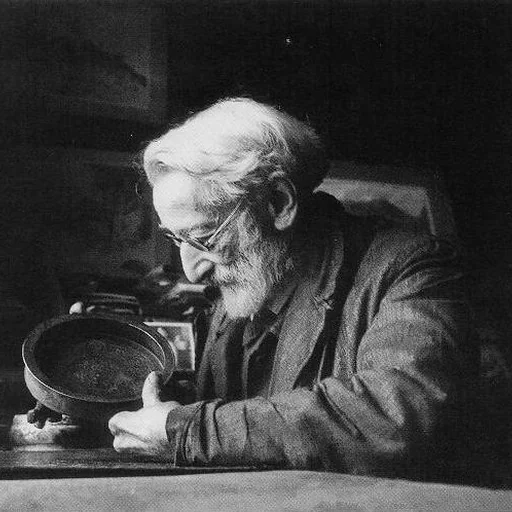
Henri Rivière (March 11, 1864 – August 24, 1951) was a French artist and designer best known for his creation of a form of shadow play at the Chat Noir cabaret, and for his post-Impressionist illustrations of Breton landscapes and the…

 Aspects of Nature: The Island
 Parisian Landscapes: The Fortifications
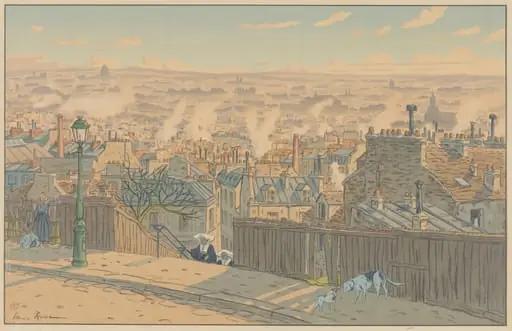 Parisian Landscapes: Paris seen from Montmartre
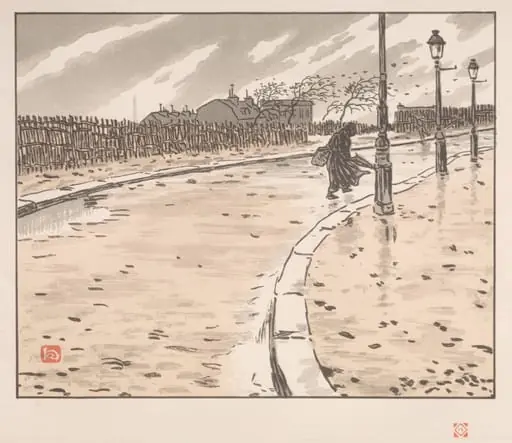 Thirty-Six Views of the Eiffel Tower: From Lamarck Street
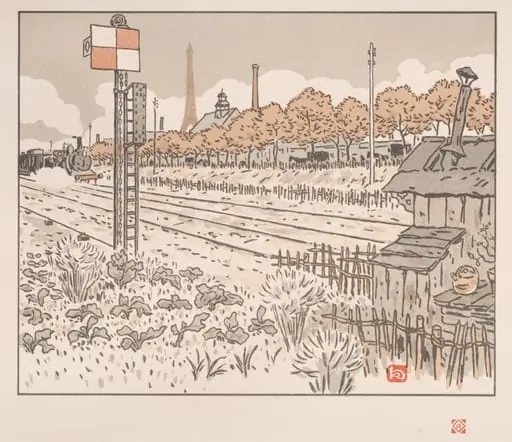 Thirty-Six Views of the Eiffel Tower: From the Quai de Javel (Switchman's Shanty)
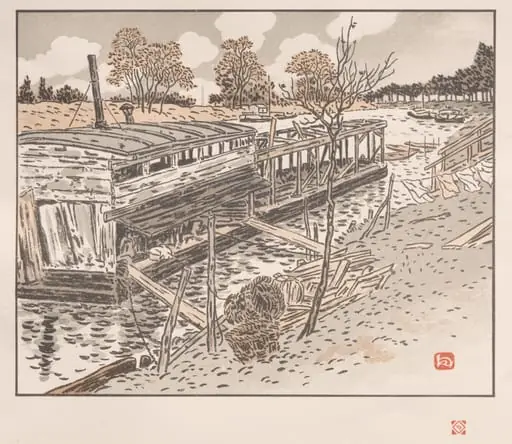 From Bas-Meudon, Old Lavoir
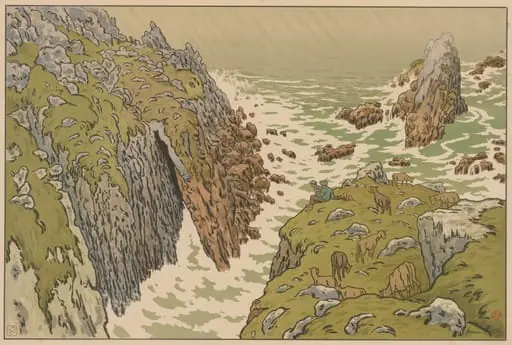 Aspects of Nature: The Cliff
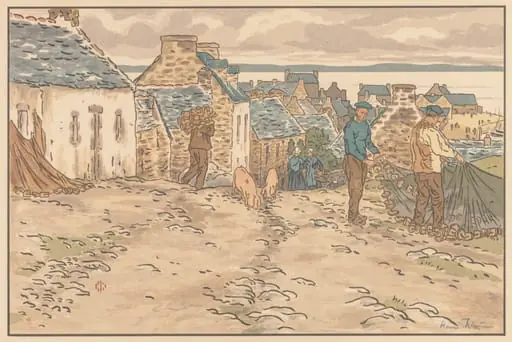 The Beautiful Countryside in Brittany: Street in Tréboul
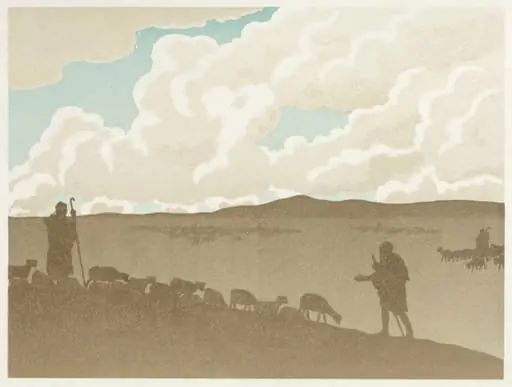 The Wandering Jew: The Plain
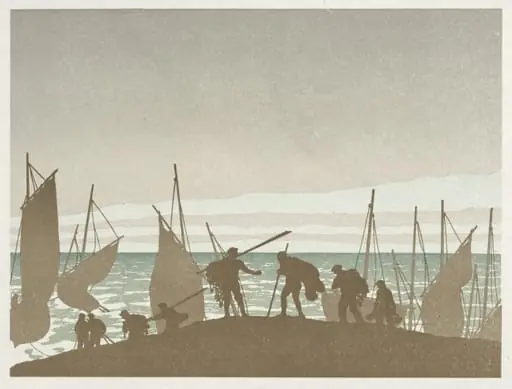 The Wandering Jew: The Fishermen
![The Archer [L'Arciere], by Adolfo De Carolis](https://artifactworldgallery.com/img/adolfo-de-carolis--the-archer-l-arciere--b650690ed1f11c5e-w320.webp) The Archer [L'Arciere]
The Archer [L'Arciere] The Wandering Jew: Heaven
 The Rest on the Flight into Egypt (recto)
 Wreck off Appledore, North Devon
 Arnheim
 Moonrise on an Empty Shore
 Mural Sketch, Pastoral Study, No. 1
 Paradise Lost: Adam and Eve Driven out of Paradise
 Rest on the Flight into Egypt