Artwork
Gluttony
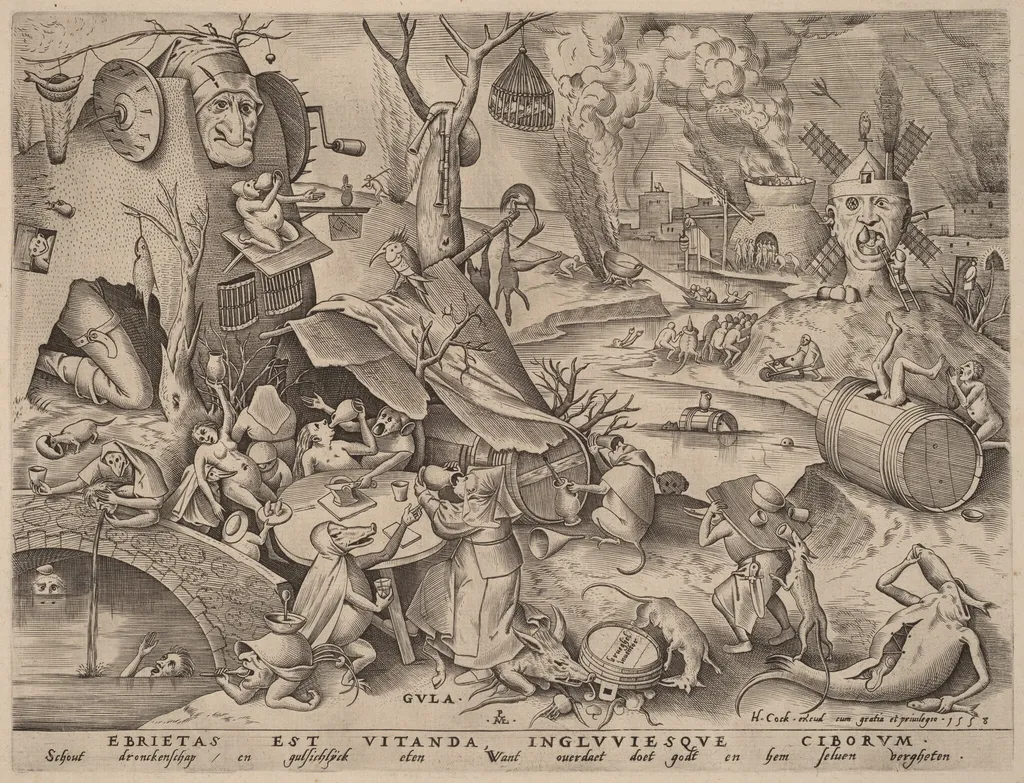
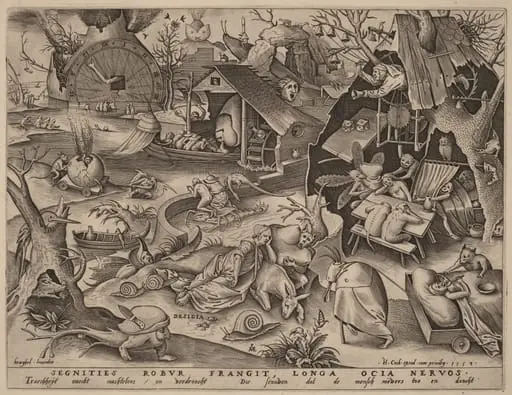
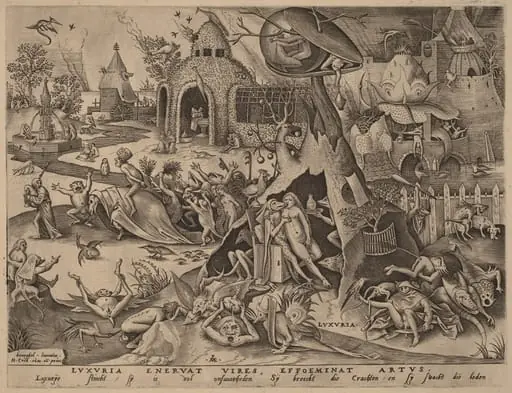
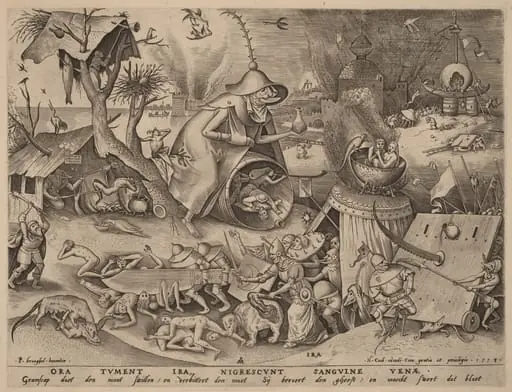
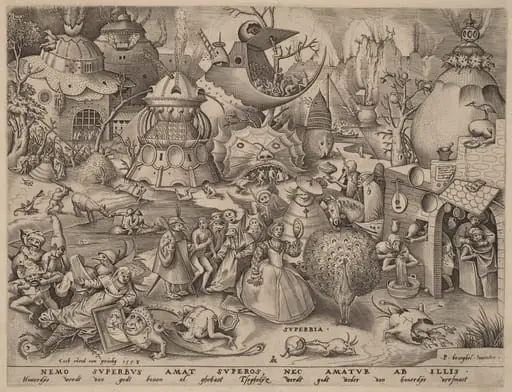
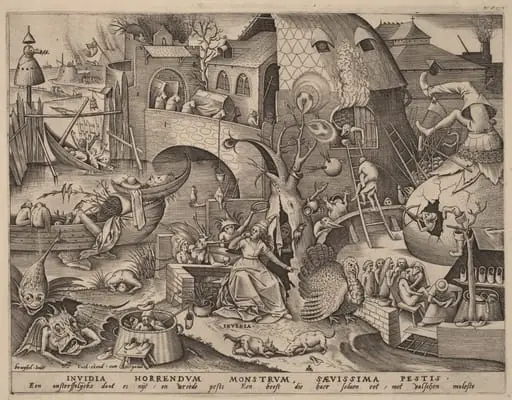
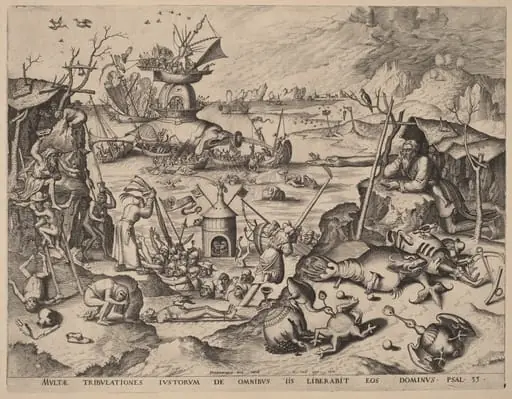
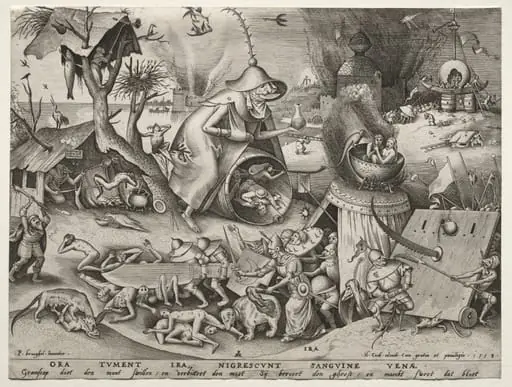
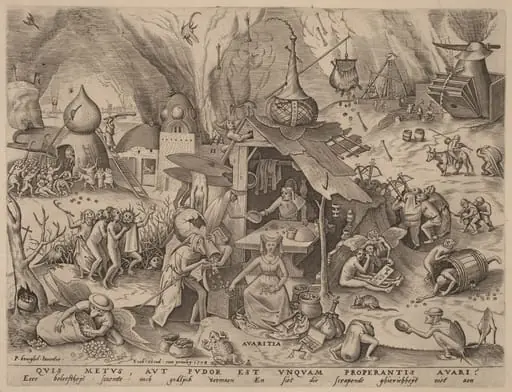
Gluttony is an ink print by the Renaissance artist Pieter van der Heyden. It dates from 1558 and is held in the collection of the National Gallery of Art.
About this work
Overview
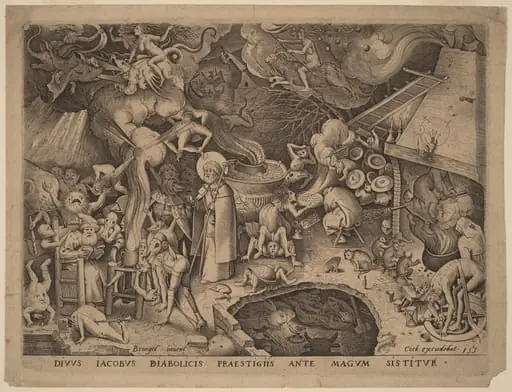
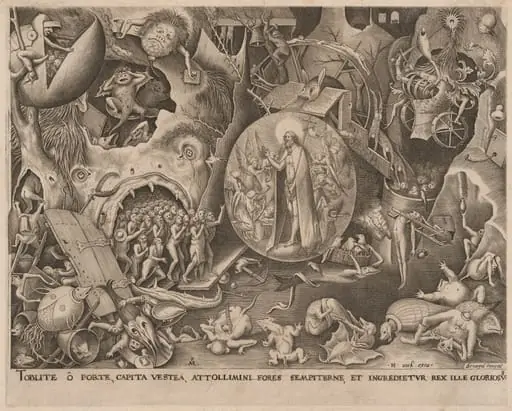
Gluttony is an engraving on laid paper created by Pieter van der Heyden in 1558. It is a representative work of the Northern Renaissance, a period characterized by the proliferation of printmaking as a means of disseminating moral and religious themes.
Subject & Meaning
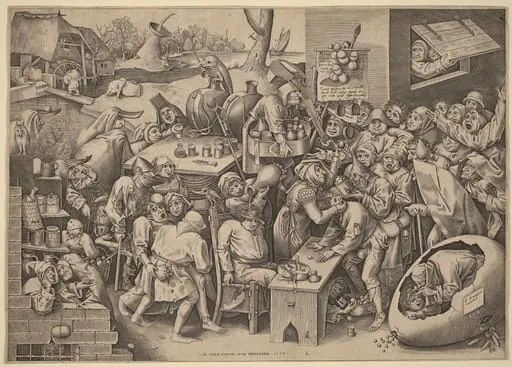
The engraving depicts a chaotic scene illustrating the vice of excessive indulgence. It features a multitude of tiny, frenetic episodes, including feasting, revelry, and destruction, conveying a moral warning about the dangers of overindulgence.
Technique & Style
Van der Heyden employed fine lines to achieve depth and texture, resulting in a detailed and intricate composition. The engraving's crowded and complex arrangement is characteristic of his style, which was influenced by the reproductive printmaking practices of his time.
History & Provenance
Pieter van der Heyden was a Flemish printmaker known for producing engravings after works by prominent artists. Gluttony is a product of this practice, reflecting the artistic and cultural currents of the mid-16th century.
Artist & collection

Artist
Pieter van der Heyden (c. 1530 - after March 1572) was a Flemish printmaker who is known for his reproductive engravings after works by leading Flemish painters and designers of the 16th century.