Artwork
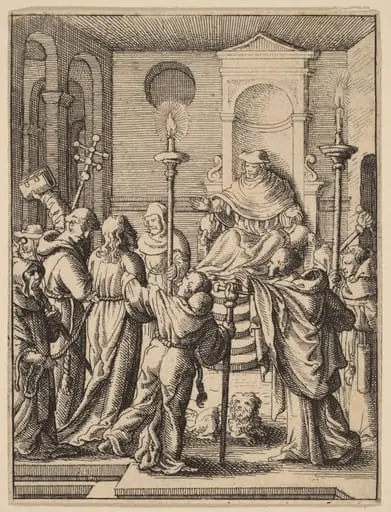
Christ is Mocked, and Caiaphas Rends His Garments
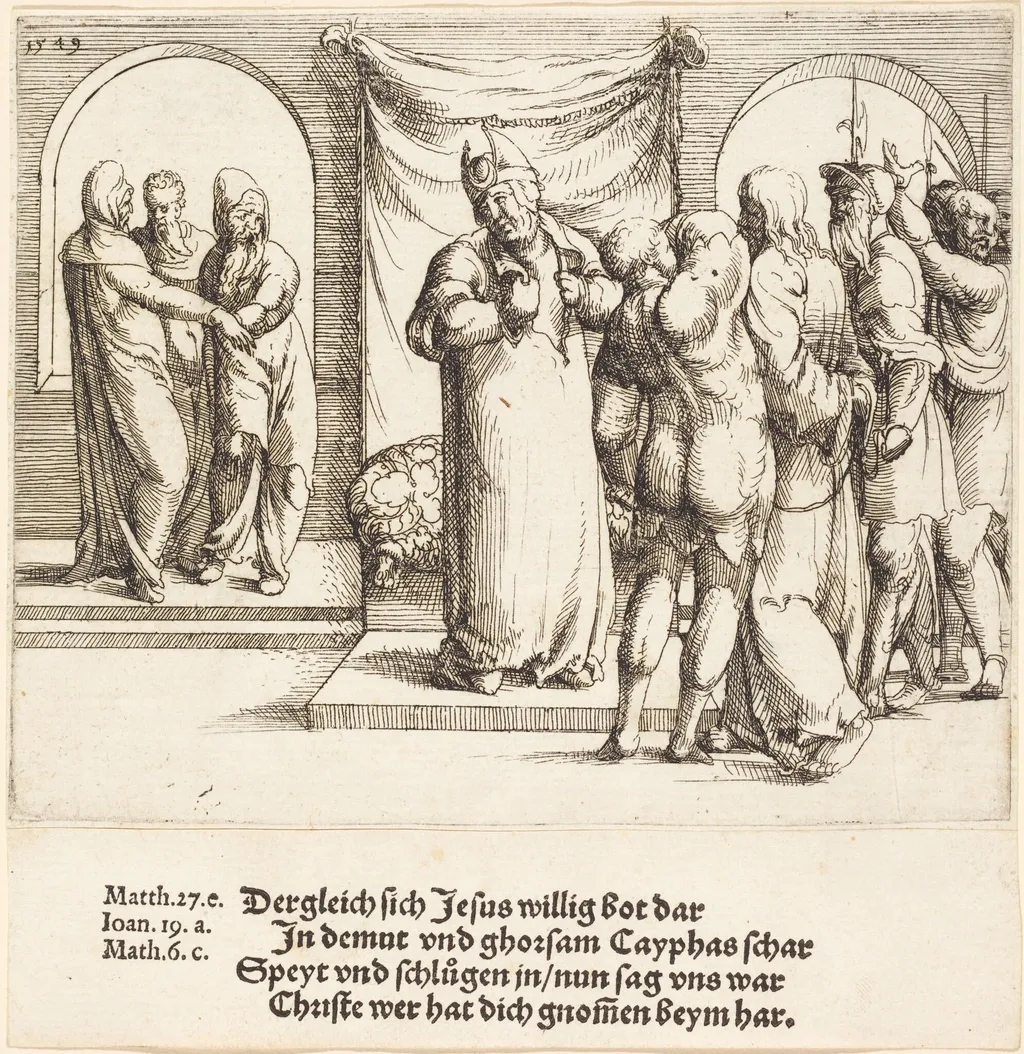
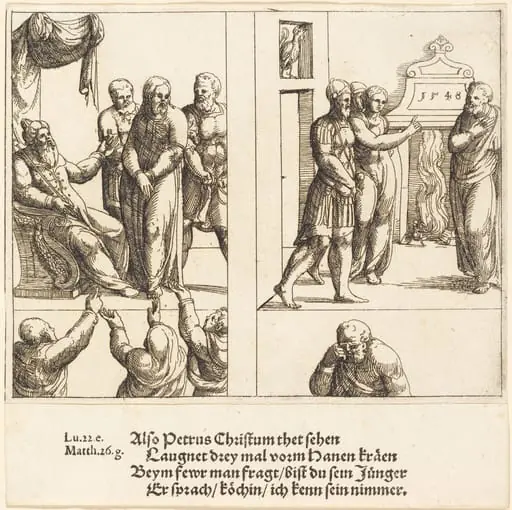
Christ is Mocked, and Caiaphas Rends His Garments is an ink print by the Renaissance artist Augustin Hirschvogel. It dates from 1549 and is held in the collection of the National Gallery of Art.
About this work
Overview
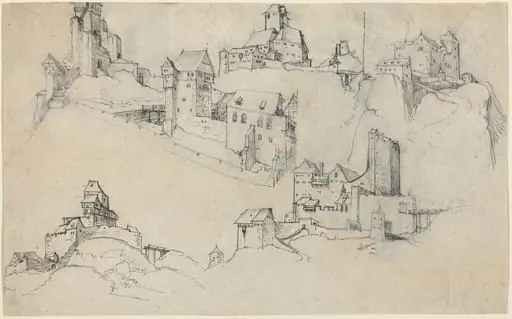
Hirschvogel, known for his precise linear style and cartographic precision, produced this work during a productive period of small-scale religious prints.
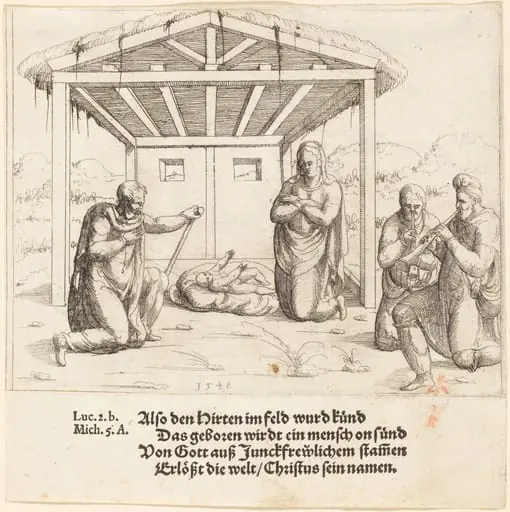
Created in 1549 by the German artist Augustin Hirschvogel, this etching captures a moment from the Passion of Christ. Hirschvogel, known for his precise linear style and cartographic precision, produced this work during a productive period of small-scale religious prints. The piece combines biblical narrative with intense emotional expression, reflecting the devotional concerns of mid-16th-century Northern Europe.
Subject & Meaning
The scene illustrates Christ’s humiliation before Caiaphas, the high priest, as described in the Gospels. Christ stands exposed and silent amid a crowd of accusers, some gesturing aggressively, others reacting in shock. Caiaphas, depicted tearing his garments, symbolizes outrage at perceived blasphemy. The inclusion of a small figure near the doorway adds a quiet, observational counterpoint, reinforcing the narrative’s gravity and isolation.
Technique & Style
Hirschvogel employed etching to achieve fine, controlled lines that define movement and tension. His use of sharp, angular strokes conveys the agitation of the figures, while delicate hatching models form and depth. The composition is tightly framed, focusing attention on the central confrontation. The absence of color and the emphasis on line reflect the medium’s capacity for clarity and emotional intensity.
History & Provenance
The print was made during Hirschvogel’s most active phase as a printmaker, between 1545 and 1549. Though primarily recognized for landscapes, he also produced religious subjects for private devotion. This work likely circulated among educated patrons in German-speaking regions, where biblical imagery served both spiritual and moral instruction. Its survival in collections today attests to its early reception and preservation.
Context
Produced during the Reformation, this image reflects the Protestant emphasis on direct engagement with scripture. While Catholic devotional art often emphasized Christ’s suffering, Hirschvogel’s focus on the moment of accusation aligns with reformist interest in textual accuracy. The inclusion of German biblical inscriptions underscores its function as a visual aid for personal reflection and study.
Legacy
Hirschvogel’s etchings, including this one, contributed to the development of Northern Renaissance printmaking through their technical refinement and narrative clarity. Though not widely reproduced in later centuries, his integration of mathematical precision with religious subject matter influenced subsequent generations of printmakers seeking to balance intellectual rigor with emotional expression.
Artist & collection
Artist
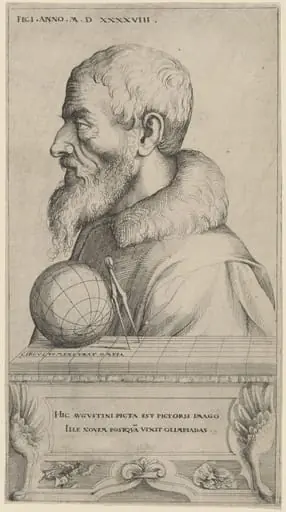
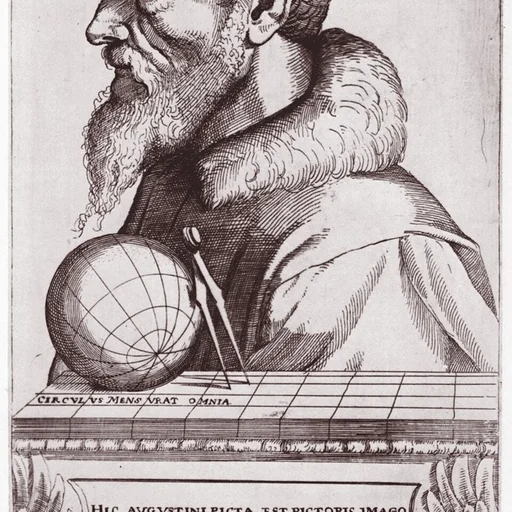
Augustin Hirschvogel (1503 – February 1553) was a German artist, mathematician, and cartographer known primarily for his etchings.