Artwork
Christ Appears to the Apostles
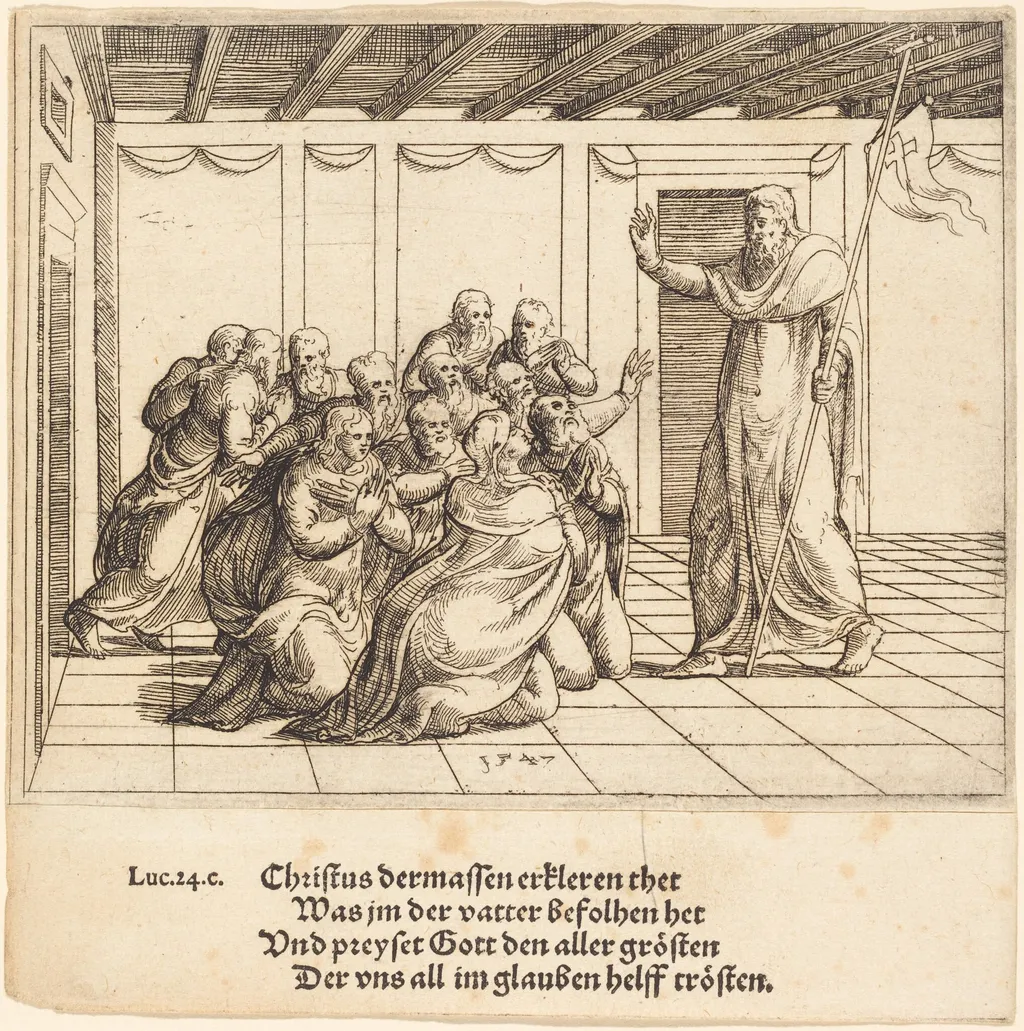
Christ Appears to the Apostles is an ink print by the Renaissance artist Augustin Hirschvogel. It dates from 1547 and is held in the collection of the National Gallery of Art.
About this work
Overview
Created in 1547 by the German artist Augustin Hirschvogel, this etching depicts a moment from the New Testament in which Christ reveals himself to his disciples. As one of approximately thirty-five small landscape-oriented prints Hirschvogel produced between 1545 and 1549, the work reflects his engagement with religious themes during a period when printmaking was becoming a key medium for devotional imagery in Central Europe.
Subject & Meaning
The scene captures Christ standing in a doorway, bearded and gesturing upward, while his followers respond with varied postures of awe and reverence.
The scene captures Christ standing in a doorway, bearded and gesturing upward, while his followers respond with varied postures of awe and reverence. The composition emphasizes spiritual revelation, with the figures oriented toward the central figure as if receiving divine instruction. The draped fabric and window frame suggest an interior space, grounding the miraculous event in a domestic setting, reinforcing the idea of faith manifesting in everyday life.
Technique & Style
Hirschvogel employed fine, precise lines typical of etching to render both figures and architectural details with clarity. The contrast between the sharply defined forms and the minimal background creates a focused, intimate atmosphere. His background in mathematics and cartography may have influenced the balanced composition and attention to spatial structure, distinguishing this work from more ornate contemporary prints.
History & Provenance
The etching emerged during Hirschvogel’s most active period as a printmaker, shortly after he shifted from cartography to artistic production. Though specific early ownership records are sparse, the work aligns with the broader circulation of religious prints in German-speaking regions during the Reformation, where such images served both devotional and educational purposes among literate audiences.
Context
Hirschvogel operated within the cultural orbit of the Danube School, a loose network of artists in Bavaria and Austria who blended Northern Renaissance detail with emerging Mannerist tendencies. While many of his contemporaries focused on mythological or secular subjects, Hirschvogel’s output remained largely religious, reflecting the enduring influence of Catholic devotional traditions even amid Protestant reforms.
Legacy
Though Hirschvogel is less widely known today than some of his peers, his etchings contributed to the development of the small-format religious print in 16th-century Germany. His integration of precise draftsmanship with narrative clarity helped establish a model for later artists seeking to convey sacred stories through accessible, reproducible imagery.
Artist & collection
Artist
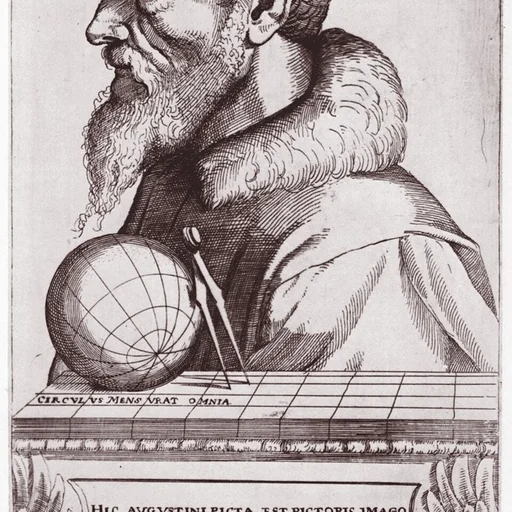
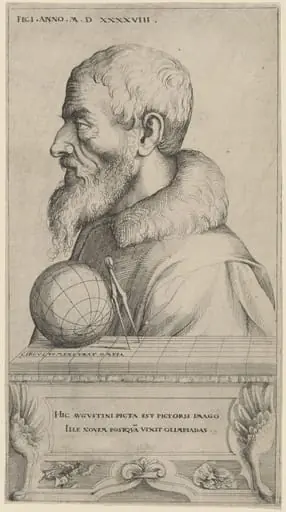
Augustin Hirschvogel (1503 – February 1553) was a German artist, mathematician, and cartographer known primarily for his etchings.

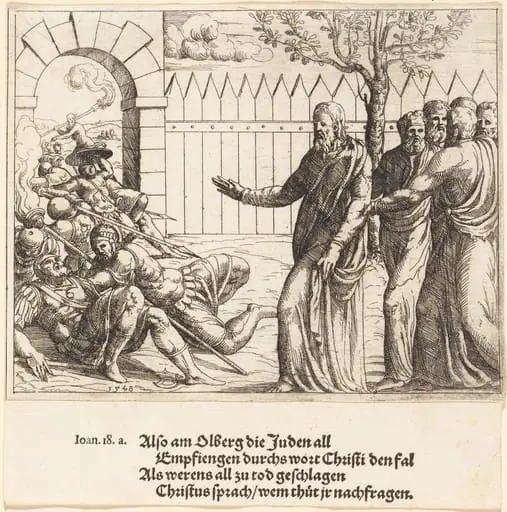 Jesus Identifies Himself before the Arrest
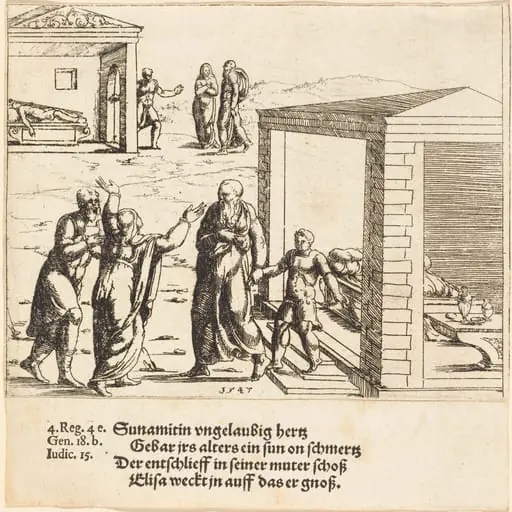 Elisha Raises the Son of the Shunammite
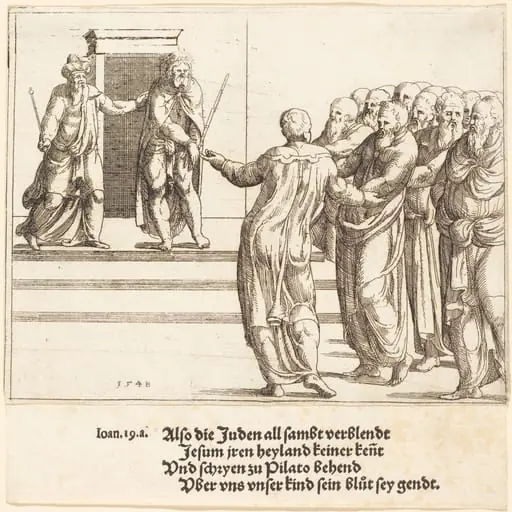 Ecce Homo, and the Jews Deny Christ
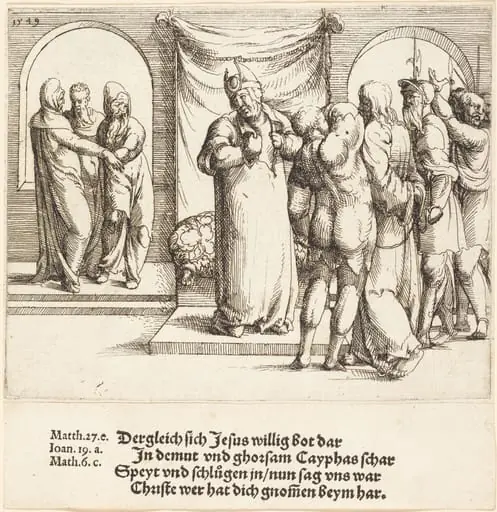 Christ is Mocked, and Caiaphas Rends His Garments
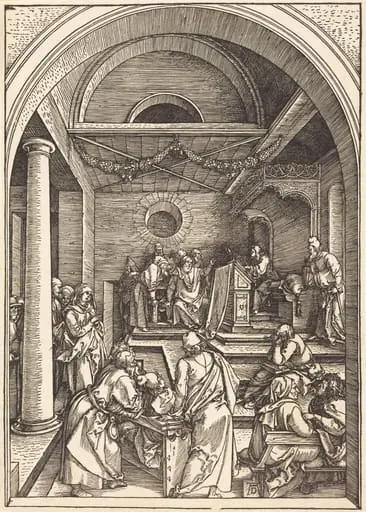 Christ among the Doctors
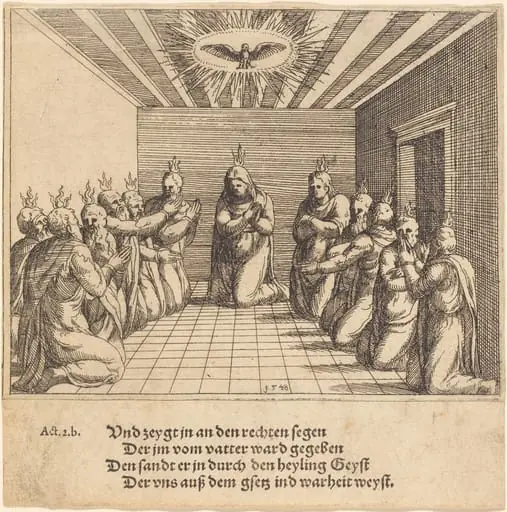 The Descent of the Holy Spirit
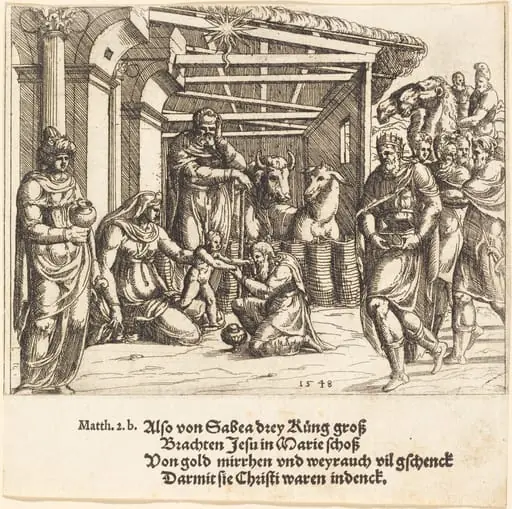 The Adoration of the Magi
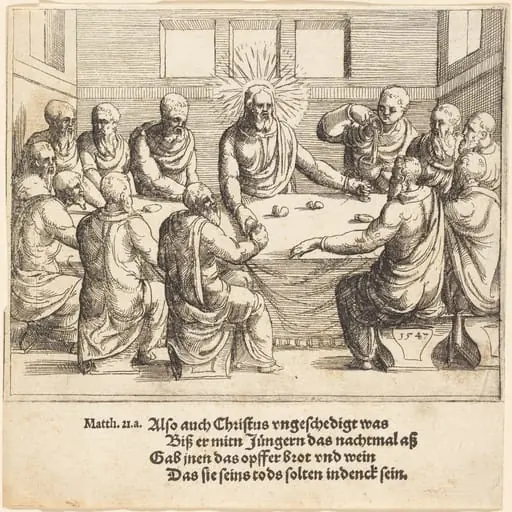 The Last Supper
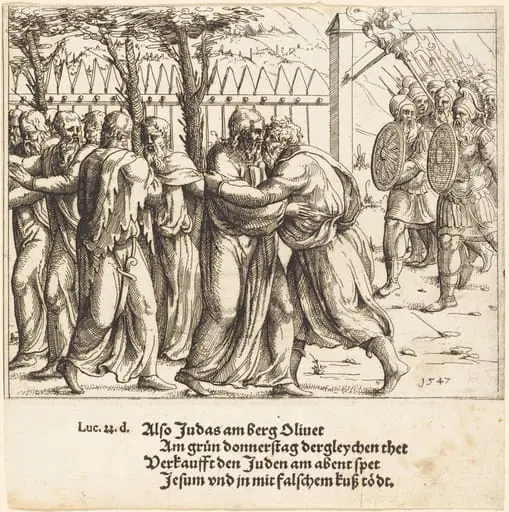 The Kiss of Judas
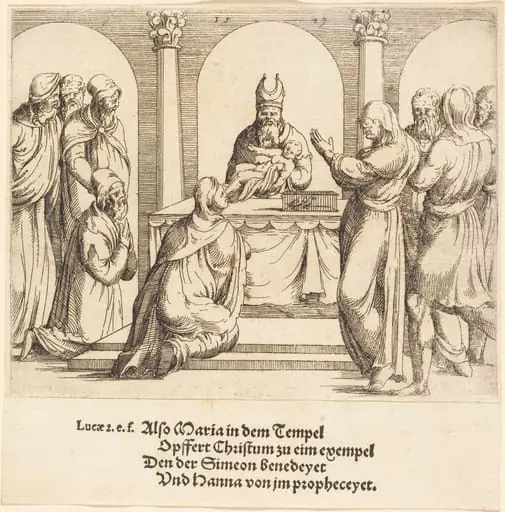 The Presentation in the Temple
 The Presentation of the Virgin in the Temple
 Der Schatzbehalter: Christ before Caiaphas (verso)