Artwork
Joseph Thrown into the Well
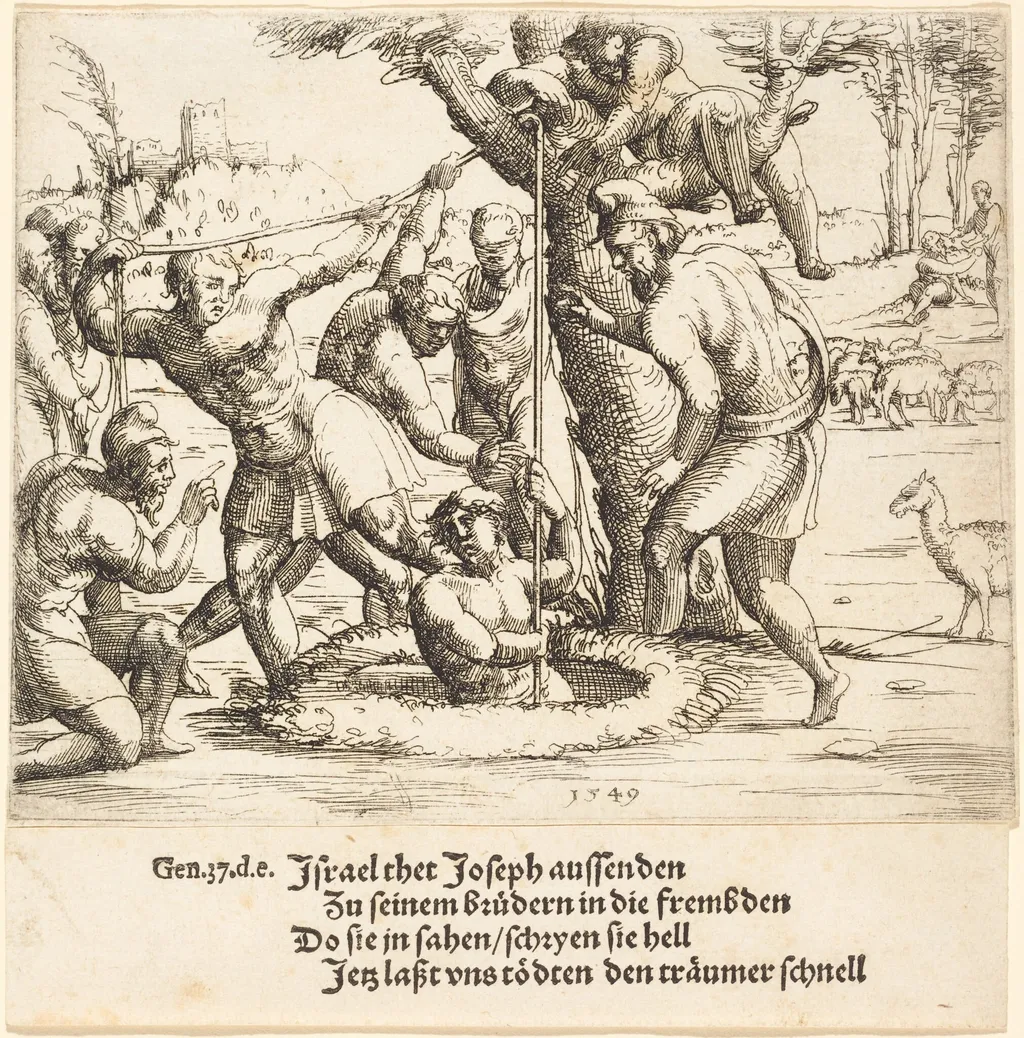
Joseph Thrown into the Well is an ink print by the Renaissance artist Augustin Hirschvogel. It dates from 1549 and is held in the collection of the National Gallery of Art. Created in 1549, this black‑and‑white etching depicts the biblical episode of Joseph being lowered into a well.
About this work
Overview
The print’s dense line work and dramatic action reflect the narrative focus typical of mid‑16th‑century German prints.
Created in 1549, this black‑and‑white etching depicts the biblical episode of Joseph being lowered into a well. The composition centers on a crowded group of figures whose tangled bodies convey the urgency of the moment, while a sparse, rugged landscape recedes into the background. The print’s dense line work and dramatic action reflect the narrative focus typical of mid‑16th‑century German prints.
Subject & Meaning
The scene illustrates the early chapter of Genesis in which Joseph’s brothers conspire to dispose of him, a story often used to explore themes of jealousy, betrayal, and providence. The chaotic arrangement of men, ropes, and the central figure emphasizes the violence of the act and the vulnerability of the young protagonist, inviting viewers to contemplate the moral consequences of fraternal envy.
Technique & Style
Executed with a fine etching needle, Hirschvogel employed a densely scratched line to render intricate details of clothing, musculature, and foliage. The technique allows for a high concentration of texture and movement, characteristic of the Danube School’s emphasis on naturalistic landscape elements combined with narrative clarity. The stark contrast between the busy foreground and the subdued background enhances the sense of immediacy.
History & Provenance
Augustin Hirschvogel, a German artist noted for his work as a mathematician and cartographer, produced this piece among a series of thirty‑five small landscape etchings made between 1545 and 1549. While the original ownership records are sparse, the work is associated with the Danube School, a regional movement active in Bavaria and Austria that valued detailed observation of nature and biblical storytelling.
Context
The print emerges from a period when printmaking served both devotional and educational purposes, disseminating biblical narratives to a broader audience. Hirschvogel’s background in cartography informed his precise rendering of terrain, while his affiliation with the Danube School linked him to artists such as Albrecht Altdorfer, who similarly blended landscape and narrative.
Legacy
Although not as widely reproduced as later prints, this etching exemplifies the technical possibilities of early modern etching and contributes to our understanding of how German artists integrated detailed topography with scriptural subjects. It remains a valuable reference for scholars studying the evolution of narrative printmaking in the 16th century.
Artist & collection
Artist
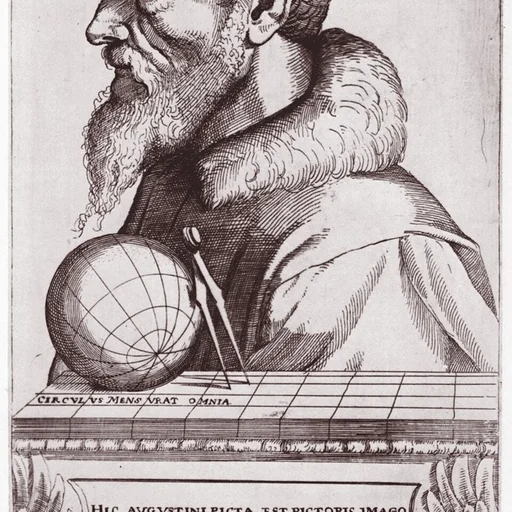
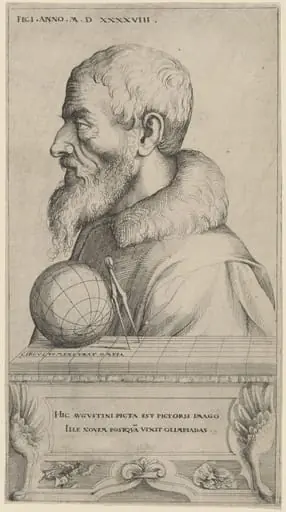
Augustin Hirschvogel (1503 – February 1553) was a German artist, mathematician, and cartographer known primarily for his etchings.

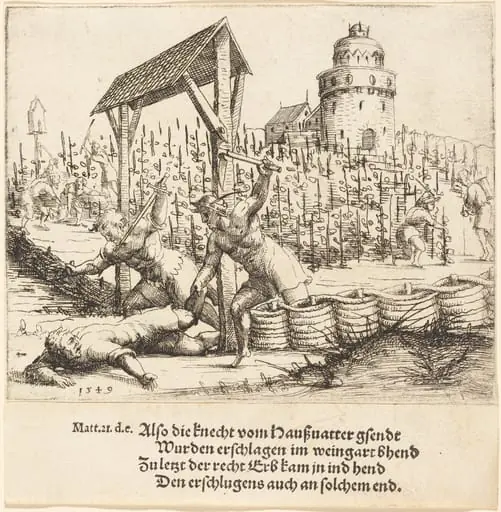 The Parable of the Wicked Husbandmen
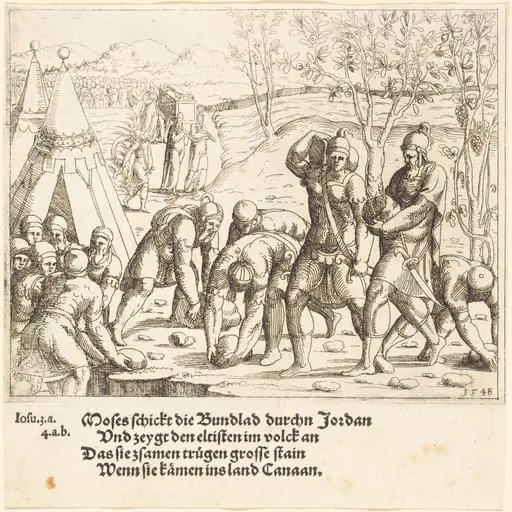 The Twelve Stones, and the Waters of the Jordan are Divided
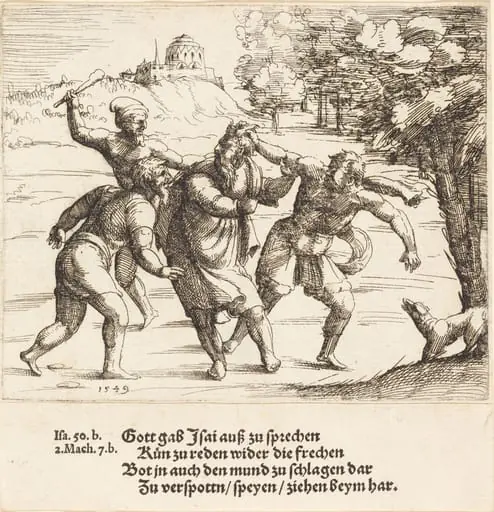 Isaiah Accepts Mockery because of His Faith
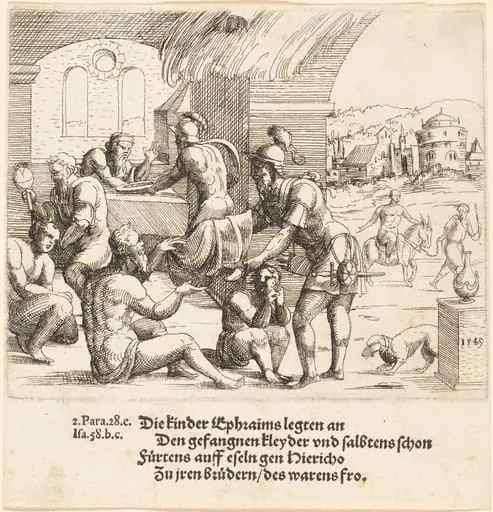 The Men of Ephraim Care for their Captives and Return Them to Jerico
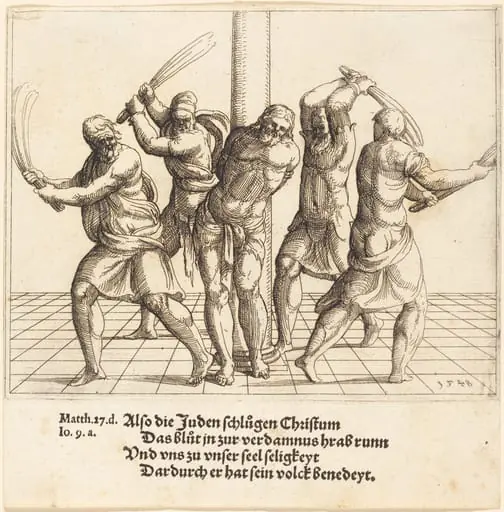 The Flagellation
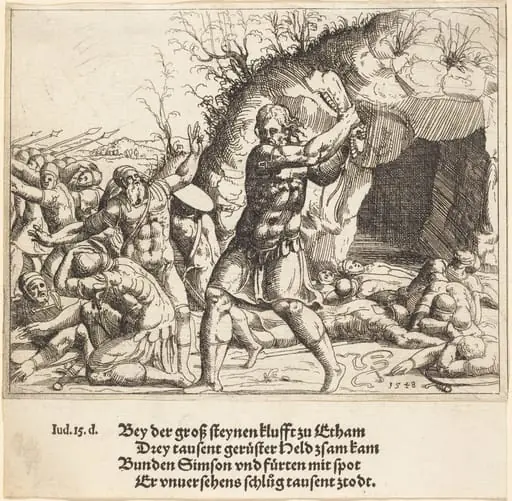 Samson Slays the Philistines
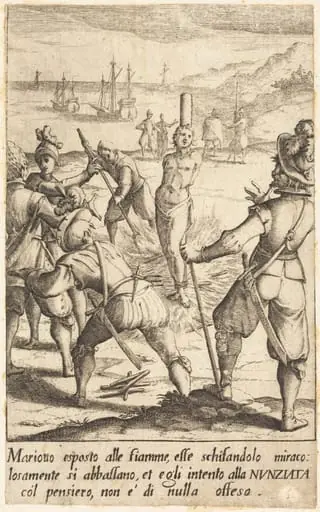 Mariotto
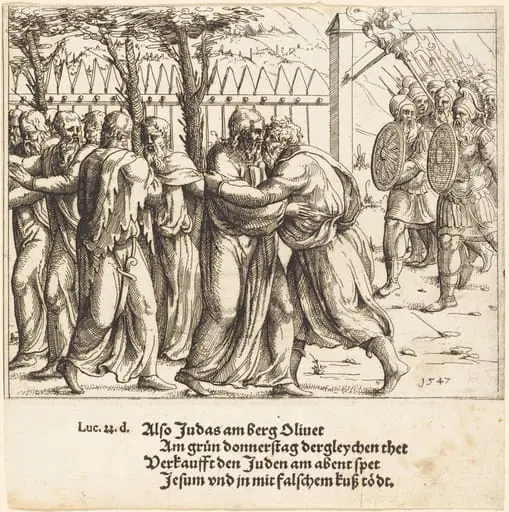 The Kiss of Judas
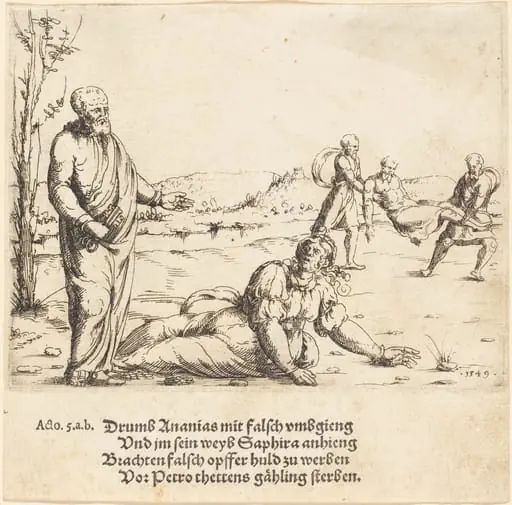 The Punishment of Ananias and Sapphira
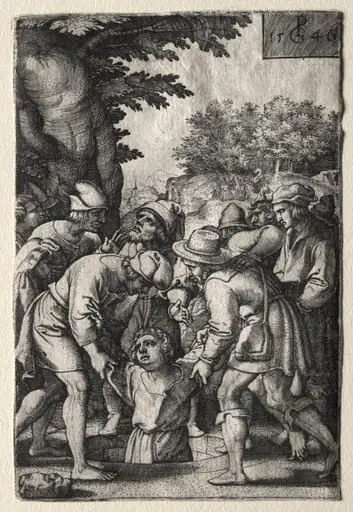 Joseph Lowered into a Well