Artwork
The Parable of the Wicked Husbandmen
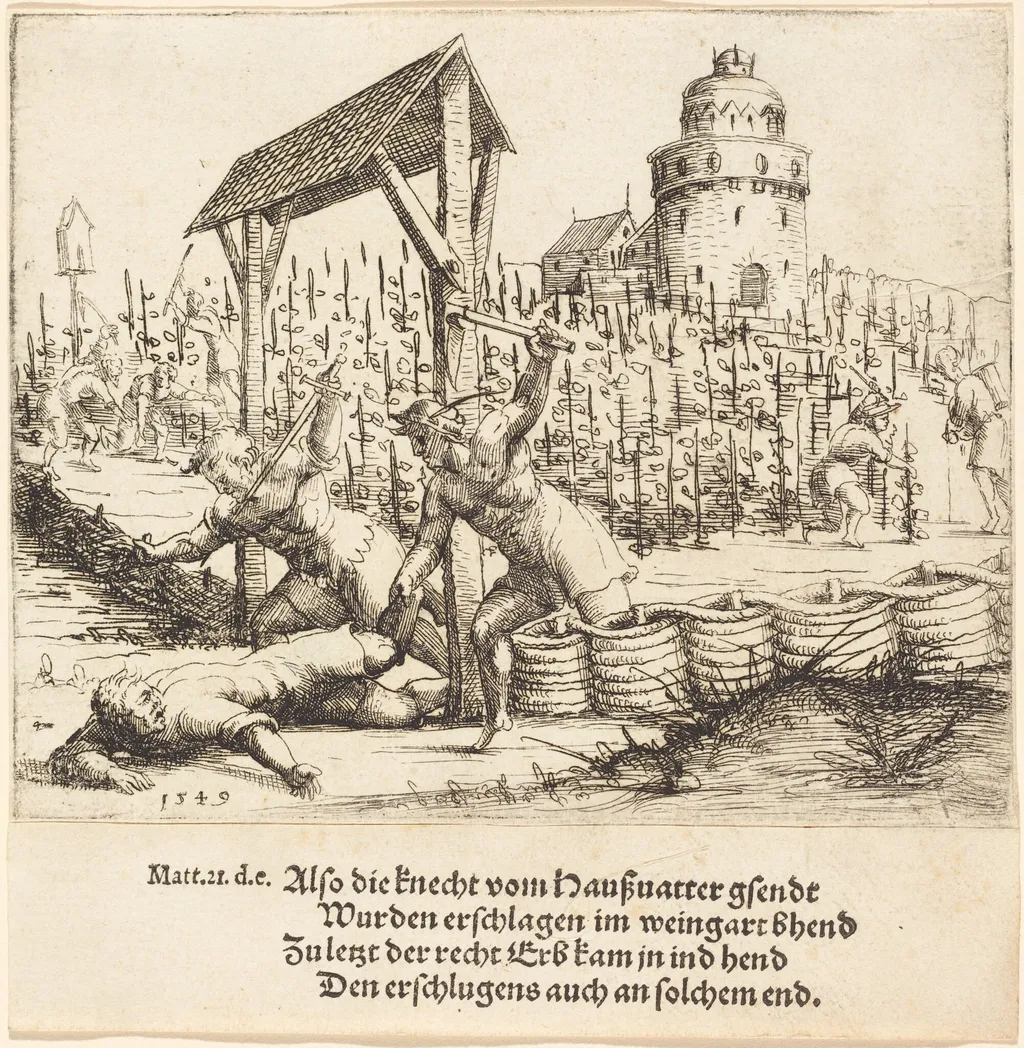
The Parable of the Wicked Husbandmen is an ink print by the Renaissance artist Augustin Hirschvogel. It dates from 1549 and is held in the collection of the National Gallery of Art.
About this work
Overview
Created in 1549 by the German artist Augustin Hirschvogel, this etching illustrates the biblical Parable of the Wicked Husbandmen.
Created in 1549 by the German artist Augustin Hirschvogel, this etching illustrates the biblical Parable of the Wicked Husbandmen. Hirschvogel, known for his precise linear style and technical mastery in printmaking, produced this work during a period of intense activity in Nuremberg’s print culture. The image is one of thirty-five small landscape-oriented etchings he completed between 1545 and 1549, reflecting his dual interests in art and cartographic precision.
Subject & Meaning
The scene depicts the violent rejection of a landowner’s servants by tenant farmers, as recounted in the Gospels. Figures are locked in chaotic confrontation—some wielding tools as weapons, others fallen or crouching in defense. A church and tower in the background suggest divine oversight, reinforcing the parable’s moral warning against rejecting sacred authority. The dense composition mirrors the escalating tension of the narrative, turning scripture into a visceral, immediate drama.
Technique & Style
Hirschvogel employed fine, incised lines to build dense, rhythmic textures across the entire plate. The etching’s sharp contours and layered cross-hatching create a sense of movement and spatial depth despite the flatness of the medium. Every inch of the surface is activated, with no empty space left untouched. The precision of the lines reflects his background in mathematics and surveying, lending an almost architectural rigor to the chaos depicted.
History & Provenance
The print emerged from Nuremberg’s thriving print industry, where artists like Hirschvogel collaborated with publishers to distribute religious and moral imagery widely. Though no early ownership records are documented, its survival in multiple institutional collections suggests it was circulated among educated Protestant audiences. Hirschvogel’s reputation as both artist and cartographer likely aided its dissemination, as his works were valued for technical and intellectual merit.
Context
Produced during the Reformation, this etching resonated with contemporary debates over authority, obedience, and divine judgment. The Danube School’s interest in expressive landscapes and dramatic narratives provided a visual language for religious stories, blending local traditions with broader Northern Renaissance themes. Hirschvogel’s use of etching—a medium gaining popularity for its detail and reproducibility—aligned with the era’s demand for accessible theological imagery.
Legacy
Hirschvogel’s etching stands as a refined example of mid-16th-century German printmaking, where technical control and narrative intensity converged. While not widely replicated, it influenced later artists in its compression of complex stories into single, densely packed compositions. His integration of cartographic discipline into pictorial space contributed to the evolution of landscape as a carrier of moral and spiritual meaning in print culture.
Artist & collection
Artist
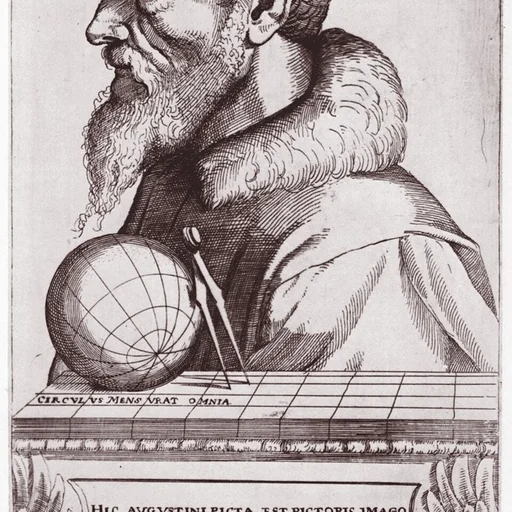
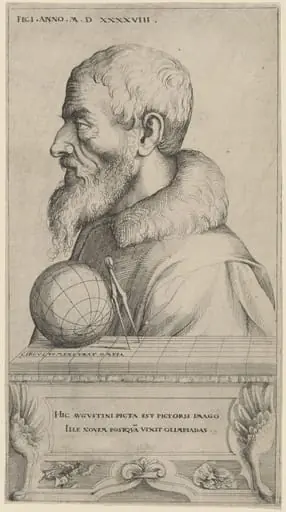
Augustin Hirschvogel (1503 – February 1553) was a German artist, mathematician, and cartographer known primarily for his etchings.

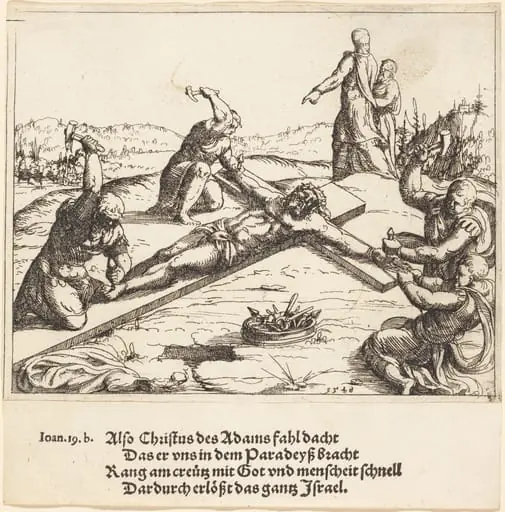
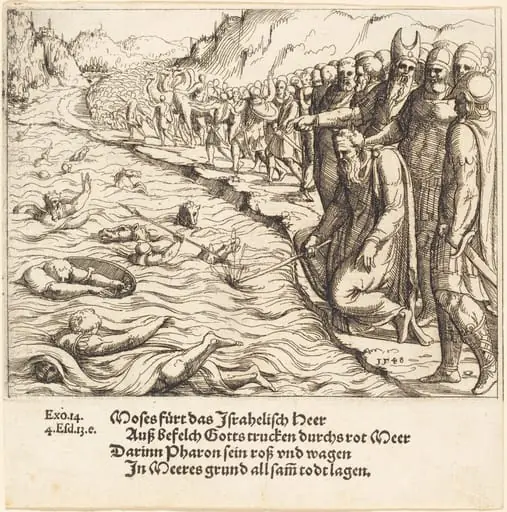
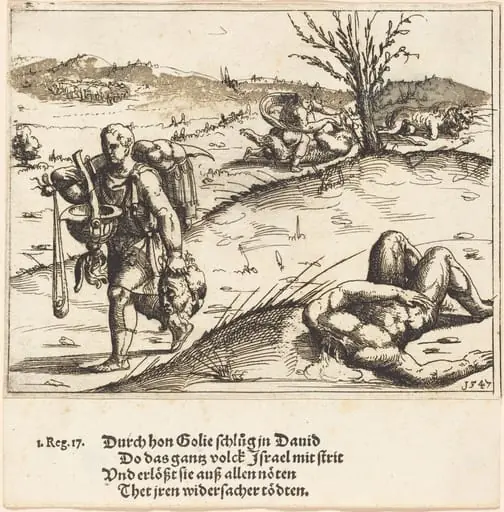 David Beheads Goliath
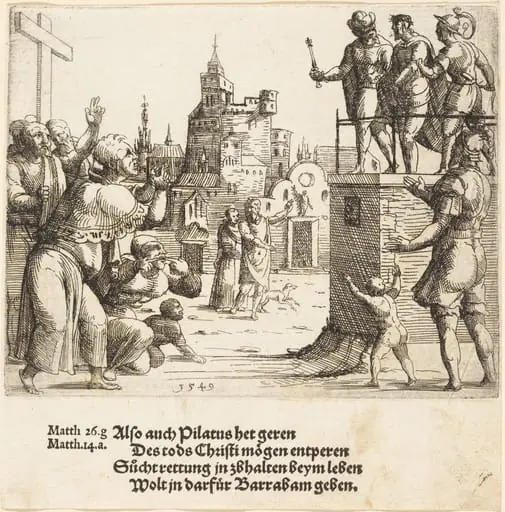 Ecce Homo
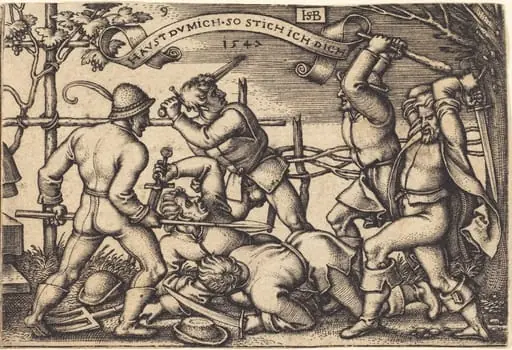 Peasants' Brawl
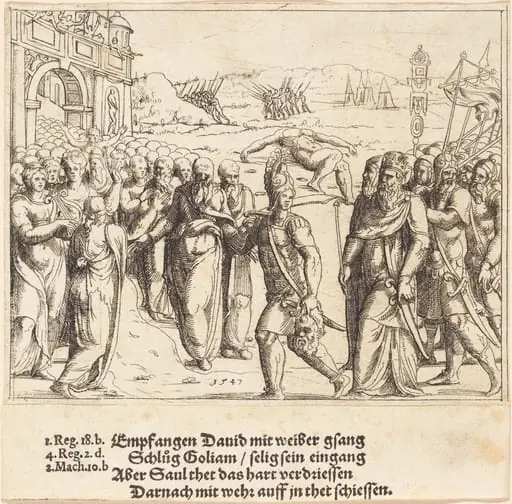 David is Welcomed after Killing Goliath, and Saul's Jealousy
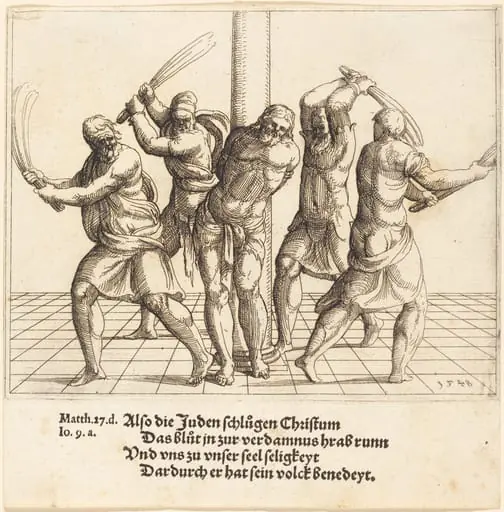 The Flagellation
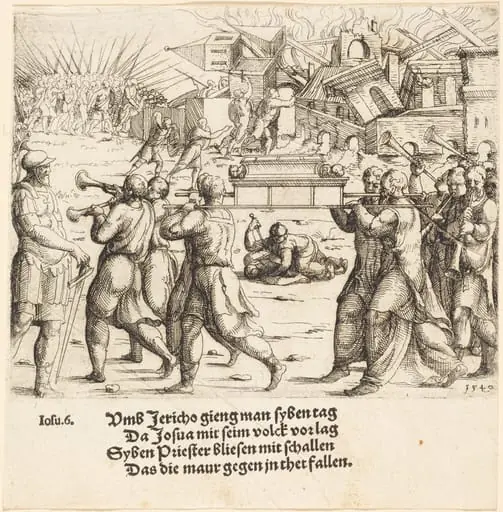 The Fall of Jericho
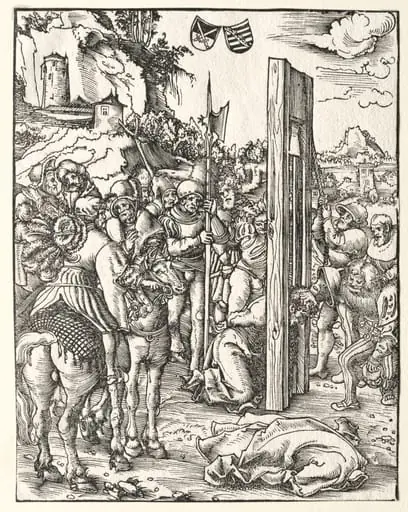 Martyrdom of St. Matthias
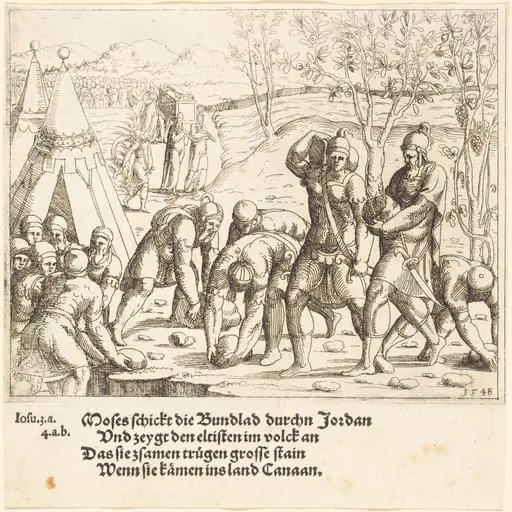 The Twelve Stones, and the Waters of the Jordan are Divided
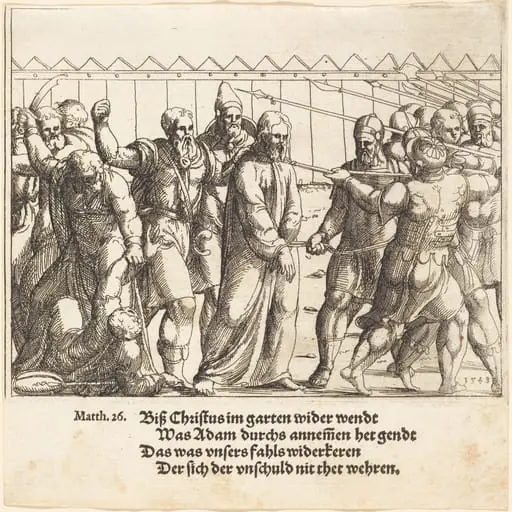 Jesus Being Led to Caiaphas
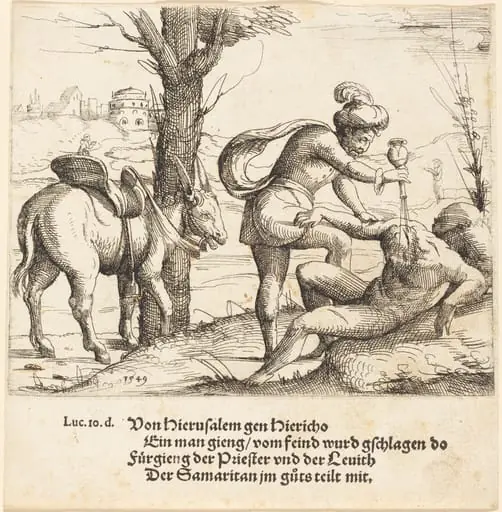 The Parable of the Good Samaritan
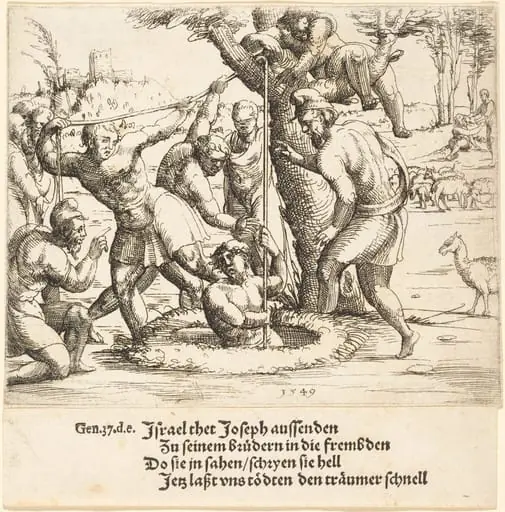 Joseph Thrown into the Well