Artwork
The Opening of the Seventh Seal
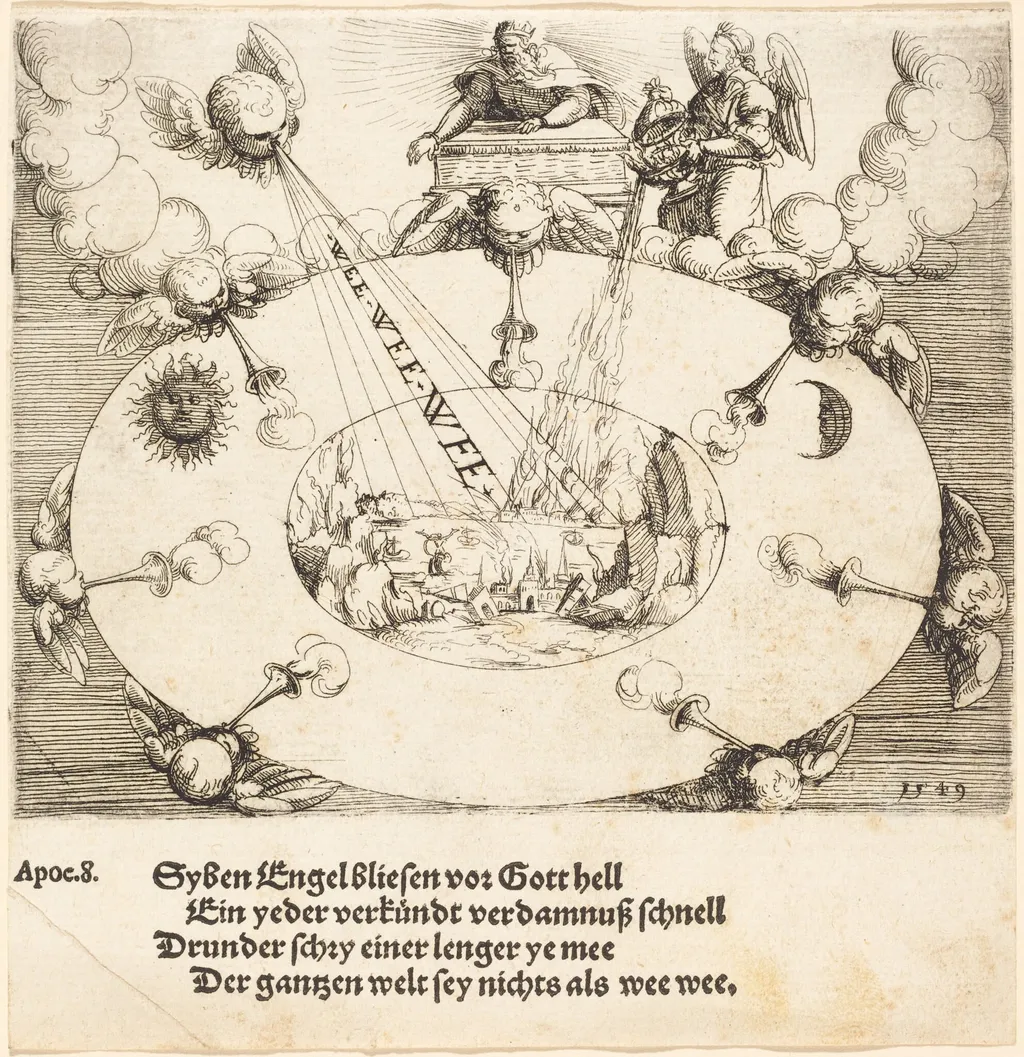
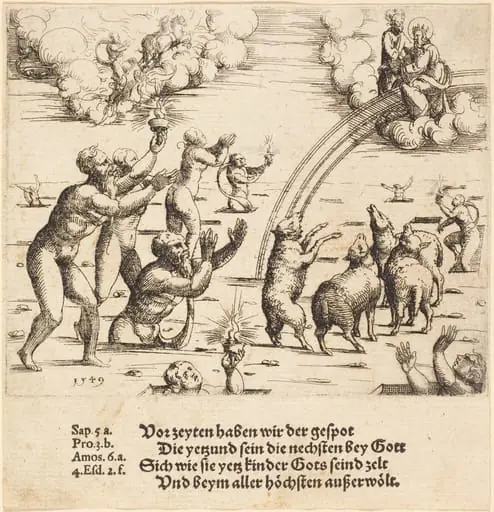
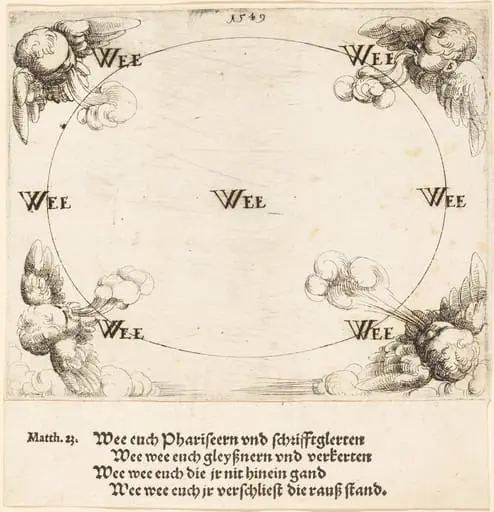
The Opening of the Seventh Seal is an ink print by the Renaissance artist Augustin Hirschvogel. It dates from 1549 and is held in the collection of the National Gallery of Art.
About this work
The outer circle has various objects and figures, including a sun, a moon, and several angels.
This painting shows a large circle with a smaller circle inside. The inner circle has a scene of a city on fire, with people running and buildings burning. The outer circle has various objects and figures, including a sun, a moon, and several angels.
The scene is depicted in a style that suggests a sense of chaos and destruction. The use of fire and smoke creates a sense of urgency and danger.
If you're interested in learning more about the Renaissance movement, you can explore the works of artists like Hirschvogel, Augustin, who created this etching in 1549.
Overview
Created in 1549, this etching by German polymath Augustin Hirschvogel presents a complex, circular composition. A central disc portrays a city engulfed in flames, its inhabitants fleeing amid smoke, while the surrounding rim is populated with celestial symbols such as a sun, moon, and a group of angels. The overall effect conveys a dramatic narrative of upheaval within a tightly structured format.
Subject & Meaning
The inner circle captures a scene of urban destruction, suggesting themes of catastrophe and human vulnerability. Encircling this turmoil, the outer band introduces heavenly elements—sun, moon, and angels—that may allude to divine observation or intervention, juxtaposing earthly disaster with celestial order and hinting at theological interpretations common in mid‑sixteenth‑century visual culture.
Technique & Style
Executed as an etching, the work relies on fine line work and varying densities of hatch to render fire, smoke, and architectural detail. Hirschvogel’s handling of light and shadow reflects the landscape sensibilities of the Danube School, emphasizing atmospheric effects and a sense of movement that heightens the scene’s chaotic energy.
History & Provenance
The piece belongs to a series of thirty‑five small landscape etchings produced by Hirschvogel between 1545 and 1549. While specific ownership records are scarce, the etching has been documented in several European print collections, illustrating the artist’s reputation as both a cartographer and a printmaker during the Renaissance.
Context
Hirschvogel operated within the Danube School, a regional movement centered in Bavaria and Austria that emphasized naturalistic landscapes and expressive skies. His work integrates this tradition with allegorical content, reflecting broader Renaissance interests in combining scientific observation, cartographic precision, and moral or religious narrative.
Artist & collection
Artist
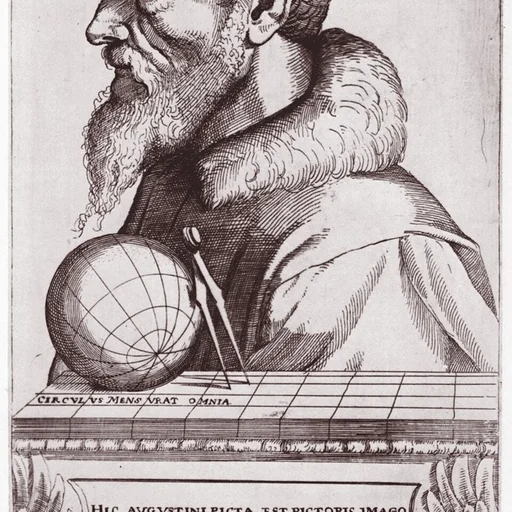
Augustin Hirschvogel (1503 – February 1553) was a German artist, mathematician, and cartographer known primarily for his etchings.