Artwork
東海道五十三次 桑名|Kuwana, from the series The Fifty-three Stations of the Tōkaidō Road
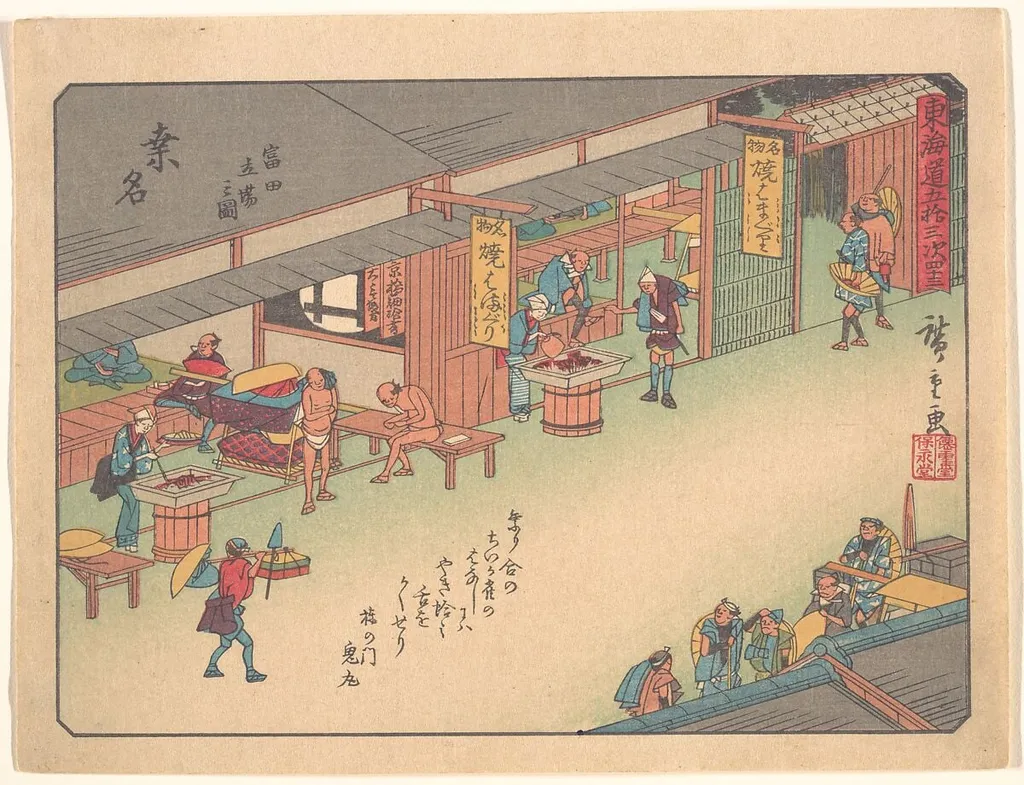
東海道五十三次 桑名|Kuwana, from the series The Fifty-three Stations of the Tōkaidō Road is an ink print by Utagawa Hiroshige. It is held in the collection of the Metropolitan Museum of Art.
About this work
Overview
The work captures Kuwana, a coastal post town known for its river traffic and commercial activity.
This woodblock print is part of Utagawa Hiroshige’s series depicting the fifty-three stations along the Tōkaidō Road, a major travel route connecting Edo and Kyoto. Created in the 1830s, not 1916, it belongs to his horizontal-format landscape prints that redefined ukiyo-e by focusing on atmospheric scenery and everyday life rather than actors or courtesans. The work captures Kuwana, a coastal post town known for its river traffic and commercial activity.
Subject & Meaning
The scene portrays Kuwana’s riverside as a working space, not a ceremonial one. Laborers rest or handle large wooden tubs, figures move along the bank, and a bridge carries pedestrians. The presence of shop signs and boats suggests a hub of local commerce. The print conveys the rhythm of daily life along a well-traveled road, emphasizing the quiet dignity of ordinary labor over grand spectacle.
Technique & Style
Hiroshige employed fine woodblock carving to render intricate details in clothing, architecture, and water. Soft gradations of color, particularly in the sky and river, create a sense of atmosphere. The composition uses diagonal lines—bridge, riverbank, and figures—to guide the eye across the scene. His use of perspective and seasonal light reflects a growing interest in naturalism, distinguishing his work from earlier stylized ukiyo-e.
History & Provenance
Produced between 1833 and 1834 by Hiroshige and publisher Hoeidō, the series was widely distributed as affordable prints for travelers and urban dwellers. Early impressions were printed in limited runs, and surviving copies are now held in major museum collections. The 1916 date sometimes cited is incorrect; the original prints predate it by nearly a century, reflecting a common misattribution in later reproductions.
Context
The Tōkaidō Road was the most important travel corridor in Edo-period Japan, frequented by merchants, pilgrims, and samurai. Hiroshige’s series responded to rising public interest in travel and regional identity. By depicting specific stations with local landmarks and activities, he transformed a commercial route into a cultural map, offering viewers a sense of place beyond the capital.
Legacy
Hiroshige’s Tōkaidō series influenced Western artists such as Monet and Van Gogh, who admired its compositional clarity and attention to nature. In Japan, it helped elevate landscape printmaking to a respected genre. The work remains a key reference for understanding how Edo-period citizens perceived their landscape—not as idealized scenery, but as lived, functional space.
Artist & collection
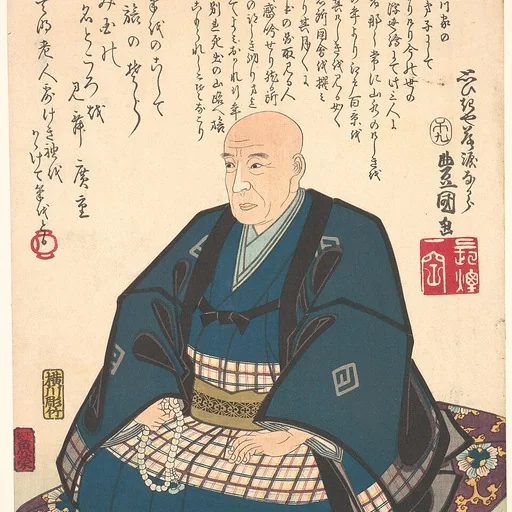
Artist
Utagawa Hiroshige (歌川 広重) or Andō Hiroshige (安藤 広重), born Andō Tokutarō (安藤 徳太郎; 1797 – 12 October 1858), was a Japanese ukiyo-e artist, considered the last great master of that tradition.

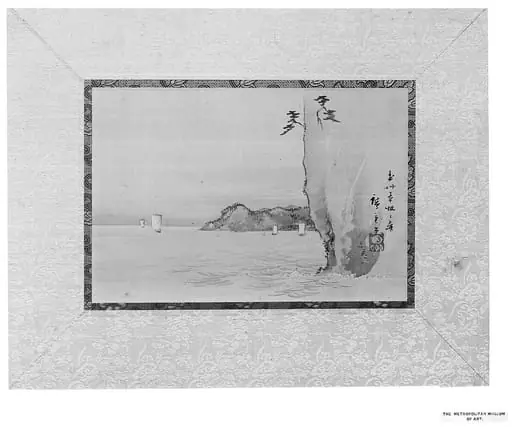
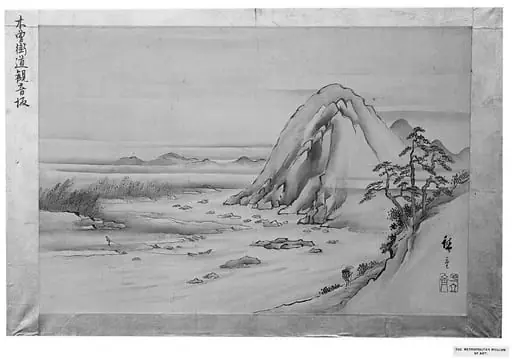
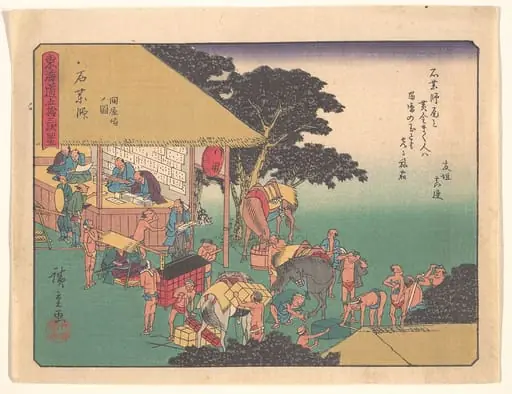 東海道五十三次 石薬師|Ishiyakushi, from the series The Fifty-three Stations of the Tōkaidō Road
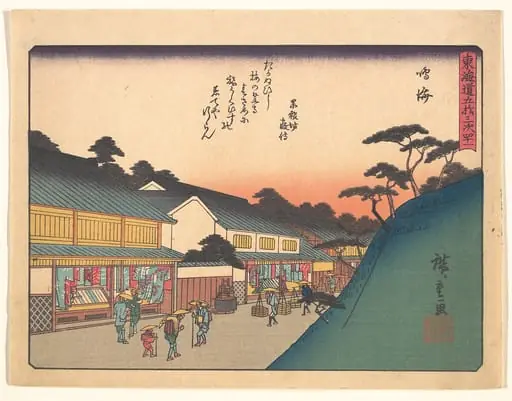 東海道五十三次 鳴海|Narumi, from the series The Fifty-three Stations of the Tōkaidō Road
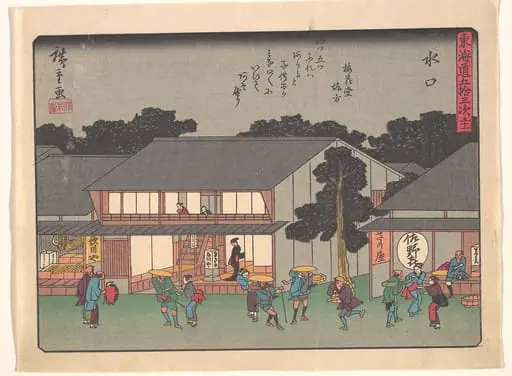 東海道五十三次 水口|Mizukuchi, from the series The Fifty-three Stations of the Tōkaidō Road
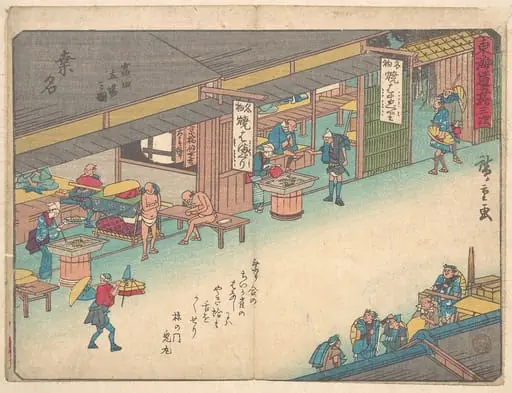 東海道五十三次 桑名|Kuwana
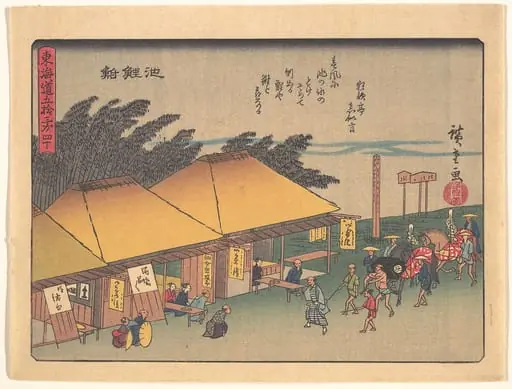 東海道五十三次 池鯉鮒|Chiryūshuku, from the series The Fifty-three Stations of the Tōkaidō Road
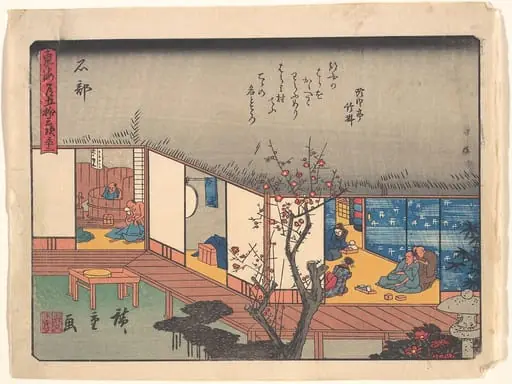 東海道五十三次 石部|Ishibe, from the series The Fifty-three Stations of the Tōkaidō Road
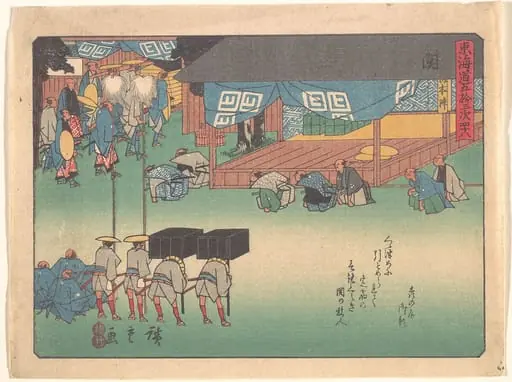 東海道五十三次 関|Seki, from the series The Fifty-three Stations of the Tōkaidō Road
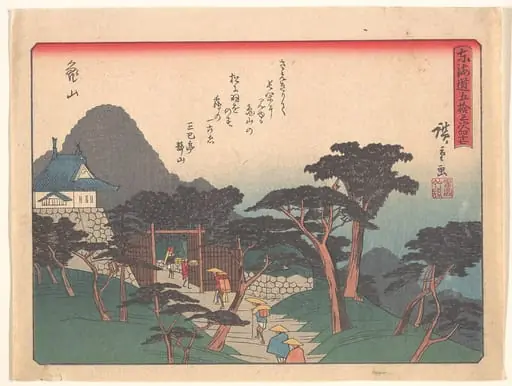 東海道五十三次 亀山|Kameyama, from the series The Fifty-three Stations of the Tōkaidō Road
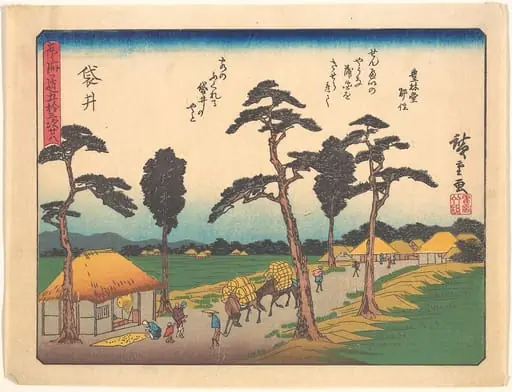 東海道五十三次 袋井|Fukuroi, from the series The Fifty-three Stations of the Tōkaidō Road
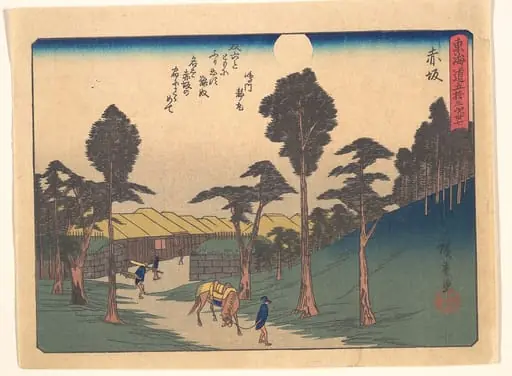 東海道五十三次 赤坂|Akasaka, from the series The Fifty-three Stations of the Tōkaidō Road