Artwork
Kampen
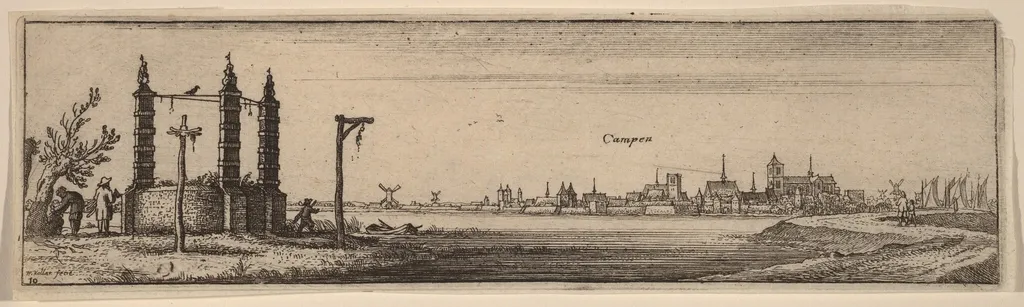
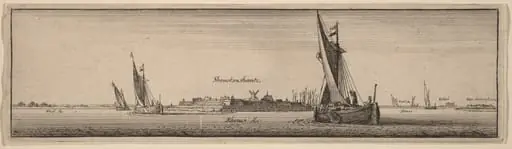
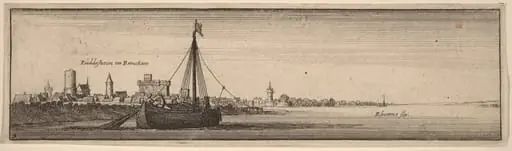
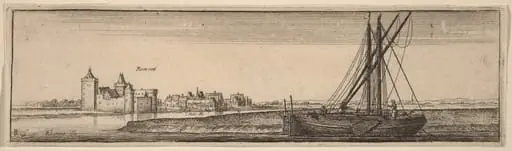
Kampen is an ink print by the Baroque artist Wenceslaus Hollar. It dates from 1632 and is held in the collection of the National Gallery of Art.
About this work
Overview
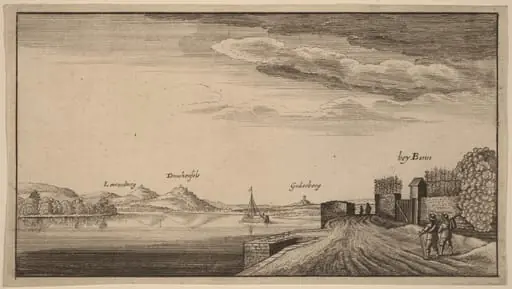
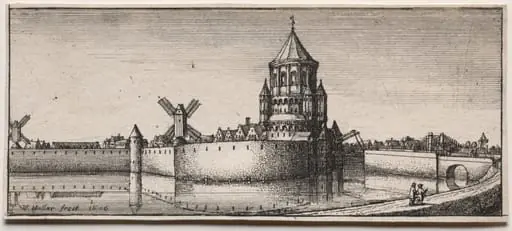
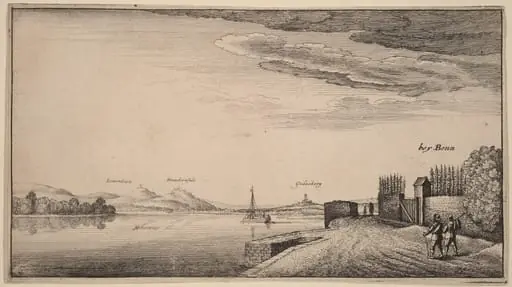
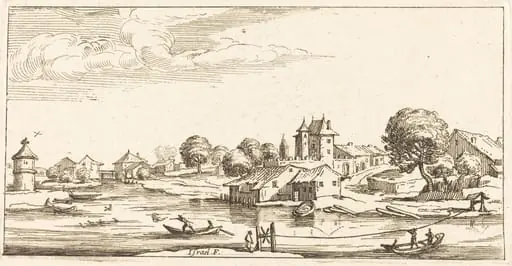
Created circa 1632, this etching on laid paper presents a tranquil riverside settlement identified by the inscription “Kampen” at the top. The monochrome image captures a modest urban scene, with stone towers, a gallows, and distant windmills framing the horizon.
Subject & Meaning
The composition juxtaposes everyday life and a stark reminder of mortality: two prominent stone towers bearing crosses stand beside a gallows from which a single figure is suspended, while onlookers gather nearby. The presence of windmills and spires suggests a Dutch town engaged in trade and agriculture.
Technique & Style
Wenceslaus Hollar employed a fine, controlled etching technique, incising delicate lines into a metal plate before printing onto laid paper. The precision of his hand yields crisp architectural details and subtle tonal variations, characteristic of his topographical approach to printmaking in the 17th century.
History & Provenance
The Czech-born engraver, who spent much of his professional life in England, produced this work during a period of extensive travel and documentation of European locales. The print has survived in several collections, reflecting Hollar’s reputation for accurate cityscapes and landscape views.
Context
Kampen, a town in the Dutch Republic, was a frequent subject for artists documenting the region’s urban development. Hollar’s interest in vedute—detailed, panoramic city views—aligns with contemporary demand for visual records of foreign cities, serving both artistic and informational purposes.
Artist & collection
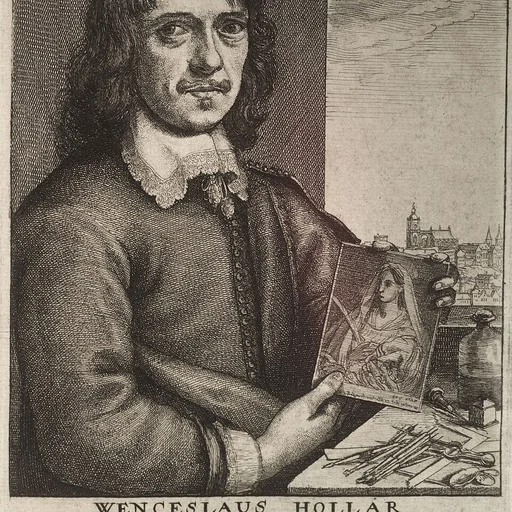
Artist
Wenceslaus Hollar (Czech: Václav Hollar (Czech pronunciation: ), German: Wenzel Hollar; 23 July 1607 – 25 March 1677) was a Czech engraver, etcher and painter.