Artwork
Ornament
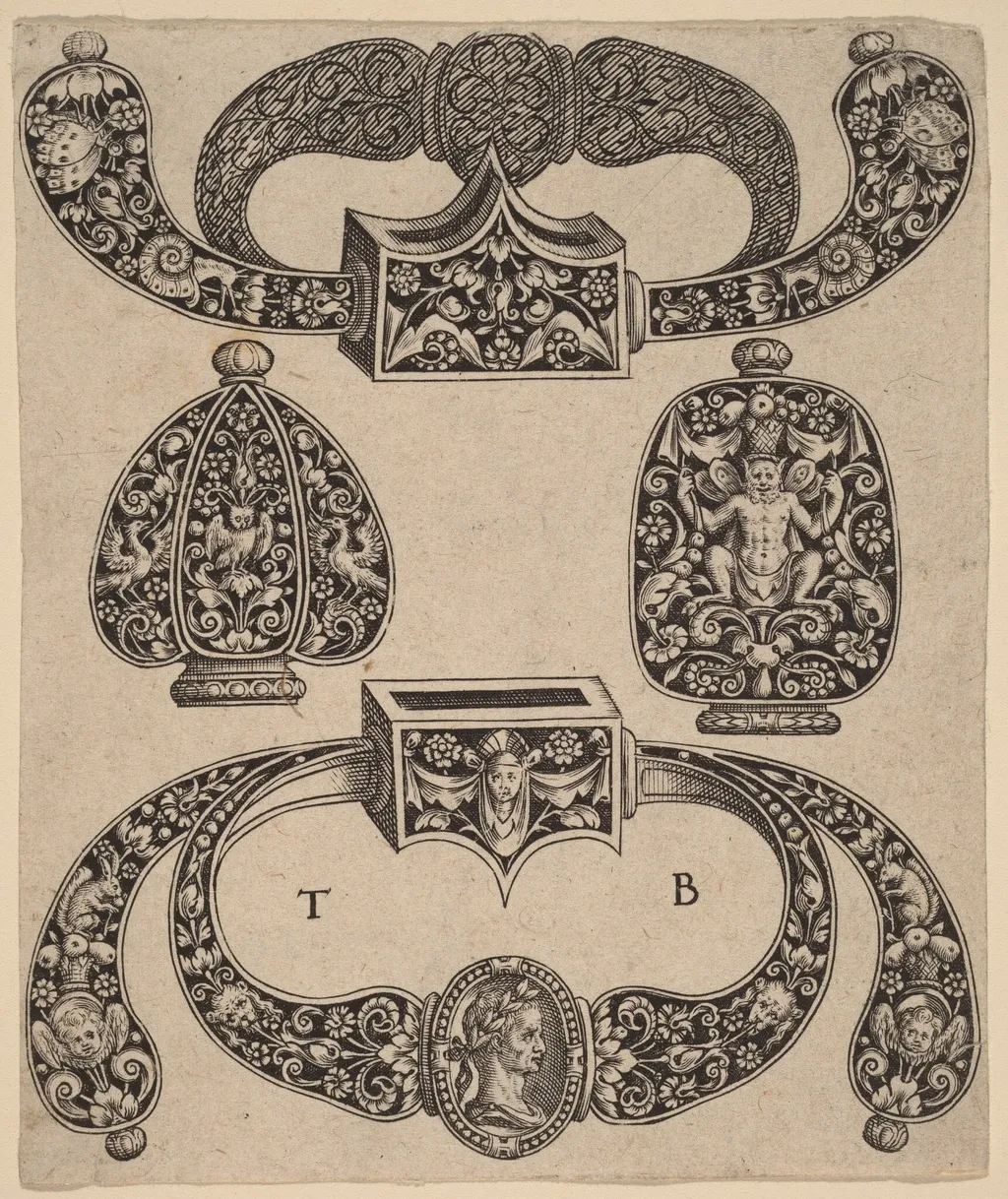
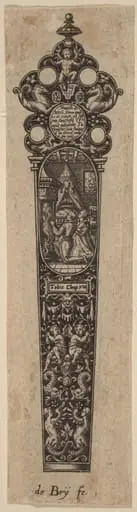
Ornament is an ink print by the Renaissance artist Theodor de Bry. It dates from 1563 and is held in the collection of the National Gallery of Art.
About this work
Overview
Though de Bry is better known for documenting colonial expeditions, this work diverges into decorative art, showcasing his technical command over the burin.
Created in 1563 by Theodor de Bry, *Ornament* is an engraving that exemplifies the precision of Renaissance printmaking. Though de Bry is better known for documenting colonial expeditions, this work diverges into decorative art, showcasing his technical command over the burin. The plate was likely intended as a standalone design or a pattern for artisans, reflecting the period’s interest in refined visual motifs beyond narrative illustration.
Subject & Meaning
The central figure is a woman adorned in elaborate courtly attire, holding a fan as a symbol of status and poise. Her dress, rendered with intricate lace and silk ribbons, suggests an idealized aristocratic femininity rather than a specific individual. The composition avoids storytelling, focusing instead on the elegance of form and texture, aligning with the era’s decorative arts where fashion and ornamentation conveyed social ideals.
Technique & Style
De Bry employed fine, closely spaced lines to model volume and texture, using cross-hatching to simulate light and shadow without color. The burin’s precision captures the stiffness of lace and the sheen of silk, translating tactile qualities into linear rhythm. Backgrounds are subtly shaded with dense, directional strokes, enhancing the figure’s presence while maintaining the engraving’s monochrome clarity and structural discipline.
History & Provenance
De Bry, a Protestant refugee from the Spanish Netherlands, produced this work during his time in Frankfurt, where he established himself as a publisher and engraver. Though *Ornament* lacks a documented early ownership trail, its style aligns with the commercial print market of the 1560s, which supplied patterns to goldsmiths, tailors, and book illustrators. It reflects his broader practice of producing reusable visual motifs for diverse audiences.
Context
In mid-16th-century Europe, engraved ornaments circulated widely as templates for craftspeople and as symbols of refined taste. De Bry’s work emerged amid a flourishing print culture that valued technical mastery and reproducibility. While his later publications documented foreign lands, this piece anchors him in the domestic tradition of decorative design, where aesthetics served both utility and social aspiration.
Legacy
Though not as widely studied as his American expedition illustrations, *Ornament* illustrates de Bry’s versatility and the broader role of engravers in shaping visual culture. His ability to render texture and detail influenced later generations of printmakers, particularly in the transmission of fashion and decorative motifs across Europe. The work remains a quiet testament to the quiet labor behind Renaissance aesthetics.
Artist & collection
Artist
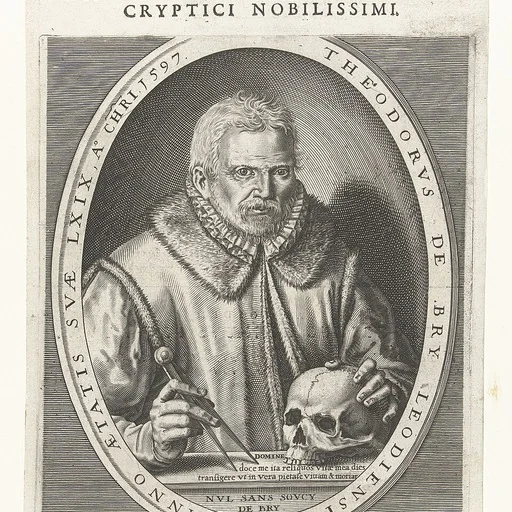
Theodor de Bry (also Theodorus de Bry; 1528 – 27 March 1598) was a Walloon engraver, goldsmith, editor and publisher, famous for his depictions of early European expeditions to the Americas.

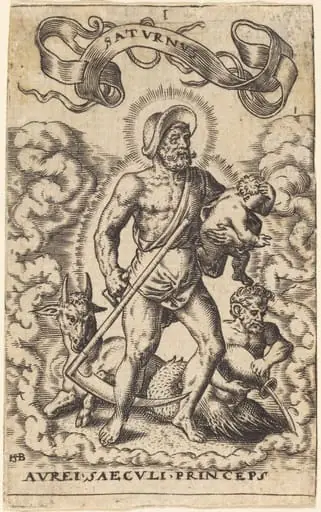
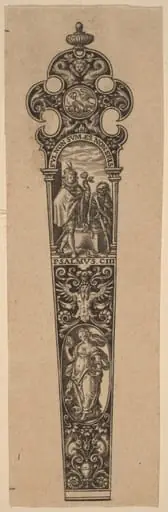
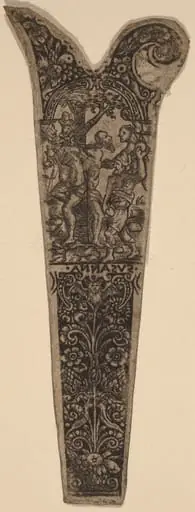
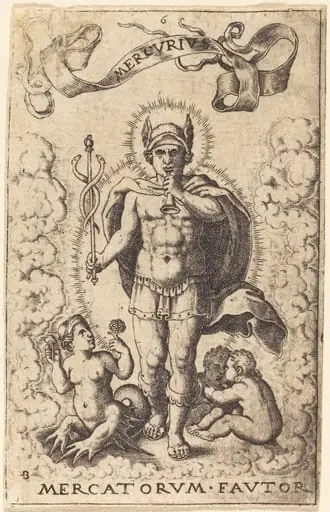
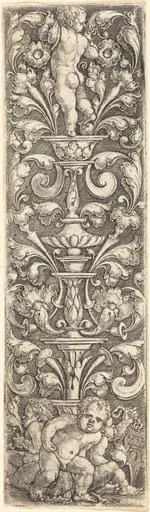 High Ornament
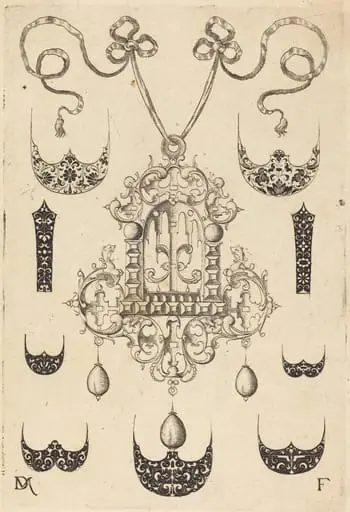 Pendant Surrounded by Seven Shields and Two Ornamental Bands
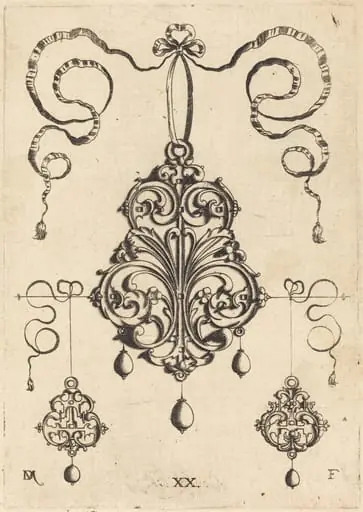 One Large and Two Smaller Strapwork Pendants
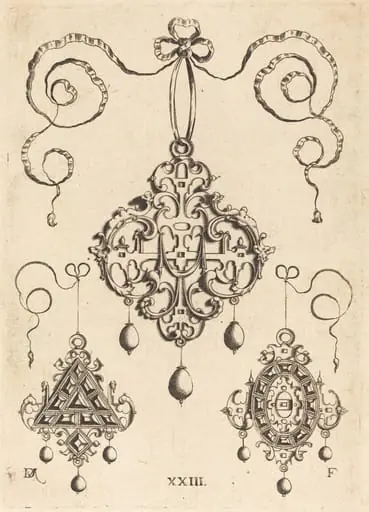 Three Strapwork Pendants, The Lower Ones Triangular and Oval
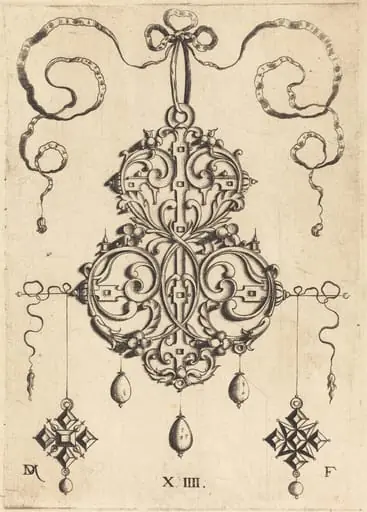 Strapwork Pendant with Three Drops and Two Cross-Shaped Pendants as Earrings at Left and Right
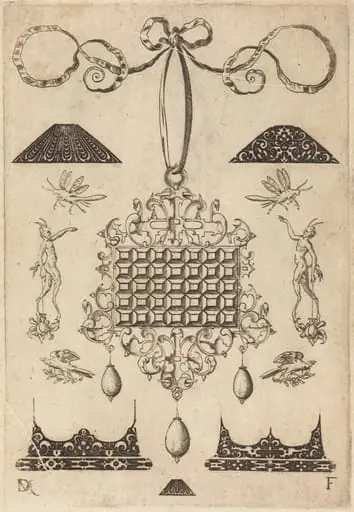 Large Pendant with Square with 35 Flat Stones
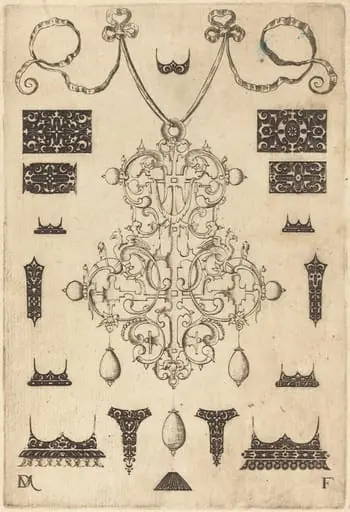 Large Pendant with Three Drops Below, Surrounded by Fifteen Different Studs
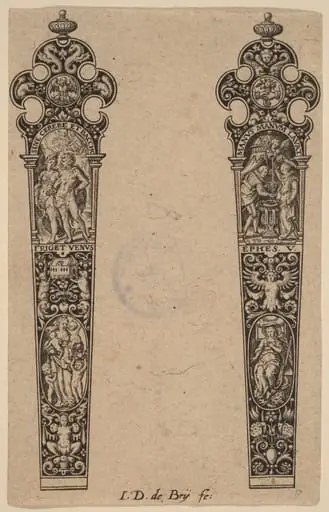
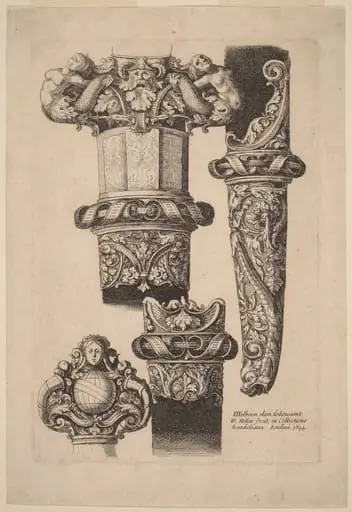 Ornamentation for a Dagger and Scabbard
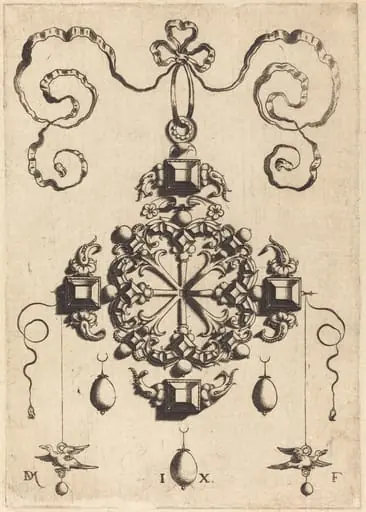 Large Pendant in the Form of a Wheel
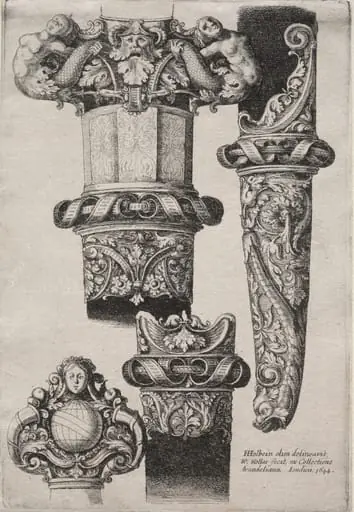 Design for Daggers
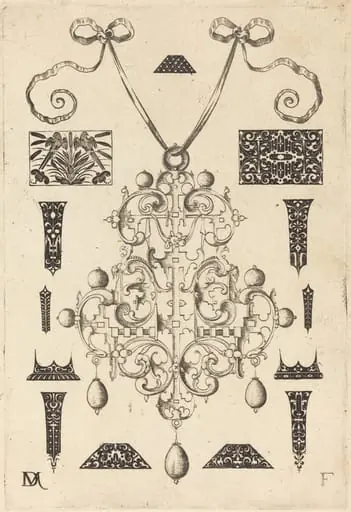 Large Pendant, Surrounded by Thirteen Studs
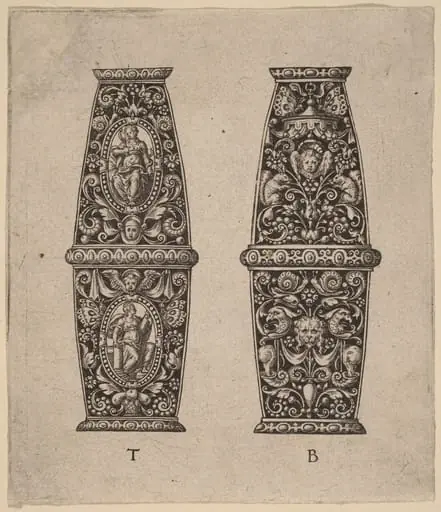 Ornament