Artwork
Three Butterflies and Two Moths
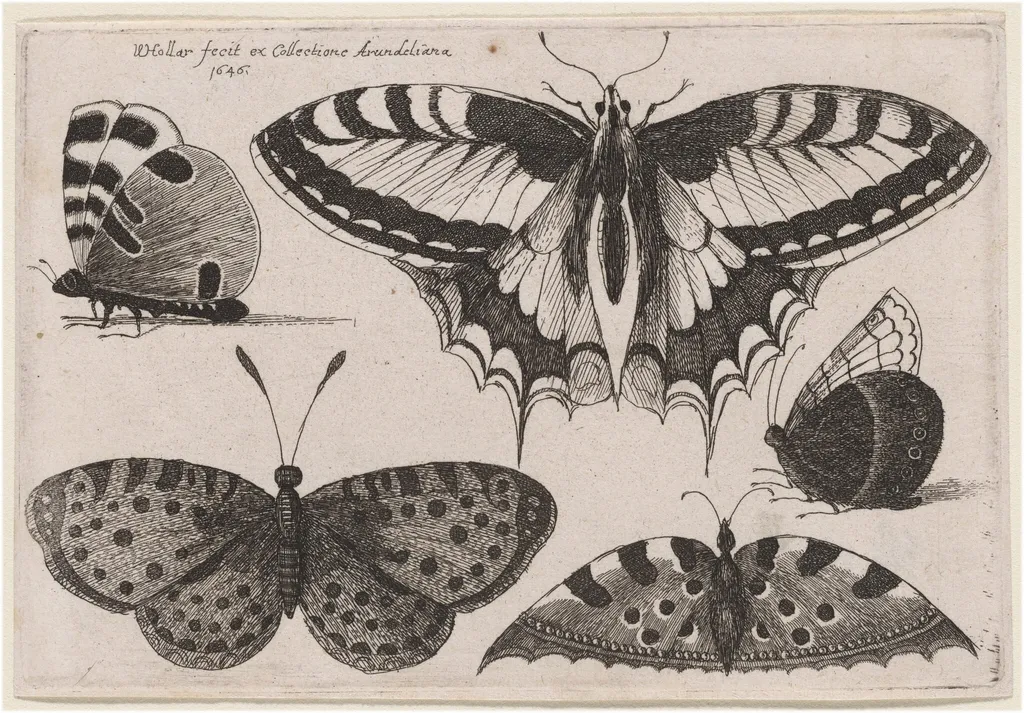
Three Butterflies and Two Moths is an ink print by the Baroque artist Wenceslaus Hollar. It dates from 1646 and is held in the collection of the National Gallery of Art.
About this work
Overview
Though Hollar is best known for topographical works, this piece reveals his interest in natural forms, rendered with meticulous attention to anatomical detail.
Created in 1646 by Wenceslaus Hollar, this etching on laid paper presents a close study of five lepidoptera: three butterflies and two moths. Though Hollar is best known for topographical works, this piece reveals his interest in natural forms, rendered with meticulous attention to anatomical detail. The composition is sparse, focusing solely on the insects against a neutral ground, emphasizing observation over narrative.
Subject & Meaning
The insects depicted are rendered without symbolic or allegorical context, functioning instead as specimens of natural observation. Their arrangement suggests a scientific interest in variation—differences in wing size, shape, and patterning are carefully noted. This work reflects the 17th-century European fascination with cataloging nature, aligning with emerging empirical approaches to biology and natural history.
Technique & Style
Hollar employed fine etching lines to capture the delicate textures of wings, antennae, and body segments. The light beige paper serves as a neutral backdrop, allowing subtle tonal variations in ink to define form. Cross-hatching and stippling create depth and surface detail, while the absence of shading or color reinforces the precision of line work characteristic of his engraving practice.
History & Provenance
Produced during Hollar’s time in England, where he worked under the patronage of the Earl of Arundel, this print likely originated as part of a larger collection of natural studies. Its survival in institutional collections suggests early recognition of its technical merit, though it was never widely circulated as a standalone image. No definitive provenance beyond 17th-century English collections is documented.
Context
In mid-17th-century Europe, detailed natural studies were gaining traction among collectors and scholars. Hollar’s insect etchings align with contemporaneous works by artists like Maria Sibylla Merian and scientific illustrators documenting flora and fauna. This piece reflects a broader cultural shift toward empirical observation, where art served as a tool for recording the natural world with accuracy.
Legacy
While not among Hollar’s most famous works, this etching exemplifies his versatility and commitment to precision. It contributes to a body of natural history prints that bridged art and science, influencing later generations of biological illustrators. Today, it remains a quiet testament to the value placed on close observation in early modern visual culture.
Artist & collection
Artist
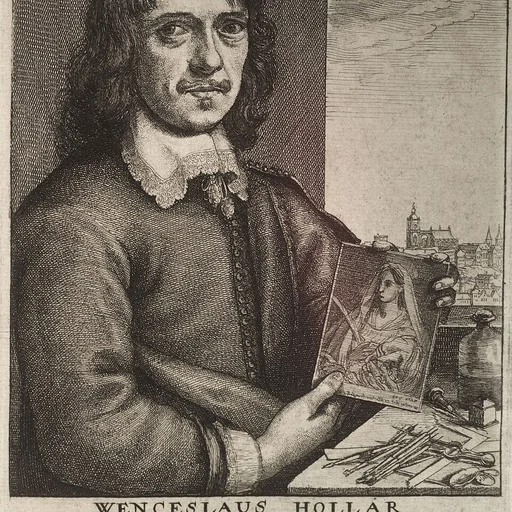
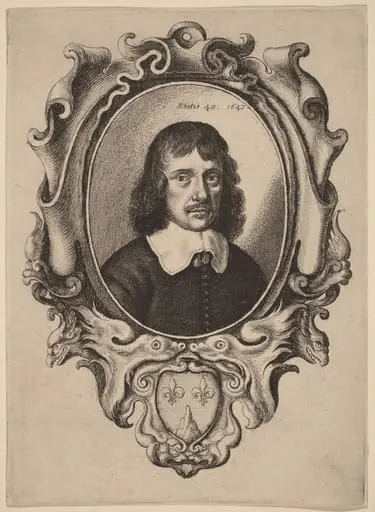
Wenceslaus Hollar (Czech: Václav Hollar (Czech pronunciation: ), German: Wenzel Hollar; 23 July 1607 – 25 March 1677) was a Czech engraver, etcher and painter.


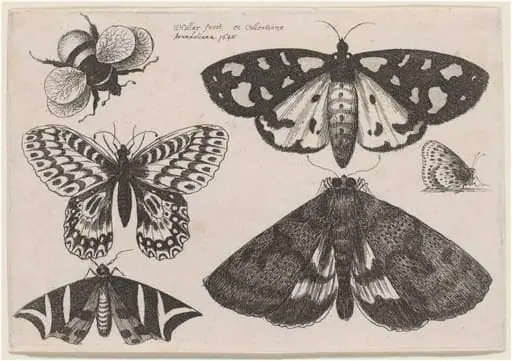 Three Moths, Two Butterflies, and a Bumble Bee
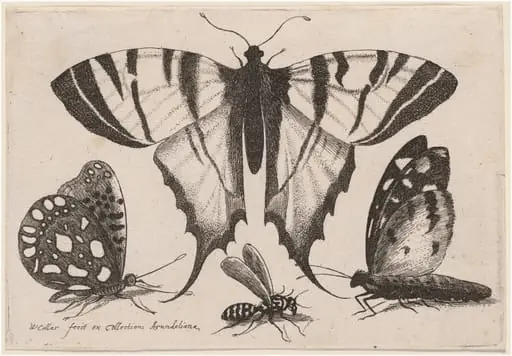 Two Butterflies, a Wasp, and a Moth
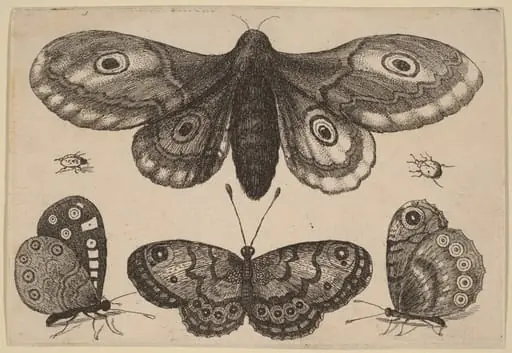 Moth, Three Butterflies, and Two Beetles
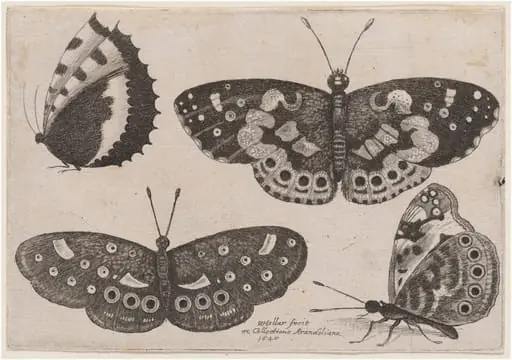 Four Butterflies
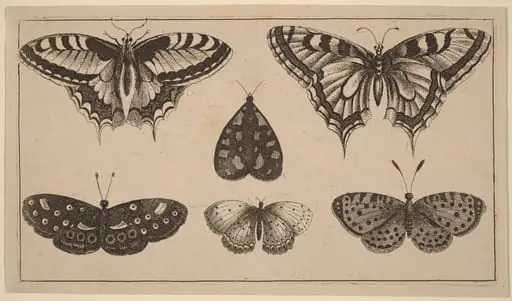 Five Butterflies and a Moth
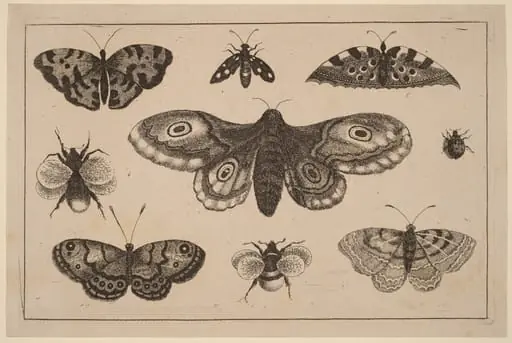 Moth, Butterflies, and Bees
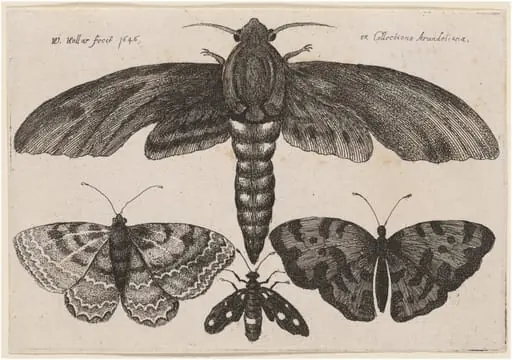 Moth and Three Butterflies
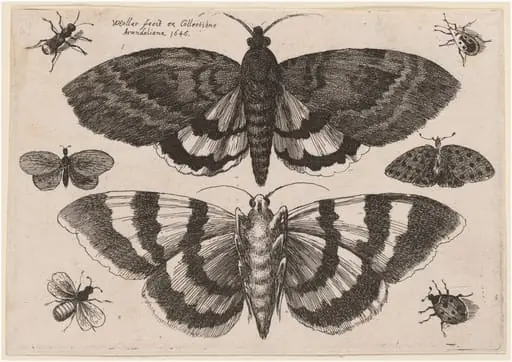 Two Moths and Six Insects
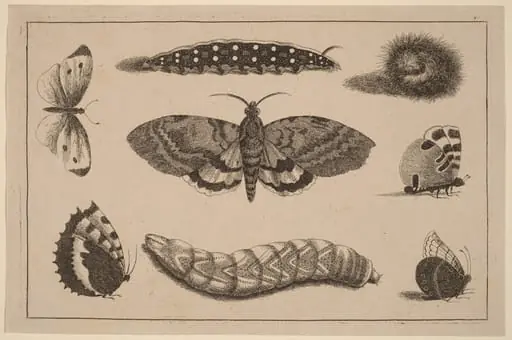 Three Caterpillars, a Moth, and Four Butterflies
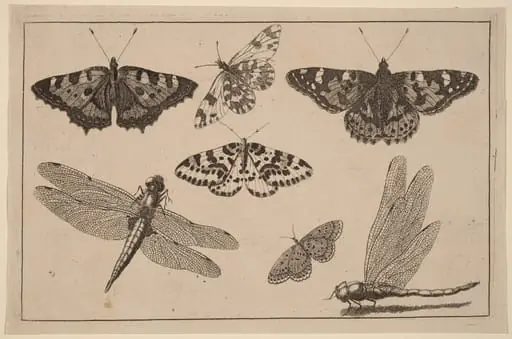 Two Dragonflies and Five Butterflies
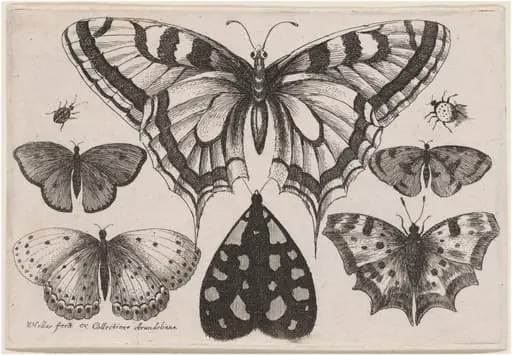 Five Butterflies, a Moth, a Beetle, and a Spider
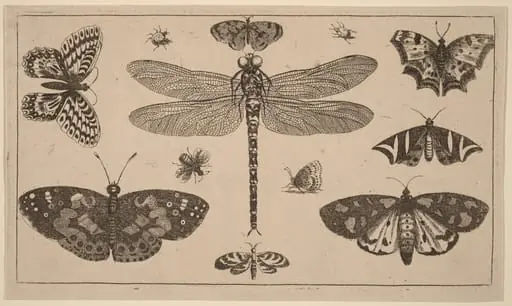 Dragonfly, Ladybirds, and Butterflies